
Walnut, cherry, birdseye maple, curly maple, bubinga and rosewood offer six appealing directions for handcrafted jewelry storage, from quiet dark grain to a richly patterned lid. The best wood for jewelry box designs depends on the appearance you want and how well the finished box works. A striking exterior cannot make up for a lid that binds or an interior that lets pieces rub together.
Whether you are choosing one keepsake or developing custom jewelry boxes for a collection, compare the material and the complete sample together. This guide helps you shortlist a wood, understand the construction and inspect the details that matter in use.
Which wood should you choose for a jewelry box?
Start with walnut for a dark, understated look, cherry for a warmer direction, and figured maple when the grain should be the focal point. Bubinga and rosewood suit projects where a distinctive specialty wood justifies closer attention to the exact material. These are aesthetic recommendations, not a universal ranking of protection or service life.
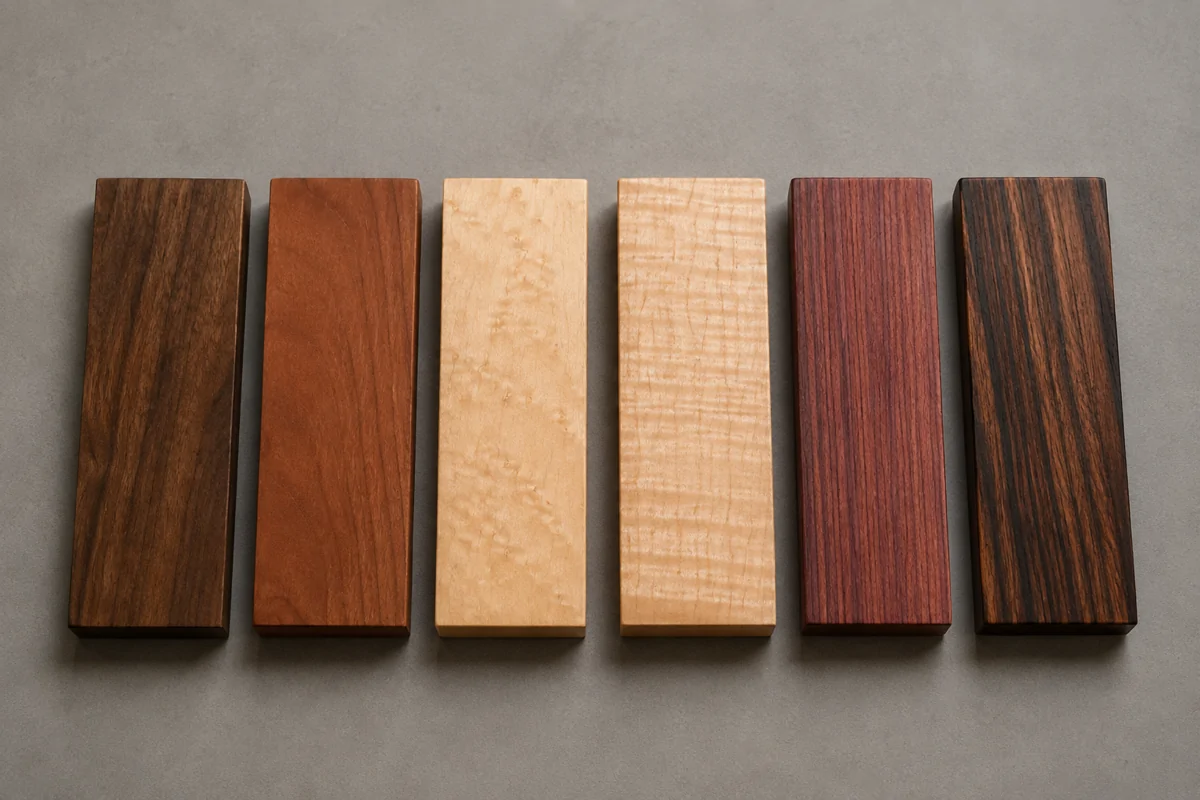
Birdseye and curly maple describe grain figure rather than two separate tree species. Ask which maple is being supplied instead of assuming both have the same hardness. Use this shortlist to identify the appearance worth examining in a real sample.
| Wood choice | Design direction | Key sample check |
|---|---|---|
| Walnut | Dark, restrained exterior | Pale sapwood and overall color range |
| Cherry | Warm, simple keepsake | Finished color and expectations about aging |
| Birdseye maple | Small-scale patterned lid | Distribution of the eye-like figure |
| Curly maple | Directional, wavy figure | Appearance from different viewing angles |
| Bubinga | Richly colored feature panel | Actual board, finish and completed weight |
| Rosewood | Strong dark grain contrast | Exact species and construction description |
The best starting point is the visual effect you need; the finished sample decides whether that choice works.
Why choose walnut for a dark jewelry box?
Walnut is a useful first choice when you want a dark exterior that leaves room for the shape, lining and jewelry to stand out. It can work well with a plain lid and restrained hardware, so the design does not need several decorative treatments to feel considered. For a brand, this makes walnut worth sampling when the brief calls for a quiet presentation.
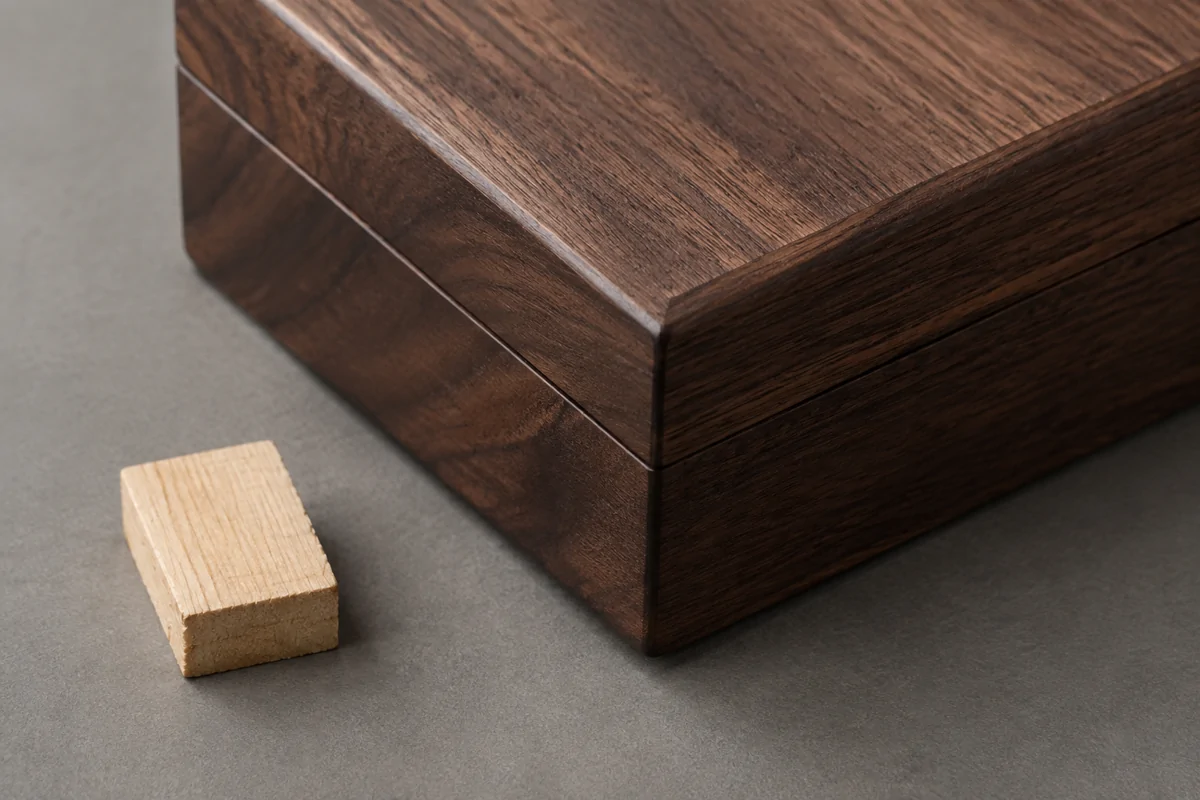
Check color variation before approval: walnut can include pale sapwood, and light exposure can change its dark appearance over time. Woodworkers Source demonstrates these issues in its walnut finishing guide. If you need a consistent dark collection, agree on the acceptable color range and finish; the word “walnut” alone does not define either.
When is cherry the right wood for jewelry storage?
Cherry is worth choosing when a warm appearance and gradual color change fit the design. Its pinkish to reddish-brown direction can suit a simple keepsake box without a heavily patterned surface. However, you should be comfortable with a natural material whose appearance can develop rather than remain identical to a new sample.
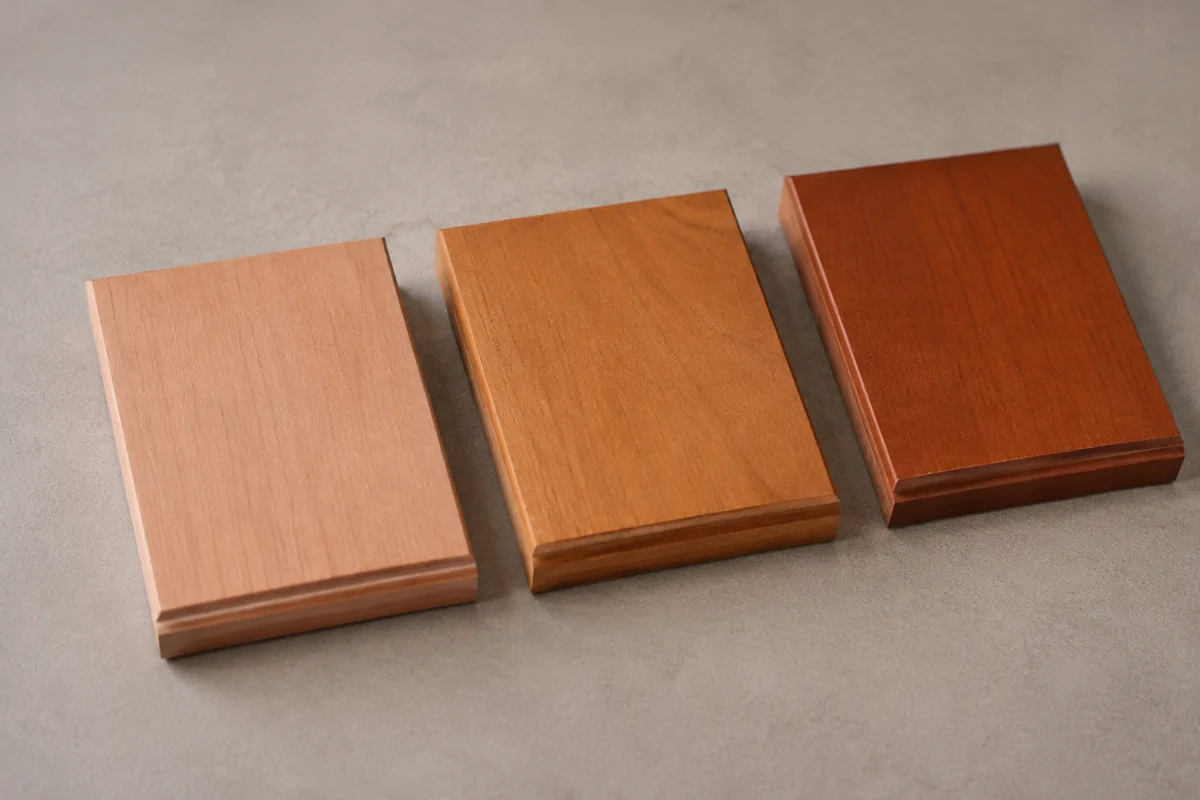
Review the intended finish on cherry itself, and ask the maker how the supplied sample relates to a newly finished box. A color photograph cannot settle that question. When comparing jewelry box design ideas, use cherry as part of the overall palette and avoid making a precise, permanent color match the reason for selecting it.
What makes birdseye maple useful for a jewelry box?
Birdseye maple gives a small lid visual detail through its clustered, eye-like figure. Consider it when you want a pale wood surface with more character than a plain board. The figure can carry the design on its own, so a large logo or busy inlay may compete with the very feature you are paying to display.
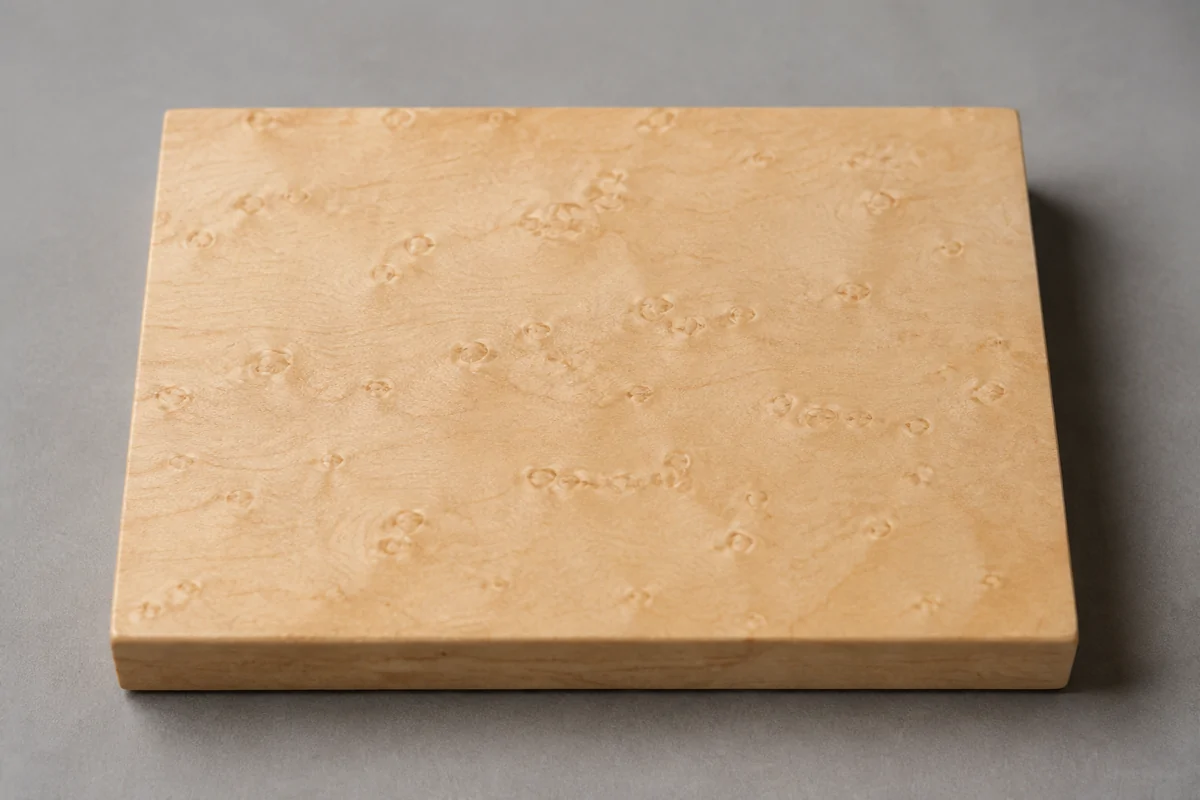
Compare the actual face of the lid, including the spacing of the figure and the quieter areas between it. For several boxes, agree on an acceptable range of pattern rather than expecting a repeatable printed texture. Your approval should show what counts as a suitable lid; a generic species name or one unusually figured sample leaves too much open.
How does curly maple change a box design?
Curly maple adds a flowing, directional pattern that changes with the viewing angle and light. This makes it useful for a broad, simple lid where the figure has space to read. Woodworkers Source explains that the curled grain reflects light at different angles; a single straight-on photograph may therefore understate its effect.
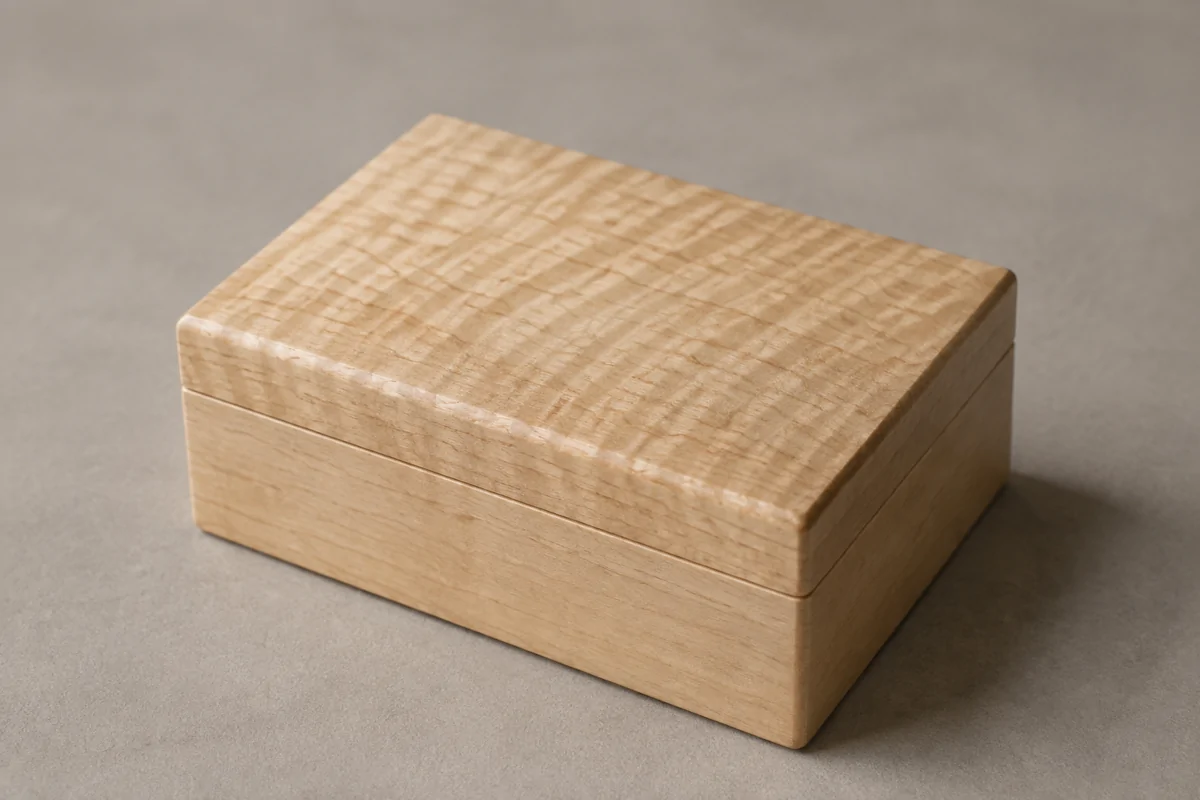
Inspect the finished sample from above and from the angle at which the box will normally be opened. Also confirm the underlying maple type: attractive curl does not establish a particular hardness. If matching a run of boxes matters, specify the intended grain direction and acceptable figure strength before approving the design.
When is bubinga worth considering?
Bubinga is worth considering when a richly colored feature surface is central to the box concept. A timber supplier’s bubinga material description identifies red to violet coloration and purple striping, along with relatively high density. Treat that as a reason to handle a sample, not as proof that a heavier box protects jewelry better.
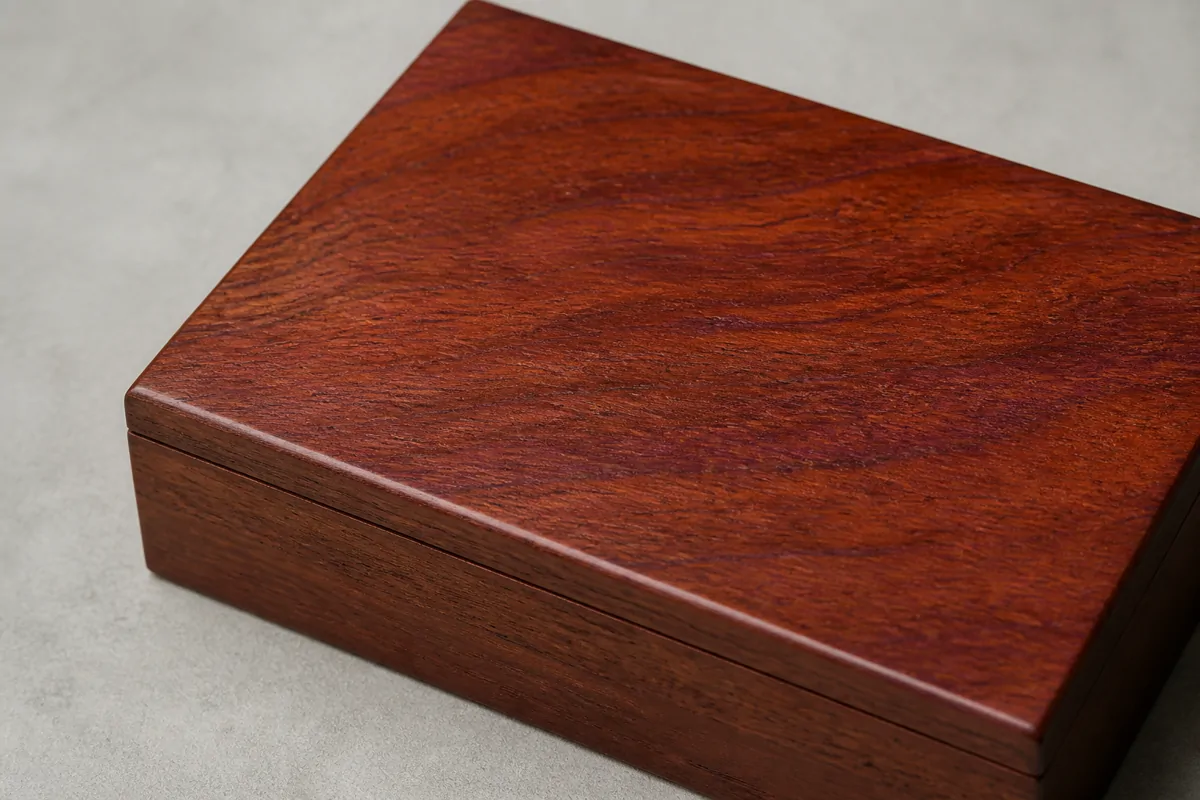
Start with the actual board or lid panel and assess whether its grain works at the intended box size. Then handle the completed sample to judge lid weight, balance and opening comfort. Confirm material identity and availability with the maker before committing to a specialty wood whose appearance is essential to the design.
What should you check before choosing rosewood?
Confirm the exact wood behind the rosewood name, then assess the finished surface and construction. The name alone is too broad to establish one color, hardness or performance level. Woodworkers Source’s discussion of misleading rosewood trade names shows why a commercial label needs clarification.
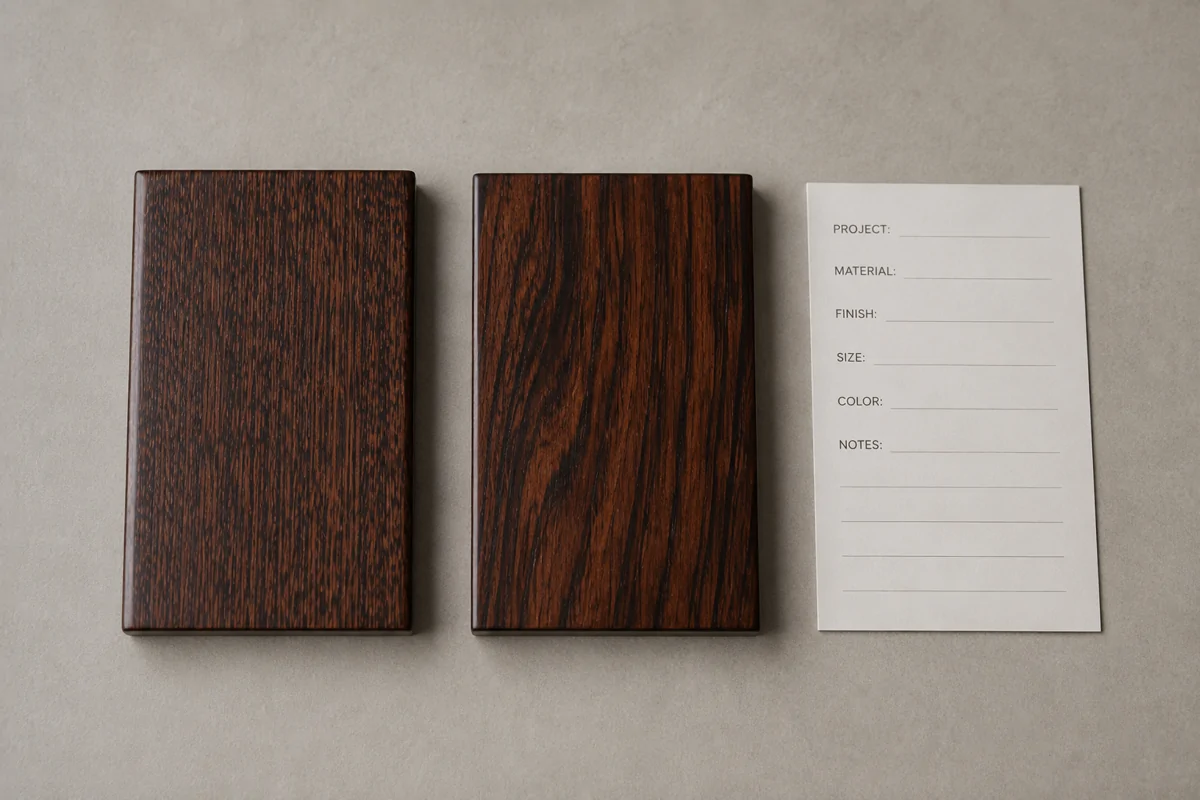
Ask whether the box uses solid timber, real wood veneer, or a finish described only as rosewood-colored. For a patterned lid, review the actual sample alongside the intended lining and hardware so the overall contrast remains balanced. If the seller cannot identify the material, choose a better-documented option rather than paying for an ambiguous name.
Should a jewelry box use solid wood or veneer?
Choose solid wood when the timber construction itself is part of the object you want; consider veneer when the main goal is a particular wood face over a separately specified core. Veneer is a thin layer of real wood, while a printed wood effect is a different surface. Neither “solid” nor “veneered” is enough to establish the quality of the finished box.
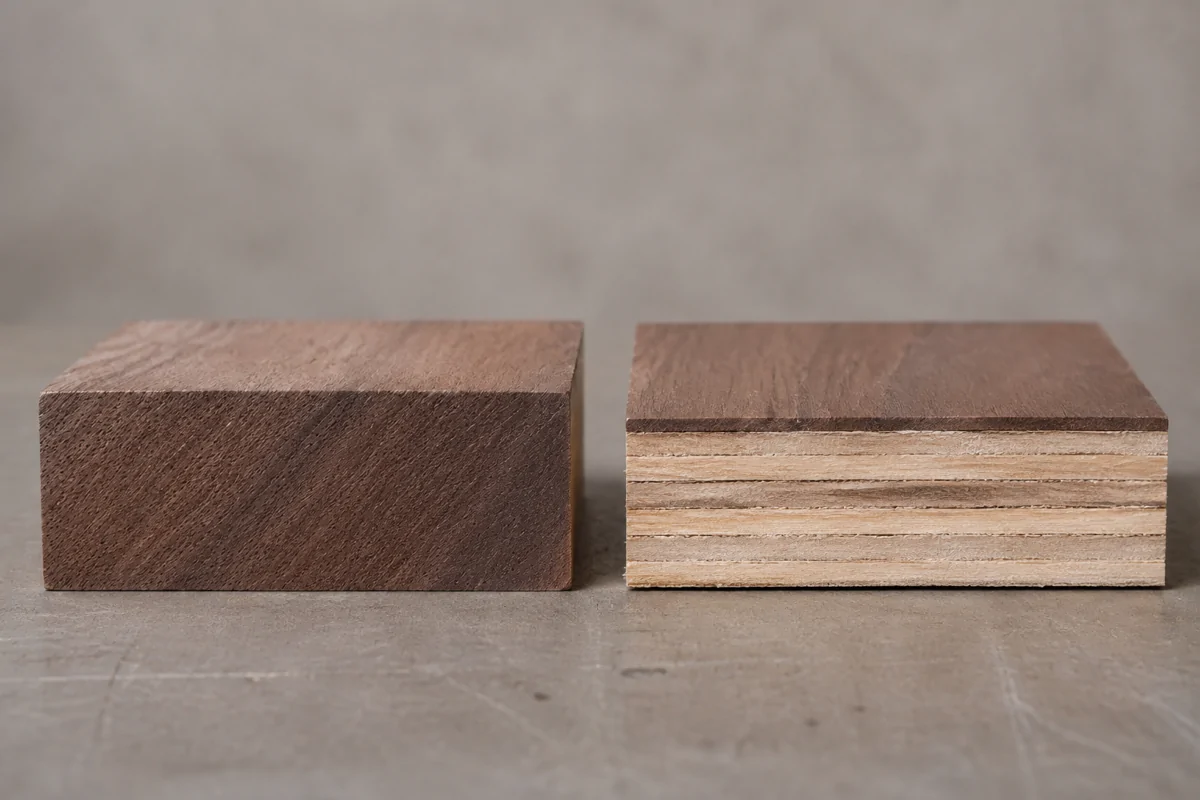
For solid wood, inspect the joints, lid fit and surface preparation. For veneer, ask what the core is and inspect the exposed edges and bonding for lifting or gaps. Compare complete samples and equivalent specifications when assessing price: an ornate veneered box and a plain solid box are not a controlled material comparison.
| Construction | What to confirm | What to inspect |
|---|---|---|
| Solid wood | Which parts use the named timber | Joint quality, grain and lid operation |
| Real wood veneer | Face wood, core and edge treatment | Bonded surface and clean transitions |
| Printed wood effect | Surface description and substrate | Print appearance and edge finish |
A clear construction description makes the best wood for jewelry box selection a practical comparison rather than a contest between labels.
How do the finish and lining protect your jewelry?
A suitable lining cushions and separates jewelry, while the exterior finish helps determine how the wood looks and feels in use. Wood species alone does not establish tarnish protection. The Canadian Conservation Institute cautions that wood and wood products can release harmful vapors in its metal storage guidance; a decorative wood box should not be assumed to provide conservation-grade storage.
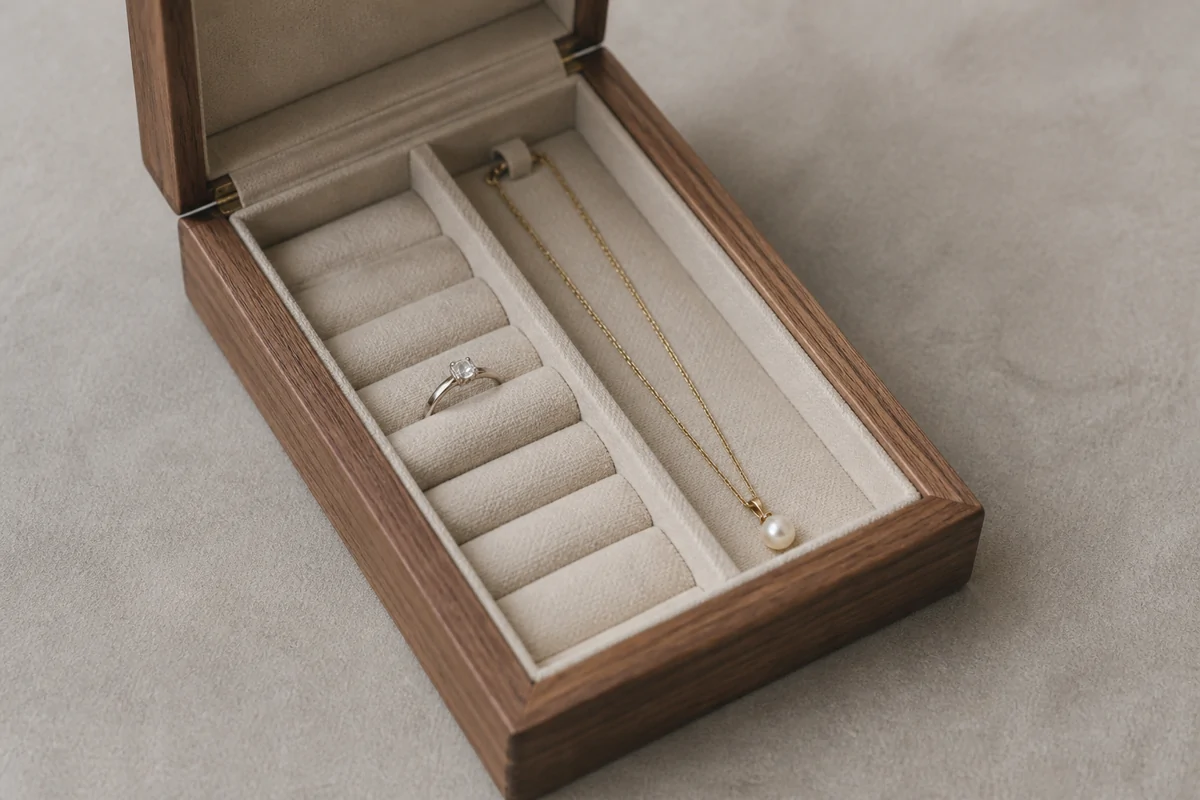
For delicate or valuable pieces, confirm the suitability of the complete interior, including fabric, adhesives and any claimed anti-tarnish treatment. A soft-looking lining is not evidence of chemical compatibility, and a clear coating is not proof of a sealed barrier. Use separate supports and channels to keep necklaces from tangling, and check that pieces cannot rub against hardware or each other when the lid closes.
What should you inspect before buying a wooden jewelry box?
Inspect the whole box with the intended jewelry or an appropriate size reference, not only a wood swatch. Open and close it, check the lining edges, and confirm that the usable space fits the pieces without pressure. A well-chosen wood cannot correct a poor fit, rough edge or loose component.
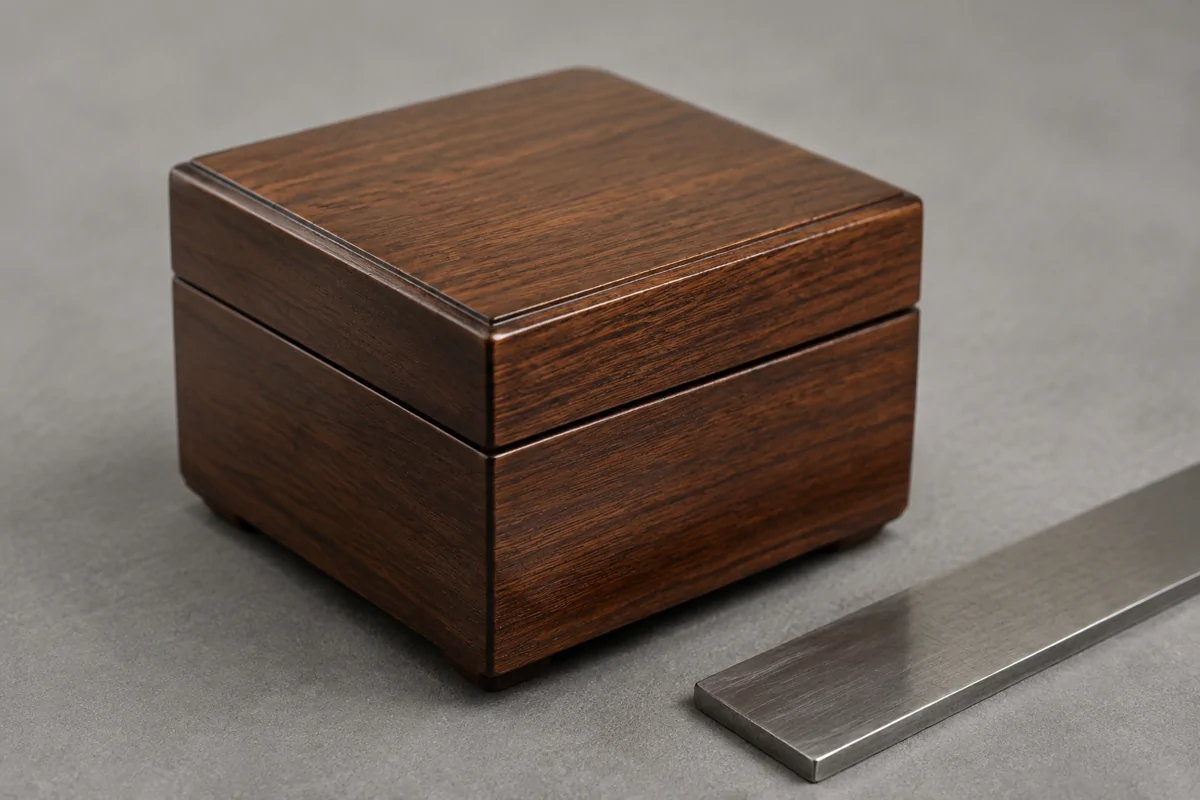
Decide whether you need a single finished item or a repeatable custom specification; that distinction helps establish where to buy a jewelry box. For an order, retain the approved sample and record these points so later checks use the same reference.
- Named material and the parts made from it, including any veneer or separate core.
- Acceptable grain, color and sheen rather than an expectation of identical natural patterns.
- Clean corners, smooth exposed edges, secure hardware and comfortable lid operation.
- Lining fit, compartment clearance and evidence supporting any protective treatment claim.
- Care instructions and an agreed approach to reviewing the delivered boxes.
The best wood for jewelry box projects is the one whose appearance you want and whose finished construction you have checked. Begin with a small material shortlist, then approve the wood, core, finish, lining and fit together. That gives you a clearer basis for choosing a keepsake or specifying a collection.
King Tai supports custom jewelry packaging, structural development and custom insert requirements. To review a packaging brief, discuss your packaging project with the team; specific wood species and construction feasibility need confirmation for the project.
FAQ
Is walnut better than maple for a jewelry box?
Choose walnut for a darker direction and maple for a lighter or figured surface. Neither name decides the quality of the complete box, so compare the finished construction and interior before choosing.
Are birdseye maple and curly maple separate species?
No. Those names describe distinctive grain figures. Ask the maker to identify the maple being supplied if hardness or another material property is important to your choice.
Can a wooden jewelry box prevent silver from tarnishing?
Do not rely on the wood for tarnish prevention. Storage conditions and the materials surrounding the silver matter; ask for evidence supporting the complete storage system and any anti-tarnish claim.
Is a veneered jewelry box made from real wood?
A real wood veneer is wood, but it covers a separate core. Ask for both the face material and core specification, because a wood-colored print or coating is a different construction.
How do I choose wood when several boxes must look consistent?
Approve a realistic range of grain, color and sheen across several representative samples. Natural timber varies, so a documented range is more useful than requiring every box to copy one photograph.