
You can keep necklaces from tangling in a jewelry box by separating every chain, securing its ends, and limiting movement before the lid closes. A necklace can look perfectly organized at first, then knot when chains overlap, slide together, or catch on a pendant. This guide shows what to look for in a jewelry-box layout, whether you are organizing a personal collection or developing a more considered custom jewelry box.
Why Do Necklaces Tangle Inside a Jewelry Box?
Necklaces tangle when loose chain length, pendants, and clasps can move into the same space. The problem gets worse when several pieces are stacked or allowed to shift as the box is carried.
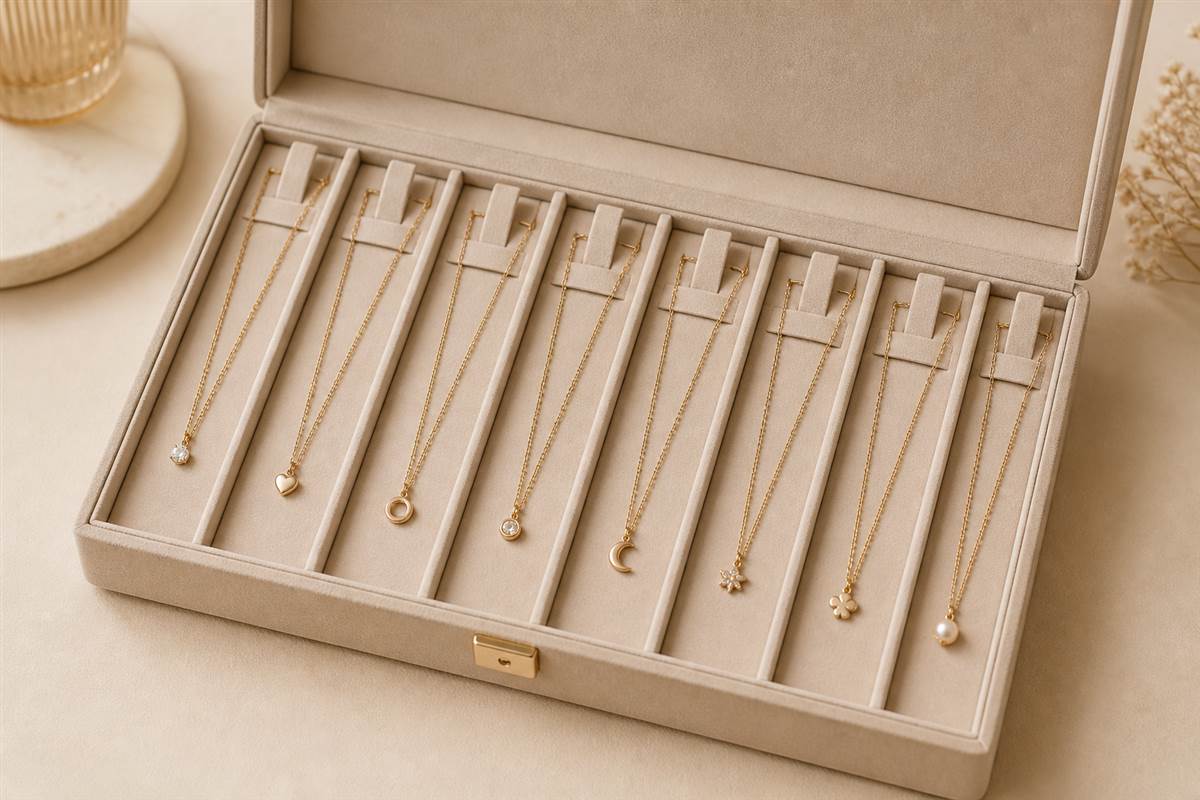
Movement creates knots
A fine chain does not need much movement to loop around another chain. Give each necklace a defined route and keep its pendant from becoming a catching point.
- Chains cross inside one shared compartment.
- Clasps and pendants sit loose against other pieces.
- The box has empty space that lets items slide.
Key Takeaway: The first fix is to control movement, not simply add more storage space.
How Should a Jewelry Box Separate Each Necklace?
A useful jewelry box gives each necklace its own channel, hook, or divided space so chains cannot meet. Flat, separated storage is usually easier to check than a deep open compartment.
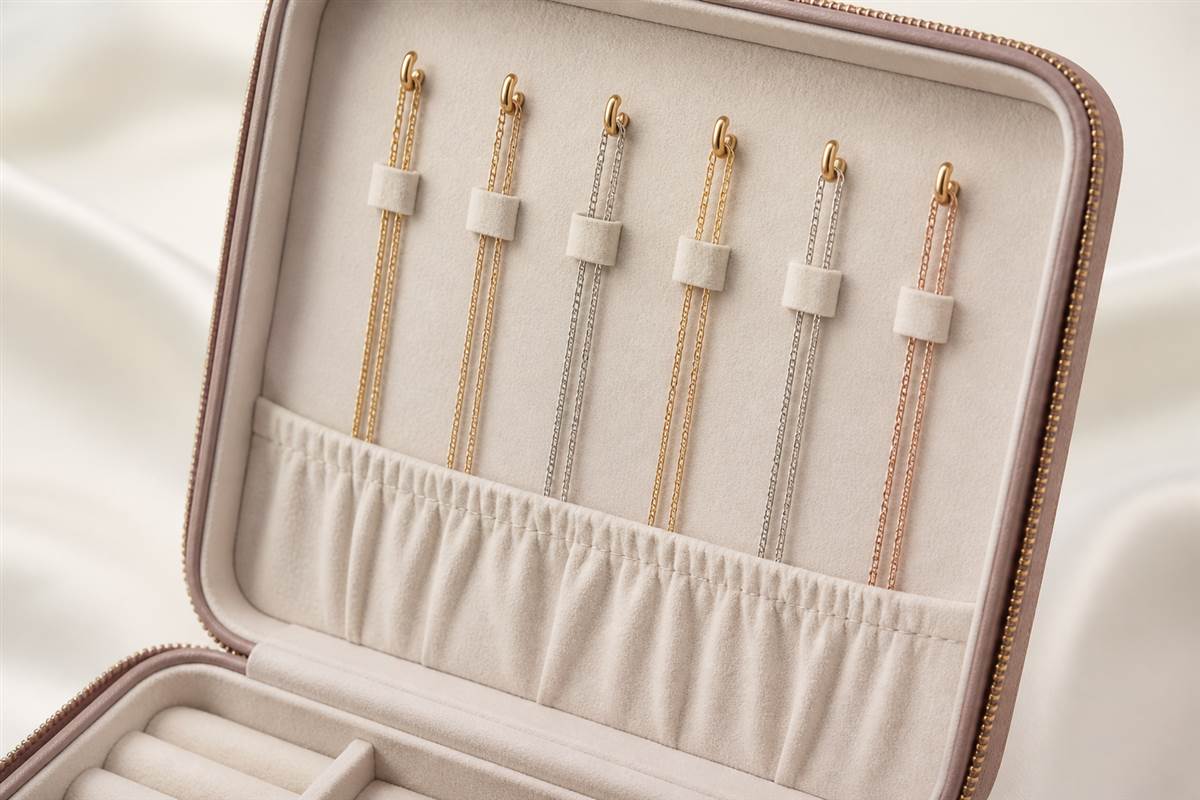
Use a defined start and end point
Place the clasp near a hook or tab, guide the chain along a clear path, and keep the pendant lower in the compartment. This simple layout makes it easier to see when a piece has shifted.
- Use one hook or retaining point per necklace.
- Keep enough distance between parallel chains.
- Give pendants a protected resting area.
Key Takeaway: A necklace compartment works best when it gives the chain a route rather than a loose pocket.
What Spacing Helps Keep Fine Chains Apart?
Fine chains need visible clearance because even light contact can lead to knotting during handling. The right spacing depends on chain length, pendant shape, and how many pieces share the box.
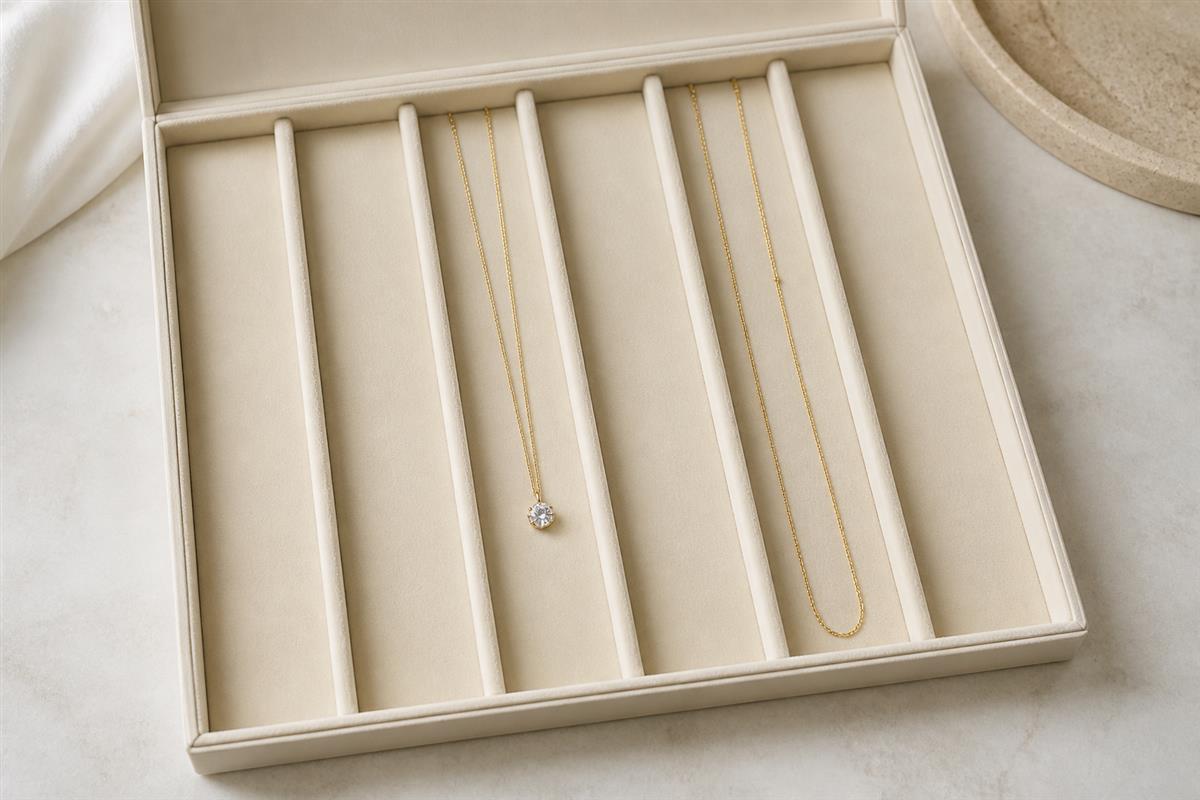
Plan for the longest pieces first
Start with the longest or most delicate necklaces because they need the most controlled path. Shorter pieces can then sit in smaller, separate positions without crossing the longer chains.
- Measure the full chain length when open.
- Allow room around oversized pendants or charms.
- Avoid forcing several chains into one narrow slot.
Key Takeaway: Size the layout around real jewelry dimensions, not an assumed average necklace.
Which Jewelry Box Features Prevent Chain Movement?
Hooks, retaining tabs, cover flaps, and shallow channels can all reduce chain movement when they suit the item. The best feature is the one that holds the necklace without making it difficult to remove.
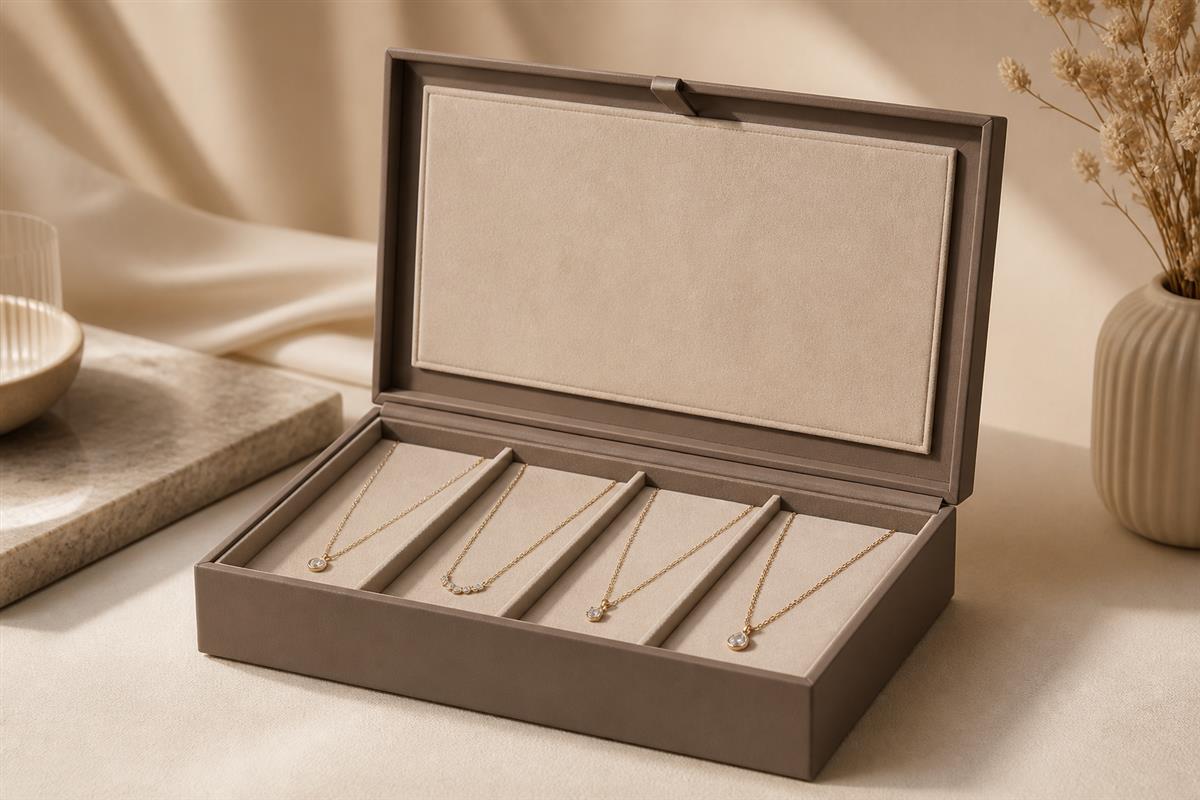
Choose features that match daily use
A storage system should be easy to reset after each use. If a holder is too awkward, the necklace is more likely to be placed back loosely and tangle later.
- Hooks can secure the clasp end.
- Tabs can hold a chain against the lining.
- A soft cover flap can separate stored rows.
For a brand project, the structure and insert should be assessed together in a custom packaging brief.
Key Takeaway: Select retention details that support both secure storage and simple everyday access.
Can You Store Layered Necklaces Without Tangling?
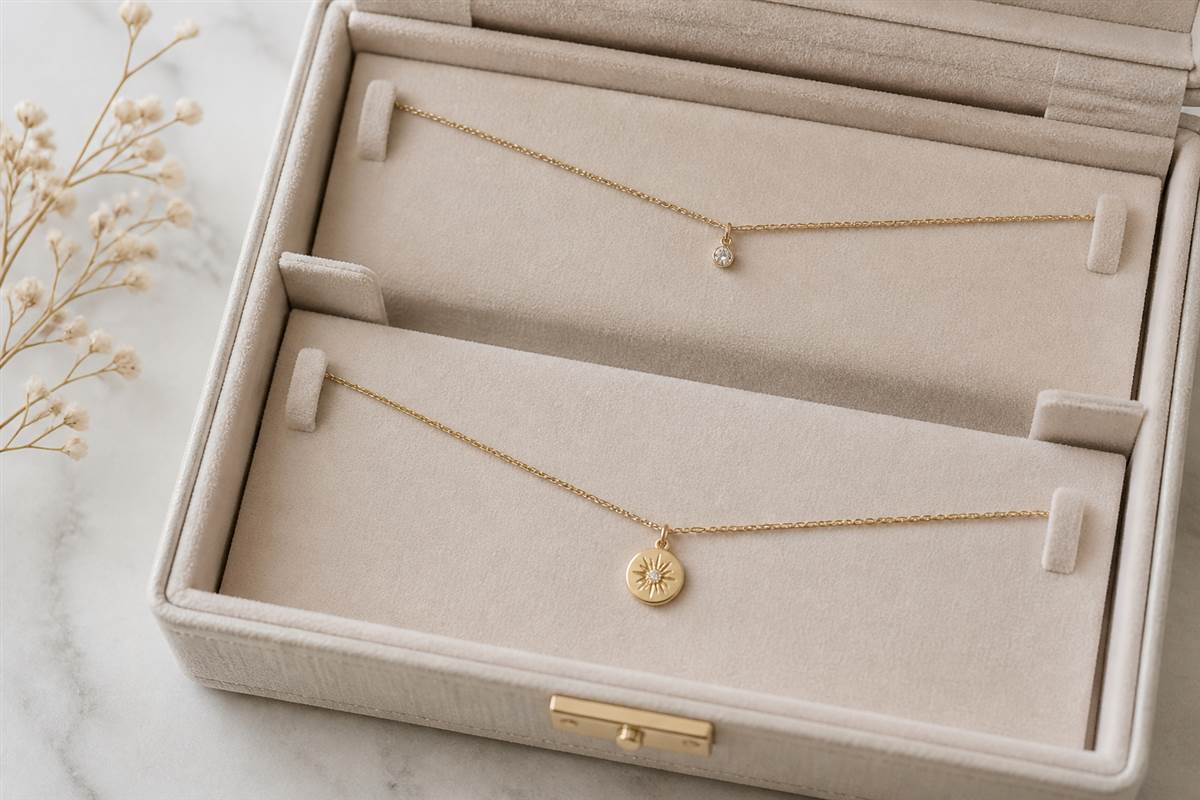
Yes, but layered necklaces should be stored as individual pieces rather than as a pre-layered bundle. Separating them preserves the intended look and prevents the chains from twisting around each other.
Unfasten and separate before storing
Take layered chains apart before they enter the box, then secure each one in its own position. This adds a small step, but it avoids a much longer untangling task later.
- Keep chains at different heights or in different channels.
- Do not place a pendant over another chain.
- Check clasps before closing the lid.
Key Takeaway: Store the components of a layered look separately, then layer them again when you wear them.
How Do You Match Compartments to Necklace Length?
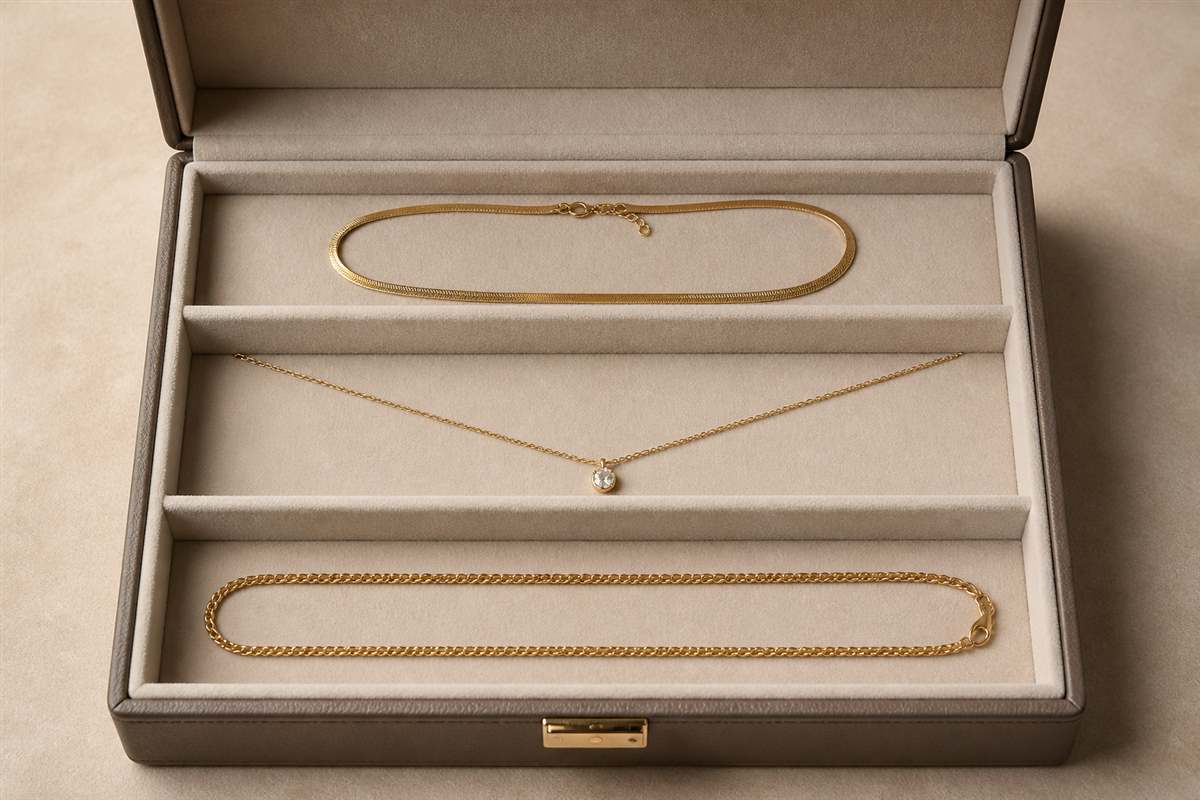
Match the compartment to the necklace’s open length and shape, not just to its category. A choker, a pendant necklace, and a long chain need different paths to stay orderly.
Use the right path for each format
A short necklace may sit safely in a small channel, while a long chain needs a longer, straighter route or a separated folded path. Try the intended arrangement with the actual product before treating it as final.
- Reserve compact areas for short chains.
- Use longer channels for pendants and fine chains.
- Give statement pieces room around their focal element.
Key Takeaway: A flexible box layout is more useful than identical compartments for every necklace.
What Materials Help Necklaces Stay Organized?
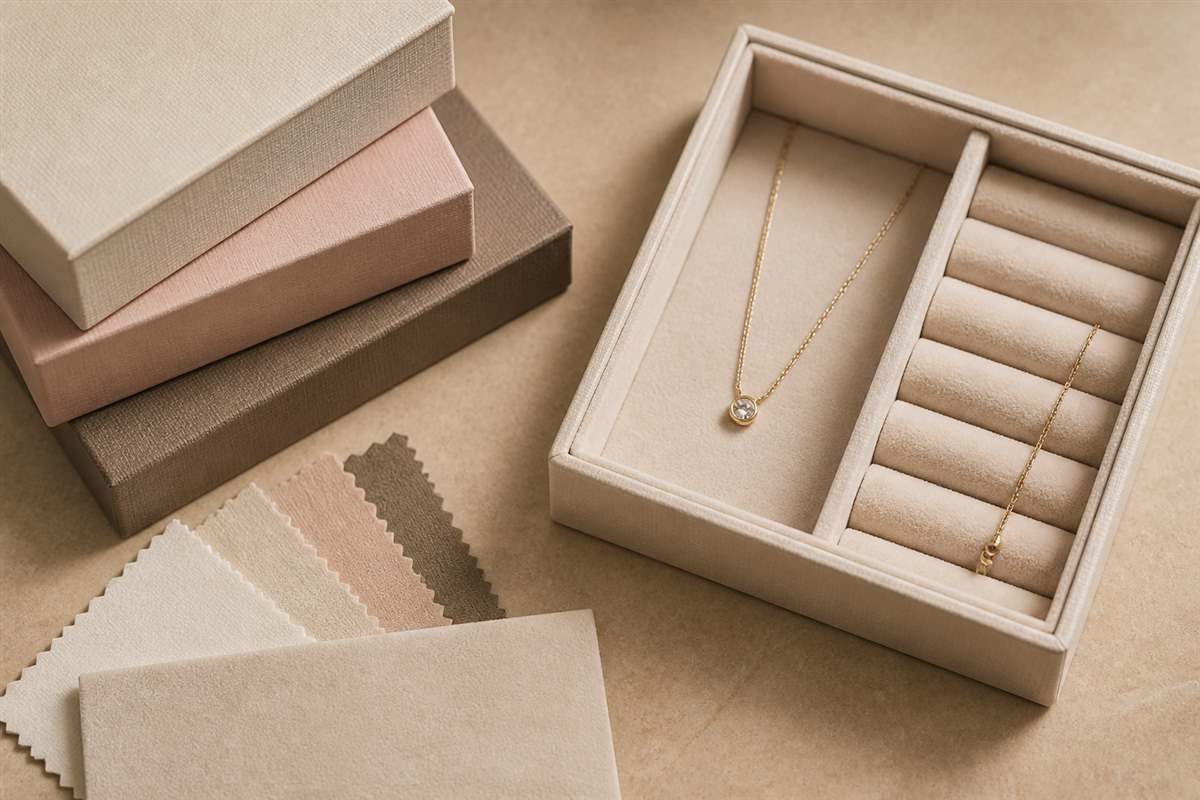
Materials should support the box structure, the retention design, and the desired presentation. The interior surface should be selected with the complete layout in mind, including how the necklace is placed and removed.
Review the complete material combination
Surface feel, friction, construction, and visible finish can affect how orderly the interior looks. For a custom project, confirm the proposed material and insert approach against the final specification rather than assuming a standard combination.
- Review material samples with the selected structure.
- Check that retaining points work with the chosen lining.
- Assess the opening presentation under normal lighting.
King Tai can support paper selection, structural packaging design, printing, finishing, assembly, and custom inserts as part of its jewelry packaging solutions.
Key Takeaway: Material choices should reinforce the storage layout instead of being chosen as decoration alone.
How Can You Keep Necklaces Tangle-Free While Traveling?
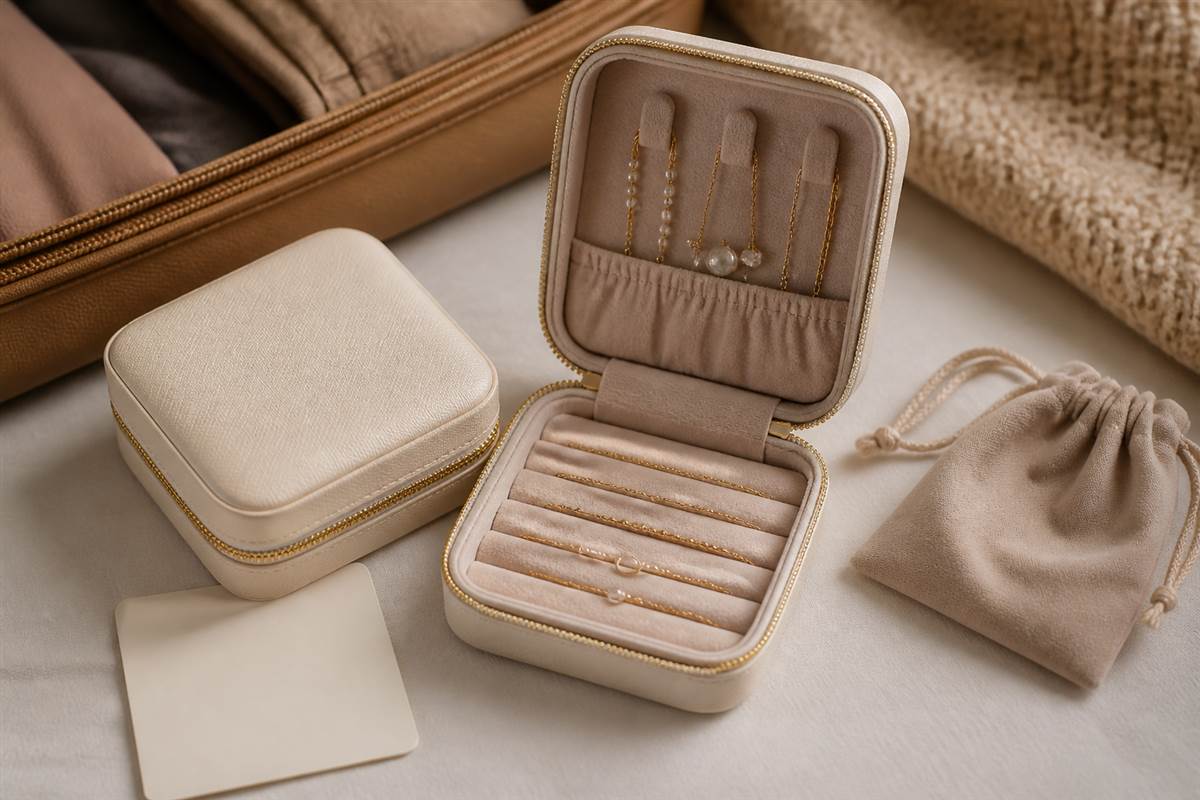
For travel, secure each necklace before the organizer goes into a bag and use a compact case that keeps compartments closed. A jewelry box that works on a dresser may need added restraint for transport.
Pack for movement, not just appearance
Keep each chain fastened where possible, protect the pendant, and avoid placing heavy items on the organizer. Before you leave, gently move the closed case to see whether anything shifts.
- Secure the clasp and lay the chain flat.
- Use a closed compartment or protective flap.
- Keep the organizer near the top of your luggage.
Key Takeaway: Travel storage must control movement in every direction, not only keep pieces visually separate.
Why Should You Test a Necklace Box Layout?
Testing reveals whether the layout still works once the real necklace is stored, removed, and carried. It is especially important for a packaging concept with multiple chain lengths or complex pendants.
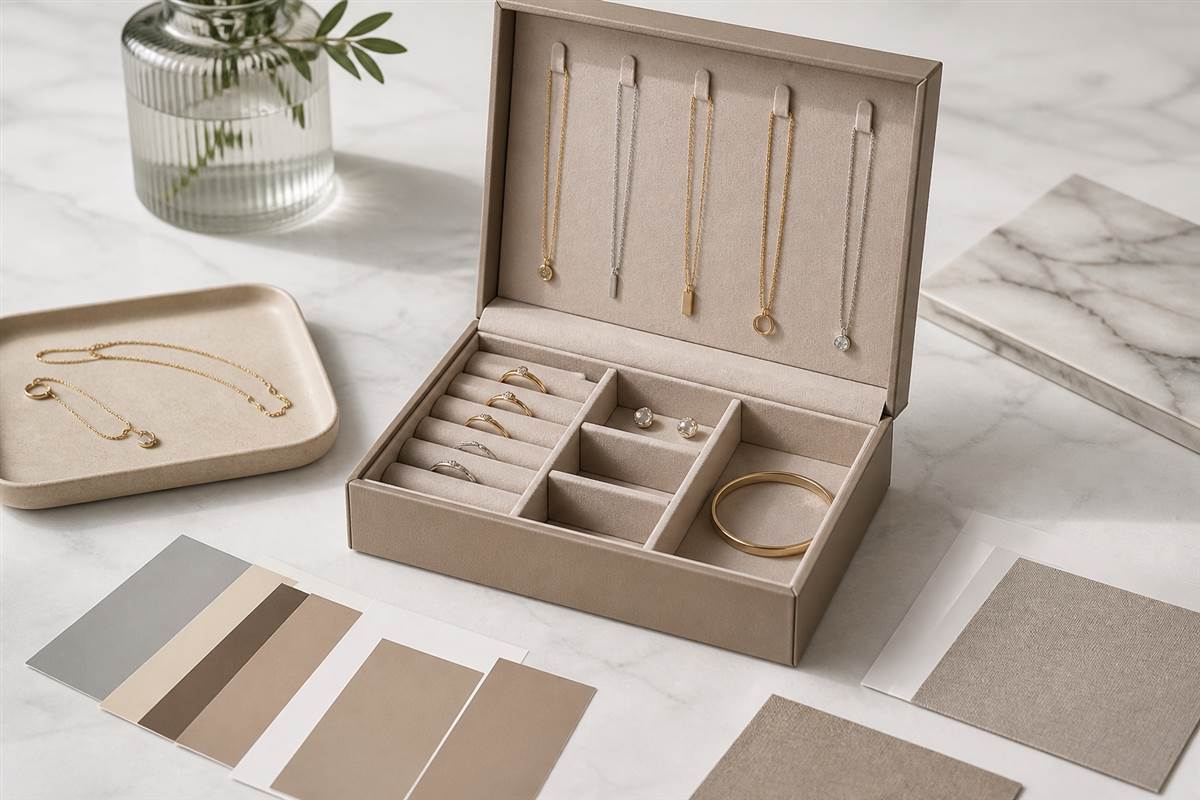
Check the actual customer interaction
Open and close the box, take the necklace out, return it, and check the position again. For a custom order, review the approved sample as the reference for the expected structure, graphics, finish, insert fit, and assembly before mass production.
- Confirm chains remain in their assigned spaces.
- Check access without pulling on delicate parts.
- Record adjustments before approval.
Key Takeaway: A sample review turns a storage idea into a checkable arrangement before production decisions are final.
What Should a Custom Necklace Box Brief Include?
A strong brief explains how the necklaces should be held, displayed, and transported. It gives the packaging team enough information to assess the layout and identify questions early.
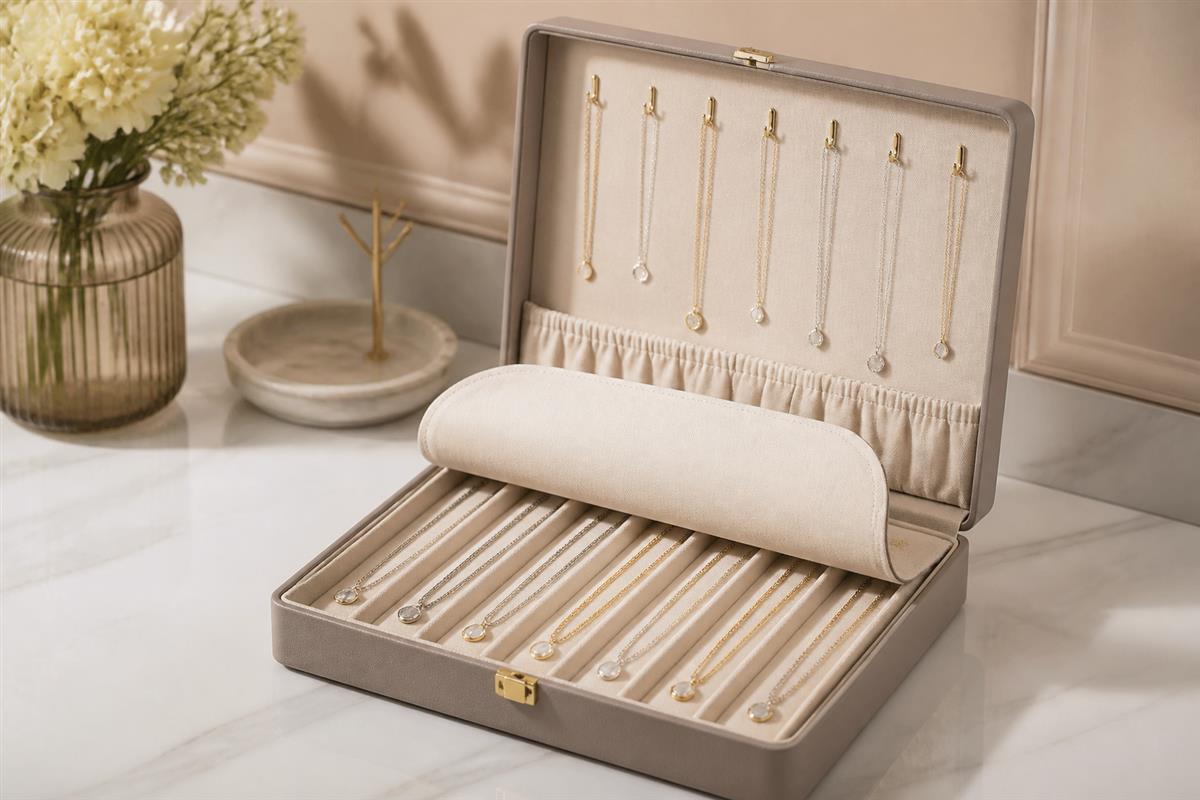
Give the supplier usable product information
Include necklace lengths, pendant dimensions, product weight where relevant, the number of pieces per box, desired opening style, artwork direction, and packing needs. MOQ, sampling time, production lead time, materials, and final feasibility must be confirmed for the specific project.
- Provide a sample or accurate product measurements.
- Show which pieces must remain separated.
- Describe retail, gifting, or travel-use expectations.
Use the King Tai contact page to share a specification-led jewelry packaging inquiry.
Key Takeaway: Clear product and use-case details give a supplier a sound basis for evaluating necklace organization.
Conclusion: To keep necklaces from tangling in a jewelry box, give every chain a separate path, secure its ends, and test the layout with the actual jewelry. For brands, the same principles inform a more reliable jewelry-packaging brief. King Tai is a direct B2B packaging and printing manufacturer that can support structural design, paper selection, printing, finishing, assembly, custom inserts, quality inspection, and logistics support. Discuss your custom packaging project with King Tai when you are ready to develop a specification-led solution.
FAQ
What is the best way to store necklaces in a jewelry box?
Store each necklace separately and secure the clasp near a hook or retaining point. A defined channel with space around the pendant helps prevent chains from crossing.
Should necklaces be clasped before putting them away?
Yes, clasping each necklace can help control loose ends. Place it flat in its assigned compartment rather than dropping it into an open space.
How do you keep necklaces from tangling in a jewelry box during travel?
Use individual secured compartments, protect pendants, and choose an organizer that stays closed in transit. Check for movement before packing it in luggage.
Can one jewelry box hold different necklace lengths?
Yes, if its layout includes varied channel lengths or separate positions. Test the fit with the actual necklaces to make sure longer chains do not cross shorter ones.