
Publishers often ask, “What is perfect binding?” It is a way to give a softcover book a clean square spine: a printer gathers pages into a block, bonds the spine edge to a wraparound cover, and trims the open edges. The finished look does not promise that the method suits every book.
For Bible and religious-book projects, the right answer depends on more than page count. Paper opacity, page-block thickness, opening behavior, cover construction, and expected handling all affect the choice. Perfect binding can suit a softcover devotional, study guide, or controlled-distribution edition. A Bible intended for daily reference or repeated opening may need a sewn page block or purpose-built lay-flat construction; a rigid case is a separate cover choice.
What Is Perfect Binding?
Perfect binding is an adhesive bookbinding method that joins a stack of individual pages to a cover along the spine. The finished book has a flat, square spine and three trimmed outer edges. A soft cover usually wraps around the front, spine, and back, creating a familiar paperback profile without wire, rings, or visible stitching.
The word “perfect” refers to the squared edges and clean spine. It does not mean the book is automatically stronger or better for every application.
| Part | What it does | Buyer check |
|---|---|---|
| Page block | Holds the printed pages in reading order | Confirm pagination, paper, and finished thickness |
| Spine edge | Provides the bonding surface | Ask how the selected paper and page construction will be prepared |
| Adhesive bond | Joins the page block to the cover | Confirm the printer’s process is suitable for the stock and intended use |
| Wraparound cover | Protects the book and forms the spine | Review cover material, score position, finish, and spine width |
| Trimmed edges | Creates the square, even book shape | Check trim size, alignment, and edge appearance on the sample |
How Does the Perfect Binding Process Work?
The sequence is consistent, although preparation and adhesive systems vary by printer and paper.
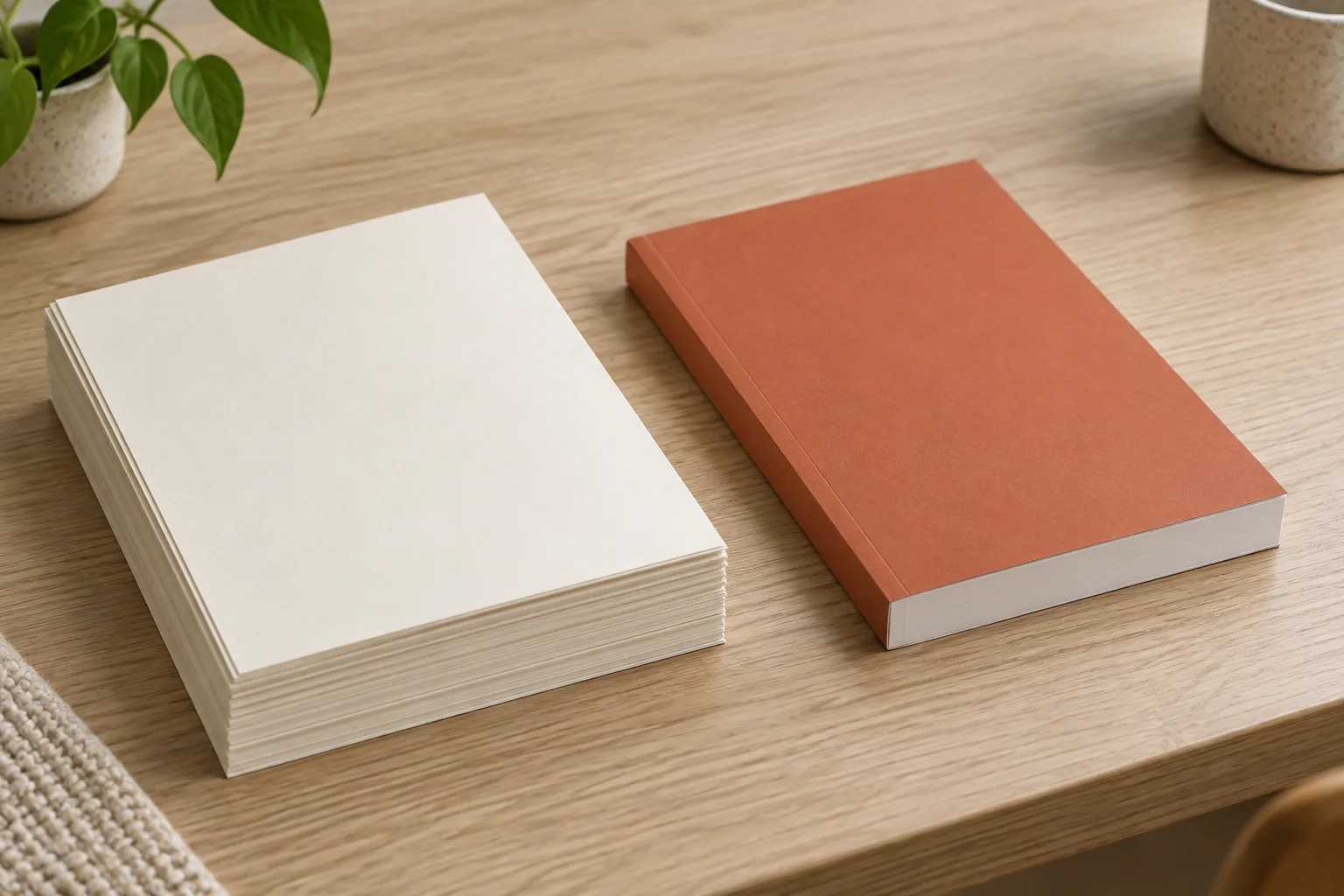
- The printed pages are assembled. Sheets are gathered in the correct order and aligned to form the page block. The final page count and paper bulk determine how thick that block becomes.
- The spine edge is prepared. The printer creates a surface that allows the adhesive to contact the pages. The preparation must match the paper and the intended structure.
- Adhesive is applied. The bonding material connects the prepared spine edge to the cover. The printer selects the process and settings for the materials rather than treating every stock the same way.
- The cover is attached. A paper or card cover wraps around the block. Its score positions and spine width must match the actual book block.
- The book is trimmed and checked. The open edges are cut to the finished size, then the printer checks the cover, spine, page alignment, and overall appearance.
What Page and Paper Limits Matter?
There is no universal page minimum or maximum for perfect binding. A supplier’s usable range depends on its process, the compressed thickness of the page block, the paper’s bulk and coating, the cover construction, and the required opening performance. Treat any page range in a quotation as process-specific rather than as a rule for every perfect-bound book.
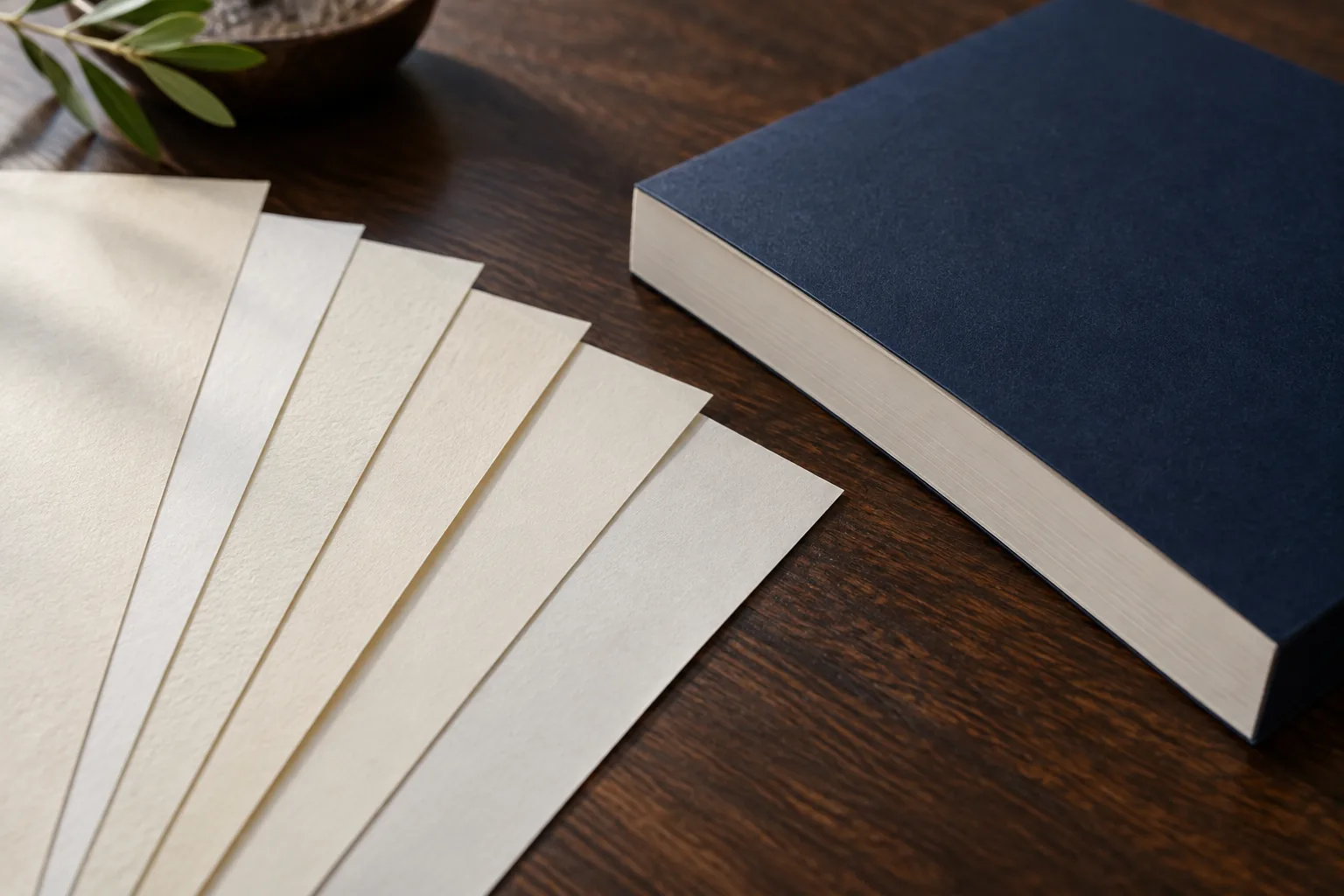
Page count helps estimate spine and finished thickness, but it is not enough by itself. Thin Bible paper may reduce bulk while creating stricter requirements for opacity, print registration, handling, and bonding. Coating, grain direction, sheet size, and page construction can also affect opening and binding.
When you discuss the project with Kingtai through its printing services, frame it around the full specification rather than a page number in isolation. Ask the printer to review these variables together:
| Variable | Why it affects the decision | What to confirm |
|---|---|---|
| Page count and compressed thickness | Determines the spine area and overall handling feel | Ask for the estimated finished thickness using the selected paper |
| Paper bulk and opacity | Changes thickness, readability, show-through, and page handling | Review a physical paper sample or mock-up |
| Coating and surface finish | Can change how the bonding process interacts with the stock | Confirm material compatibility with the proposed process |
| Trim size and grain direction | Influences flexibility, opening, and spine geometry | Confirm the intended direction and finished dimensions |
| Cover stock and score position | Affects protection, fold behavior, and cover alignment | Review the cover on the assembled sample |
For a very thin or very thick book, the spine, paper, cover, and opening demands may point toward another method. The safe answer comes from a sample, not an internet-wide page threshold.
What Does a Perfect-Bound Book Feel Like?
A perfect-bound book feels like a conventional paperback: a smooth spine, a soft or flexible cover, and clean edges that stack neatly.
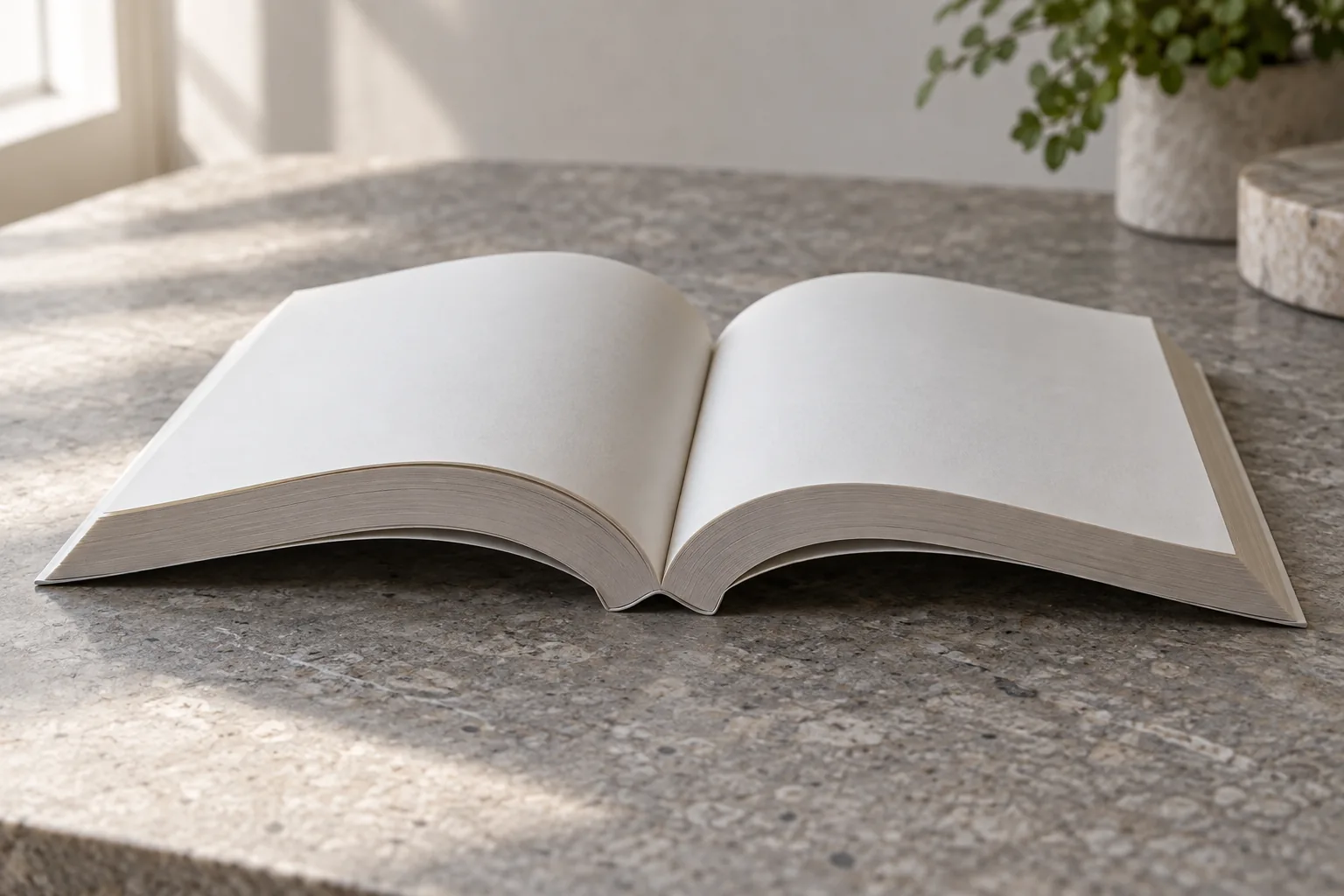
The reading experience has limits. The adhesive spine creates a continuous hinge, so the book normally does not behave like a lay-flat book. Opening it wide can place stress on the inner gutter and the bond. That may be acceptable for a short reading session, a workbook, or an edition used under controlled conditions. It deserves more scrutiny for a reference book that must stay open on a table or be read repeatedly from front to back.
The cover can be printed, coated, textured, or finished to suit the product direction, but surface appeal should not replace a check of the spine, hinge, and page movement.
Which Religious Books Fit Perfect Binding?
Perfect binding can be a sensible choice for religious publications whose use, thickness, and positioning fit a softcover structure. Examples include:
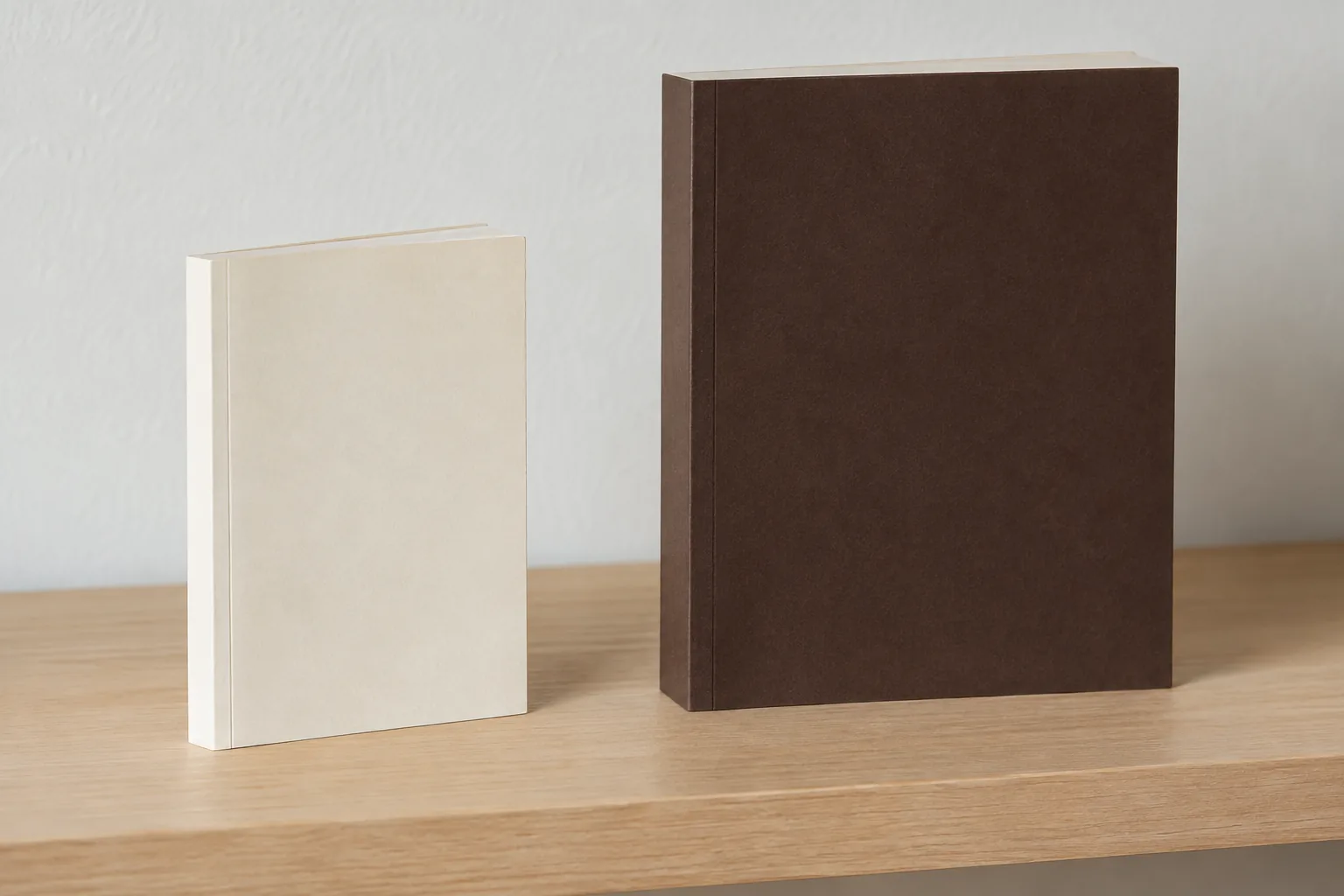
- Devotionals and prayer books intended for occasional or moderate handling.
- Study guides, discussion workbooks, and ministry materials that need a clean spine.
- Shorter religious books or softcover editions where a rigid case is unnecessary.
- Distribution editions where the buyer values a paperback format and has confirmed the paper and page block through sampling.
The method can also work for a Bible edition when the publisher prioritizes a softcover profile, controlled use, and a defined production budget. That decision should be made after the paper, page block, cover, and opening behavior have been reviewed as one system. A project team planning custom Bible printing can also compare scripture publishing solutions and custom collection book printing if the intended format is still being defined.
A church-distribution edition, bookstore paperback, ministry workbook, and commemorative Bible can share the same text while needing different physical decisions.
| Use case | Why perfect binding may fit | Questions to settle |
|---|---|---|
| Devotional or prayer book | Softcover format and a clean spine can suit moderate handling | How often will it be opened, carried, and stored? |
| Study guide or workbook | A practical final format can support a defined program or course | Must it open wide or remain open without being held? |
| Church or ministry distribution | A consistent paperback profile may suit planned circulation | What paper and cover balance readability, handling, and cost? |
| Retail softcover edition | Square spine and cover graphics support shelf presentation | Does the edition need the service life and feel of a sewn book? |
| Gift or commemorative Bible | Usually a weaker starting point if premium permanence is central | Would a case or sewn structure better match the promise? |
When Is Perfect Binding a Poor Fit for a Bible?
Perfect binding deserves a second look when the Bible will be opened, carried, and closed many times over a long period. It may be a poor fit when the project requires:
- Hands-free, near-flat opening for study, teaching, or reference.
- A thick page block whose paper and cover create a difficult spine or opening condition.
- Very thin text paper where opacity, page movement, and the bonding process have not been tested together.
- An heirloom or premium gift position in which a rigid cover and more durable structure are part of the product promise.
- Easy access to a spread without repeatedly flexing the spine and inner gutter.
A perfect-bound Bible should be judged by an approved physical sample under the way the target reader will use it. Open it at the beginning, middle, and end. Turn pages normally, then check the cover-to-block transition, first and last leaves, spine, and feel after repeated handling.
Kingtai’s Bible-printing guidance frames paper, binding, cover direction, sampling, and bulk consistency as connected decisions. That is the right way to handle a religious edition whose use is not yet clear.
How Does It Compare With Sewn Binding?
Perfect binding is one option in a broader book-format decision. Compare these starting points with the supplier.
| Method | Basic structure | Reader experience to consider | When to investigate it |
|---|---|---|---|
| Perfect binding | Page block bonded to a wraparound cover | Clean square spine, usually less suited to lay-flat use | Softcover books with a confirmed page block and moderate handling |
| Smyth sewn binding | Folded sections joined with thread before covering | Often supports repeated opening and a more flexible book block | Daily-use Bibles, long-life editions, or books where opening is a priority |
| Case binding or hardcover | A rigid case covers an adhesive-bound or sewn page block | More cover structure, but opening and page retention still depend on the block | Premium or commemorative editions needing a rigid exterior |
| Lay-flat binding | Structure designed to reduce resistance across an open spread | Useful for hands-free reading when the construction supports it | Study, teaching, reference, or workbooks that must stay open |
| Saddle stitching | Folded sections secured through the fold | Suits thinner booklet formats when the page plan permits it | Short religious booklets rather than a full-length Bible |
Sewing describes how the page block is joined; case binding describes the rigid outer cover. A hard case can enclose either an adhesive-bound or sewn block, so it does not by itself guarantee a flatter opening or better page retention. Compare the complete construction against reading behavior, paper, quantity, and market position.
For a Bible-specific comparison, review Kingtai’s Bible binding guide and Bible paper guide before fixing the structure.
What Should a Pre-Production Sample Prove?
A sample should answer production questions, not merely display cover artwork. Confirm:
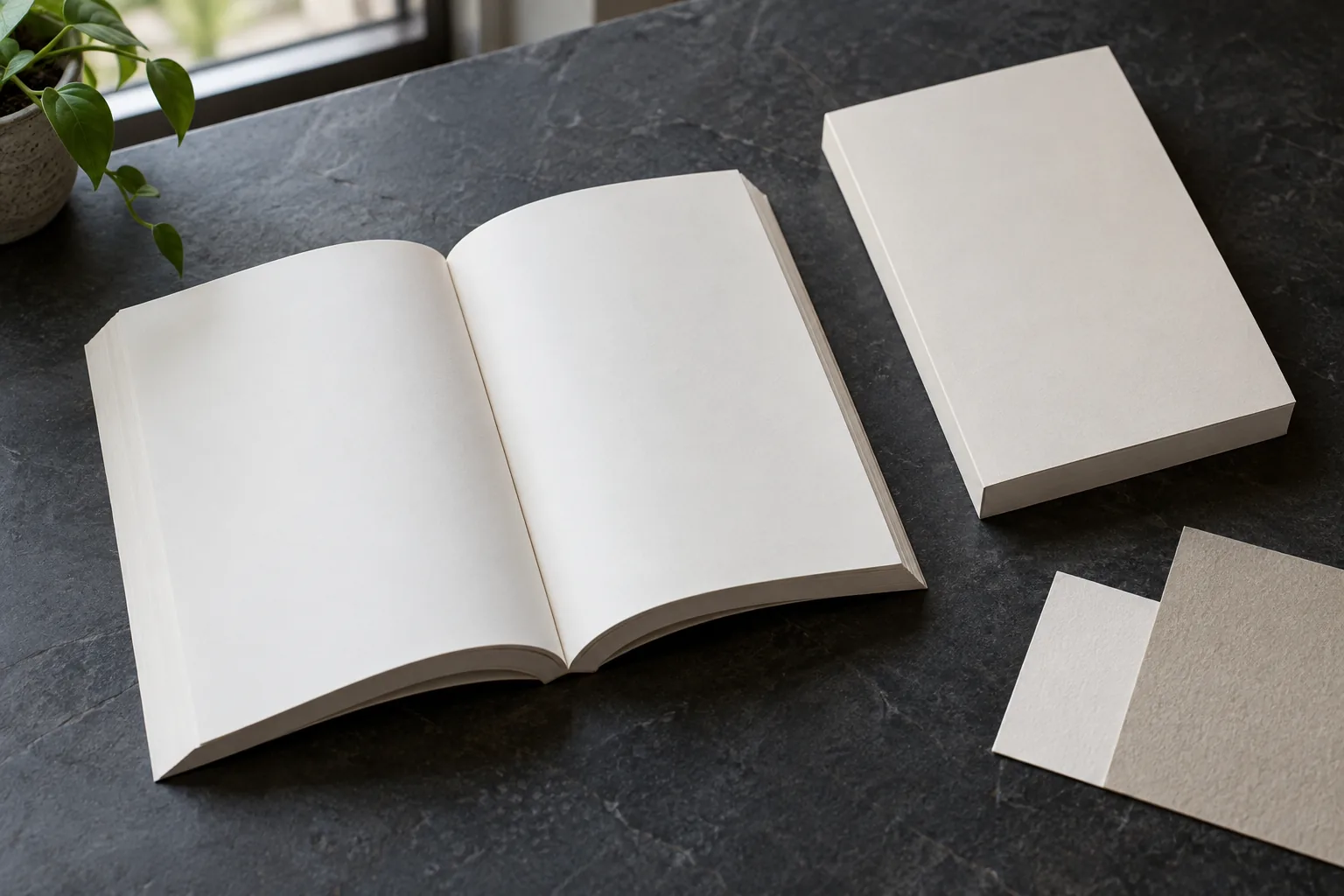
- Physical format: trim size, page count, spine width, cover score, and finished thickness.
- Reading behavior: opening at several points, page turning, gutter comfort, and whether the book can stay open as required.
- Paper performance: opacity, legibility, show-through, surface feel, and how the stock behaves at the spine.
- Binding and cover alignment: cover position, spine square, edge trim, first and last page attachment, and the transition from cover to block.
- Production expectations: color, registration, finishing, packing, and the details that must remain consistent in the bulk order.
For formal validation, Fogra’s bookbinding product testing lists checks for sheet tear strength, dimensions, flatness, opening behavior, and coating adhesion. Use these categories to define review, not a generic pass threshold.
Do not approve a perfect-bound Bible from a cover-only proof. Use the intended or representative paper and proposed structure, then review the sample against a written approval list. A Bible printing case study can help frame the path, but the project’s own sample remains the deciding evidence.
What Belongs in a Perfect Binding RFQ?
Give the printer enough information to recommend a structure. Include:
- Publication type and intended use, such as devotional, study, church distribution, retail, or gift.
- Trim size, estimated page count, pagination status, and language or edition details.
- Text-paper requirements, especially opacity, feel, bulk, coating, and any thin-paper objective.
- Cover material, finish, artwork, spine text, and whether a soft or rigid cover is preferred.
- Estimated quantity, delivery market, packaging expectations, and whether there will be repeat orders.
- Required opening behavior, handling frequency, and whether a sewn or lay-flat alternative should be quoted alongside perfect binding.
- Sample requirements, approval checkpoints, inspection expectations, and what must match between sample and bulk production.
Ask the supplier:
- Based on the selected paper and page block, would you recommend an adhesive-bound, sewn, or purpose-built lay-flat block, and would it need a soft or rigid cover?
- What finished thickness and spine width should the artwork use after the paper is confirmed?
- What paper and cover combinations have to be tested before the format is approved?
- Which opening, edge, cover, and spine checks will be included in the sample review?
- How will the approved sample be used as the reference for bulk production and packing?
If the specification is still developing, use Kingtai’s contact page to share the publication type, paper direction, binding options, and sample questions.
Is Perfect Binding Right for Your Bible Project?
Perfect binding is a glued, flat-spine softcover structure. It can be the right answer for a religious book or Bible edition when the page block, paper, cover, opening behavior, and intended handling all support that choice. It is a weaker fit when the edition must lie open, withstand intensive daily use, or deliver a premium heirloom experience without compromise.
Confirm the paper and thickness, request a physical sample, handle it as the reader will, and ask for a sewn or engineered lay-flat block when opening or repeated use requires it. Choose the cover separately. Kingtai can review Bible and religious-book requirements across paper, binding, sampling, and production planning. Start with the Kingtai homepage and share the publication type, format, quantity, and target use.
Frequently Asked Questions
Is perfect binding suitable for a Bible?
Sometimes. It can suit a softcover devotional, study guide, or controlled-distribution edition. A daily-use or lay-flat Bible may need a sewn or engineered lay-flat page block; a rigid case alone does not solve that need. Approve the choice from a representative physical sample.
Does perfect binding lay flat?
Usually not in the same way as a lay-flat structure. The glued spine and cover need to be flexed as a unit, so confirm the required opening behavior before choosing it for teaching, study, or reference use.
Is there a fixed minimum or maximum page count?
No universal limit applies to every printer. The workable range depends on the process, paper bulk, compressed thickness, cover, and intended use. Ask the supplier to confirm the range for your exact specification rather than relying on a general number.
What paper should be used for perfect-bound Bible printing?
Choose paper by balancing opacity, readability, bulk, surface, printability, and binding compatibility. Thin Bible paper can change the finished thickness, but it still needs a sample review with the proposed cover and page block.
What should I send with a perfect binding quote request?
Send the publication type, use case, trim size, page count, paper direction, cover preference, quantity, market, opening requirement, and sample expectations. Ask for a sewn or lay-flat block comparison when repeated handling matters, and discuss hard or soft cover separately.