
The binding has to do more than hold pages together. It determines how much text disappears into the gutter, whether a reader can keep the book open, how the cover moves, and which failures may appear after repeated handling. Those questions become harder when a Bible or reference book combines a high page count with thin paper, inserts, ribbons, or a premium cover.
There is no single best answer among the types of book binding. Start with the way the page block is assembled, define the opening behavior, and then choose the cover construction. A representative sample should confirm that those parts work together before mass production.
Which binding families belong on a buyer’s shortlist?
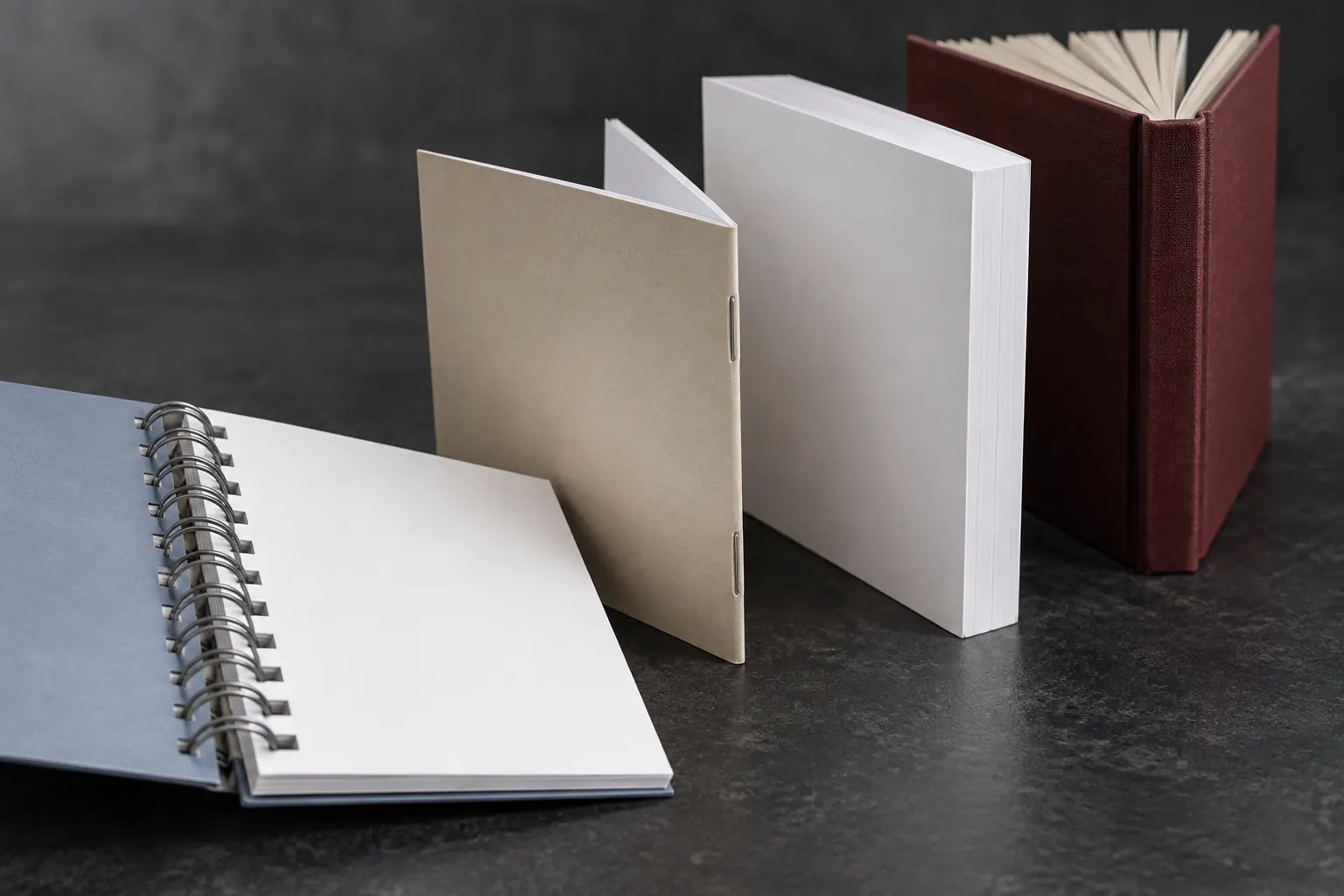
Most commercial book projects can begin with four families: section-sewn, perfect-bound, casebound, and lay-flat or mechanical structures. These labels do different jobs. Section sewing and perfect binding describe how the page block is joined. Case binding describes a rigid cover built around that block. Lay-flat describes an opening requirement or a construction designed to meet it.
This distinction keeps an RFQ precise. A request for a hardcover leaves the block attachment undefined. A request for a lay-flat book leaves the mechanism undefined. The supplier needs both the structure and the expected behavior.
| Binding family | What joins or supports the pages | Useful when | Main point to sample |
|---|---|---|---|
| Section sewn | Thread passes through folded signatures | Repeated reading and a connected high-page-count block matter | Opening across several signatures |
| Perfect bound | Prepared page edges are held with adhesive | A square-spined softcover and efficient production suit the project | Page retention and gutter access |
| Casebound | Boards, cover material, and endpapers form a rigid case | Protection, presentation, and shelf life justify added assembly | Hinge movement and block alignment |
| Lay-flat or mechanical | A floating spine, sewn design, Wire-O, or coil supports wider opening | Hands-free use or page rotation is required | The exact opening angle under normal use |
Use the table to choose candidates, then ask a supplier to test them against the actual paper and format. Kingtai’s printing services cover several book and binding formats, so a complete physical brief will produce a more useful recommendation than a binding name alone.
How does section-sewn binding work?
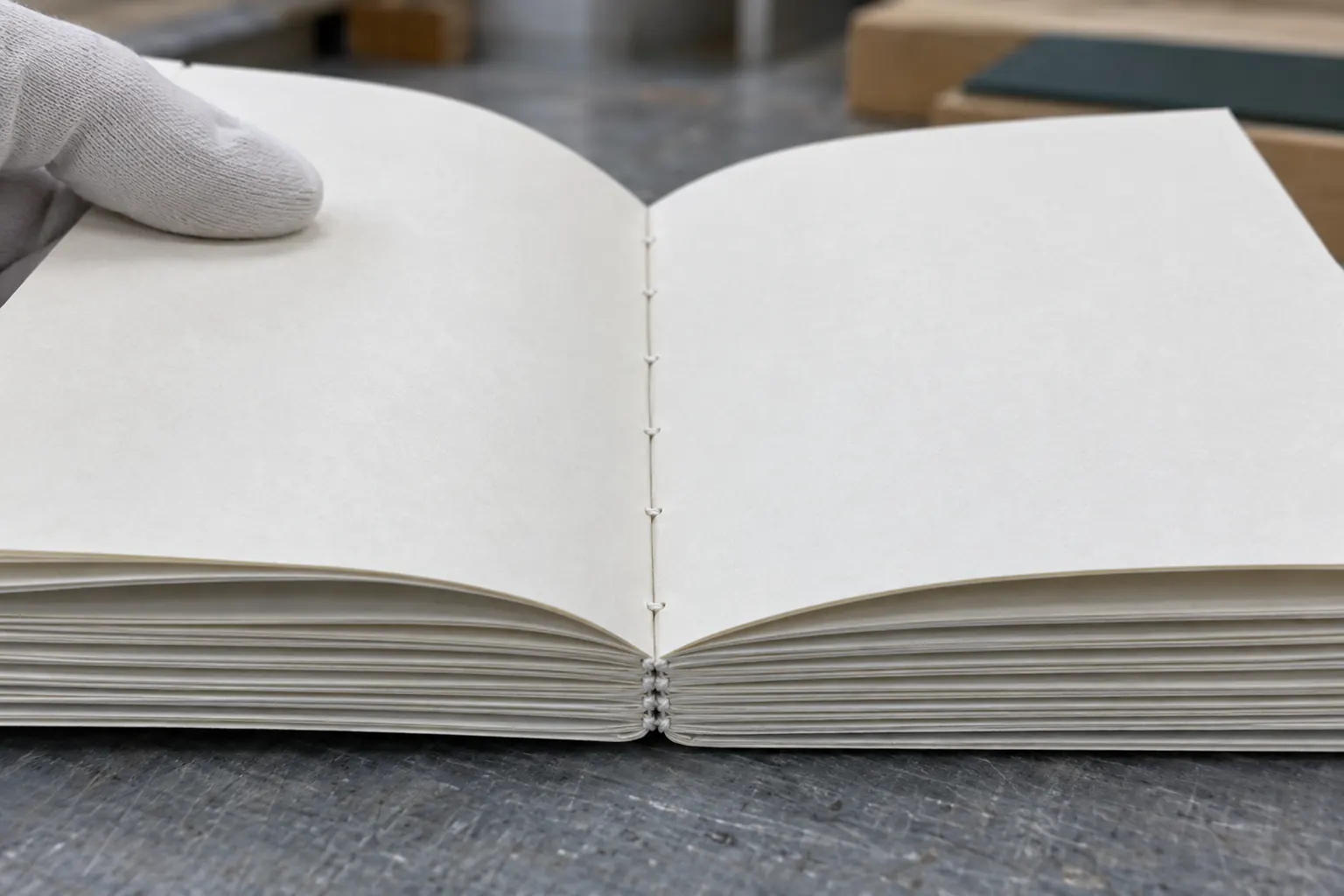
Section-sewn binding starts with printed sheets folded into signatures. Thread passes through the folds and joins those signatures into a page block. This construction keeps each folded section connected and can allow more movement near the gutter than a tightly glued block.
What sewing can improve
Sewing is worth considering when readers will open the book often, when page retention carries extra weight, or when a thick block needs a continuous mechanical connection. It also gives the binder several control points: signature order, fold accuracy, thread tension, spine lining, and the connection between the first and last sections and the cover.
The result still depends on the rest of the specification. Cross-grain paper can resist opening. Thick or stiff stock can fight the fold. Tight spine lining or a rigid case can limit movement even when the signatures are sewn correctly.
What sewing adds to production
Section sewing adds folding, gathering, sewing, consolidation, and inspection work. Those operations affect setup and cost. The economics depend on signature count, format, paper behavior, quantity, and the available production line, so fixed short-run or long-run thresholds are unreliable.
For a premium title, sewing should earn its cost through use and risk control. A custom collection book may justify the structure when the book will be handled and displayed for years. A lightly used promotional book may not need the same build.
Key Takeaway: Specify sewing as part of a complete page-block plan. Ask for the signature scheme, paper grain, spine lining, and opening sample rather than accepting “sewn” as a performance guarantee.
What does case binding add to a sewn or glued block?
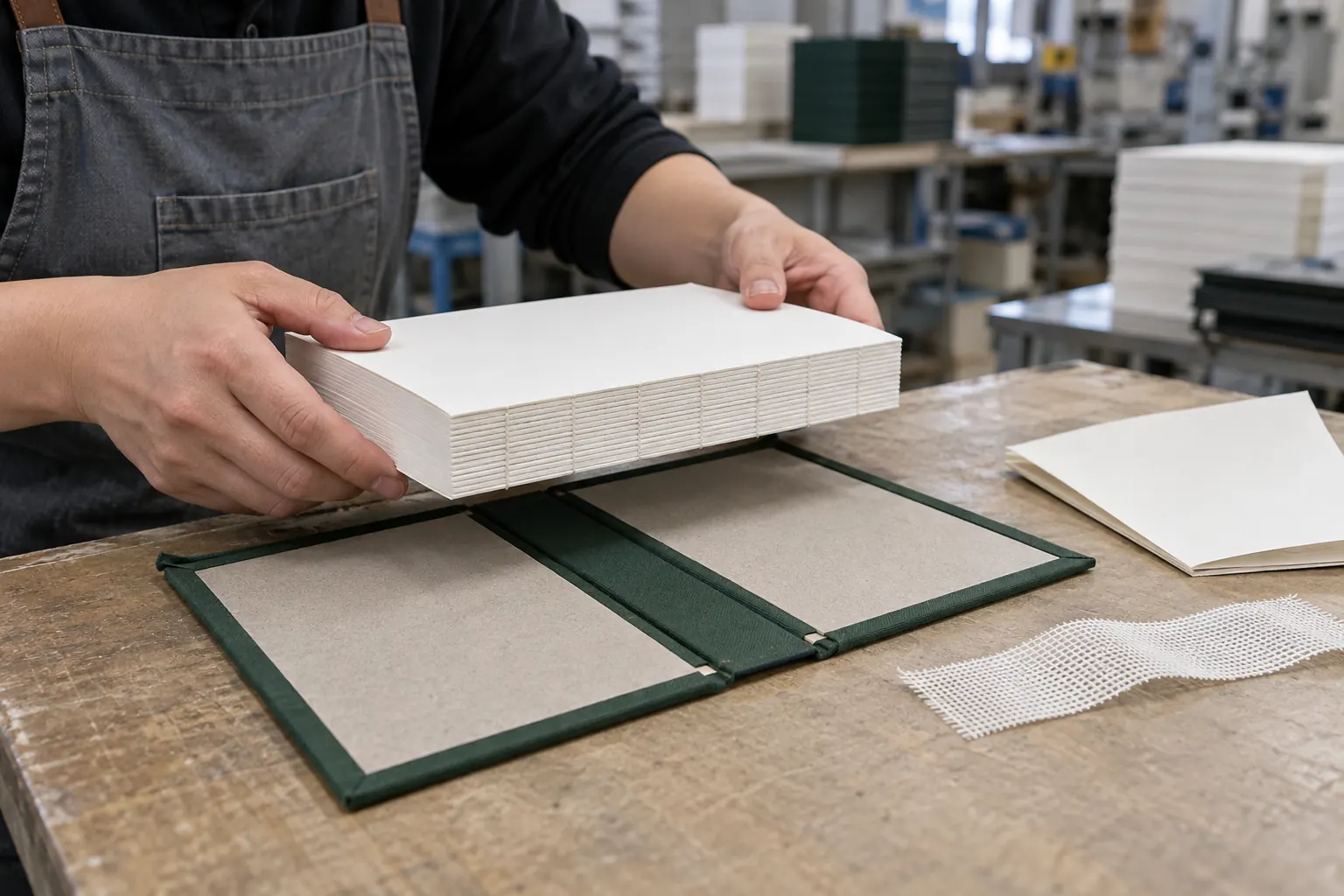
Case binding adds a rigid cover made from boards, a spine component, covering material, and endpapers. The completed page block is attached to that case during casing-in. Either a sewn or an adhesive-bound block may sit inside, which is why “hardcover” alone is incomplete purchasing language.
Where a case helps
A case can protect the edges and give the book a stable shape on the shelf. It also creates room for cloth, printed paper, leather-like coverings, foil, embossing, and other finishes. Those choices affect presentation as well as hinge movement, scuff risk, packing weight, and carton design.
The surface material should be evaluated with the structure. Kingtai’s guide to Bible cover materials helps frame the cover discussion, while the binding sample must show how the cover, endpapers, joints, and block move together.
Where a case can fail
An attractive flat cover sample cannot prove a finished case. Inspect board squareness, spine width, joint position, endpaper adhesion, turn-ins, and the distance between the block and cover edges. Open the front, middle, and back of the book. The case should support the block without pulling it out of alignment.
Case construction adds material and assembly steps, and the finished book is heavier. Those trade-offs are reasonable when protection and presentation matter. They add cost without much benefit when a lighter, replaceable softcover already meets the use case.
When is perfect binding the practical choice?
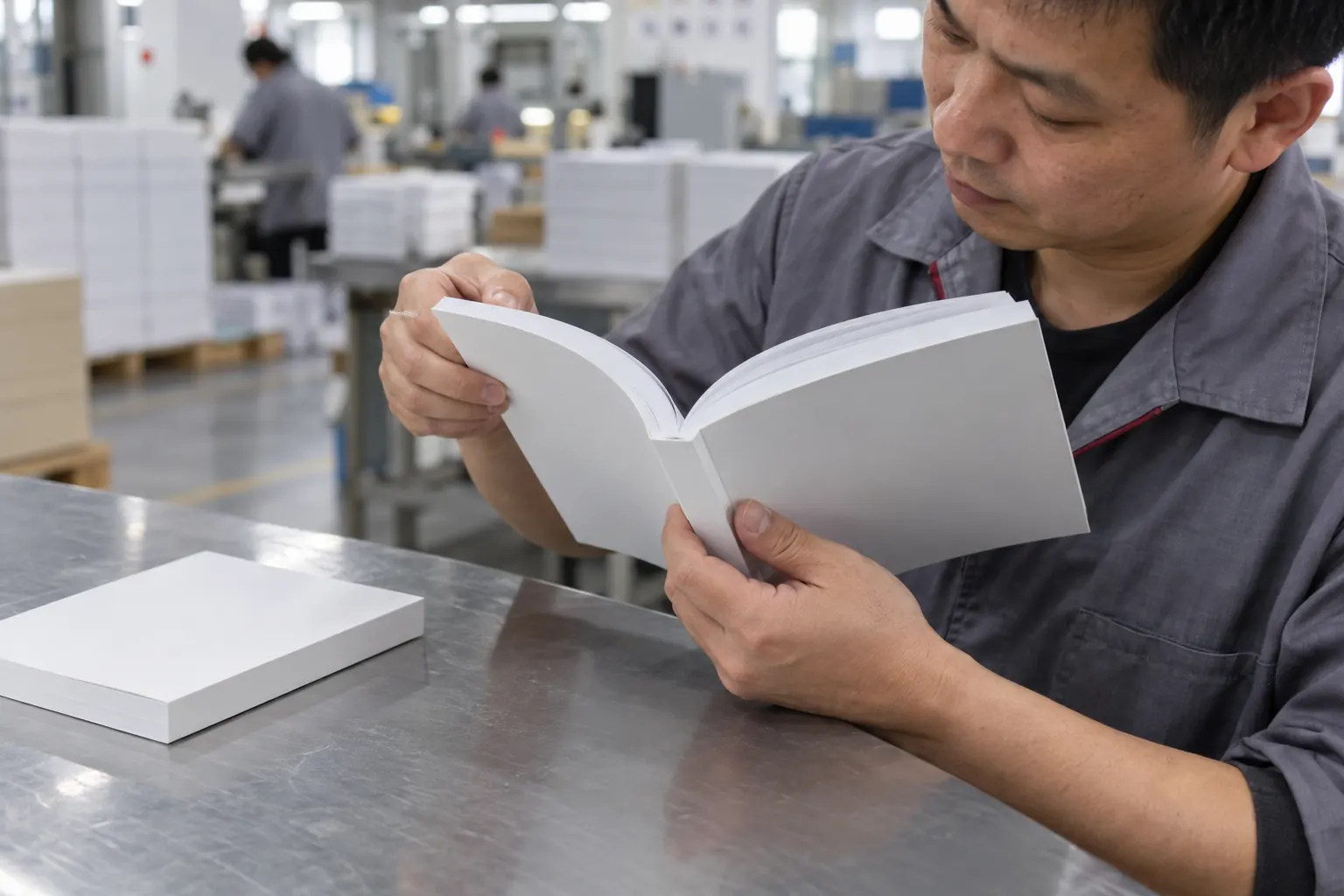
Perfect binding is practical when a project needs a clean square spine, a wraparound cover, and an adhesive-bound page block that can meet the required opening and handling. The process prepares the spine edge, applies adhesive, attaches the cover, and allows the bond to set before trimming and packing.
Which variables control the bond?
Paper coating, surface strength, grain, ink coverage near the spine, milling or notching, adhesive selection, glue-film control, and curing conditions all affect performance. PUR is an adhesive option within this family. Its presence does not remove the need to qualify the actual paper and process.
Ask the binder to state the planned spine preparation and adhesive. Then approve a sample made with the specified stock. A generic sample on different paper cannot show how the proposed book will open or hold pages.
When should a buyer compare it with sewing?
Perfect binding deserves a direct comparison when the project values a familiar paperback format, a printable spine, and fewer binding operations. Sewing deserves comparison when repeated opening, page-block security, or a demanding high-page-count structure creates more risk.
The useful question is whether the adhesive-bound sample meets the job. Check page pull, cover scoring, spine cracking, gutter access, and how the block behaves after repeated opening. If it passes, added sewing may not improve the buyer’s outcome enough to justify the extra operations.
What does lay-flat binding mean in a specification?

Lay-flat binding should describe an observable result. State whether the book must stay open at 180 degrees, open comfortably without force, or rotate pages fully behind the spine. Each requirement points to a different construction.
Bound books that open wide
A well-planned sewn block can open deeply at the signature folds. Floating-spine or Otabind-style constructions separate cover movement from the spine of the block so the pages can spread more freely. Their names and details vary by binder, making a finished dummy more useful than a label.
Define where the behavior must work. A sample that opens well at the center may resist near the front or back. Check several spreads and include any inserts or section changes that could alter movement.
Punched mechanical structures
Wire-O and coil bindings let pages rotate around punched holes and can stay open on a desk. They suit workbooks, manuals, planners, and some custom notebooks. The holes consume margin, the hardware remains visible, and the cover must turn without catching or tearing.
A standing custom calendar may need full page rotation and a stable base. A formal Bible usually has different expectations for appearance, storage, and reading. Specify the use before selecting the mechanism.
Key Takeaway: Replace the phrase “lay flat” with a test: opening angle, hands-free behavior, page rotation, and the spreads where performance must be confirmed.
Why are Bibles and high-page-count books different?
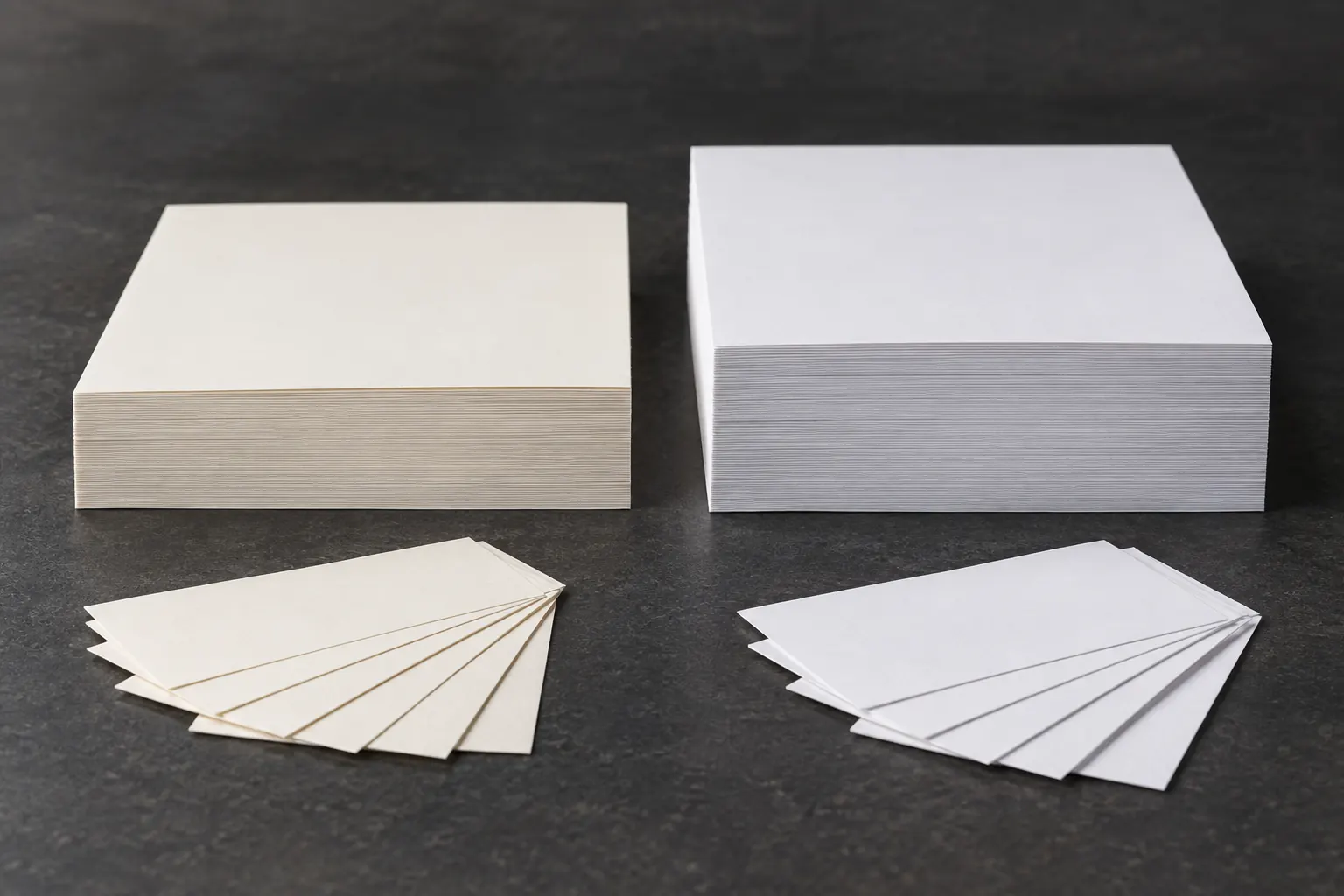
Bibles and other high-page-count books concentrate many pages into one block. Thin paper can reduce bulk, but opacity, show-through, fold quality, handling, grain direction, and ink coverage still affect the finished book. A decision that works for a short trade paperback may fail when applied to a much thicker, thinner-paper block.
Paper thickness changes the whole structure
GSM cannot predict spine width by itself. Two papers with similar weight may have different caliper and stiffness. The printer needs the actual paper specification, trim size, pagination, and signature plan to estimate bulk and prepare the cover.
Kingtai’s discussion of Bible paper quality covers opacity and handling considerations. Binding review adds another question: can the paper fold, gather, open, and remain attached in the proposed construction?
Accessories and mixed sections add interfaces
Maps, coated inserts, ribbons, headbands, endpapers, and multiple color sections introduce different materials at the spine. Each interface can change bulk or movement. List them before the binder plans signatures and spine preparation.
A custom Bible printing brief should connect page files, paper, binding, cover, accessories, and packing. Approving those items separately can hide a problem that appears only in the complete book.
Avoid universal page ceilings. The workable range depends on the entire build and the supplier’s equipment. A full-size blank dummy is often the fastest way to expose bulk, gutter, and cover-fit problems before printed sampling.
How do print run and budget change the binding decision?
Print run and budget change which operations carry an acceptable setup cost, but quantity never works alone. Format, signature count, paper, versions, cover finishing, automation, inspection, and packing can shift the comparison.
| Cost or run driver | Why it matters | Buyer action |
|---|---|---|
| Signature count | More sections change folding, gathering, and sewing work | Request the planned signature map |
| Adhesive and curing | Paper compatibility and set time affect production and packing | Confirm the adhesive and sample schedule |
| Case materials | Boards, wrap, endpapers, and casing add material and assembly | Compare the complete case, not a cover swatch |
| Multiple SKUs | Shorter runs per version increase setup and consistency demands | Quote quantity by version and shared components |
| Finishing and accessories | Foil, ribbons, inserts, and special edges add operations | Separate required features from optional ones |
| Packing method | Weight and surface vulnerability affect cartons and freight | Include destination and handling requirements |
Ask suppliers to quote the same specification and one meaningful alternative. For example, compare an adhesive and a sewn block with the same trim, paper, page count, case, and quantity. That isolates the binding trade-off instead of mixing several changes into one price difference.
For books aimed at frequent handling, such as some children’s book printing projects, cost review should include the risk revealed by sampling. A cheaper construction that misses the use requirement is not a useful baseline.
What should a binding sample prove before production?
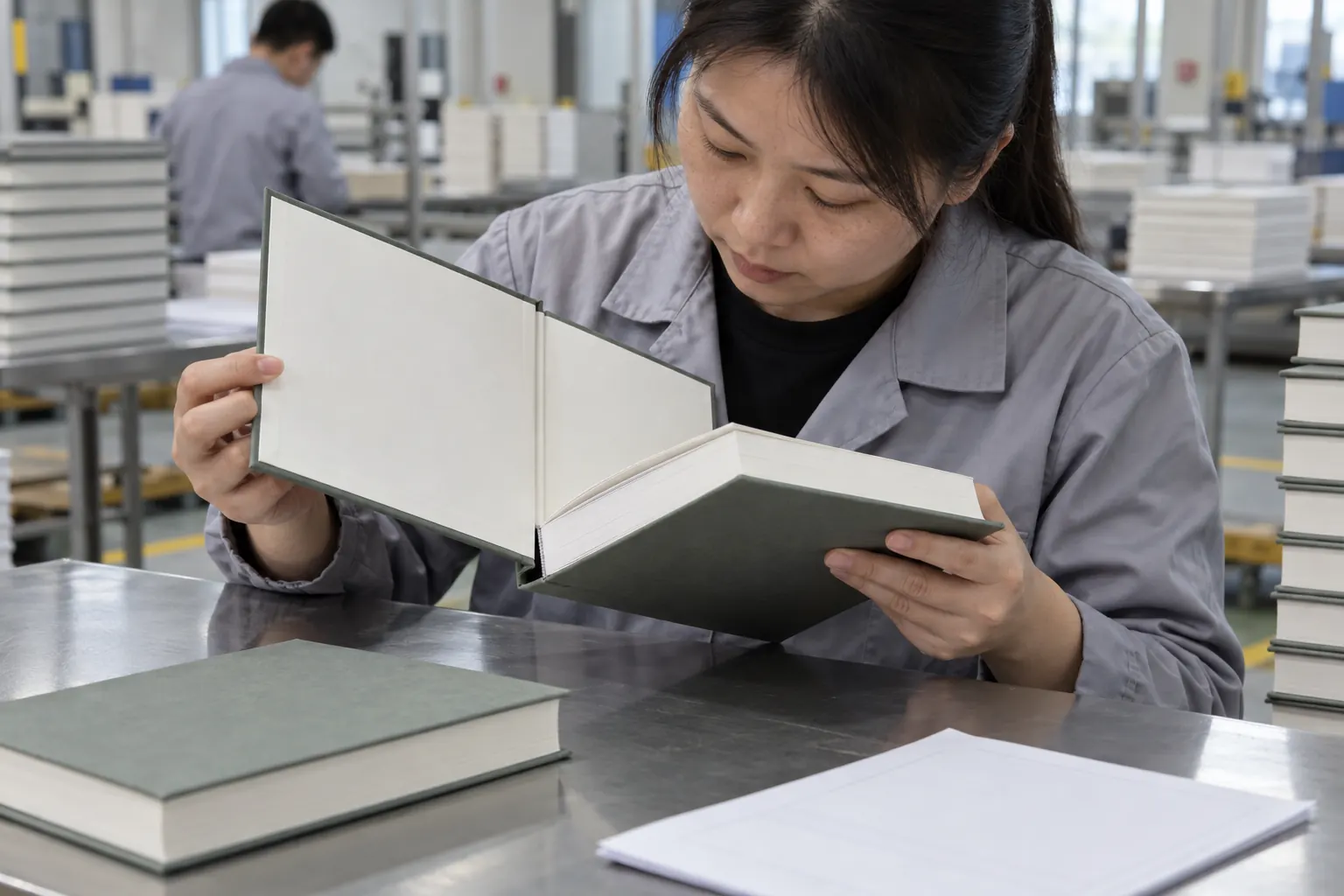
A binding sample should prove reading behavior, page retention, cover movement, and assembly consistency. Start with a blank dummy for bulk and structure, then approve a printed pre-production sample with the intended paper, ink coverage, finishes, and accessories.
| Failure mode | What the buyer sees | What to check next |
|---|---|---|
| Gutter loss | Text or images disappear near the spine | Margin plan, opening behavior, and cover tension |
| Page pull or loose sections | Leaves detach or signatures shift | Spine preparation, sewing, adhesive, and curing |
| Spine or cover cracking | Visible stress after opening | Paper grain, cover scoring, coating, and flexibility |
| Uneven opening | Some sections resist or spring closed | Signature plan, grain, lining, inserts, and casing |
| Crooked case or weak hinge | Block sits unevenly or pulls the cover | Board dimensions, joint position, endpapers, and casing |
| Bent wire or rough holes | Pages catch or hardware deforms | Hole pattern, wire size, crimping, cover, and packing |
Test the front, middle, and back. Record the paper, construction, and approved result so production inspection has a clear reference. If the book will face long-distance shipping, inspect it again after representative packing and handling.
The sample also needs to answer aesthetic questions. Foil position, spine alignment, cover wrap, and edge treatment can shift when the book opens. Good appearance at rest does not prove that the finish survives use.
What belongs in a binding RFQ?
A binding RFQ should give every supplier the same physical and commercial inputs. This makes recommendations and quotations comparable.
Include:
- Finished trim size, orientation, pagination, and file status.
- Text paper name or properties, GSM, caliper, coating, opacity target, and grain direction.
- Proposed signature plan or a request for the supplier to develop one.
- Block attachment, cover construction, spine shape, endpapers, and lining.
- Inserts, ribbons, headbands, edge treatment, foil, embossing, and other finishes.
- Quantity for each edition, language, color, or SKU.
- Required opening angle, hands-free behavior, and expected handling.
- Proofs, blank dummy, pre-production sample, and approval checkpoints.
- Packing method, delivery destination, and any surface-protection requirement.
Ask the supplier to identify conflicts rather than silently substitute materials. A changed paper, adhesive, signature plan, or board can alter opening and spine width. When the brief is ready, contact the printing team and request a construction recommendation plus the samples needed to approve it.
Which book binding method should you choose?
Choose section sewing when a connected signature block and repeated opening justify the extra operations. Choose perfect binding when the proposed paper and adhesive process can deliver the required retention and opening in a simpler square-spined format. Add a case when protection and presentation justify rigid boards and casing work. Specify a lay-flat or mechanical structure only after defining the opening behavior.
For a Bible or other high-page-count book, lock the paper, pagination, signature plan, cover, accessories, and sample tests before treating the binding as final. Kingtai Printing & Packaging can review these variables as part of a custom book project. Send the specification and intended use to Kingtai Printing & Packaging to plan the next sample and quotation.
Can a hardcover book be perfect bound?
Yes. Hardcover describes the rigid case, while perfect binding describes an adhesive-bound page block. Specify both the block attachment and the case construction.
Is section sewing always better for a Bible?
No. Sewing can support repeated opening and a connected block, but paper grain, signature design, spine lining, cover movement, quantity, and cost still decide whether it fits the project.
Does PUR adhesive make every book lie flat?
No. Adhesive selection affects the bond, while lay-flat behavior also depends on spine preparation, paper, block design, cover attachment, and the required opening angle.
How should I compare binding samples?
Use the same trim, paper, pagination, cover, and accessories. Open each sample at several points, inspect the gutter and page retention, and record any cover or spine stress.
What information affects a binding quotation most?
Trim, page count, paper and caliper, signature plan, binding, cover, finishing, quantity by version, sample requirements, packing, and destination all affect the production plan and price.