
A Bible cover can look convincing on screen and still fail in production. Fine letters may lose definition, a deep relief may distort the hinge, foil may drift away from the stamped shape, or a leather-like surface may react differently from the approved swatch once it is wrapped over board.
The embossing vs debossing decision starts with direction: embossing raises the design above the surface, while debossing presses it below the surface. Neither method is automatically more premium or durable. The right choice depends on the complete cover stack, artwork, desired touch, finishing sequence, quantity, and evidence from a production-condition sample.
What is the difference between embossing and debossing?
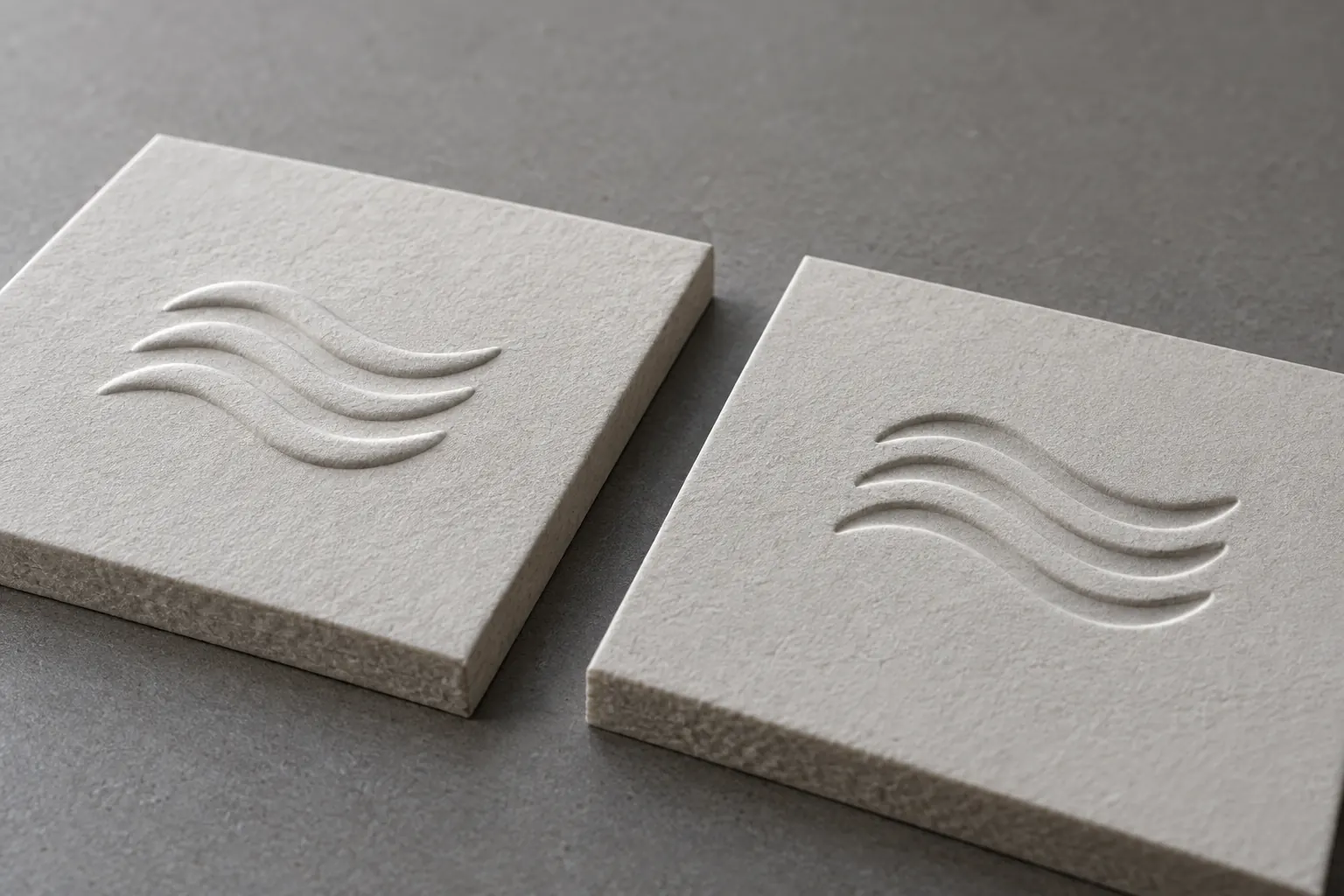
Embossing creates raised relief, while debossing creates a recessed impression. That simple difference changes the tooling, how light moves across the artwork, what a reader feels, and how the reverse side or underlying board may respond.
Both finishes can be blind, with no ink or foil, or combined with color and metallic foil. A raised logo can feel prominent and sculptural. A recessed logo tends to feel quieter and contained within the material. The visual effect also depends on the substrate: the same die artwork will not produce the same edge definition on smooth paperboard, woven cloth, and grained PU.
| Decision point | Embossing | Debossing |
|---|---|---|
| Relief direction | Raised above the surrounding surface | Pressed below the surrounding surface |
| Visual character | Catches side light and projects outward | Creates shadow within the impression |
| Tooling question | Usually needs coordinated forming surfaces | May use a pressing die with suitable support or counter |
| Reverse-side concern | Raised forming can show through or affect the back | Effect may be more contained, depending on construction |
| Best proof | Finished cover with actual board, wrap, and finish | Finished cover with actual board, wrap, and finish |
Treat this table as a shortlist, not a material guarantee. Kingtai's printing services include custom finishing, but the final construction still needs a supplier review based on the specific cover and artwork.
What does embossing add to a Bible cover?
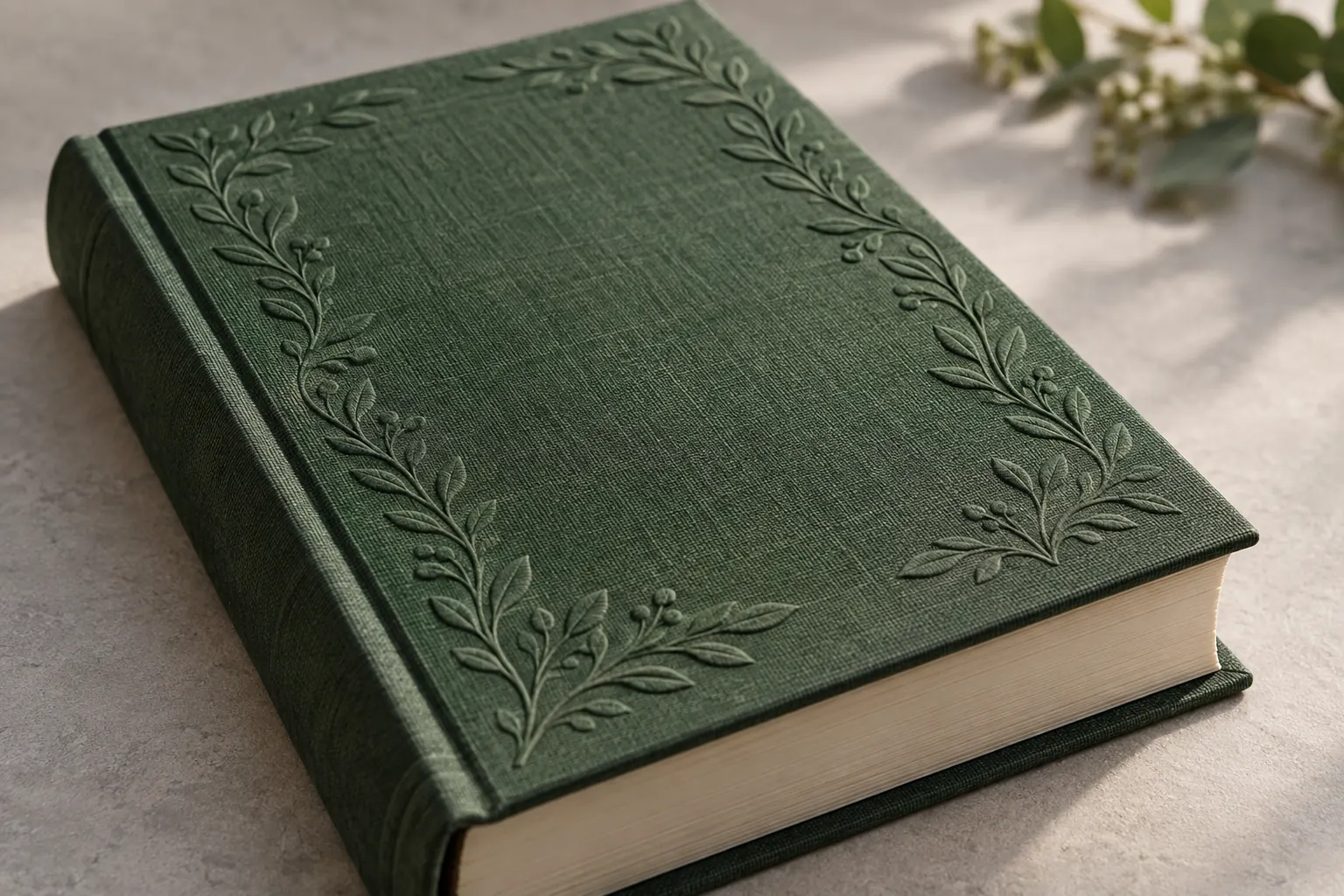
Embossing gives a cover a raised focal point that readers can see and feel. It works well when the design needs to catch light at the edge of a letter, border, emblem, or restrained pattern.
How is the raised shape formed?
For paper-based work, the cover material is typically formed between coordinated die surfaces. The exact die construction, counterdie, pressure, temperature, and make-ready depend on the substrate and press. The material must move into relief without tearing, crushing surrounding areas, or blurring small counters.
Embossing also affects the layers under the visible surface. A wrapped case may combine cover material, adhesive, and board. A loose swatch can form cleanly while the finished case responds differently near a joint or reinforced area.
Which artwork benefits from raised relief?
Simple shapes with intentional spacing are easier to form and inspect than dense artwork with fine rules, tiny type, sharp points, and several competing depth levels. Vector artwork gives the die maker clean paths, but the supplier still needs to adapt the relief to the material and scale.
A premium custom collection book may use a raised title or emblem to create a clear tactile hierarchy. The strongest design usually chooses one focal relief instead of forcing every printed element into three dimensions.
Key Takeaway: Choose embossing when raised light and touch support the cover concept, then prove the relief on the finished case rather than approving die art alone.
What does debossing add to a Bible cover?
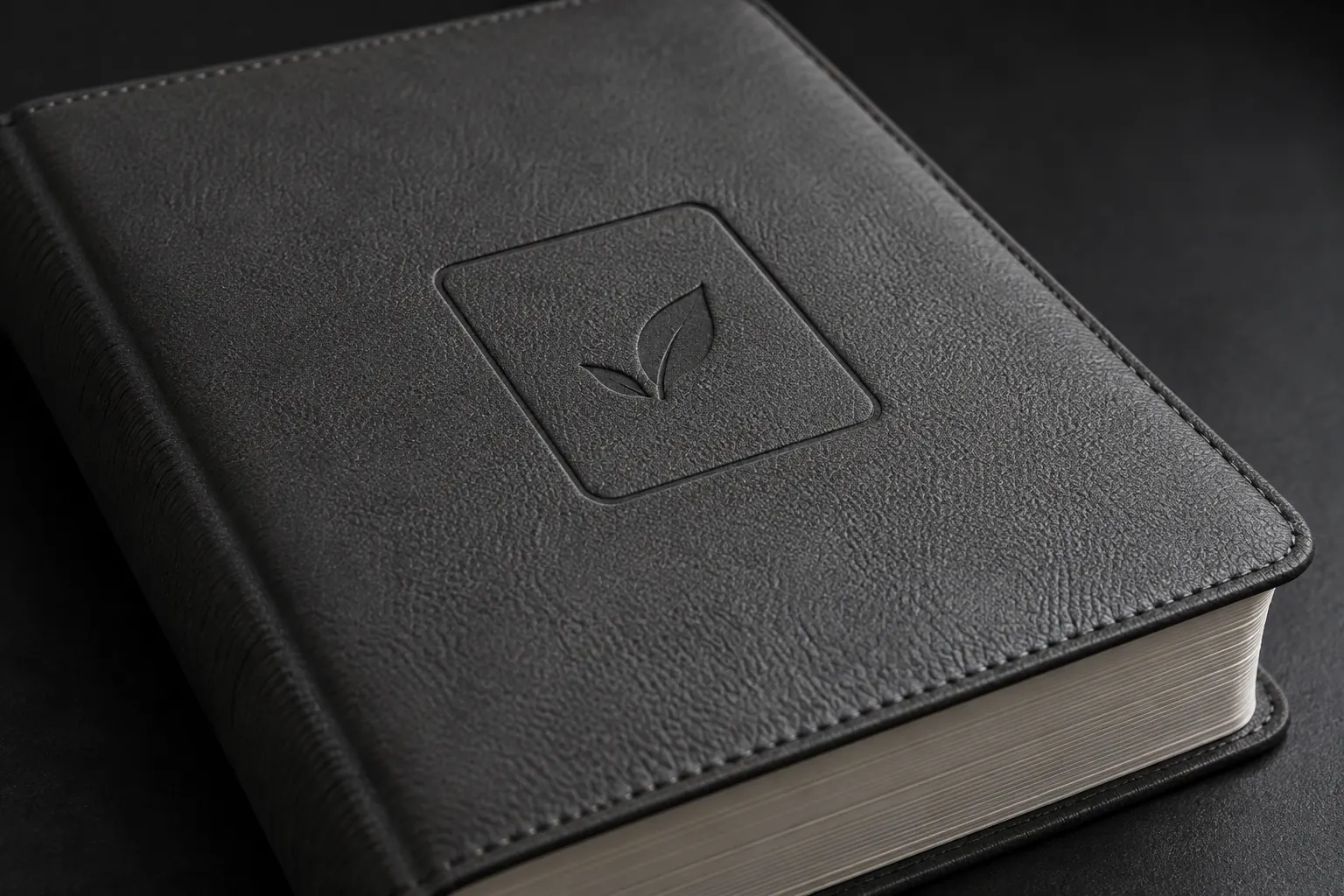
Debossing presses the artwork into the surface, creating depth through an inset edge and shadow. It often suits understated branding, tactile navigation, and materials that do not hold a proud raised shape consistently.
Why can a recessed mark feel more controlled?
The surrounding surface stays visually dominant while the design sits inside it. On a plain cloth or leather-like cover, that restraint can make a title or symbol feel integrated with the material instead of placed on top.
The impression still needs support. Excess pressure can crush board, flatten a cloth weave, stretch a coating, or create an unwanted halo. Insufficient pressure can leave weak corners and uneven depth. The acceptable balance depends on the cover stack and artwork area.
Does debossing remove reverse-side risk?
Not always. A thick self-supporting item may hide the reverse impression, while a wrapped Bible case has several layers and nearby hinges. Pressure can still telegraph through, change board flatness, or disturb an adhesive layer.
Debossing can also suit products that need a practical tactile cue, such as some custom notebooks. The useful comparison is between actual samples made with the intended cover construction, not a general claim that recessed work is always safer.
How do both finishes behave on paperboard covers?
Paperboard covers can produce crisp relief, but fibre strength, thickness, coating, lamination, grain, and the position of the design control the result. The visible sheet and the supporting board should be evaluated as one construction.
When is paperboard suitable for embossing?
A board that can deform without surface cracking can hold a clean raised edge. Large areas and deeper levels move more material than a shallow emblem. Small enclosed spaces may fill in, while sharp corners can concentrate stress.
If the cover is printed or laminated, sequence matters. Relief can alter a coating, and a coating can change how the sheet forms. Registered artwork adds alignment tolerances between print, foil, and the die.
What should a buyer check on a finished case?
Inspect the relief near the front edge, spine, fold, and hinge. These zones do not all have the same support. Look for fibre cracking, crushed corners, board warp, reverse-side show-through, and a change in opening behavior.
Bible projects often combine thin text blocks with structured cases. Kingtai's scripture publishing solutions provide useful application context, but the cover finish still needs its own finished-case approval.
Which finish works better on book cloth?
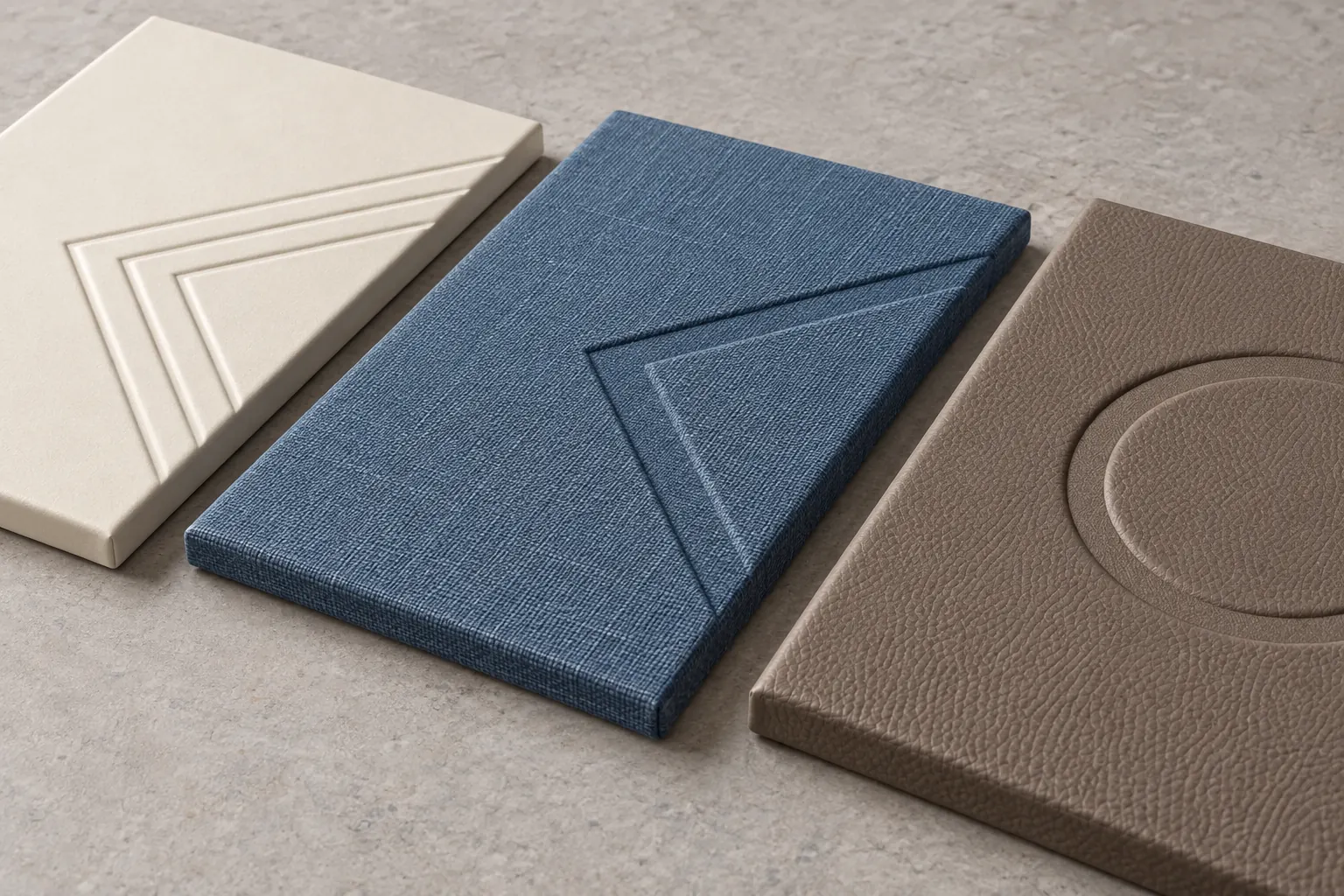
Book cloth usually favors the finish that matches its weave, coating, flexibility, and backing. A smooth filled cloth may hold a different level of detail from a coarse open weave, even when both are sold under the same broad material name.
Embossing asks the cloth to retain a raised form. Flexible woven material may relax or soften the edge after pressing. Debossing often gives a clearer starting point because the design is compressed into the surface, but that is not a universal rule. Some coated cloths can support sharp raised work when the board and die are matched correctly.
| Cloth variable | Embossing concern | Debossing concern | Approval action |
|---|---|---|---|
| Coarse weave | Fine edges can break across threads | Small counters can fill or look uneven | Enlarge or simplify the motif |
| Surface coating | Heat or pressure may change sheen | Impression may polish or darken the area | Compare under side light |
| Flexible backing | Raised relief may relax | Deep pressure may distort the cloth | Test after wrapping and curing |
| Hinge position | Relief can fight repeated flexing | Recess can weaken or mark a fold zone | Keep clear unless validated |
The cover-material discussion in Kingtai's genuine leather Bible guide also applies here in principle: touch and appearance come from the complete material system. Approve the chosen cloth over the actual board, adhesive, and joint geometry.
Which finish suits leather-like Bible covers?
Leather-like Bible covers require testing of the exact PU, PVC, coated split, or other supplied material because formulation, grain, backing, thickness, and topcoat can change the result. A generic “faux leather” label is not enough for a die or foil decision.
When can embossing work?
Raised relief can create a strong emblem or title when the material can stretch and recover around the formed area. A stiff topcoat may whiten, crack, or resist the shape. A soft foam-backed construction may look rounded and lose fine detail.
Temperature and pressure also affect sheen and color. The approved setting belongs to the actual material batch and cover build, not a value copied from another project.
When is debossing the safer starting point?
A recessed mark often suits a soft-touch or grained cover because the impression works with the material's depth. It can still fail through edge whitening, gloss change, rebound, uneven depth, or damage near the hinge.
Kingtai's guide to bonded leather Bible covers shows why the material category needs closer specification. Whether the cover uses bonded leather or another leather-like surface, request the exact finish name, backing, color, and production sample.
Key Takeaway: Select the relief direction only after the supplier tests the actual leather-like material over the intended Bible-cover structure.
How do blind and foil effects change the decision?
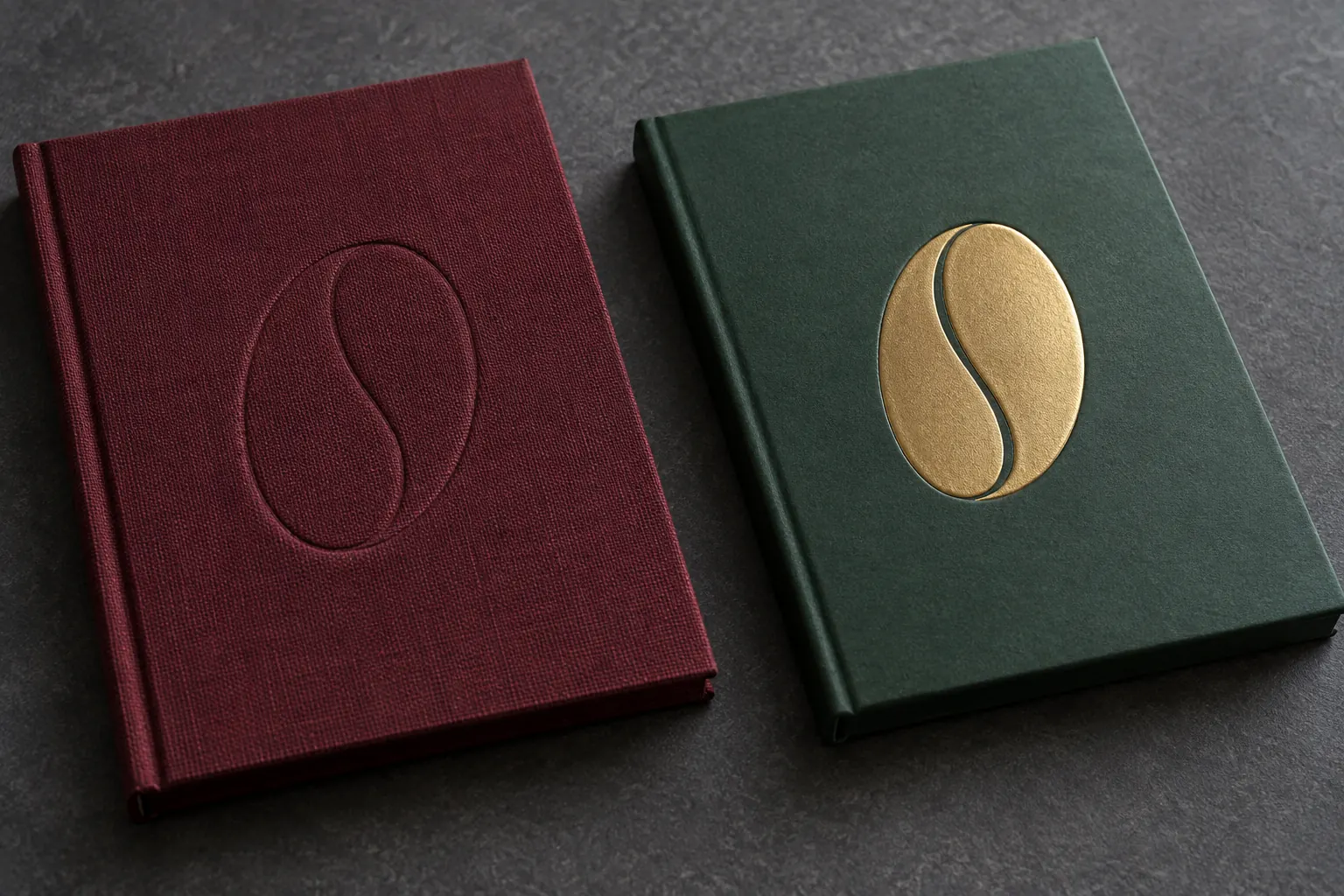
Blind finishing relies on relief, shadow, and touch, while foil adds color and reflectivity. The embossing vs debossing choice therefore cannot be separated from the desired surface treatment.
What does a blind finish require?
Without foil or ink, edge definition carries the design. Low contrast can be elegant on a smooth cover and nearly invisible on a dark, coarse, or highly grained surface. Side lighting and hand feel become part of the approval.
Blind work also exposes inconsistency quickly. Uneven depth, a weak corner, or board show-through cannot be hidden by metallic color.
What changes when foil is added?
Foil introduces adhesion, release, coverage, and registration controls. Foil embossed work must align the metallic area with the raised shape. A foil deboss must transfer cleanly into the recess without picking, bridging, or losing small counters.
The final sequence depends on the material and equipment. A custom Bible printing specification should state whether the effect is blind, foil stamped, printed and registered, or formed in more than one level. Those are different production requests.
What drives tooling cost and production risk?
Tooling cost comes from more than the metal die. Artwork preparation, die material, counterdie or support, make-ready, proofing, registration, press time, foil, spoilage, and inspection all affect the quotation.
| Cost or risk driver | Why it changes the job | Buyer question |
|---|---|---|
| Artwork size and detail | More area or fine geometry changes die work and pressure control | What needs simplification for this material? |
| Single vs multiple levels | Sculpted relief adds tool and setup complexity | Is the second level visible enough to justify it? |
| Blind vs registered foil | Foil adds transfer and alignment controls | What registration tolerance will be approved? |
| Cover substrate | Board, cloth, and PU respond differently | Has this exact construction been sampled? |
| Quantity and versions | Setup is spread across units and repeated per version | Which dies or setups can be shared? |
| Repeat order | Reuse depends on unchanged art and construction | How will the die be stored and identified? |
Do not assume debossing is always cheaper or embossing always needs the more expensive die. The supplier's tooling method and the finished cover decide the comparison. Ask for tooling, proof, setup, foil, and production charges as separate quotation lines.
A Bible printing case study can show the broader coordination involved in a finished book. It should not replace a new relief sample for a different material or design.
What should buyers approve before mass production?
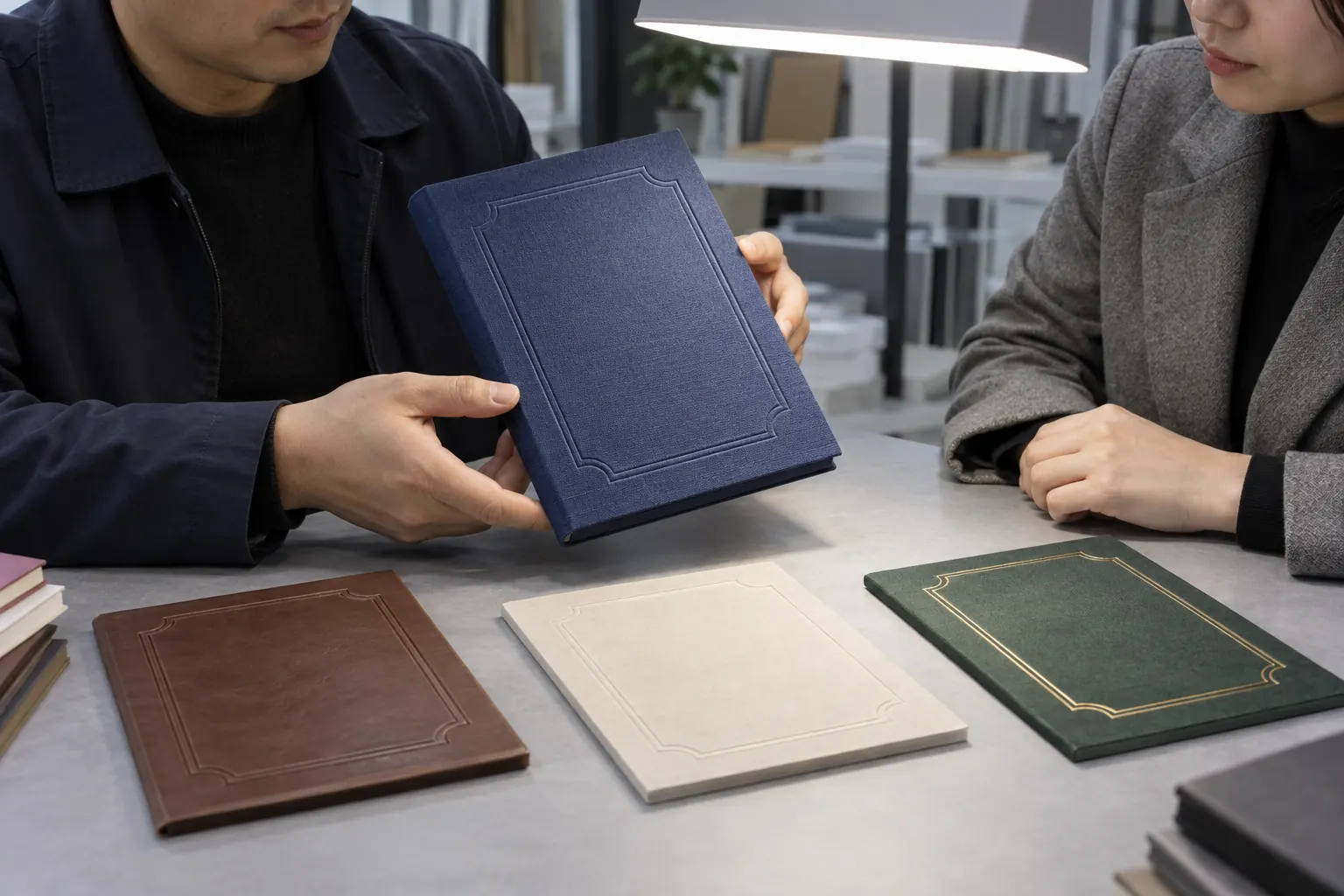
Buyers should approve the artwork, die interpretation, actual cover stack, finished case, and inspection criteria before mass production. A loose swatch proves only one part of the job.
Send the supplier:
- Vector artwork with separate layers for print, foil, emboss, and deboss.
- Finished cover dimensions, board, wrap material, backing, adhesive, and hinge positions.
- The required blind, foil, ink, or multi-level effect.
- Quantity by edition, color, language, or SKU.
- Areas where reverse-side show-through or surface change is unacceptable.
- A request for the supplier's minimum detail, spacing, depth, and edge-clearance rules.
- The sample sequence and the conditions that trigger reapproval.
Inspect the sample under front and side light and by touch. Check relief clarity, depth consistency, print-to-die registration, foil coverage, picking, surface whitening, cloth distortion, board warp, hinge damage, edge cracking, rub resistance, and repeatability across several samples.
When the brief is ready, contact the Kingtai team with the cover material, artwork, quantity, and intended finish. Ask which risks require a finished-case sample rather than a flat proof.
Which finish should you specify?
Specify embossing when raised relief is central to the cover design and the material can hold the intended shape without cracking, relaxing, or disrupting the reverse side. Specify debossing when recessed depth suits the visual hierarchy or the cover material responds more predictably to compression. Use blind finishing for material-led subtlety and foil when color and reflection justify the added registration and adhesion controls.
For Bible covers, the decision should follow the actual board, cloth or leather-like material, hinge geometry, artwork, and production sample. Kingtai Printing & Packaging can review these inputs as part of a custom printing project and help plan the sample and quotation needed for approval.
Can embossing and debossing use the same artwork?
They can begin with the same vector concept, but the die maker may need different spacing, bevels, counters, and depth decisions for raised and recessed relief. Approve separate production artwork when the structures differ.
Can you combine embossing or debossing with foil?
Yes. Foil can be combined with either relief direction, but the material, foil grade, press sequence, heat, pressure, and registration must be proven on the intended cover.
Which finish is better for small text?
Neither is universally better. Small type can fill, soften, bridge, or lose counters. Ask the supplier for its artwork limits on the exact material and enlarge or simplify the design when needed.
Will debossing damage the back of a Bible cover?
It can affect underlying layers if pressure is excessive or the construction lacks support. Inspect the inside, board flatness, hinge, and endpaper area on the finished sample.
Can a die be reused for a repeat order?
Often, but reuse depends on die condition and an unchanged design, material, board, relief, and production setup. Record the die identity and confirm compatibility before every repeat run.