
A publisher may need an initial run, a corrected edition six months later, and a handful of replacement copies before the next large order. The right process for the first run may not be the right process for every later order. For a Bible, the paper and binding can narrow the options before price enters the discussion.
In offset vs digital printing, offset uses plates and transfers ink through a blanket to the sheet. Digital systems form the image from a file without making the same set of plates. Quantity, color requirements, version changes, and the exact paper determine which route fits a book project. Ask suppliers to quote the finished book and prove the proposed production route on a representative sample.
What changes between offset and digital printing?
Offset and digital describe how an image reaches the paper. Sheetfed or web offset printing uses plates and an inked blanket; the same plate image repeats until the plate or job changes. A digital press reads print data and forms an image without that offset plate set.
Digital is a family of processes. Dry toner, liquid electrophotographic printing, and production inkjet differ in how color reaches and fixes to the sheet. Their paper ranges, surface appearance, finishing behavior, and throughput can differ. Ask the supplier to name the actual production process rather than accept “digital” as a sufficient specification.
| Buyer question | Offset route | Digital route |
|---|---|---|
| What happens before printing? | Plates, make-ready, and color setting are required | Files and the selected engine are prepared; no equivalent offset plates |
| What happens if every copy differs? | A plate change or separate run is normally needed | Variable files can change copy to copy where the workflow supports it |
| What drives paper feasibility? | Press feed path, ink, drying and stock specification | Engine-approved stock, image material, duplex path and fixing |
| What should the sample prove? | Printed result on planned stock under production settings | Printed result from the proposed digital engine on planned stock |
The comparison helps a buyer frame a request for custom printing services. It does not say that either method automatically delivers better color, lower waste, or greater durability. Those outcomes depend on the equipment, operator, paper, job design, and control plan.
When does each process make financial sense?
Offset usually spreads a larger setup cost across the run. Digital often reduces plate-related setup and can make a small or changing job easier to produce. The crossover depends on the complete specification, so a quantity threshold from another printer’s website is a poor purchasing rule.
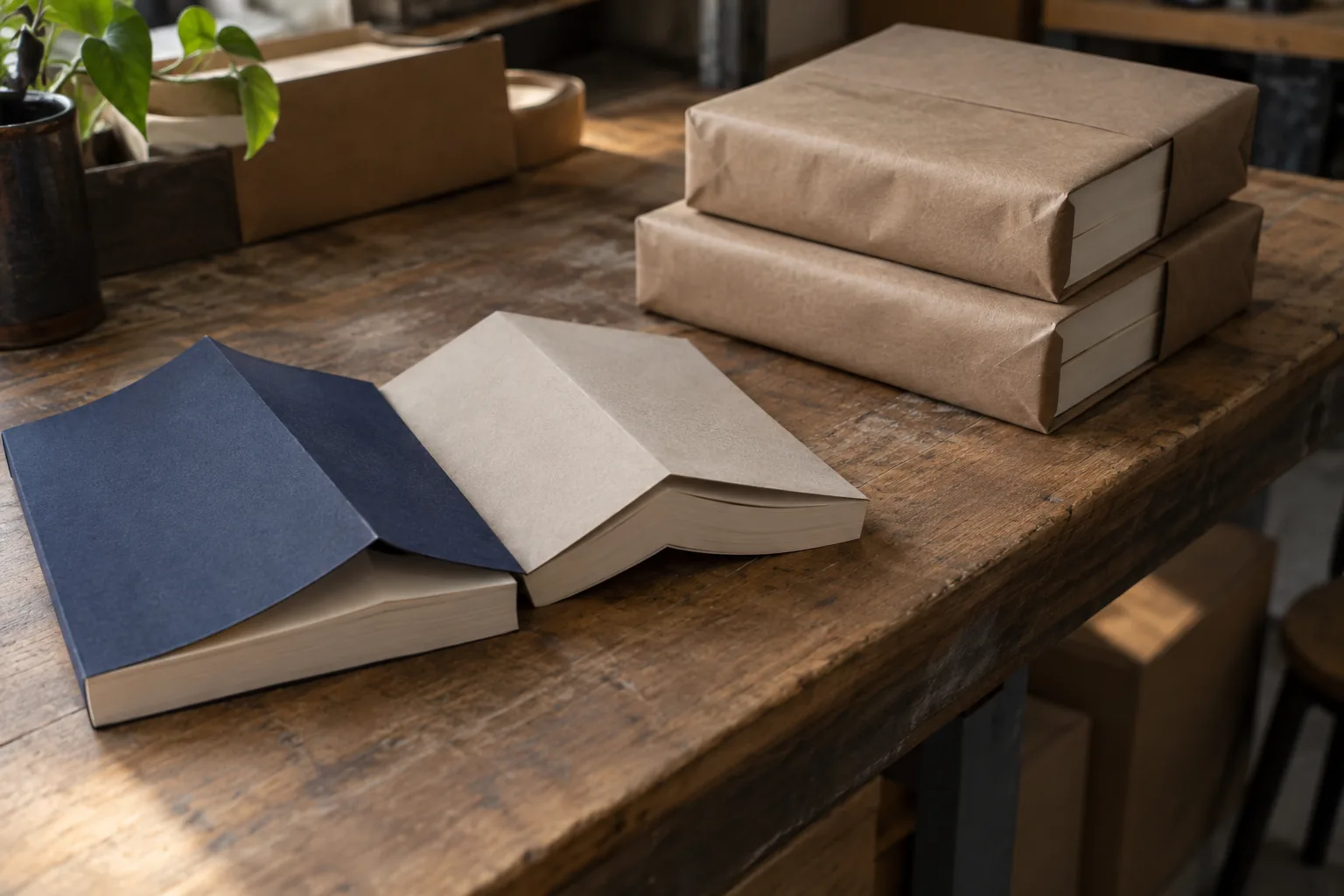
Compare the complete unit
Start with identical trim, pagination, paper, ink colors, cover, binding, finishing, and packing. Then ask for the same quantity on both routes. A quote for an offset book on one grade and a digital book on another cannot isolate the printing-process difference.
Price the book that will arrive ready to sell or distribute. Plates, proofing, paper allowance, printing, drying or fixing, folding, binding, finishing, inspection, cartons, and freight can all shift the result. An apparent press saving may disappear if a substitute stock changes the binding or packing plan.
Request more than one quantity
Ask for your expected quantity and two plausible alternatives. This exposes how setup is spread across units without inventing a universal break-even point. For a custom collection book, color pages and a heavy case may dominate the total landed cost; the press choice then needs to be judged alongside those other items.
Key Takeaway: Compare like-for-like finished books at the quantities you could actually order. The cheapest printing line item is not necessarily the lowest delivered unit cost.
What changes when a title has several versions?
Version count can favor a flexible digital workflow, especially when each edition has a small run or frequent corrections. Offset may still make sense if shared pages and a stable total volume justify its setup.

A multi-language Bible or reference series can reuse trim, paper, cover format, and binding while changing a portion of the interior. Give the printer a quantity by version, not only an aggregate total. The supplier can then show whether it would print separate offset signatures, use a digital route for complete books, or propose another approved production plan.
File revision control matters on both routes. A digital file can change between runs without new plates, which is useful only if the printer knows which version is approved. On an offset run, a late text correction can require new plates or another make-ready. Set a file-freeze date and an approval method for every edition.
Digital also supports variable content where the chosen equipment and finishing workflow permit it. Do not assume that a book can switch names, text, or images on every copy at no added cost. Data preparation, quality checks, and downstream sorting can become the larger job.
Can each process run thin Bible paper?
Thin Bible paper needs a press and finishing route qualified for the exact grade. Some offset systems and specialized digital web systems can handle lightweight paper. That does not mean every offset press, toner device, or inkjet line can print the same stock successfully.

Confirm the press-paper pairing
Ask for the paper’s grade, grammage, caliper, opacity, shade, grain, sheet or roll format, and approved ink or toner route. The supplier should confirm feeding, duplex printing, drying or fixing, and the planned color coverage. A paper that runs well as black text may behave differently with maps, saturated artwork, or mixed inserts.
The comparison should start with the paper requirements outlined in Bible paper selection, then move to a real print sample. Check whether printing on the reverse distracts the reader and whether the page remains practical to handle.
As a specific equipment example, an HP digital web press announcement describes a press series with a lightweight-media range. Its stated range belongs to that configuration, not to every digital press or every Bible-paper grade; the proposed stock still needs testing.
Include the next operation
The printed sheet must also fold, gather, and survive the selected binding. A stock may pass through a press but resist folding at the required signature format. Ask the printer to show a folded section or a small bound dummy, including any endpapers or inserts that change the structure.
Kingtai supports custom Bible printing with material and binding decisions tied to the project. Ask for the proposed press model, approved paper range, and a sample on the actual grade in the supplier’s written proposal; do not rely on a universal minimum paper weight.
How should you compare color and consistency?
Color comparison should use an agreed target, the actual paper, and printed samples from the proposed processes. A process name alone does not establish which book will match the approved cover or retain the intended colors at a later reprint.
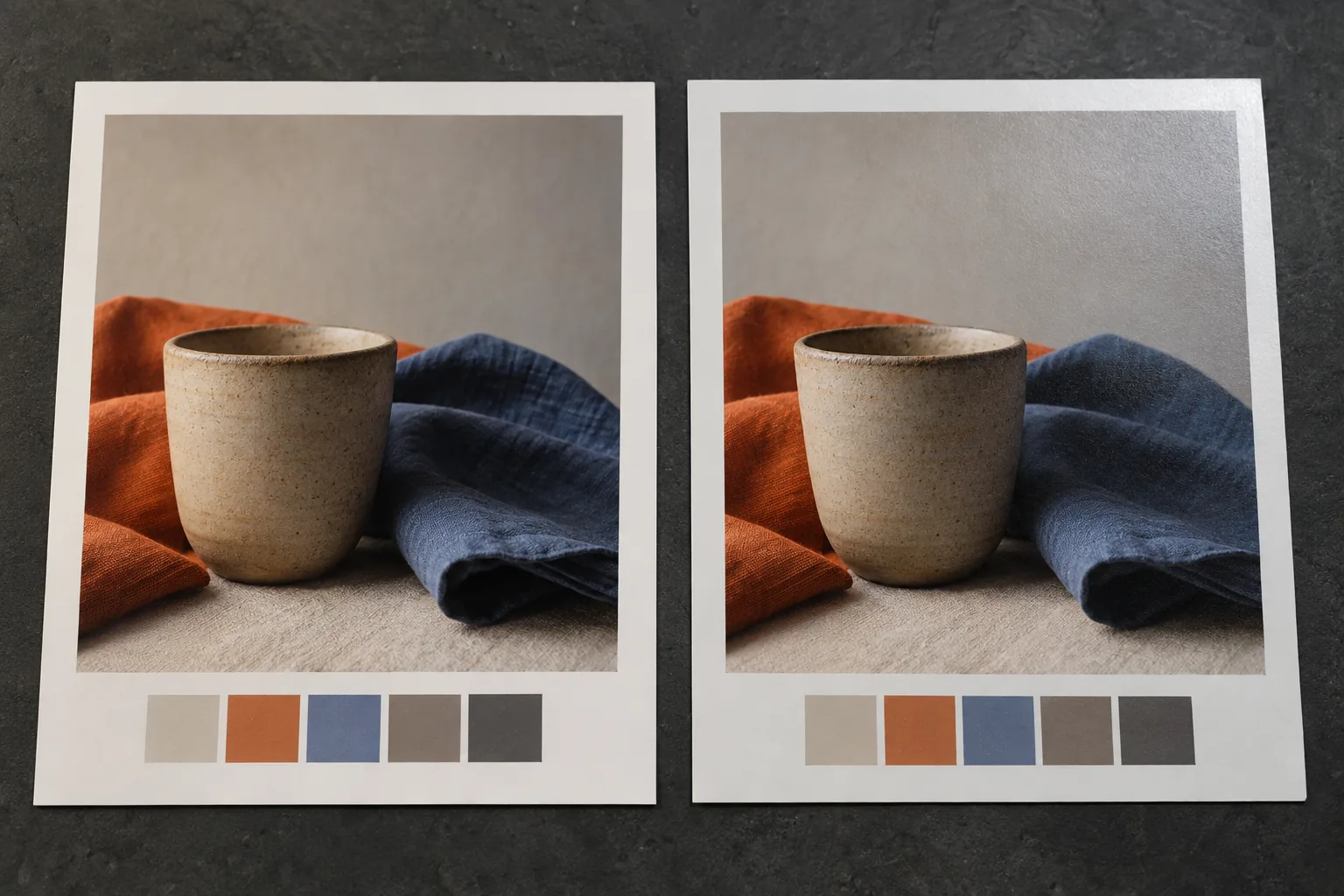
The target comes first
Provide the source files, intended profile or color reference, and the pages where a mismatch would be conspicuous. Skin tones, pale neutral areas, dense blacks, and illustrations that cross a spread may reveal different weaknesses. Review under the lighting in which the book will be used or sold.
Offset can use dedicated spot inks; some digital presses offer specialty colors or expanded color sets. Whether a named brand color can be matched depends on the exact press, ink set, substrate, and proofing workflow. Ask the supplier to state what it can reproduce and how it will measure or visually approve the result.
Consistency is a control task
Offset color can drift during a run if the press is not controlled. Digital output can also vary with calibration, consumables, paper lots, and finishing. Request an approved reference, production checks, and a procedure for reviewing visible variation across copies and batches.
An art-book printing project may need tighter visual comparison than a black-text title. The cost of proofing is justified when image detail is part of the product’s value. For text-led books, readability and clean registration may matter more than squeezing a higher color score from the press.
Which proof answers the production question?
Different proofs answer different questions. A PDF proof checks content, pagination, and missing elements. A color proof checks a defined appearance under its own output conditions. A production-condition printed and folded sample tests the planned paper and process more directly.

| Proof or sample | What it can establish | What remains open |
|---|---|---|
| Screen/PDF review | Text, pages, image placement, edition and file version | Actual paper, ink/toner, show-through, fold and binding |
| Digital color proof | A color target under that proof device and stock | Match to a different production press and paper |
| Production press sheet | Image and text on planned stock at planned settings | Final fold, gathering, cover and handling |
| Folded signature or bound dummy | Bulk, grain, opening and construction interaction | Final mass-run consistency unless monitored |
If the final job will run offset, a convenient digital proof on another stock cannot by itself approve offset color. Likewise, an offset swatch does not prove a particular digital engine’s paper handling. Ask the printer which proof is contractual and which is only for layout or discussion.
On a custom children’s book, ink coverage, page stiffness, finish, and repeated handling can matter alongside color. The sample should resemble the final product closely enough to expose those issues before approval.
Why does binding affect the print choice?
Binding converts printed sheets into a book, so the print route must supply sheets or rolls in a format the binder can fold, trim, and assemble. Grain direction, signature plan, inserts, and the finished block’s thickness affect what a promising press sheet becomes.
Check the book binding options while specifying paper and printing. A change from one paper to another may alter spine width or opening. A change in press format may alter imposition, signatures, or trim waste. These effects belong in the quote rather than arriving as late production surprises.
Proof a complete construction when a high-page-count book includes maps, colored inserts, ribbons, or multiple paper grades. Ask how each section will be gathered and whether the proposed adhesive or sewn structure has been qualified for that combination.
Do not call a project finished when only the flat sheets look acceptable. Inspect the front, middle, and back of a representative bound copy for gutter access, page retention, cover alignment, and damage during packing.
How do later reprints change the decision?
Reprint plans can change the value of the initial press choice. Digital may suit a small top-up or a corrected edition without repeating an offset plate set. Offset may remain efficient for a stable title with a substantial repeat run. Neither result is guaranteed without the next-order quantity and the kept production records.
Tell the supplier whether readers will expect new copies to sit beside the first edition. If so, keep the approved paper specification, color target, cover materials, trim, binding, and finishing record. A reprint on a different grade or process can look noticeably unlike the original even when the PDF is identical.
Book inventory also carries cost. Large initial orders spread setup over more units but may tie up stock, storage, and cash if the edition changes. Smaller replenishments reduce that exposure while potentially increasing the cost per book. Compare the two plans over the likely title life, including delivery destinations and cartons.
A custom notebook program with many cover versions has a different replenishment pattern from a single Bible edition. Record quantity by SKU and the change frequency so a printer can quote a useful mix rather than assume every version follows the same run plan.
What goes into a fair RFQ?
A fair RFQ makes both routes solve the same finished-book problem. Send the supplier the actual files or representative sections, and ask it to identify any assumption that changes between options.
Include:
- Final trim, page count, file status, and quantity by edition or SKU.
- Interior and cover ink plan, image coverage, special colors, and the pages requiring close color review.
- Exact proposed paper grades or target properties, including caliper, opacity and shade for thin stock.
- Binding, inserts, endpapers, finishing, carton packing, and destination.
- The expected initial run, plausible top-up and expected revision pattern.
- What each proof is intended to approve, and the required printed or bound sample.
- A request to show setup, print, finishing, packing, freight and reprint assumptions separately.
Ask the printer to state the offset and digital press routes it is actually quoting, then request a sample on the proposed materials. The Kingtai contact page is a practical place to send the scope for a printing discussion. Confirm the construction and approval steps before treating a price comparison as final.
Key Takeaway: A quote is comparable when each option names its paper, process, quantity by version, proof, binding and delivered cost. Otherwise the cheaper number may describe a different book.
Which method should you specify?
Specify the route that can make the approved book at a defensible total cost over the initial run and likely reprints. Offset often becomes attractive when stable content and enough copies spread the plate and make-ready cost. Digital can be useful for smaller or changing editions. For thin Bible paper, the approved press, stock and bindery combination has the final say.
Kingtai can help review custom book materials, print direction, sampling, binding, finishing and packing. Send the title’s version plan, quantities, paper requirements and demanding sample pages to Kingtai Printing & Packaging to discuss a production route and an approval sample.
Can a digital press print on Bible paper?
Some specialized digital presses can handle certain lightweight papers. Ask for the exact press and grade, and approve a double-sided printed and bound sample; a generic “digital-compatible” label is not enough.
Is offset always cheaper for a large book order?
No. Offset setup is spread over the run, but the crossover depends on page count, format, coverage, paper, spoilage, binding and the quantity by version. Compare written quotes for identical finished books.
Does digital printing always match an offset proof?
No. Proof device, production press, ink or toner and paper may differ. Set a color target and ask which proof controls the final production approval.
Can different editions share the same offset setup?
Only where the imposed content and production plan allow it. Separate text versions can require separate plates or press setups. Give the supplier a pagination and quantity for each edition.
What should I keep for the next reprint?
Keep the approved files, edition identifier, paper grade, color reference, cover specification, binding details and a retained finished sample. Confirm available materials and any changes before ordering again.