
If you are asking “how much does it cost to print a book,” a page count alone will not produce a useful answer. A supplier needs the finished trim size, interior pages, paper, color specification, binding, cover and finish, quantity, packing method, and delivery destination. Those inputs determine what is being made and what a quote actually includes.
For a B2B buyer, the practical goal is a comparable quotation and a landed unit-cost view. This guide shows which fields to define, how to compare offers on the same basis, and how to prepare a copyable request-for-quotation (RFQ) worksheet. It is a planning framework, not a live calculator or a promise of a universal book-printing rate.
What actually determines the cost to print a book?
The cost comes from a stack of physical and logistical decisions, not from the word “book” itself. Start with the product specification, then separate manufacturing, packing, and delivery so you can see what each supplier is pricing. Kingtai’s custom printing services cover different product categories and production requirements.
| Cost driver | What to specify | Why it changes the quote |
|---|---|---|
| Finished format | Trim width and height, orientation, and any special shape | Changes sheet use, cover size, spine calculation, and carton fit |
| Interior extent | Final page count, blank pages, inserts, and foldouts | Changes paper consumption, thickness, handling, and binding setup |
| Paper | Text stock, shade, surface, bulk, and any special requirement | Changes material cost, print behavior, opacity, feel, and finished thickness |
| Color | Black-and-white, spot color, full color, and cover color | Changes ink coverage, press planning, and proofing needs |
| Binding and cover | Binding method, cover construction, endpapers, and spine | Changes materials, labor, opening behavior, and durability expectations |
| Finish | Lamination, foil, embossing, debossing, spot UV, or other approved processes | Adds process steps, tooling or setup, and inspection points |
| Quantity | Total copies and each version or language | Spreads preparation work across the run and changes material planning |
| Delivery | Packing, destination, shipping mode, and quote basis | Changes cartons, freight, handling, and the amount you pay to receive stock |
Compare specifications before prices. Quotes for different paper, color, cover, or binding are not offers for the same product.
How do trim size and page count change the quote?
Trim size and page count affect both the book block and everything around it. A larger finished page can use a different sheet layout, while a thicker book may need a different spine, cover construction, carton arrangement, and handling plan. The effect is project-specific, so ask the supplier to show the assumptions behind the quotation.
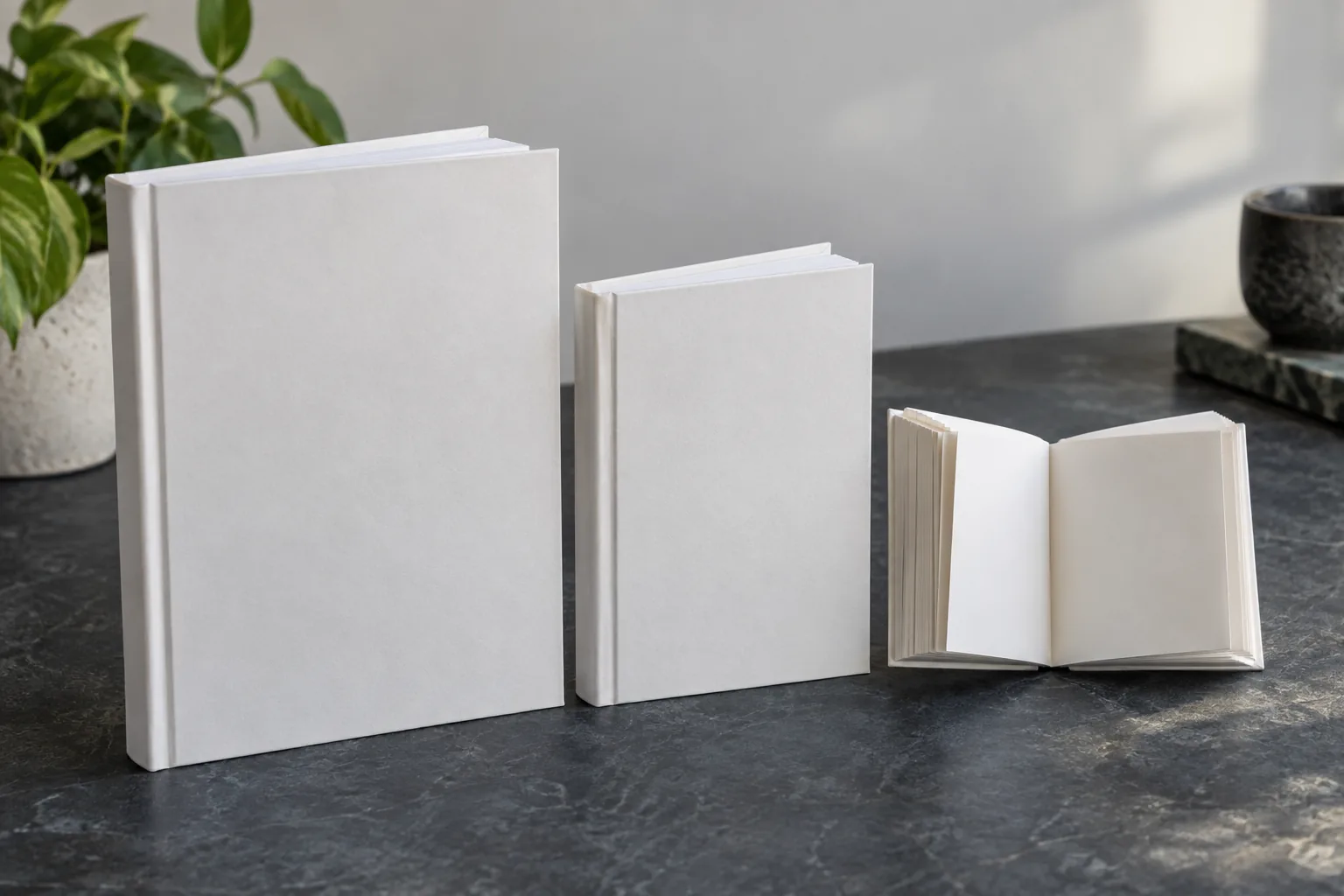
Ask for a finished trim, not a vague size
Write the finished width and height after trimming, plus portrait or landscape orientation. If the book includes a gatefold, insert, tipped-in page, or another non-standard element, call it out separately. “Standard size” is not an RFQ specification because different suppliers can interpret it differently.
Define pages the same way in every quote
Count a page as one side of a leaf, not one whole sheet. State whether the page count includes blank sides, preliminary matter, color sections, inserts, or foldouts. Confirm how the cover is counted and whether the quoted page count is the final approved extent. For projects where page thickness and readability must work together, the custom Bible printing page is a useful example of why format, paper, binding, and use should be reviewed as one system.
Ask for a revised quote if pagination changes after proof approval. An editorial change can alter the physical book even when the artwork looks almost the same on screen.
How should you specify paper and color?
Paper and color should be specified together because they shape both the reading experience and the production plan. A text-heavy edition may prioritize readability and opacity, while an image-led edition may prioritize color reproduction and surface appearance. Neither objective can be evaluated from a generic “premium paper” label.
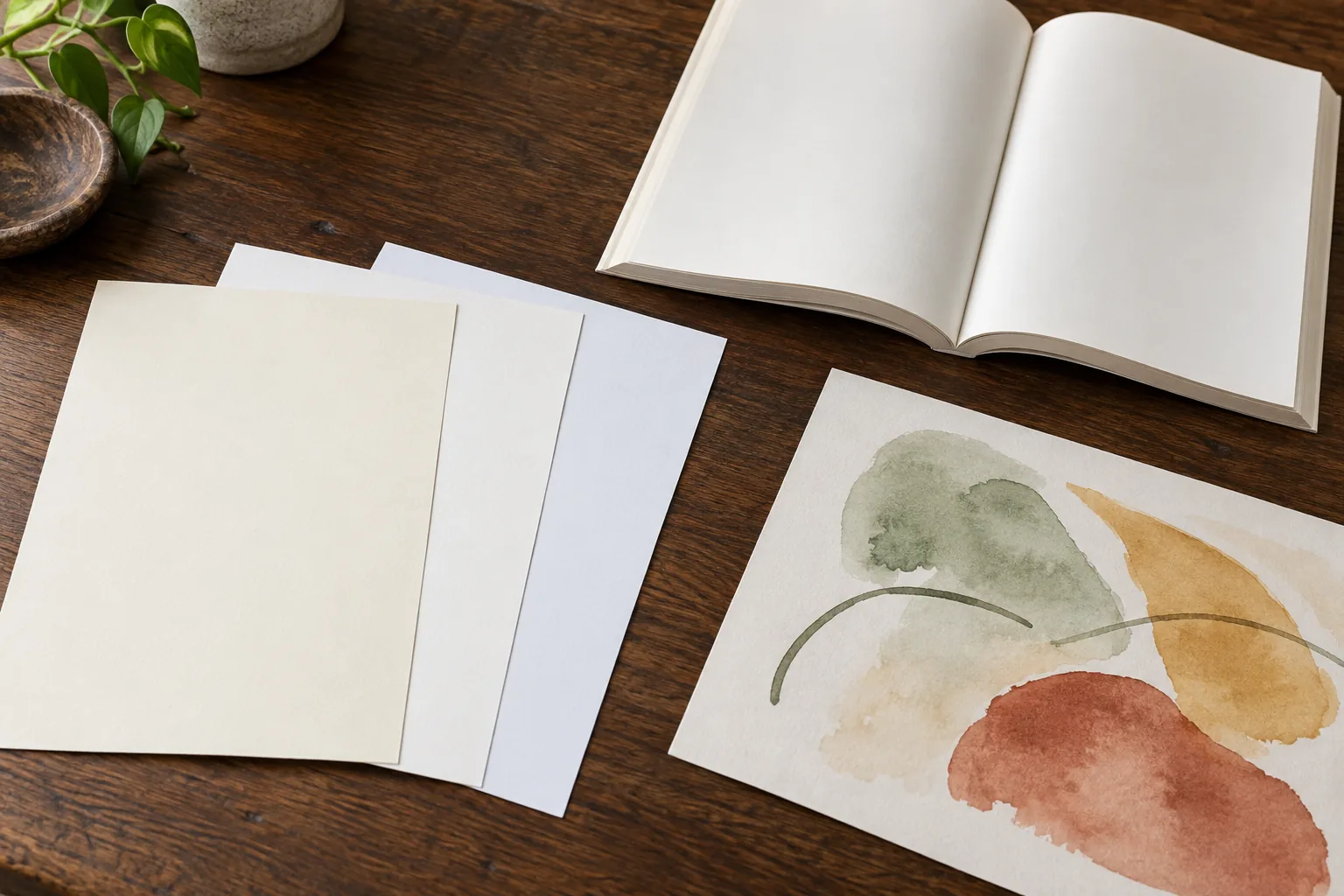
Paper is a reading decision as well as a material line
Record the text paper’s named stock or grade, gsm or basis weight with stock category, shade, surface, and bulk or thickness requirement. If a supplier proposes an equivalent, ask it to identify the replacement stock and provide an approval sample. Note whether the pages need to support dense text, illustrations, writing, or repeated handling. Ask for a paper dummy when thickness, show-through, or page-turning behavior affects the product decision.
Color means more than yes or no
State whether the interior is black-and-white, spot color, full color, or a mix of sections. Record whether the cover is printed separately and whether color-critical pages need a defined proof or approval reference. If the book is for children or education, the custom children’s book printing page shows why format, material, print quality, and usability need to be planned together.
Do not ask a supplier to quote “color” without identifying where it appears. An image-heavy interior and a text interior with a color cover can require different production planning.
Which binding and cover choices affect cost?
Binding changes the material list, assembly work, opening behavior, and durability target. Choose it from the way the book will be used, then ask for the corresponding cover construction rather than selecting a binding name in isolation.

| Binding direction | Useful when | Questions to put in the RFQ |
|---|---|---|
| Perfect binding | A flexible paperback format fits the product and handling pattern | What cover stock, spine, adhesive, and opening expectation are assumed? |
| Case or hardcover binding | A rigid cover and stronger presentation are part of the product brief | Are boards, covering material, endpapers, headbands, or other components included? |
| Smyth sewn or sewn construction | Repeated handling and page security justify a more involved structure | What sewn section and cover construction will be quoted and sampled? |
| Spiral or Wire-O | The user needs a book to open flat or turn pages freely | What coil or wire size, cover stock, and protection during packing are included? |
| Saddle stitching | A short, flexible booklet format fits the content | Is the page plan suitable for the selected stitching and cover arrangement? |
| Lay-flat construction | Spreads, workbooks, or reference use need a flatter opening | What structure and paper combination will deliver the required opening behavior? |
The custom notebook printing page is relevant when a project combines page layout, binding, cover materials, and finishing. Ask for a physical sample or dummy when opening, spine shape, or cover feel affects the buying decision. Ask why the structure fits the page count and use.
How do finishes change both price and risk?
Finishes add value only when they support the cover’s purpose and can be defined clearly. Lamination, foil or hot stamping, embossing, debossing, spot UV, and special surface treatments can add setup, process, and inspection requirements. The question is not whether a finish sounds premium; it is what area, side, color, artwork, and approval standard the quote covers.

For each finish, specify its location, coverage, color or material, artwork file, and whether a separate proof or sample is required. Ask whether tooling, plates, dies, setup, and make-ready work are included or shown separately. Also ask how the finish will be protected inside the carton. A delicate cover effect can look right at approval and still be vulnerable to rubbing if packing is not planned with it.
For image-led, commemorative, or collectible editions, Kingtai’s collectibles publishing solutions provide a relevant context for discussing print quality, binding durability, presentation value, and delivery control. Use the same vocabulary in the RFQ that you will use at sample approval so the approved result becomes a production reference.
Why does quantity change the unit cost?
Quantity changes the relationship between fixed preparation work and each finished copy. File checking, proof preparation, setup, material planning, and packing preparation do not necessarily grow in direct proportion to the run. A larger run may distribute those activities across more units, while a smaller run can leave more of that work attached to each copy.
Request the same specification at each planned quantity rather than asking for a single “best” rate. Keep versions, languages, covers, and destinations visible because splitting an order can create separate preparation or packing requirements. Compare both the total order amount and the unit amount. A low unit figure can still be the wrong choice if it excludes a setup item, uses a different version count, or is based on a different delivery term.
If your project has repeat editions, ask how a new version, reprint, or replenishment will be quoted. The collection-book case study illustrates why a buyer should care about approved visual standards and production consistency, not only the first quotation.
What should packing and freight include?
Packing and freight belong in the cost conversation before you approve the print price. Ask how books will be bundled, protected, labeled, placed in cartons, and prepared for the stated destination. Confirm whether the quote includes export packing, local handling, freight, insurance, duties, taxes, destination fees, or delivery to your receiving address. If one line is excluded, mark it as excluded rather than silently treating it as zero.
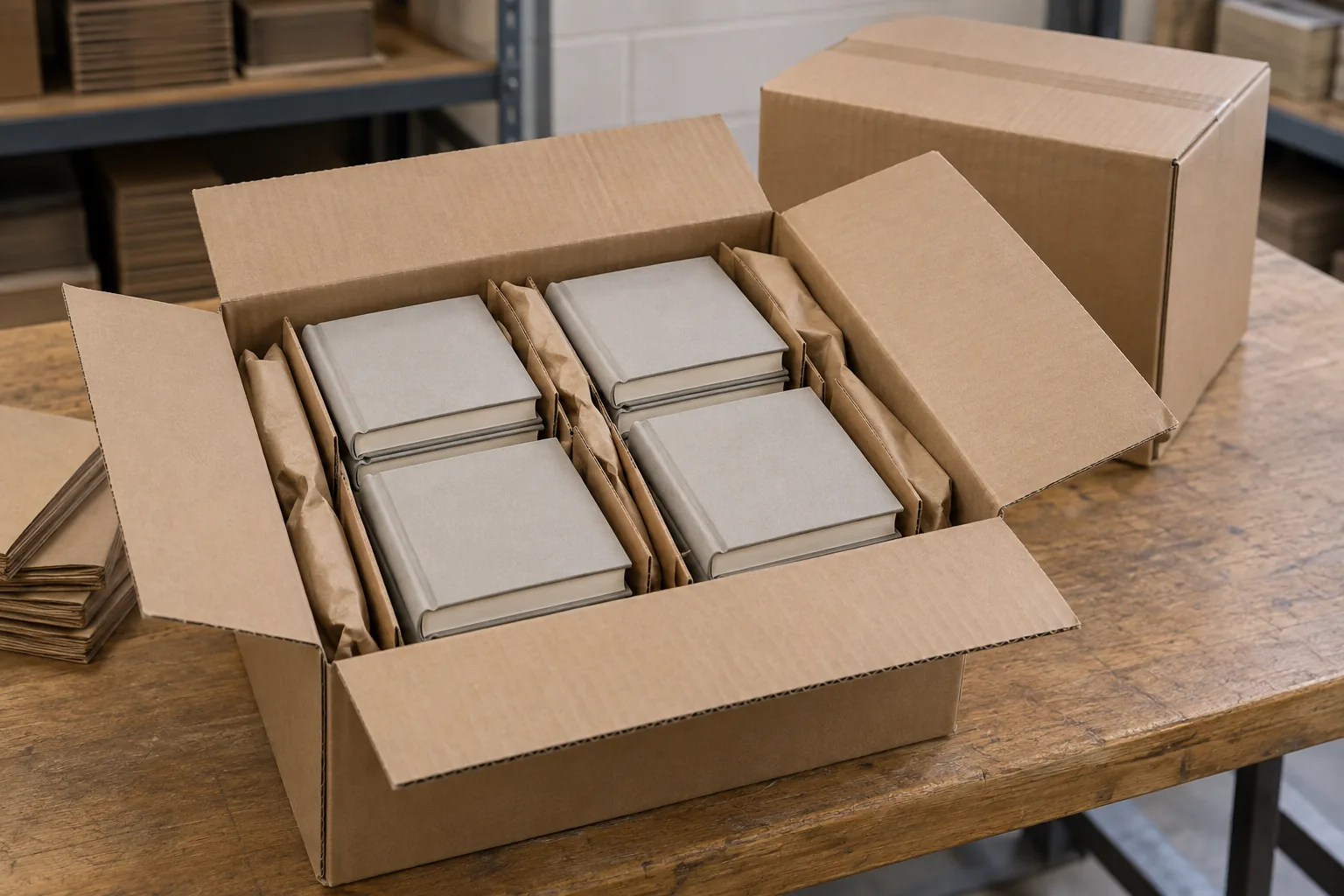
Use this planning formula:
Landed unit cost = (book production + separately charged setup and proofs + separately charged packing + freight + insurance + duties, taxes, and fees if applicable) ÷ accepted saleable copies
Add each charge only once; a production or delivered price may already include some of these items. At RFQ stage, use the expected accepted quantity, then reconcile against actual accepted stock after receipt. Damaged or unusable copies do not create the same value as accepted stock. Ask how overage, shortages, defects, and replacement handling are treated. When a quote uses a delivery term, confirm what each party is responsible for. The U.S. International Trade Administration’s Incoterms guidance is a useful reference for separating transport, insurance, and import responsibilities; it does not replace the supplier’s project-specific quotation.
Kingtai’s company information states that finished products can be packed into shipping cartons and that customers may arrange logistics independently or ask Kingtai to assist with shipping arrangements. Put your preferred arrangement and ship-to location in the RFQ so the supplier can price the same handoff point.
How can you compare book-printing quotes fairly?
Compare quotes only after normalizing the product, quantity, and delivery basis. A simple review sheet prevents a low headline number from hiding a missing line item.
Normalize the basis before comparing unit prices
| Check | Ask each supplier to state | Why it matters |
|---|---|---|
| Product identity | Trim, page extent, paper, color, cover, binding, and finish | Confirms the offers describe the same book |
| Quantity | Copies by version, language, or destination | Prevents a mixed run from looking like one simple quantity |
| Included work | Prepress, proof, setup, assembly, and packing | Keeps preparation and finishing from disappearing outside the unit price |
| Delivery basis | Ship-to point, shipping mode, insurance, and excluded charges | Converts factory pricing into a comparable received-cost view |
| Approval standard | Proof type, sample requirement, and reference standard | Gives both sides the same definition of an acceptable result |
| Quality handling | Inspection points, tolerances agreed in the project, and defect resolution | Makes risk visible before production starts |
| Quote validity | Currency, validity period, assumptions, and change triggers | Shows what must be reconfirmed before ordering |
Do not turn a supplier’s general capability statement into a guarantee for your book. Confirm the exact specification, sample path, and delivery basis in writing. A Bible printing case study reinforces the need to confirm readability, binding, and consistency before bulk execution.
What should a supplier receive before quoting?
Send enough information to remove avoidable assumptions, but do not wait for perfect files before starting a conversation. The worksheet below can be copied into an email or purchasing brief. Fill in “to be confirmed” when a field is open, then ask the supplier to quote that choice separately if it affects cost.
| RFQ field | Fill-in value |
|---|---|
| Project and end use | |
| Market and sales channel | |
| Finished trim size and orientation | |
| Interior page count and special pages | |
| Text paper stock/grade, gsm or basis weight, shade, surface, and bulk | |
| Interior color specification | |
| Cover construction and cover paper/material | |
| Binding method and opening expectation | |
| Cover finish and special processes | |
| Quantity by version, language, or destination | |
| Packing, labeling, and carton requirements | |
| Ship-to address or destination country | |
| Preferred shipping arrangement or delivery term | |
| Artwork and file status | |
| Proof, sample, and approval requirements | |
| Target delivery window | |
| Quote basis requested | Ex-factory, delivered, or landed-cost view |
Attach the interior and cover files if they are ready. If not, include a representative page, a cover reference, a physical sample description, and the decisions still open. For buyers working across education, publishing, and children’s products, Kingtai’s children’s publishing solutions show the value of matching content format and end use before production. When the brief is ready, use Kingtai’s contact page to send the project details and ask which assumptions need confirmation.
What is the practical answer for a B2B buyer?
Book printing has no responsible universal price because the product is defined by its physical specification and delivery scope. The fastest route to a useful answer is to lock the fields that drive material, labor, finishing, packing, and freight, then ask for a quote that shows assumptions and exclusions.
Use the worksheet to request comparable options, review a proof against the same standard, and calculate the amount paid per accepted book at the receiving point. Kingtai can discuss content format, paper, binding, printing, finishing, sampling, quality checks, packing, and shipping arrangements for custom B2B printing projects. Start with the Kingtai home page if you need to route the project to the right printing category, then send the completed brief for a project-specific quotation.
Frequently asked questions
FAQ: Can I get a useful estimate without final design files?
Yes. A supplier can review a planning brief with the finished format, page extent, paper direction, color, binding, quantity, packing, and destination. The figure remains provisional until files, proofs, and open specifications are confirmed.
FAQ: Does a larger quantity always reduce the unit cost?
It can reduce the share of preparation work assigned to each copy, but it does not make every project cheaper in every comparison. Ask for the same specification, version mix, packing, and delivery basis at each quantity so both total cost and unit cost are visible.
FAQ: Which input changes book cost the most?
There is no single answer for every book. Format, page extent, paper, color coverage, binding, cover construction, finish, quantity, and delivery all interact. Ask the supplier to identify the largest cost drivers in your specific quote rather than relying on a generic ranking.
FAQ: Should I compare unit price or total order cost?
Compare both, then calculate the landed unit cost using the same received quantity. A unit price is incomplete if setup, proof, packing, freight, insurance, import charges, or excluded fees sit outside the quoted line.
FAQ: What should I send first to a book printer?
Send the completed RFQ fields, available interior and cover files, the target quantity by version, the ship-to location, and the proof or sample expectation. Mark unresolved choices clearly. That gives the supplier a usable starting point without pretending that unknown inputs are fixed.