
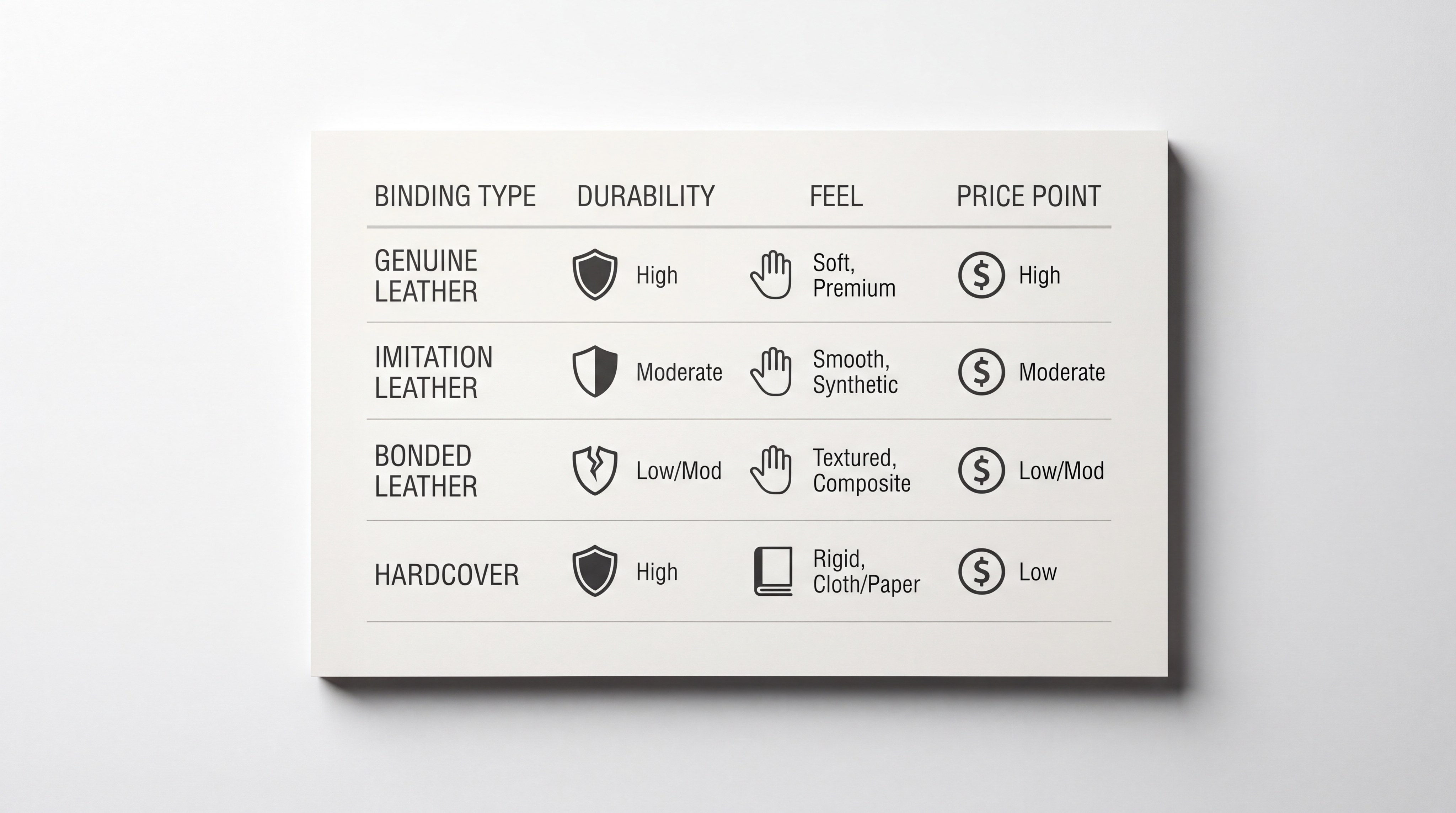
Selecting the ideal Bible binding is a matter of matching your long-term durability requirements with your production budget constraints. If you are a B2B publishing or sourcing manager, you probably know the pain of choosing covers that look fantastic on a sample desk but peel or crack after a few months of heavy use. This physical failure damages your organization’s reputation and wastes your valuable budget on costly replacements. Fortunately, you can avoid this struggle by choosing a versatile bonded leather bible or another professional binding standard engineered to withstand repetitive handling.
Is a bonded leather bible durable enough for pew use?
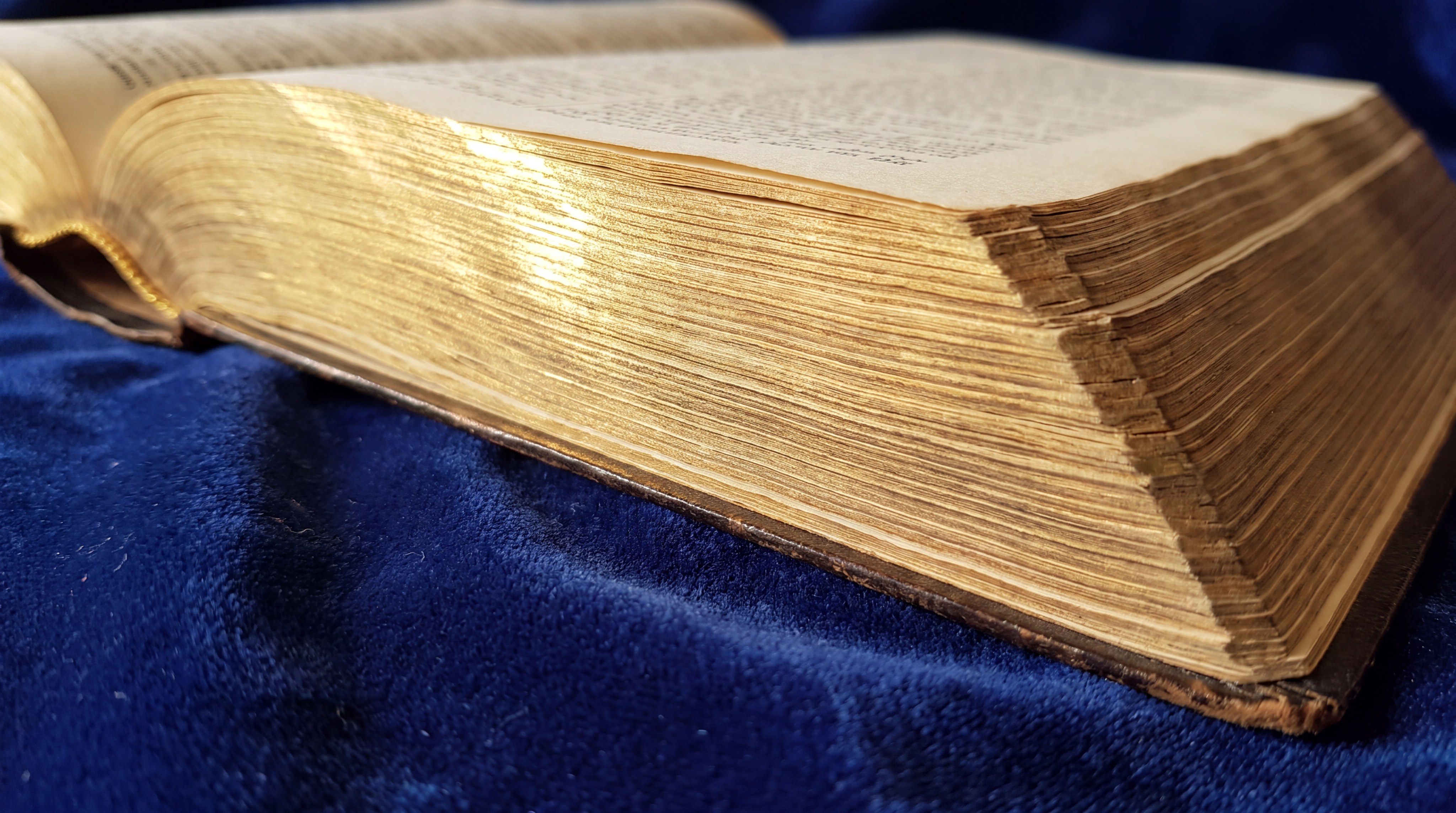
A bonded leather bible offers a reliable, mid-tier level of durability that is highly suitable for moderate pew use under standard conditions. If you are sourcing books for congregations, you want a volume that maintains its professional appearance without skyrocketing your cost. This composite material is created by combining natural leather scraps with durable synthetic resins. It provides an excellent balance of classic aesthetics and high production efficiency.
However, you must understand that composite materials are naturally more sensitive to ambient humidity and friction than solid premium hides. If your sanctuary experiences extreme temperature swings, these fibers can eventually start to flake along the joints over several years. Knowing these physical characteristics helps you plan your inventory replacement cycles realistically.
What is the chemical composition of bonded fibers?
Look: you can better appreciate how this material performs by examining its internal makeup. It consists of shredded real leather scraps blended with latex or polyurethane binders before being pressed onto a fiber backing. This engineering process creates a highly uniform sheet that looks and smells like premium natural hide.
Understanding these components will help you make a smarter manufacturing choice:
- Natural leather fibers comprise sixty to eighty percent of the composite core.
- High-grade synthetic binders preserve the structural flexibility of the cover.
- A durable fabric mesh backing prevents premature tearing along stress points.
Key Takeaway: Choosing composite leather fiber sheets allows you to procure handsome, genuine-looking holy books at a fraction of premium hide pricing.
| Aspect | Composite Leather Fiber | Natural Animal Hide | |
|---|---|---|---|
| Aesthetic Appeal | Highly uniform texture | Unique grain patterns | |
| Production Waste | Extremely low scrap | Higher cutting loss | |
| Overall Affordability | Highly economical | Premium luxury pricing |
With these structural factors in mind, navigating the material selections becomes a seamless process for publishers.
Why upgrade to premium hide from a bonded leather bible?
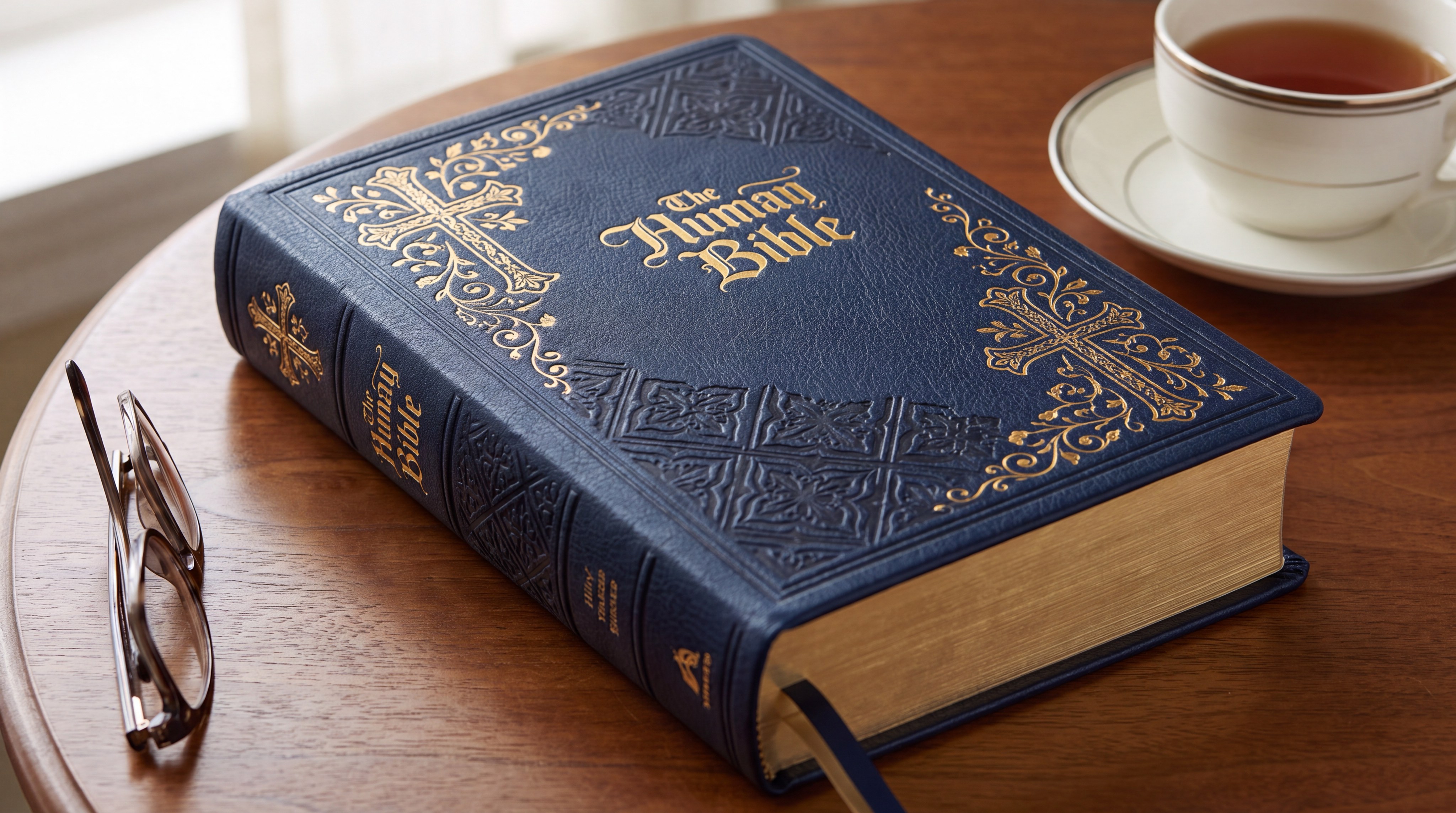
Upgrading to premium animal hide from a bonded leather bible is highly recommended if you require maximum longevity, a luxurious hand-feel, and a natural aging patina. Solid animal hides retain their organic grain fibers, which allows them to bend repeatedly without tearing or flaking. This physical composition ensures that your high-end commemorative editions will easily survive decades of daily reading. While the upfront investment is greater, the long-term value you receive makes it highly economical for heirloom volumes.
Natural hides like top-grain calfskin and goatskin possess unique textures that synthetic alternatives simply cannot replicate. They are also highly resistant to the typical drying and surface peeling that can plague recycled composite covers. Selecting these premium options instantly elevate the perceived market value of your scripture line.
Does natural animal grain justify the higher cost?
Think about it: you are not just buying a cover material; you are investing in a historical standard of book preservation. Premium natural grain hides naturally absorb oils from the reader’s hands, which darkens the cover and develops a gorgeous, protective patina. This slow cosmetic evolution makes the volume feel increasingly personal and valuable over time.
These premium characteristics deliver distinct commercial benefits to your publication:
- High tensile strength prevents splitting along the critical cover hinges.
- Natural breathability protects the delicate inner paper pages from moisture buildup.
- Superior elasticity allows the volume to lie completely flat when open.
Key Takeaway: Investing in premium natural skins guarantees that your most important commemorative editions remain beautiful and intact for generations.
| Benefit | Premium Natural Hide | Reclaimed Fiber Cover | |
|---|---|---|---|
| Expected Lifespan | Decades to centuries | Three to seven years | |
| Aging Character | Rich protective patina | Surface wear and flaking | |
| Flex Tolerance | Unlimited folding actions | Moderate physical limits |
Recognizing the longevity of premium hides allows you to weigh them effectively against synthetic solutions.
How does imitation cover match a bonded leather bible?
An imitation polyurethane cover matches a bonded leather bible by delivering a comparable leather-like texture while offering significantly better water resistance and color customizability. Modern synthetics—often referred to as leatherette or PU—contain no animal fibers at all, making them entirely vegan. They are engineered by applying a textured plastic layer over a stable woven fabric backing. This synthetic makeup prevents the material from drying out or cracking along the cover folds over time.
If you are printing titles aimed at active users or students, you need a resilient material that repels sweat and liquids. Synthetic covers are highly resistant to staining, which allows you to offer lighter, brighter cover colors. These advantages make modern synthetic options a dominant force in the contemporary religious publishing sector.
Are modern synthetic polyurethane covers more flexible?
The best part is that you can easily customize the physical stiffness of these covers to achieve a highly flexible, limp cover design. Modern production processes allow manufacturers to match the soft, drape-like flexibility of premium goatskin at a fraction of the cost. This tactile flexibility makes the final book incredibly satisfying to hold and read on the go.
These synthetic fabrics offer a wealth of creative opportunities for your design team:
- Two-tone heat burnishing creates dark, high-contrast debossed imagery without ink.
- High resistance to moisture prevents cover warping in humid coastal climates.
- Perfect compatibility with high-speed automated casing machinery keeps costs low.
Key Takeaway: Utilizing advanced synthetic leathers lets you combine outstanding liquid resistance with bright, modern designs that attract contemporary B2B buyers.
| Feature | Modern Polyurethane (PU) | Composite Fiber Cover | |
|---|---|---|---|
| Water Resistance | Complete liquid barrier | High moisture absorption | |
| Color Range | Unlimited vibrant choices | Mostly traditional earth tones | |
| Surface Stability | Highly resistant to flaking | Prone to surface peeling |
After examining these flexible synthetic qualities, you can compare them to rigid traditional formats.
Can a standard hardcover outlast a bonded leather bible?

A standard rigid hardcover will easily outlast a flexible bonded leather bible because its thick paperboard core protects the inner book block from physical deformation. This structural design wraps heavy-duty greyboard in protective cloth, paper, or synthetic materials. The rigid edges overhang the pages, acting as armor that shields the paper corners from impact and wear. This format is the industry standard for thick reference titles that require maximum physical defense on a library shelf.
If you expect your books to be stored vertically for long periods, rigid boards prevent gravity from dragging the pages downward. This support prevents the spine from sagging and tearing away from the outer cover over the years. Choosing hardcovers for heavy study editions is a highly sensible, damage-reducing choice.
When should your organization invest in rigid board?
Here is why: you should opt for rigid paperboard covers when your main priority is protecting massive volumes with high page counts. Heavy study books containing cross-references and maps put immense stress on their bindings when handled. Hardcover structures distribute this weight evenly, ensuring that the spine signatures remain securely aligned under daily stress.
Rigid cover options deliver exceptional value in specific environments:
- Public libraries and educational institutions require rigid boards for shelf storage.
- Heavy reference editions with over one thousand pages need strong boards.
- Presentation boxes and commemorative editions benefit from a hardcover aesthetic.
Key Takeaway: Selecting a rigid hardcover structure provides your publication with supreme physical defense and prevents the spine sagging common in thick books.
| Attribute | Rigid Hardcover Boards | Flexible Composite Cover | |
|---|---|---|---|
| Corner Protection | Excellent rigid overhang | Soft flush or semi-overhang | |
| Vertical Storage | Perfect for upright shelving | Prone to spine sagging | |
| Base Core Material | High-density greyboard | Flexible backing material |
While rigid structures excel on shelves, some distribution strategies demand a lighter, more portable approach.
Should your project choose softcover over a bonded leather bible?
You should choose a softcover over a bonded leather bible when you need to minimize the physical weight of each volume and lower overall bulk shipping expenses. Softcover bindings utilize a single layer of flexible cardstock or plastic-laminated paper to wrap the text block. This lightweight construction trims several millimeters from the book’s outer thickness, making it ideal for compact designs. It allows you to produce highly transportable editions that easily fit into a reader’s travel bag.
By eliminating heavy internal backing boards and thick leather linings, softcovers dramatically reduce the weight of your cargo. This weight reduction yields massive cost savings during international freight and local postal mailings. For high-volume distribution networks, softcover specifications represent an exceptionally practical business decision.
Is lightweight paperboard ideal for heavy travel?
Think about it: you do not want your readers leaving their heavy books at home because they are too bulky to carry to work or school. A flexible, thin cardstock cover allows the book to bend easily without taking up precious space. This portability ensures that your audience can comfortably read your printed material anywhere, from trains to cafes.
These lightweight characteristics provide major advantages for specific publishing niches:
- Pocket devotionals benefit from a slim, highly flexible structural profile.
- Travel-focused editions slip effortlessly into compact luggage or backpack pockets.
- Youth-targeted campaigns love the colorful, modern lamination designs available.
Key Takeaway: Choosing lightweight softcovers is the most efficient way to maximize portability and reduce shipping costs for your travel editions.
| Metric | High-Grade Softcard | Flexible Composite Cover | |
|---|---|---|---|
| Thickness Range | 0.3mm to 0.6mm | 1.2mm to 2.0mm | |
| Shipping Weight | Exceptionally light | Moderately heavy | |
| Unit Cost Index | Low production cost | Moderate production cost |
Once you understand the benefits of lightweight card covers, you can explore the economic benefits of mass-market paperbacks.
Why select paperback instead of a bonded leather bible?
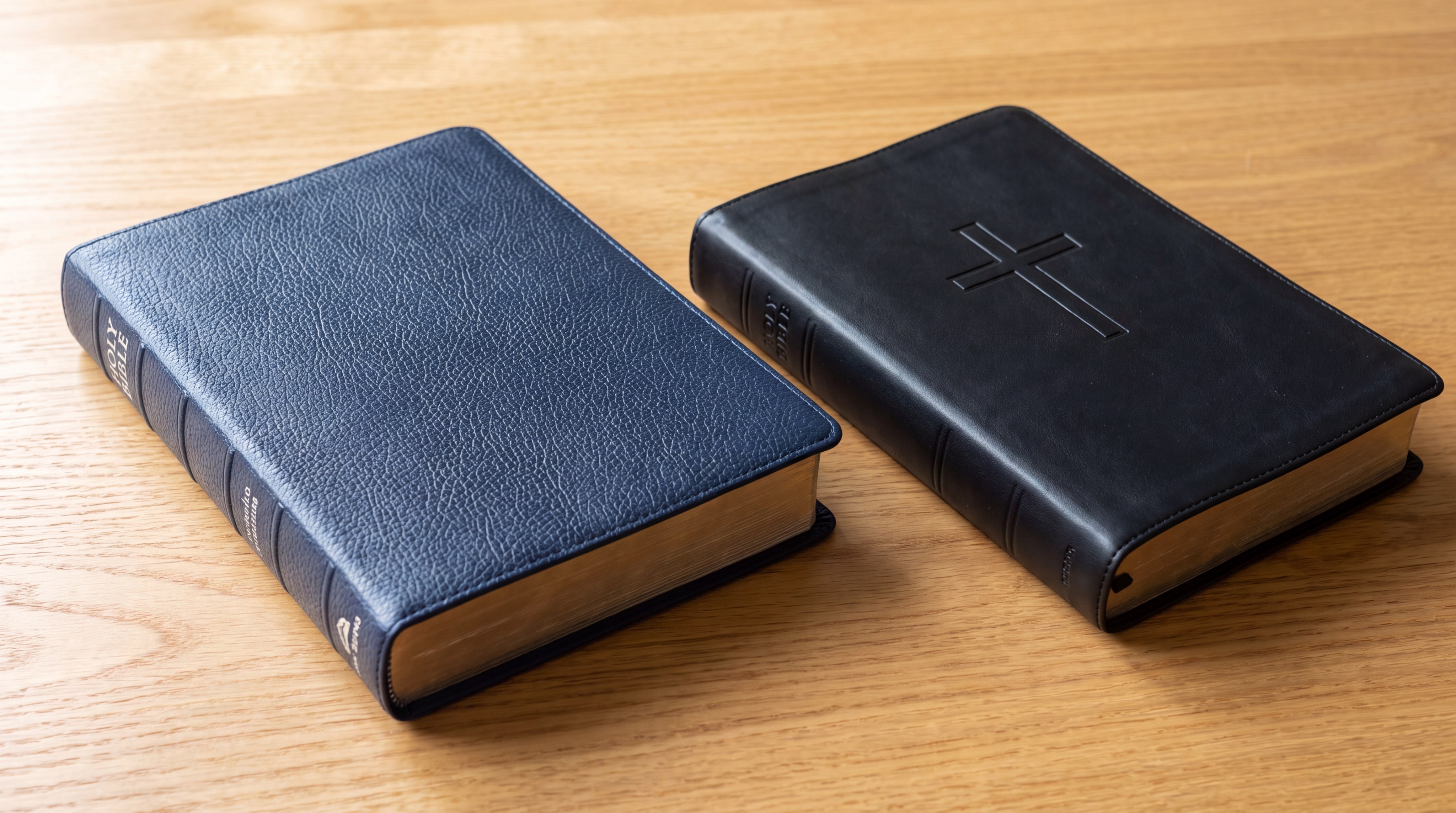
Selecting a mass-market paperback instead of a bonded leather bible is the most logical path when you must produce the maximum number of copies under a tight, restrictive budget. Paperback production utilizes thin covers and fast, automated perfect-binding lines to achieve unmatched speeds. This high-speed manufacturing keeps the unit cost incredibly low, which is ideal for massive outreach campaigns. It allows you to distribute resources to thousands of people who might not otherwise have access to them.
While paperbacks do not possess the luxurious allure of leather-bound keepsakes, their utility is unparalleled for educational and missionary work. They serve as excellent disposable study texts or classroom materials that can be easily distributed without financial stress. If your primary goal is maximizing regional distribution, paperback printing is your best option.
Does high-speed perfect binding offer enough stability?
Here is the thing: you do not have to sacrifice all structural stability when choosing a high-speed paperback option. Modern polyurethane reactive (PUR) adhesives form incredibly strong chemical bonds with paper edges, preventing sheets from slipping out under standard use. This advanced adhesive technology ensures that your budget-friendly editions remain perfectly intact during standard reading.
Paperback specifications are perfectly suited for several high-volume projects:
- Massive outreach initiatives require the lowest possible unit cost to maximize reach.
- Charity campaigns depend on lightweight, non-rigid formats for distribution.
- Short-term classroom workbooks and seminar guides are ideal for simple paperback runs.
Key Takeaway: Utilizing paperback perfect-bound methods allows non-profits and publishers to scale their distribution efforts ten-fold without breaking the bank.
| Parameter | Mass-Market Paperback | Flexible Composite Cover | |
|---|---|---|---|
| Optimal Order Volume | 10,000+ copies | 1,000 to 5,000 copies | |
| Production Time | Extremely fast turnaround | Slow, hands-on assembly | |
| Logistics Economy | Maximum shipping savings | Moderate shipping weight |
With these economic factors cleared, we can dive deep into the specific spine designs that define premium books.
Which special binding options beat a bonded leather bible?
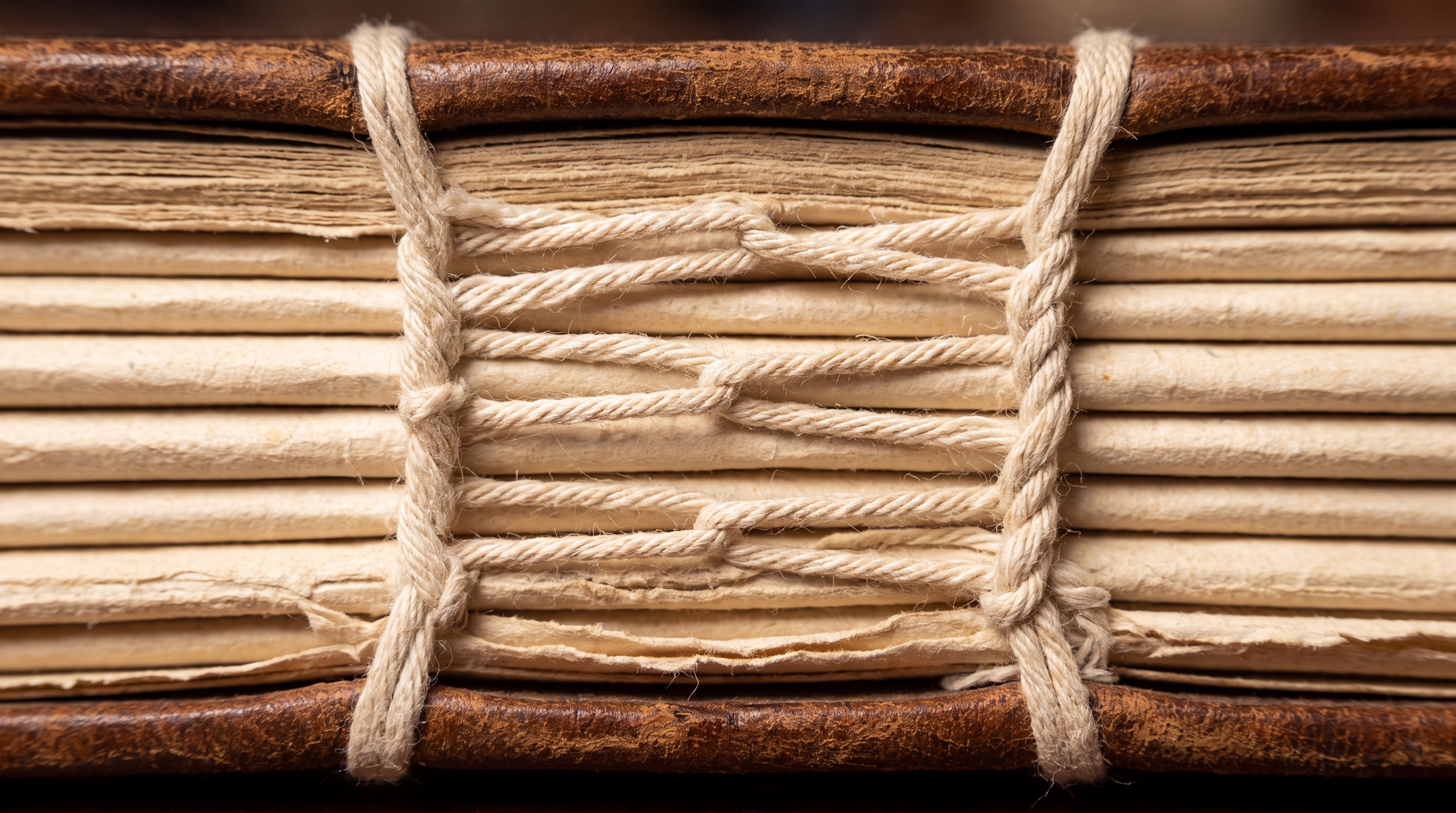
Smyth-sewn bindings coupled with premium edge gilding will easily beat a standard bonded leather bible in both structural lifespan and visual elegance. The primary vulnerability of composite covers lies in their glue-based bindings, which can dry out and snap under heavy use. Smyth sewing physically threads folded paper signatures together, creating a flexible backbone that withstands constant folding. This mechanical sewing allows the open book to lie completely flat on a pulpit or study desk without snapping.
When you pair a Smyth-sewn book block with edge gilding, you also protect the pages from dust and moisture. The gold or silver foil applied to the page edges acts as a protective shield against yellowing. Investing in these premium structural details is crucial if you want your printed editions to become cherished heirloom pieces.
How does Smyth sewing improve long-term page security?
Look: you can visually detect a Smyth-sewn book by looking at the top or bottom of the spine and finding the folded thread signatures. Because the pages are physically sewn together rather than ground flat and glued, they cannot easily pull out or fall free. This structural method has been proven over centuries of bookbinding history to survive intensive daily use.
These mechanical binding elements are vital for high-durability book designs:
- Physical thread loops hold adjacent paper pages together with minimal tension.
- A reinforced spine liner provides an extra layer of protective cushioning.
- Lay-flat flexibility reduces physical stress on the cover joints during reading.
Key Takeaway: Pairing thread-sewn signatures with high-grade covers yields an heirloom-quality volume that easily survives decades of consistent reading.
| Binding Quality | Smyth-Sewn Threading | Perfect-Glue Binding | |
|---|---|---|---|
| Page Security | Superior (pages cannot fall out) | Moderate (glue can degrade) | |
| Opening Flexibility | Lies perfectly flat when opened | Tends to spring shut easily | |
| Historical Lifespan | Decades to centuries | Three to ten years |
Understanding these structural spine differences highlights the role that material thickness plays in cover construction.
How does cover thickness impact a bonded leather bible?
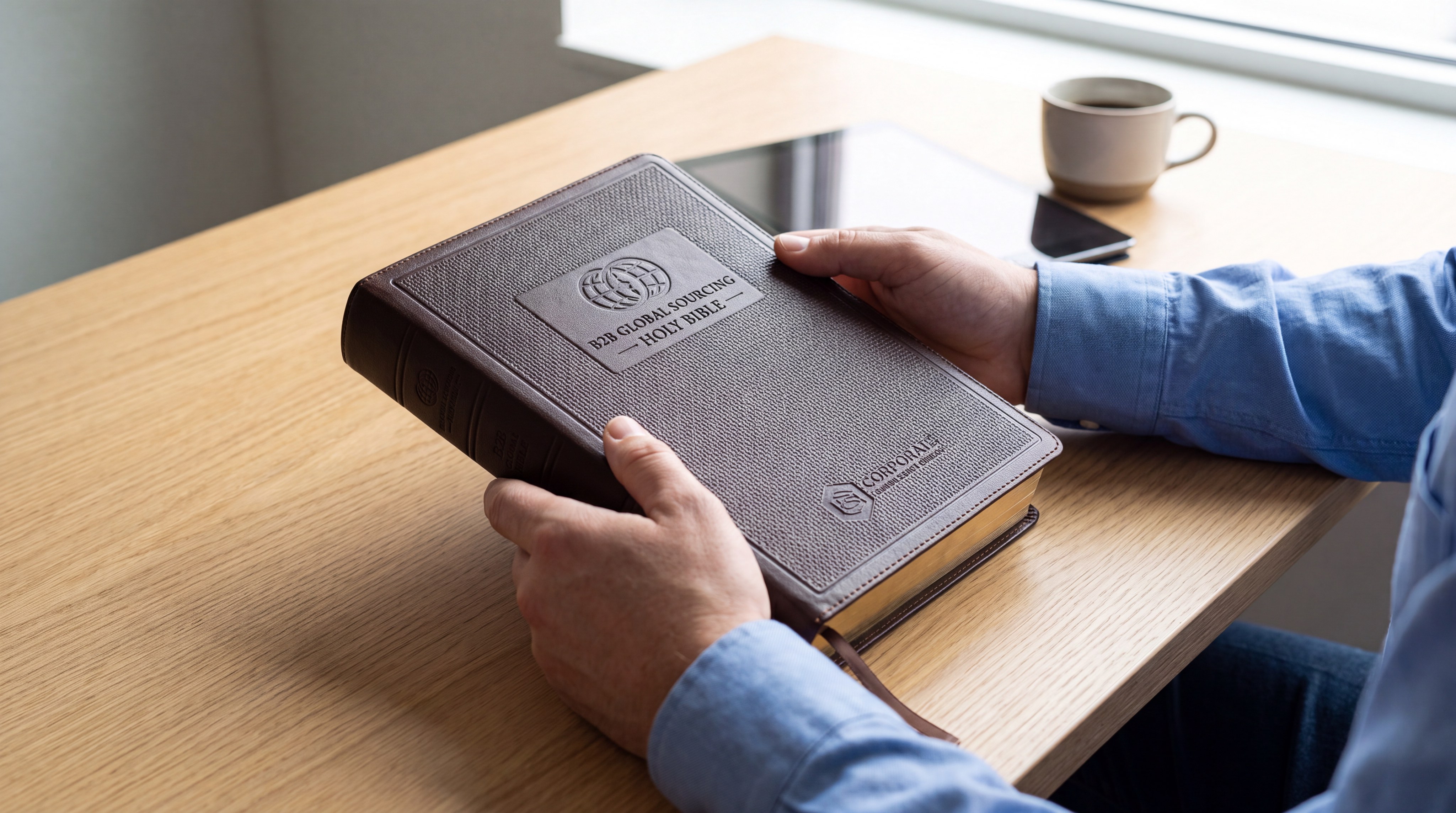
Cover thickness directly dictates the rigid feel, hand-drape, and overall weight of a bonded leather bible during daily use. In custom B2B book manufacturing, thickness is measured in millimeters and is controlled by adjusting the internal backing paper board. A thin cover (around 1.0mm) yields a highly limp, flexible feel that curves beautifully in your hands. Conversely, a thick cover (2.0mm or higher) provides a substantial, robust structure that resists drops and corner impacts.
Choosing the correct cover weight is essential because it limits the types of decorative finishes you can apply. Thicker covers are highly compatible with deep blind debossing, creating elegant, deep textures. Knowing how thickness impacts both aesthetics and durability helps you design a highly polished final product.
Which cover weight delivers the best tactile feel?
Think about it: you want your books to feel incredibly satisfying the second a reader picks them up. A medium-thick cover (1.5mm to 1.8mm) delivers a balanced, premium feel that provides excellent corner protection without feeling overly rigid. This physical weight instantly signals manufacturing quality and structural care to your end users.
These thickness grades are tailored to meet distinct aesthetic preferences:
- Slim covers (0.8mm to 1.2mm) are ideal for lightweight travel and pocket editions.
- Balanced covers (1.5mm to 1.8mm) are perfect for standard pew and classroom books.
- Heavy covers (2.0mm to 2.5mm) provide the depth needed for premium study editions.
Key Takeaway: Adjusting your cover thickness lets you fine-tune the flexibility and debossing depth of your volumes to match your brand style.
| Cover Thickness | Flex Profile | Ideal Decorating Technique | |
|---|---|---|---|
| 0.8mm to 1.2mm | Highly flexible and limp | Light foil stamping | |
| 1.5mm to 1.8mm | Balanced, medium flexibility | Standard blind debossing | |
| 2.0mm to 2.5mm | Substantial, semi-rigid | Deep, multi-layered debossing |
With these physical dimensions optimized, calculating production costs becomes your next logical step.
What determines the cost of a bonded leather bible run?
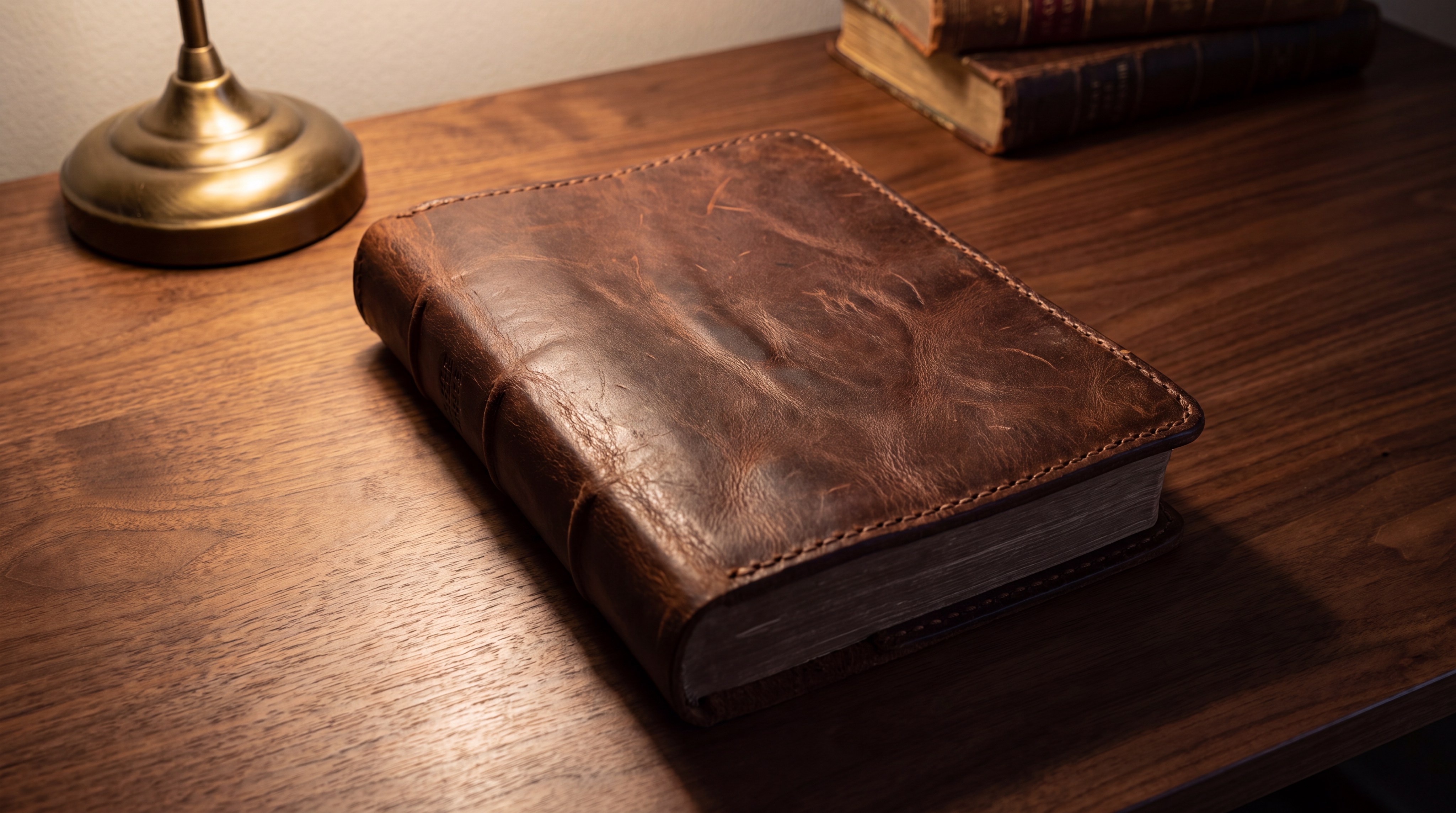
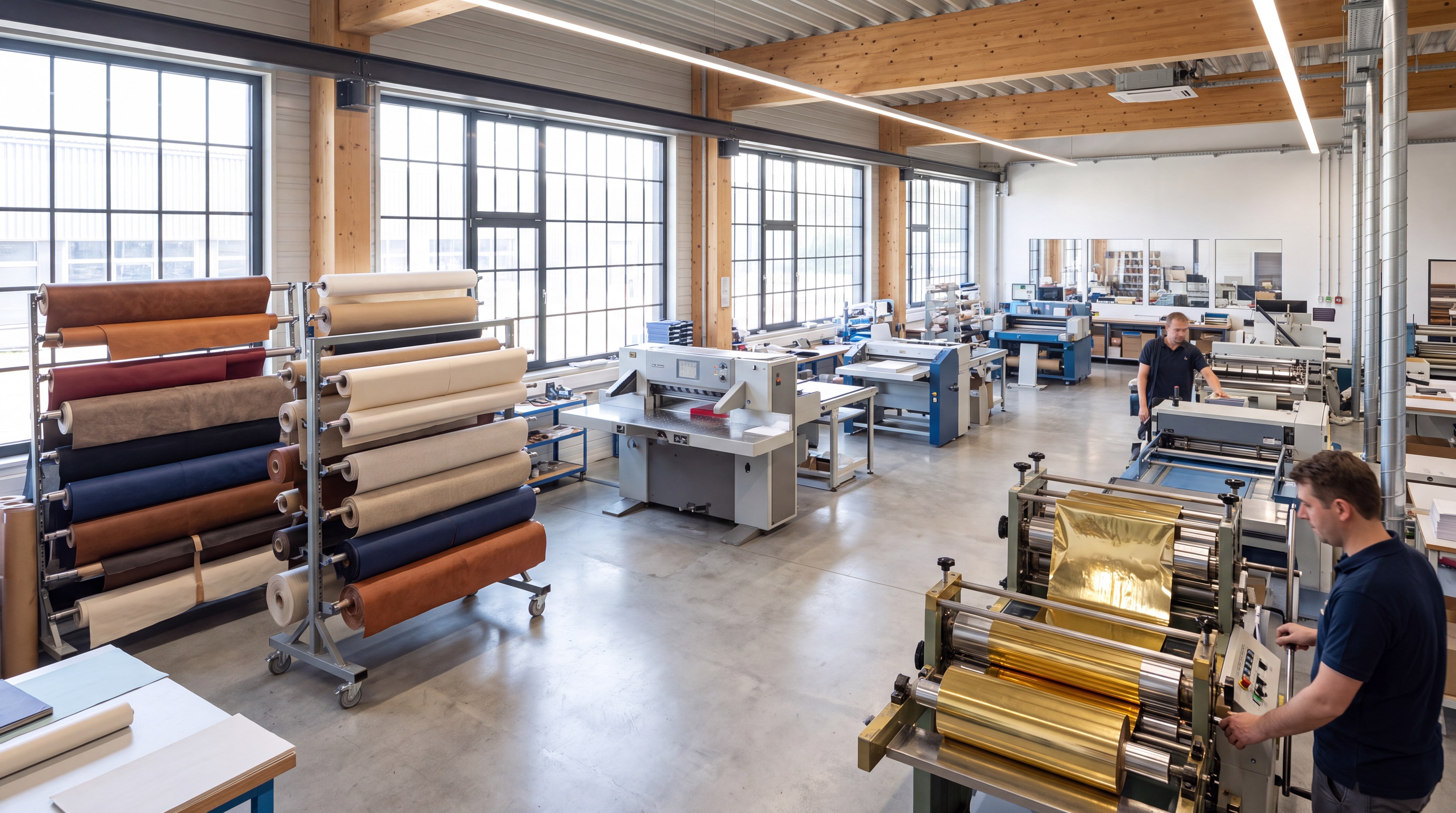
The total cost of a custom bonded leather bible printing run is primarily determined by your order quantity, cover thickness, and decorative edge finishes. Because composite materials are manufactured in continuous rolls rather than irregular individual hides, factory cutting waste is incredibly low. This high yield makes composite materials much more affordable than natural hides for large-scale production. It represents a highly predictable and budget-friendly option for mid-to-high volume orders.
If you want to maximize your budget efficiency, scaling up your order volume is the most effective path. High-volume print runs allow automated machinery to operate continuously, which slashes setup fees and reduces unit costs. Understanding how these factors scale helps you optimize your financial planning for custom projects.
How do order volumes reduce your custom print pricing?
Here is why: you can unlock significant cost reductions as your manufacturing run scales up. Industrial printing presses and automated bookbinding machines require complex physical setups that are highly expensive for small runs. Once these machines are calibrated, they can process thousands of copies rapidly with very little human intervention.
These production efficiencies deliver substantial financial advantages to your organization:
- Massive order volumes (5,000+ units) trigger steep discounts on raw materials.
- Streamlined cutting patterns virtually eliminate expensive composite waste.
- Automated assembly lines drastically reduce the cost of manual labor per unit.
Key Takeaway: Sourcing uniform, rolled composite materials in large quantities ensures predictable manufacturing costs and a higher return on investment.
| Production Volume | Setup Cost Impact | Waste Percentage | Unit Cost Efficiency | |
|---|---|---|---|---|
| 1,000 Units | High per-unit impact | Less than 5% | Standard B2B pricing | |
| 5,000 Units | Low per-unit impact | Less than 3% | Optimized bulk rates | |
| 10,000+ Units | Negligible impact | Less than 1% | Maximum volume discount |
With your budget and volume projections aligned, protecting the finished volumes becomes your final manufacturing concern.
How do you properly clean a custom bonded leather bible?
Properly cleaning a custom bonded leather bible requires using a dry microfiber cloth and avoiding all harsh chemical cleaning solutions. Because these composite covers are held together by synthetic adhesives, they are highly sensitive to harsh detergents and rubbing alcohol. These harsh chemicals quickly dissolve the internal binders, causing the surface to peel and crack. Storing the volumes in a moderate, climate-controlled space prevents the composite fibers from drying out over time.
If you are distributing volumes to high-use environments like churches or schools, providing basic care instructions is highly beneficial. Simple preventive habits can easily double the physical lifespan of your books, preserving your investment. Ensuring proper care helps your organization maintain a clean, professional library presentation for years to come.
What storage environments prevent surface peeling?
The best part is that you can keep your library looking pristine simply by maintaining a stable indoor climate. Storing your books away from direct heat sources and windows prevents the cover materials from drying out. A steady humidity level ensures that the cover fibers remain flexible and resilient during reading sessions.
These basic storage habits are highly effective at preventing premature cover decay:
- Store your volumes vertically to support the spine and keep the covers flat.
- Maintain relative humidity levels between forty and sixty percent.
- Clean dust away gently using a dry, soft microfiber cloth to avoid scratches.
Key Takeaway: Implementing basic climate control and gentle cleaning practices preserves the look and structural integrity of your books for years.
| Maintenance Rule | Recommended Action | Action to Avoid | |
|---|---|---|---|
| Dusting Cover | Soft, dry microfiber cloth | Wet washcloths or paper towels | |
| Chemical Use | None (keep materials dry) | Alcohol sanitizers and solvents | |
| Storage Climate | Climate-controlled room (40-60% RH) | Damp basements or hot attics |
By establishing these simple maintenance protocols, B2B buyers can confidently proceed with large-scale projects.
Aligning Your Vision with Manufacturing Excellence
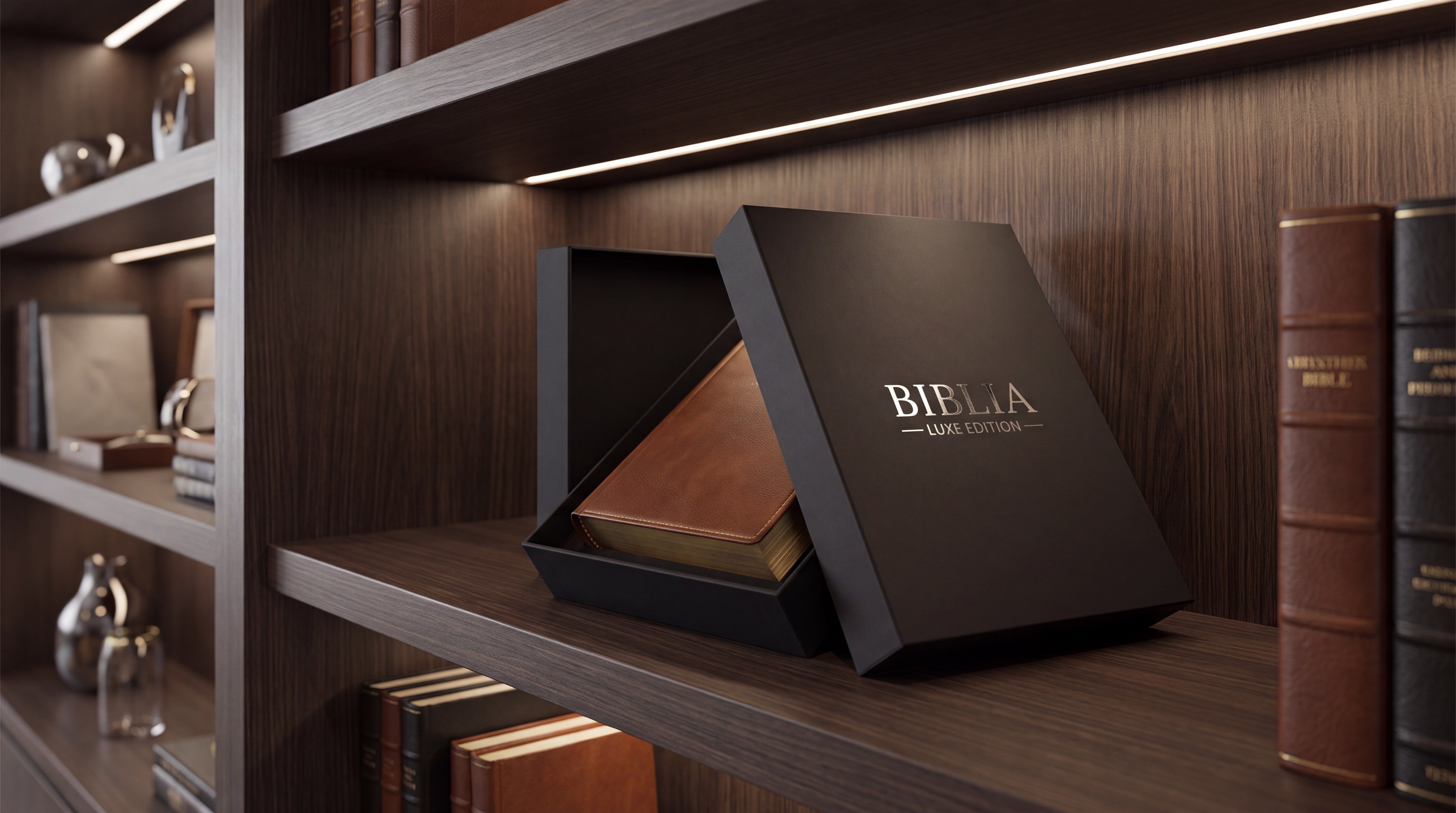
Selecting the perfect book cover material and binding style no longer needs to be a stressful, budget-draining decision. By understanding the distinct physical characteristics of leather, synthetics, hardcovers, and paperbacks, you can confidently design beautiful, long-lasting books that perfectly match your budget and distribution goals. At King Tai, we help publishers, religious organizations, and sourcing managers eliminate production friction and achieve consistent quality from approved sample to bulk delivery. Our team handles every phase of custom printing and box packaging with absolute precision, ensuring that your volumes arrive on time and intact. If you are ready to elevate your scripture publishing project and work with a reliable, export-experienced manufacturing partner, we invite you to contact us today for a comprehensive, professional quotation within twenty-four hours.
Bible Binding Design: Frequently Asked Questions
Can I customize the cover design of my books with custom stamping?
Yes, you can. Modern manufacturing allows you to apply precise gold foil stamping, deep blind debossing, and elegant perimeter stitching to create a premium-looking finished cover that perfectly represents your brand.
What’s the best binding style for a heavy reference book?
A Smyth-sewn binding paired with a rigid hardcover is highly recommended. Heavy volumes require physical thread sewing rather than simple adhesives to keep pages secure, while rigid boards protect the heavy book block from sagging over time.
How do I know if my project should use a paperback instead of a composite leather cover?
It depends on your primary distribution goals. If you are executing a massive charitable campaign on a strict budget where quantity is your main focus, a mass-market paperback is best; if you want to create premium keepsakes for retail shelves, select a composite leather cover.
Can I receive a custom physical sample before committing to mass production?
Yes, you can. We develop custom physical samples first so you can verify the materials, thickness, structure, and finishes of your book before mass production begins.
How do I know if synthetic leathers are a better value than recycled leather fibers?
They are typically a better value if your books will be handled frequently in humid or highly active environments. Modern synthetic polyurethane is completely waterproof and highly resistant to flaking, making it more durable than recycled fibers under harsh daily conditions.