
A premium Bible can leave the printer in excellent condition and still arrive with rubbed corners, a marked cover, or movement inside a shipping carton. A custom book slipcase adds a fitted outer layer for editions that need protection, shelf presentation, and a more controlled handoff to retailers, ministries, collectors, or gift recipients.
The right slipcase is not selected from a generic size chart. Its internal space, grayboard structure, wrap paper, and liner have to match the finished Bible after binding and finishing. The specification should balance easy access with enough restraint to prevent shifting. This guide covers the pre-quotation decisions.
What Is a Book Slipcase and When Should You Use One?
A book slipcase is a rigid sleeve with one open access side and enclosed panels around the book. The Bible slides into the sleeve for storage or display and comes out without opening a hinged lid. The structure can protect the cover and edges from routine shelf contact while giving a premium edition a defined presentation format.
Slipcases work well when the book is the main product and the outer case needs to stay compact. They suit collector editions, commemorative publications, gift-oriented Bibles, and premium retail formats. They are less suitable when the book must be opened inside the package, several unrelated items need organizing, or the slipcase itself must provide transit-impact protection without an outer carton.
Use the finished Bible as the starting point, then decide whether the sleeve needs a visible spine, a thumb access area, printed branding, or a quieter protective finish. A custom Bible printing project can involve different paper, binding, cover, and finishing directions, so the slipcase should follow the edition rather than force the edition into a standard case.
| Packaging choice | Best fit | Main strength | Main limitation |
|---|---|---|---|
| Book slipcase | One premium book with shelf or gift presentation needs | Compact protection and visible presentation | Open access side needs careful fit and pack-out planning |
| Rigid presentation box | Book plus accessories, inserts, or a more formal unboxing | More enclosed space for contents | Takes more room and adds more structural components |
| No dedicated outer case | Distribution editions with basic packing requirements | Lowest packaging complexity | Less protection and less control over presentation |
Start with the edition’s handling, storage, sales channel, and shipping path.
How Does a Slipcase Protect a Finished Bible?
A fitted slipcase protects a finished Bible by limiting contact, friction, dust exposure, and movement around the cover and page block. It gives the book a rigid boundary on several sides, reducing the load on cover corners and the spine during shelf handling.
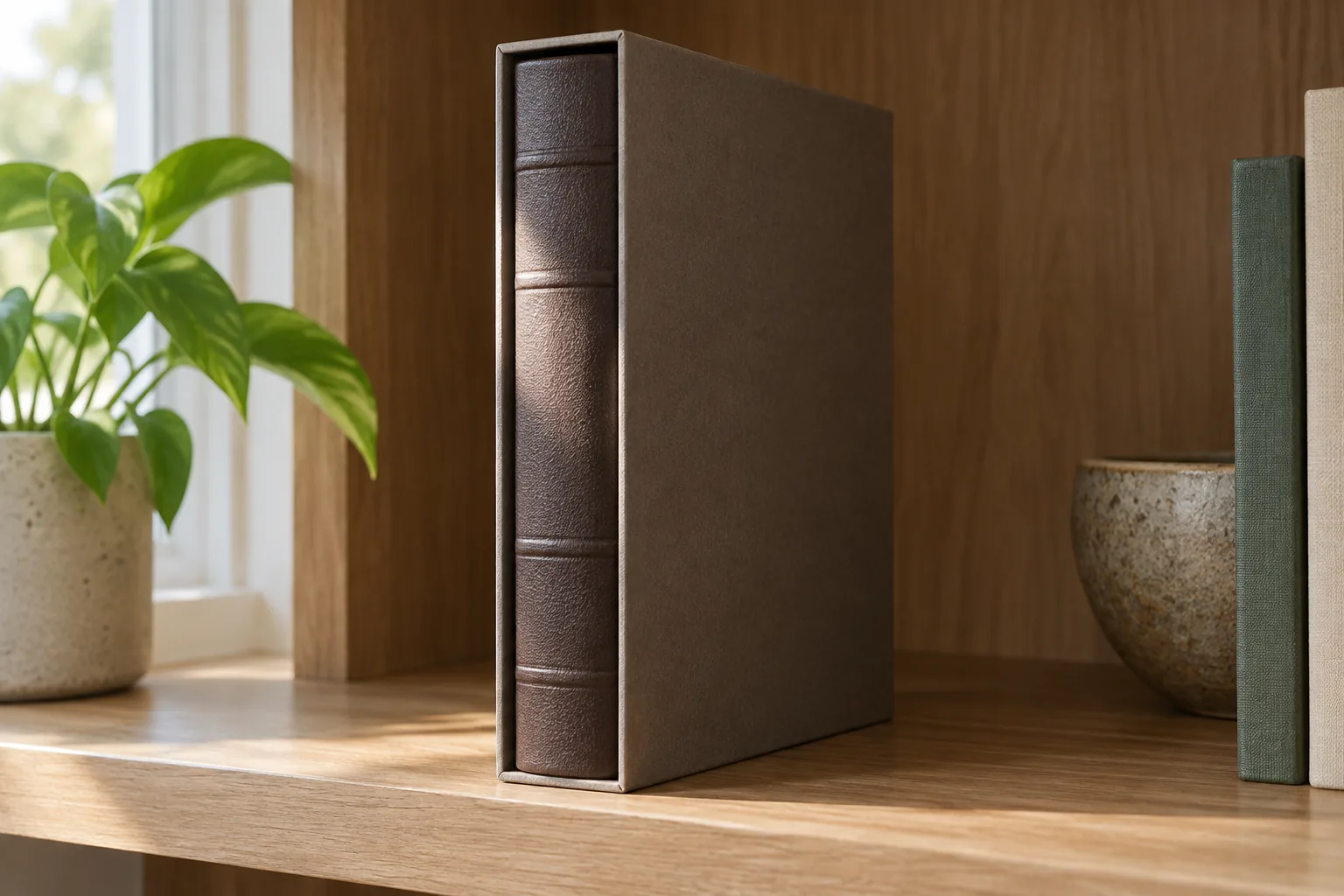
Protection depends on the complete system. A thick board with a loose opening can let a heavy Bible slide into the case walls. A very tight opening can scrape a leather, PU, cloth, or printed cover. Liner paper and the internal finish matter because they form the surface that the cover touches.
The open side also needs an honest risk review. The Canadian Conservation Institute notes that an open-sided slipcase leaves the book exposed to light. Repeated sliding can also abrade a poorly matched cover or liner. If the edition has a delicate cover overhang, raised finishing, gilt page edges, or ribbon markers, show those features in the sample. The slipcase reduces handling risk; it does not replace an outer shipping carton.
For broader Bible format and distribution decisions, see Bible printing solutions for publishers and ministries. The case should support the book’s actual use, not only its appearance in a photograph.
Which Slipcase Structure Fits a Premium Edition?
The classic structure uses rigid panels that form a closed-end sleeve around the book, with a separate access side for insertion and removal. The broad panels protect the faces of the Bible, while the spine and side pieces keep the opening square. The exact panel arrangement should follow the book orientation and the way the buyer will take it from the shelf.
Positioning the open side so the Bible spine remains visible can make a collection easier to identify on a shelf, while a plain wrap can keep attention on the Bible cover when displayed separately. A thumb cutout or shaped access area may improve removal, but it changes the exposed edge and should be reviewed against the book’s weight and cover material.
Structure should also account for assembly. Wrapped boards need clean folds, stable corners, and an opening that stays square after the covering materials dry. If the case will be produced alongside a premium collection book printing project, align the format, page bulk, cover construction, finish, and delivery plan before mass production.
Ask the supplier to show the open side, liner, board joints, and wrapped corners in the sample. Those areas reveal more than a flat artwork proof.
How Should You Size a Slipcase to the Finished Bible?
Size the slipcase from a finished, bound Bible or a dummy that reproduces its thickness and cover build. Measure the uncompressed book at several points and start from the largest height, width, and thickness observed. Then account for cover overhangs, raised materials, page-edge treatments, ribbons, and the chosen liner.
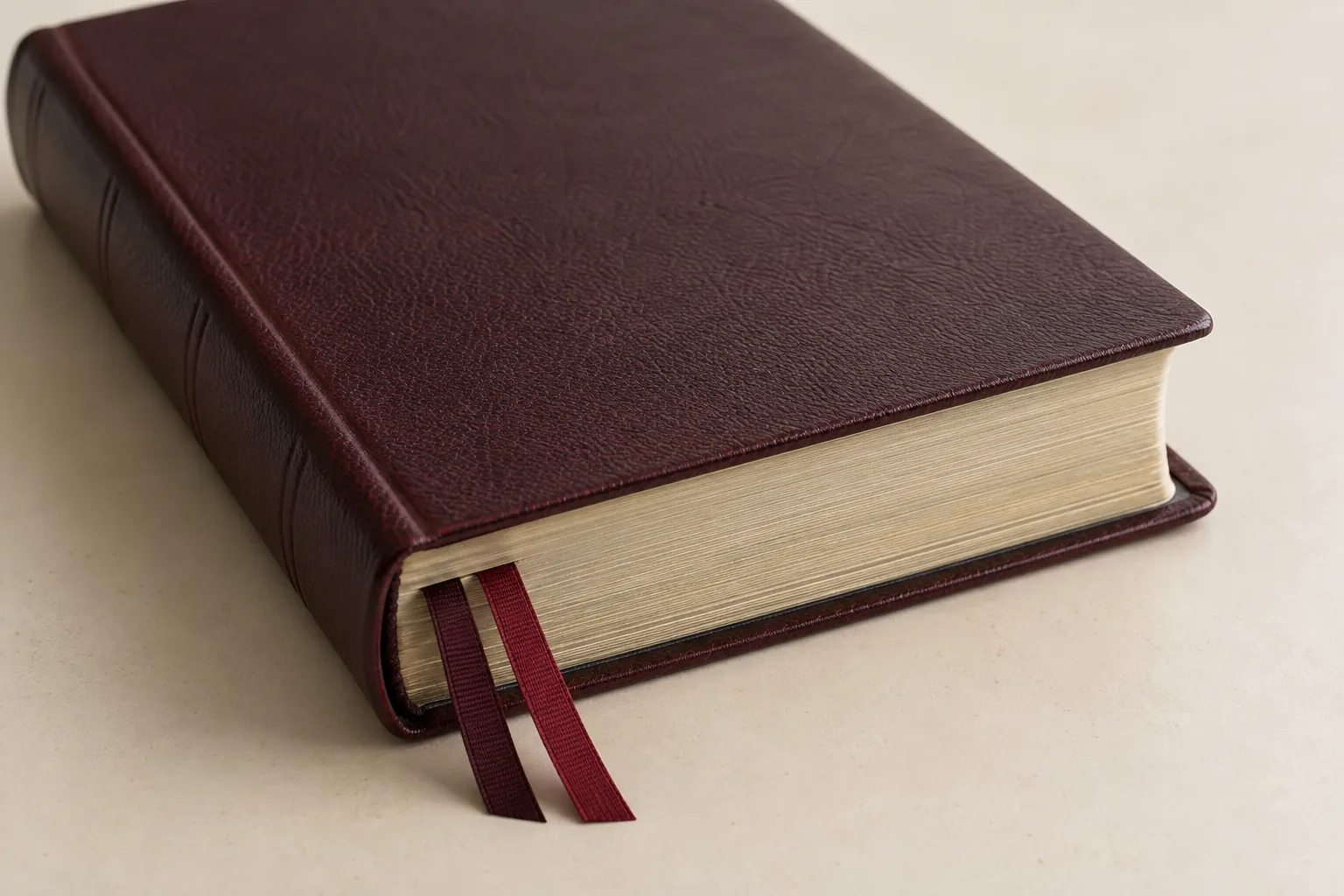
The fit needs room for normal insertion and removal while preventing visible movement on the shelf or inside the carton. “Snug” is not a universal number. Board thickness, wrap, liner, adhesive, cover texture, and book weight all change the result. Confirm the working fit through a physical sample with the real edition.
Measure more than the three outside dimensions:
- Note which edge is the spine and which edge is the access side.
- Record the largest cover dimension, including yapp or other overhangs if present.
- Identify page-edge finishes that may rub against a liner, plus ribbons or attached details that stay on the book.
- Confirm whether the slipcase will be stored upright, flat, or in a retail tray.
| RFQ measurement or input | Why it affects the case |
|---|---|
| Finished height and width | Sets the main panel size and shelf presentation |
| Finished thickness | Sets the internal gap between broad panels and affects access feel |
| Cover material and overhang | Changes friction, visible clearance, and corner protection |
| Page-edge or ribbon details | Identifies surfaces that may catch or rub |
| Storage and removal orientation | Guides the opening, spine panel, and handling test |
Do not approve a fit from an empty mock-up. Insert and remove the actual Bible, then inspect the cover and edges.
How Do Grayboard Thickness and Stiffness Affect Performance?
Grayboard gives a slipcase its rigidity. It helps the sleeve hold its shape and keep wrapped panels aligned. Thickness and stiffness affect weight, edge appearance, internal space, and room for wrap folds and liners.
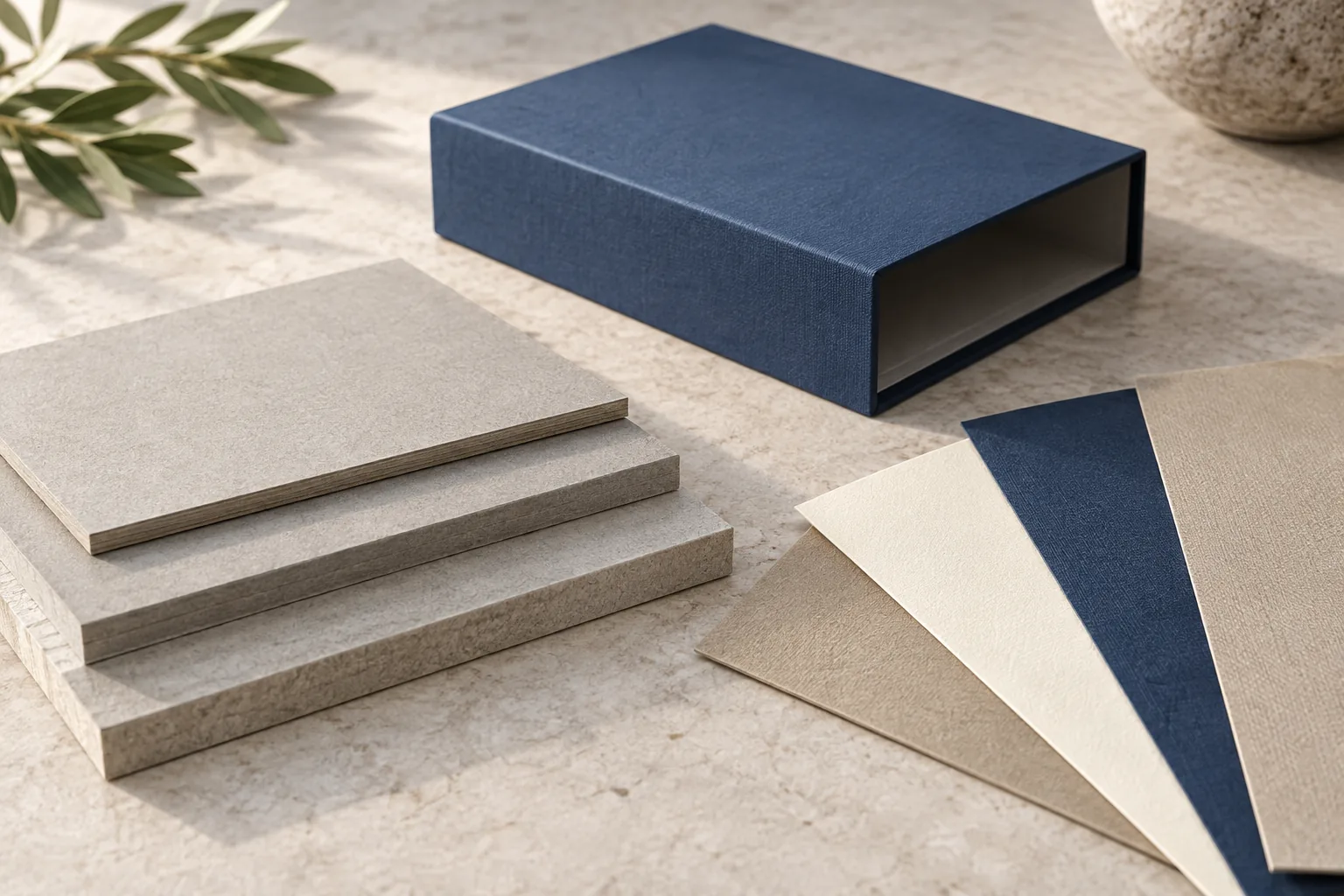
More board is not automatically better. A heavy Bible may need a stronger structure, but thick board can make the case bulky, reduce internal space, and increase shipping volume. A lighter structure is easier to handle but may flex when lifted or packed. The choice depends on the finished book, handling, display orientation, and shipping method.
Discuss board as part of a system with the printer or packaging manufacturer. Custom printing services for B2B publishers and brands can involve different paper, binding, cover, and finishing requirements; the slipcase specification should preserve the approved book dimensions rather than treat board as an isolated upgrade.
| Board direction | Useful when | Trade-off to review |
|---|---|---|
| Lighter rigid board | Portability and lower package bulk matter | May flex more under handling or packing pressure |
| Medium rigid board | A balanced shelf, gift, and shipment format is needed | Requires fit and corner review with the actual book |
| Heavier rigid board | The edition needs a stronger, more substantial outer shell | Adds weight, bulk, and possible internal-space pressure |
The sample should show that the case stays square and the wrapped corners remain clean after handling.
What Wrap Paper and Surface Finish Should You Choose?
Wrap paper is the visible skin of the slipcase. It sets the color, texture, print surface, and tactile impression while covering board joints. Choose it to sit beside the Bible cover instead of competing with it.
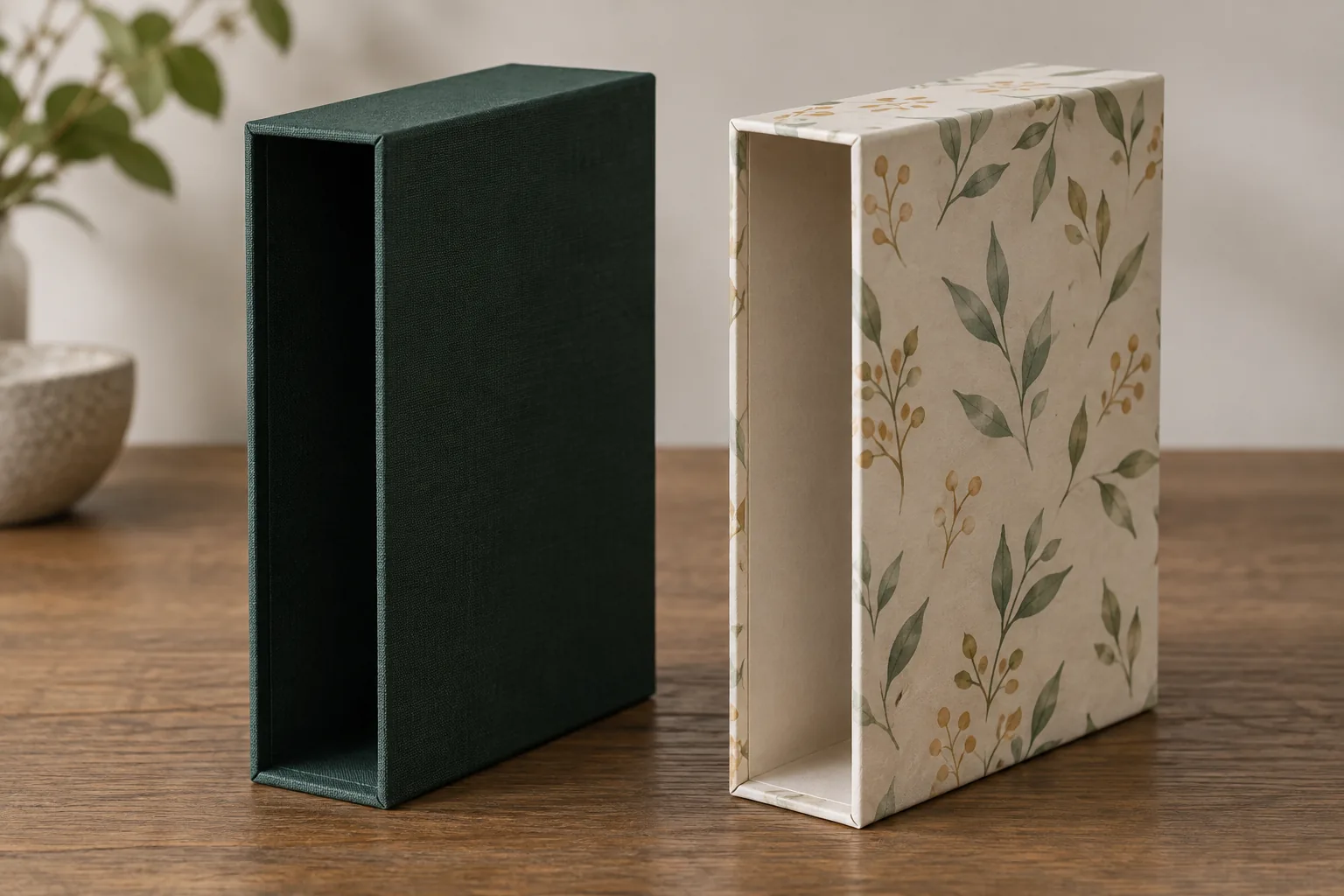
Printed wrap paper works when the slipcase is part of a branded retail or gift presentation. A solid color or textured paper may suit a commemorative or collector edition better. Matte, gloss, foil, embossing, debossing, and spot UV can be considered when the artwork, board structure, and production method support them. Review the wrapped sample because each finish changes how folds, fingerprints, and scuffs appear.
The Bible cover is part of this decision. A genuine leather cover, a leather-look cover, cloth, or printed paper each creates a different contrast with the case surface. Kingtai’s guide to Bible cover material choices can help buyers frame that comparison. Its separate discussion of genuine leather Bible construction is also relevant when a soft or textured cover needs careful protection from rubbing.
Review these finish questions:
- Does the wrap color match the approved Bible cover and artwork?
- Do folds and corners stay clean without exposed board?
- Does the surface show handling marks under normal removal, and are foil or raised effects away from crush-prone folds?
How Should Interior Liners and Inserts Hold the Bible?
An interior liner creates the contact surface between the grayboard structure and the finished Bible. It can reduce direct board-to-cover friction and hide internal construction. Test it with the actual cover material, page edges, and surface treatments.
An insert is different. It changes how the book is located inside the case, while a liner covers or finishes the interior. Inserts can help with irregular features, multiple components, or movement, but can make removal harder if they narrow the access path or grip a soft cover.
Ask what the liner may leave behind during repeated use. Loose fibers, pigment transfer, rough seams, exposed adhesive, or an uneven fold can damage the edition. Test repeated insertions and removals, then inspect cover corners, page edges, and gilded or printed surfaces.
Kingtai’s Bible printing case study shows why sample confirmation and bulk consistency matter for the book itself. The same approval discipline should cover the slipcase contact surfaces and assembly points.
How Can a Slipcase Be Prepared for Shipping and Fulfillment?
A slipcase can control movement around one finished Bible, but it is not a shipping carton. Plan the case, book, and master pack as one path from assembly to delivery. Decide whether the Bible enters the sleeve before carton packing, whether the case needs an outer wrap, and how many units share a carton.
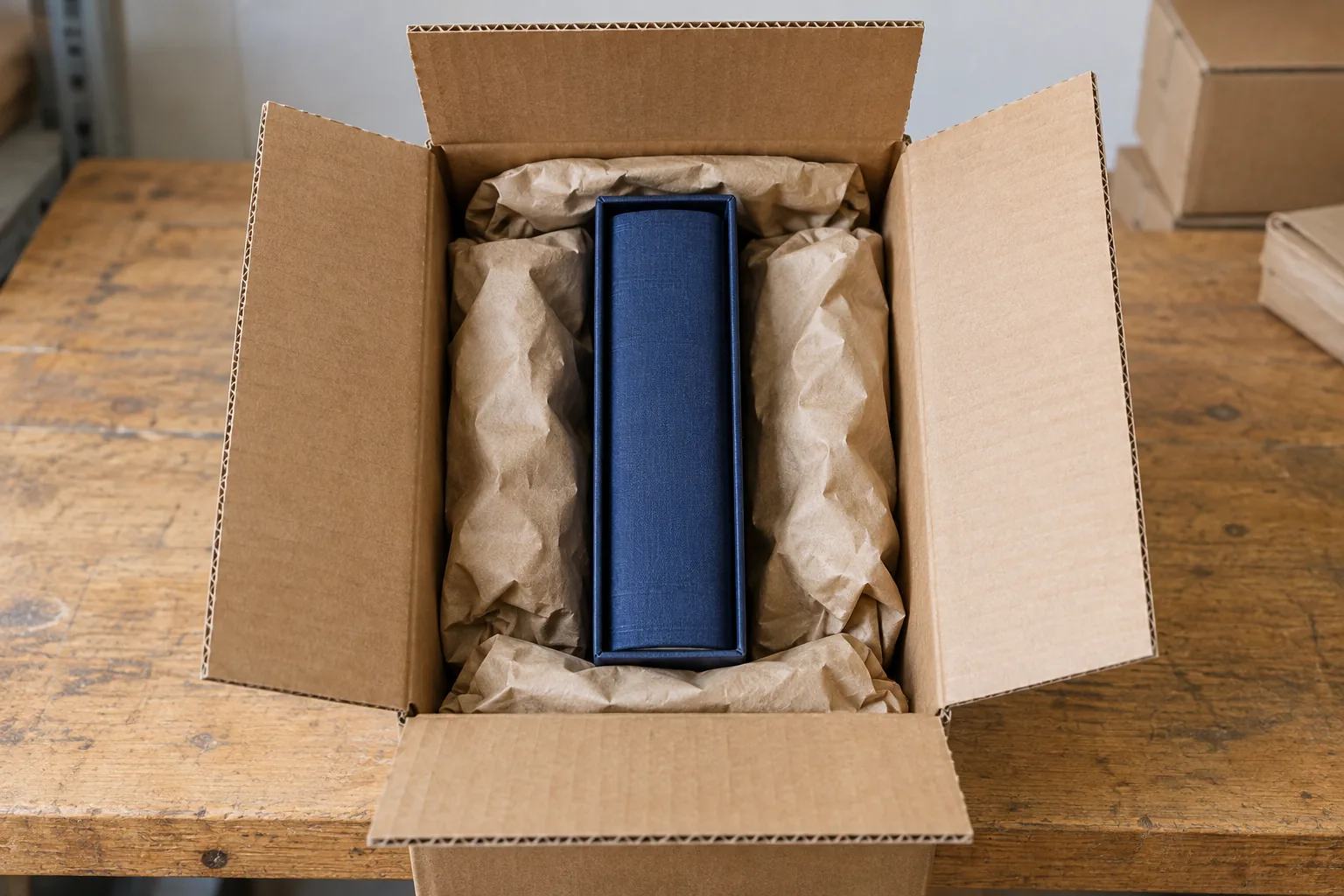
Shipping preparation should reflect the destination and sales channel. Retail units may need clean presentation after carton opening, e-commerce fulfillment may need more restraint against shifting, and ministry distribution may favor repeatable pack-out. None of these needs is resolved by board thickness alone.
Use a sample to review the points below:
| Checkpoint | What to confirm |
|---|---|
| Unit assembly | The Bible enters and leaves the slipcase without cover or edge damage |
| Case orientation | The open side and spine direction remain consistent in the carton |
| Unit protection | Finished surfaces do not rub against adjacent cases or carton walls |
| Carton pack-out | The number and orientation of units do not create avoidable pressure |
| Delivery condition | The intended retail, gift, or distribution presentation survives unpacking |
For collector-focused books, Kingtai’s collectibles publishing solutions page connects packaging, finishing, delivery, and presentation decisions. Define the pack-out for the Bible and destination in your RFQ.
What Should a Buyer Confirm Before Ordering Custom Slipcases?
Before requesting a quotation, prepare a brief that lets the supplier price and sample the real structure. It does not need every technical answer, but it should make the finished product, use case, and decision points visible.
Include:
- A finished Bible sample or dummy that reproduces the approved cover and thickness.
- Height, width, thickness, spine direction, access side, overhangs, and attached details.
- Target use: retail display, gifting, collection storage, ministry distribution, or another defined channel.
- Preferred grayboard, wrap paper, liner, printing, and surface finish, if known.
- Whether the case holds one Bible or needs an insert or multi-part set.
- Carton packing, destination, storage orientation, retail requirements, and sample approval points.
Ask which choices are confirmed, which remain subject to sampling, and which depend on the finished Bible. Do not compare quotations on board thickness alone. A lower material cost can be offset by poor fit, rework, or a case that does not survive the delivery path.
When the dimensions or structure are still open, contact Kingtai about your packaging or printing project with the product type, quantity, references, and decisions already made. That gives the production team a starting point.
Should You Order a Custom Book Slipcase for a Premium Bible?
Order a custom book slipcase when the finished Bible needs a defined presentation layer as well as protection from routine handling, storage, and shipment. The decision makes the most sense for premium, gift, commemorative, or collector editions whose cover, edges, and shelf presence are part of the product value.
The buying order is straightforward: confirm the finished Bible, select a structure, test the fit, choose board and wrap together, inspect liner and corners, then verify the carton path. The approved sample should show what the supplier is proving.
Kingtai works with custom printed products and packaging for B2B customers, including books, Bibles, and branded presentation projects. If you have the finished dimensions or only a working concept, start with the project details and ask for a practical structure and sampling plan through the Kingtai Printing & Packaging homepage.
FAQ
Is a book slipcase the same as a book box?
No. A slipcase is an open-access sleeve; a box may use a lid, hinge, or separate base to enclose more contents. Choose by access, presentation, accessories, and shipping needs.
Can one slipcase fit several Bible formats?
Only if dimensions and handling requirements are compatible and the fit is tested. Different sizes, thicknesses, overhangs, or finishes usually need separate reviews. An insert should not hide a fundamentally loose or tight design.
What measurements do I need before requesting a quote?
Provide finished height, width, and thickness, plus spine and opening direction, overhangs, page-edge finishes, ribbons, storage orientation, quantity, and destination. A physical sample or realistic dummy is better than artwork dimensions alone.
Does thicker grayboard always give better protection?
No. Board stiffness, case geometry, fit, wrap, liner, and outer carton work together. Thicker board can add rigidity while adding weight and reducing internal space. Approve it with a sample containing the real book.
Can a slipcase be printed or finished with branding?
Often, if the wrap paper and production method support it. Confirm color, folds, corners, foil or raised effects, and surface durability on the wrapped sample. Match the final option to the Bible’s positioning and shipment conditions.