
Jewelry boxes range from compact ring cases to long bracelet boxes and wider necklace cases; the right size depends on the piece, its display position, and the insert. Comparing jewelry box dimensions by the outside measurements alone can leave you with too little room for a tall setting or earring backs. This overview explains how to read sizes, compare layouts, and check the fit before choosing custom jewelry boxes.
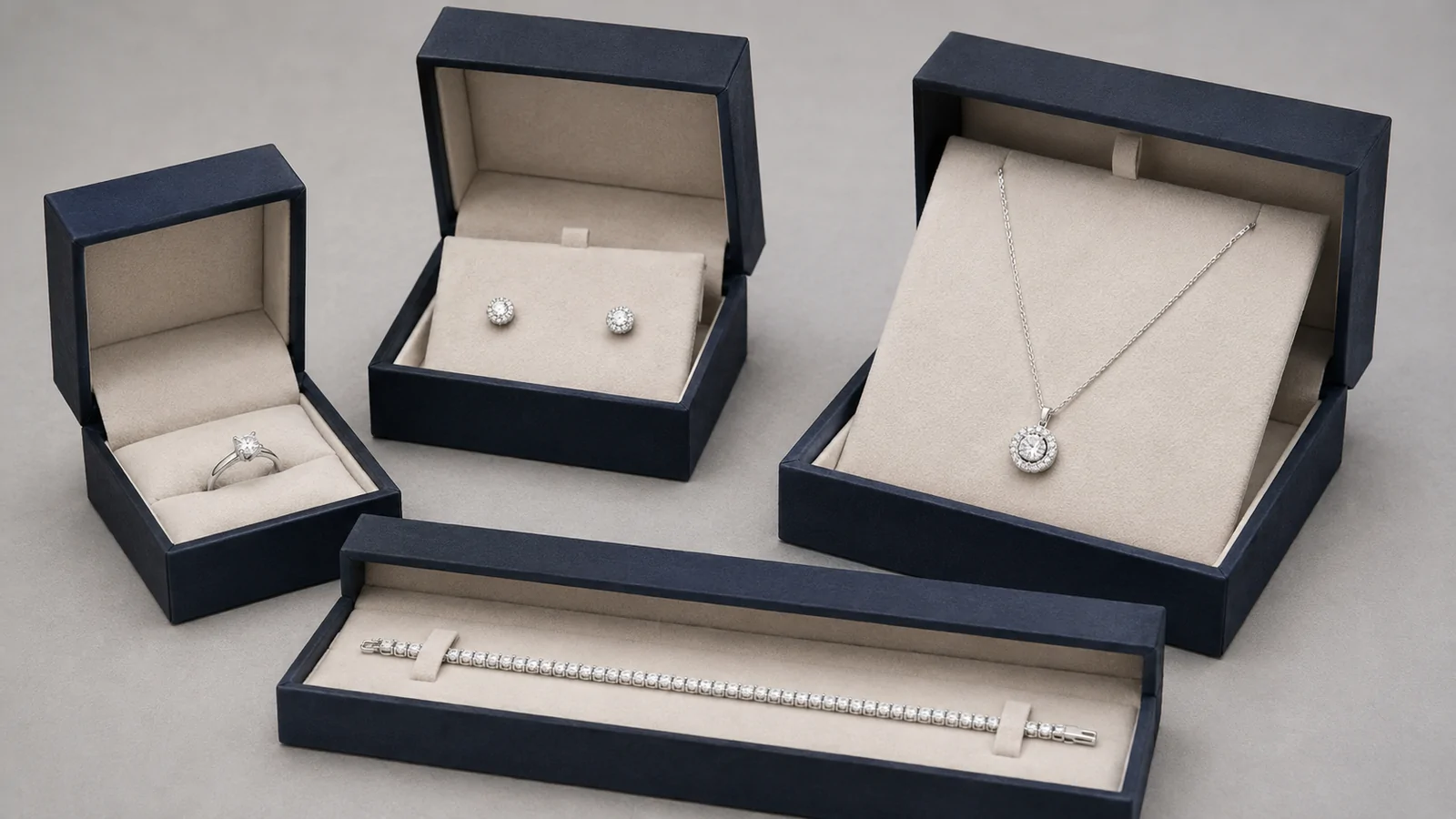
Which jewelry box dimensions should you compare first?
Compare the box category first, then its length, width, and height on the same measurement basis. A single-piece presentation box and a compartmented collection case solve different problems, even when both are called a jewelry box.
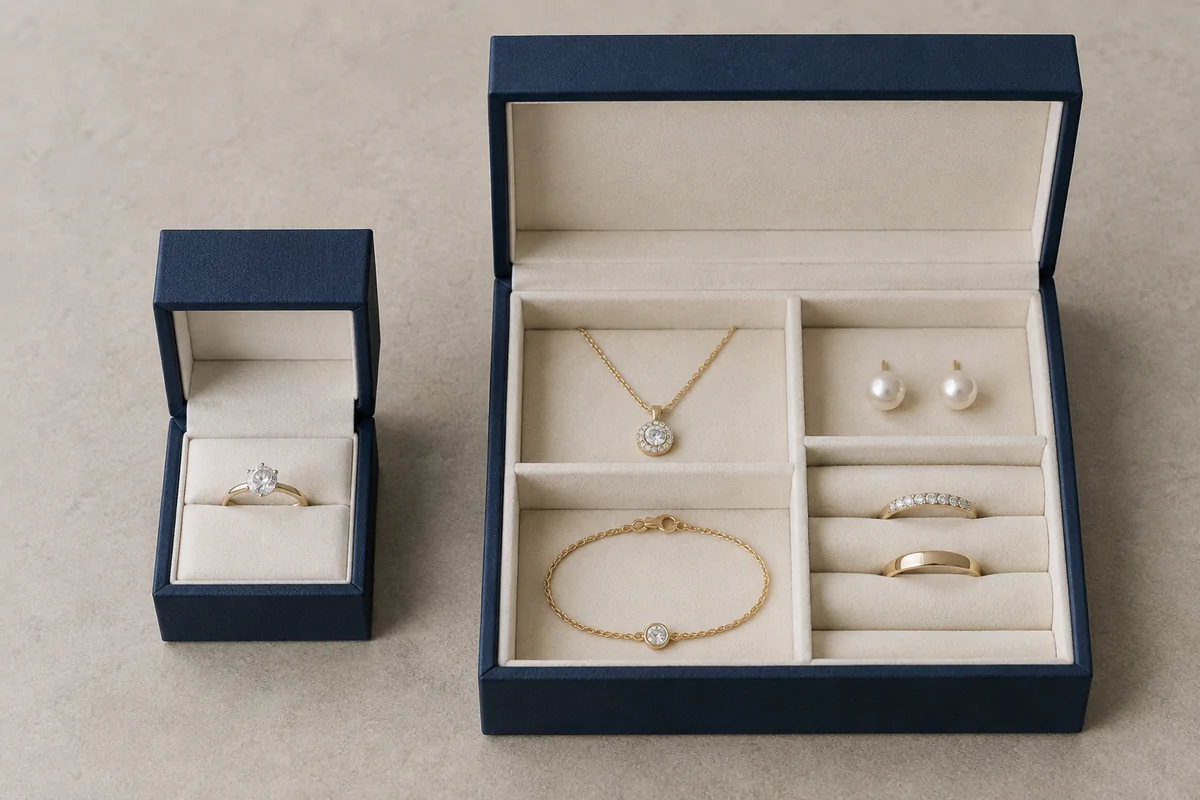
The examples below show the scale of selected retail packaging formats. They are comparison starting points, not universal standards or King Tai stock specifications; confirm the listed dimension basis and usable interior with the supplier.
| Packaging format | Example size in inches | Approximate size in mm | First fit check |
|---|---|---|---|
| Compact ring box | 2 × 2 × 1.75 | 51 × 51 × 44 | Setting height above the insert |
| Small earring or pendant box | 2.5 × 2.5 × 1.25 | 64 × 64 × 32 | Drop length and space behind the card |
| Long bracelet box | 8 × 2 × 1 | 203 × 51 × 25 | Laid-out bracelet and clasp |
| Necklace presentation box | 7–9 × 7–9 × 1.25–1.5 | 178–229 × 178–229 × 32–38 | Display layout and pendant position |
Notice that a longer footprint does not necessarily provide more height; each axis must suit the jewelry independently.
How do you measure internal and external box sizes?
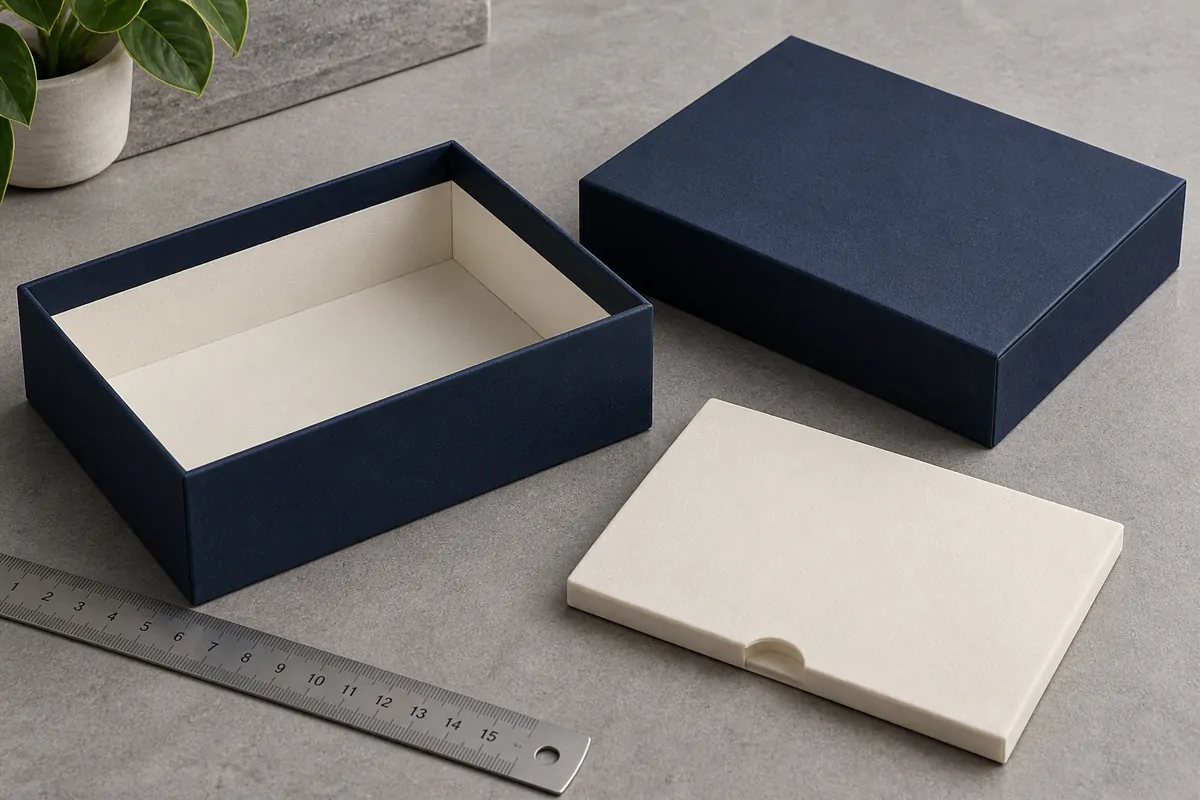
Record length × width × height, state the units, and label whether you measured the outside, the empty cavity, or the usable space with the insert fitted. Use a sketch to identify the axes if the supplier uses a different order.
Outside size and usable space
Measure the closed box at its widest outside points when checking a shelf, sleeve, or shipping carton. Next, open it and measure the cavity between the inner walls. Finally, install the intended insert and check the space left for the jewelry, including the room beneath the closed lid.
A catalog ring-box example illustrates the difference: a 50 × 50 × 33 mm exterior can have a 45 × 45 × 30 mm interior, with a separate insert taking up more room. Do not transfer that difference to another structure; wall construction and lid fit vary.
Keep one unit system in the specification
One inch equals 25.4 mm, and one centimeter equals 10 mm. Keep the original measurement as the controlling value and mark rounded conversions as approximate. A rounded inch value should not quietly replace the millimeter dimension you approved.
What size box fits a ring and its setting?
A ring box fits when the insert holds the band in its intended position and the highest part of the setting clears the lid. Ring size alone does not tell you the required box height.
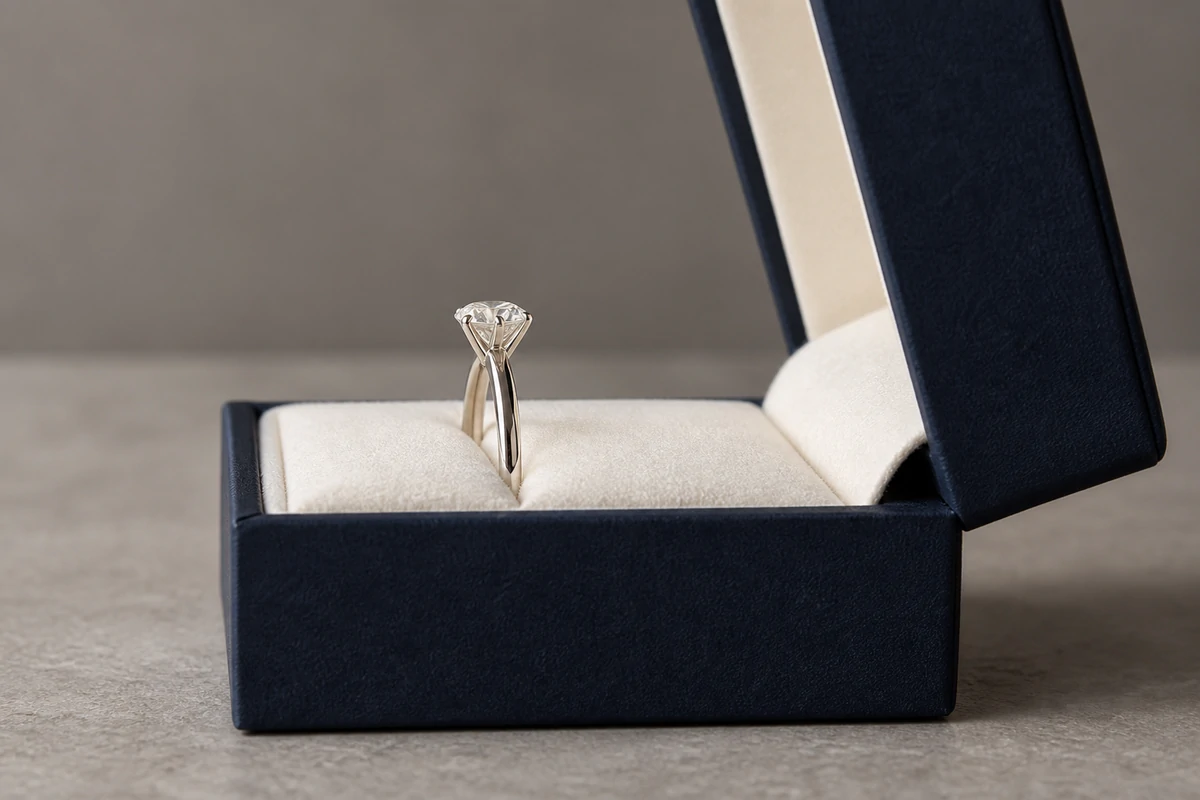
Check the ring seated in the slot rather than standing loose on the bench. A shallow slot can leave more of the ring exposed, while a deeper slot changes how the piece looks and how easily you can lift it out. Compare the tallest setting and widest design in the range before adopting one box across several styles.
Single rings and paired bands
For two rings, review slot spacing as well as the overall width. The settings should not touch when both pieces are seated, and removal should not require gripping the stones. If one design fails the trial, change the slot layout or box depth instead of assuming every ring needs a larger footprint.
How much room do earrings and pendants need?
Earrings and pendants need room for their visible outline plus the parts hidden behind the insert, such as posts, backs, and stored chain. A flat front view can conceal a depth problem.
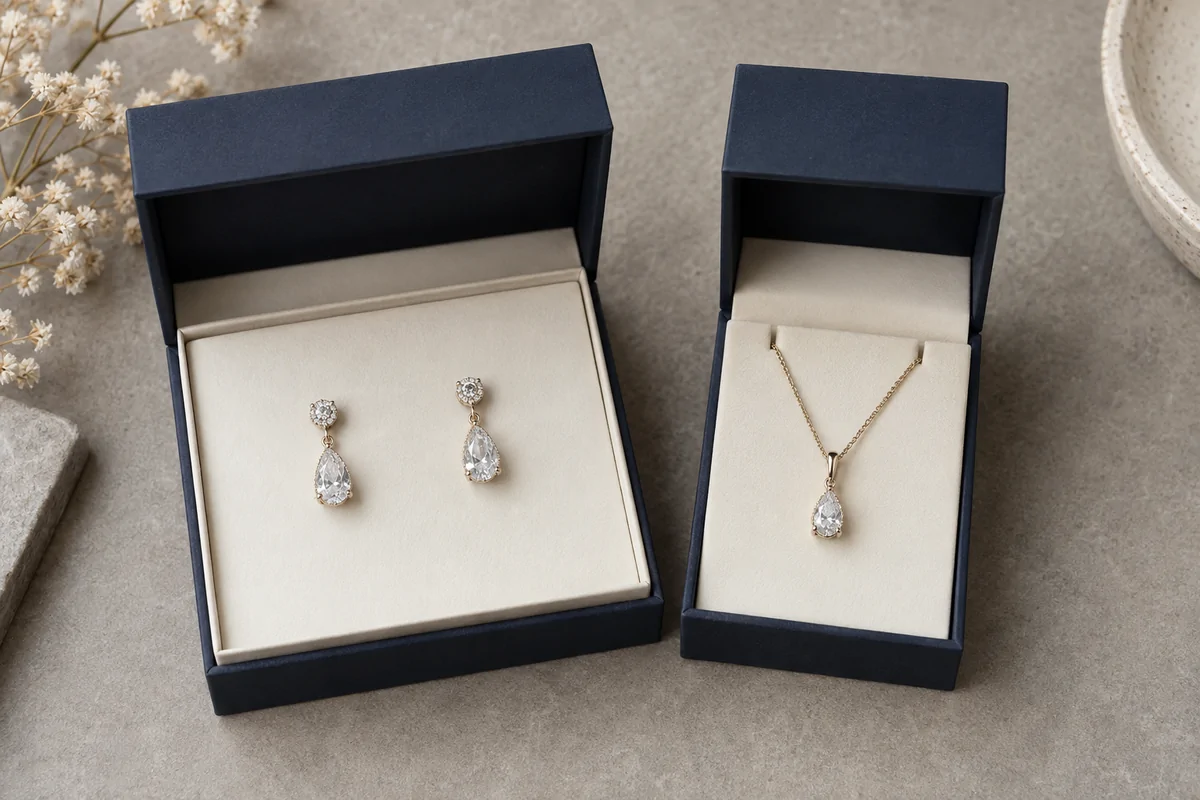
Measure drop earrings from their attachment point to the lowest tip in the planned display position. For hoops, check the full outer outline and the separation between the pair. Place the actual backs on the posts during the trial so the card does not press them against the box base.
Plan the chain path
For a pendant, decide how much chain will appear on the front and where the remainder will sit. It needs a controlled route behind or around the pad without lifting the display surface. Keep care cards clear of the jewelry rather than pushing them into the last available gap.
Which box shapes fit bracelets, bangles, and cuffs?
Flexible bracelets can suit a long display layout, while rigid bangles and cuffs need a footprint based on their actual outer shape. Their shared product category does not make their packaging interchangeable.
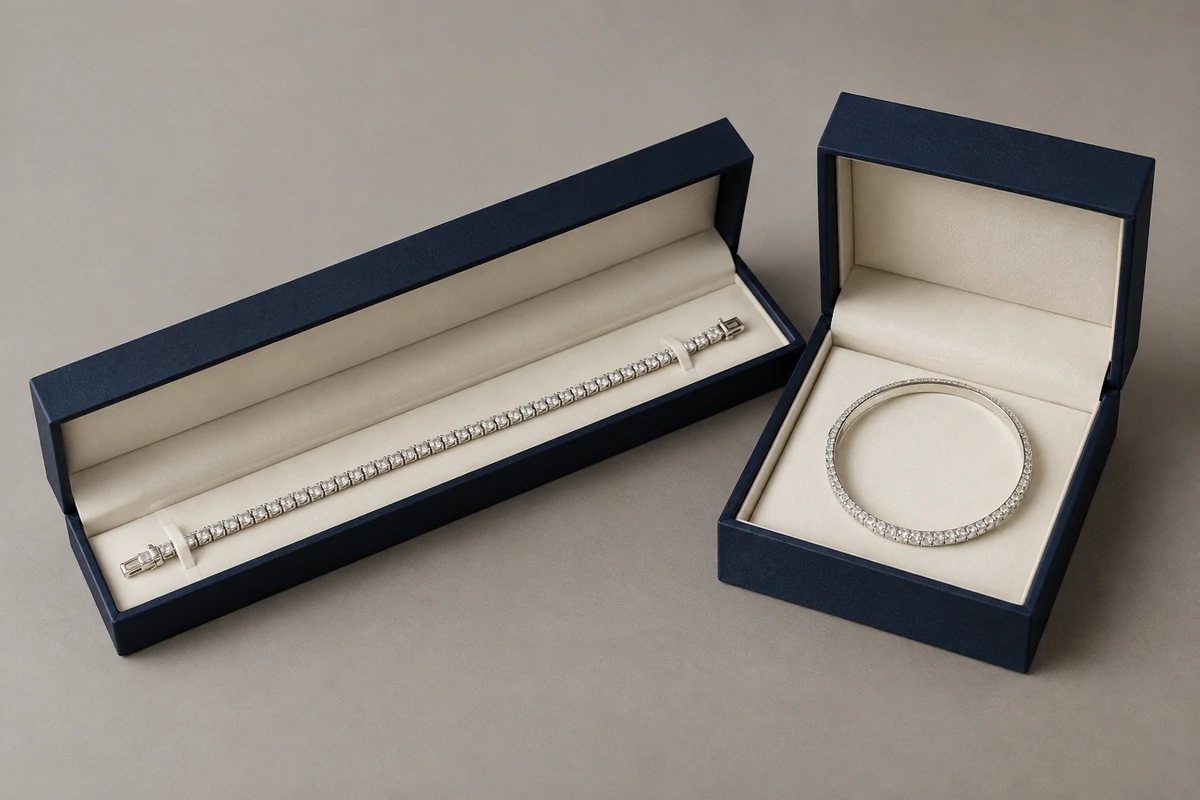
Lay a flexible bracelet in the intended position with its clasp included, without stretching the links. For a bangle, measure across the outside edges, not the opening that fits the wrist. A wide cuff also needs a height check in the orientation used for display.
Choose the support before fixing the size
A flat pad and a curved support place the same bracelet differently. Trial the proposed support with the piece, especially if the closure must fasten around it. An attractive display is unsuitable if loading the product requires force or leaves the clasp under strain.
How should necklaces and jewelry sets fit inside a box?
A necklace box should fit the arranged display, including the pendant and chain-retention points; its length does not automatically need to equal the necklace’s full chain length. Decide the layout before selecting the footprint.
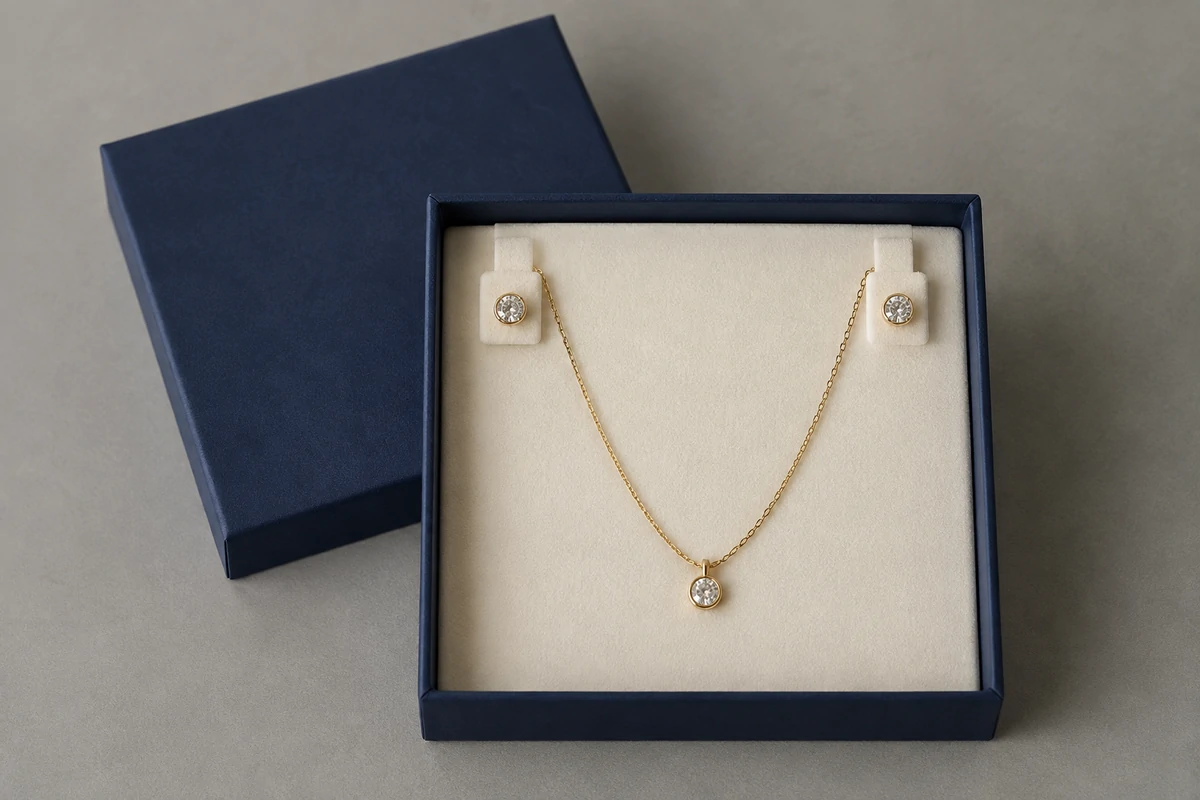
Keep the chain in a relaxed route that suits its construction, with the pendant supported and separate from other pieces. For a set, lay out every component together so earrings or a ring cannot contact the necklace. Our guide to keeping necklaces neat in a jewelry box covers chain separation in more detail.
Keep collection storage separate from gift packaging
A multi-piece storage case needs accessible compartments for repeated use. A presentation box usually arranges a specific item or set for handover. If you are selecting storage, measure the usable compartments and available furniture space; a gift-box size chart cannot establish collection capacity.
How do inserts change usable jewelry box dimensions?
Inserts change jewelry box dimensions that matter to fit by occupying space and setting the jewelry’s position relative to the walls and lid. Approve the box and insert as one assembly.
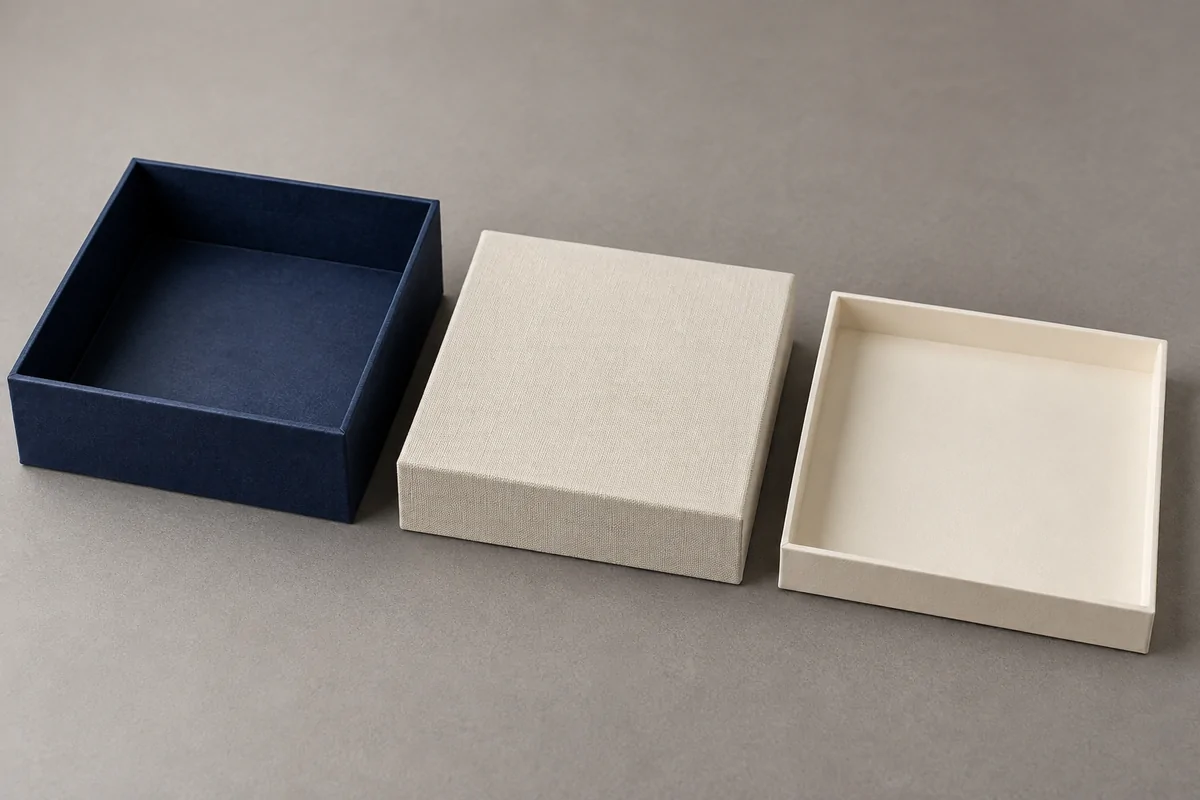
A deeper pad may raise a pendant, while a shaped recess may lower part of a ring or bracelet. Fabric folds, card tabs, and retention points also take space. Check the assembled sample instead of subtracting a nominal insert thickness and assuming the result is usable clearance.
Separate retention from spare room
Clearance lets the piece sit and lift out without unwanted contact; retention limits unwanted movement. Adding empty space does not improve retention. If an item shifts, review the support geometry before enlarging the box, and agree any material choice against the actual jewelry surface and project requirements.
When should you choose a larger or custom box?
Choose a larger or custom box when the planned assembly cannot hold the jewelry, close normally, and allow easy removal. First identify which dimension or support detail causes the failure.
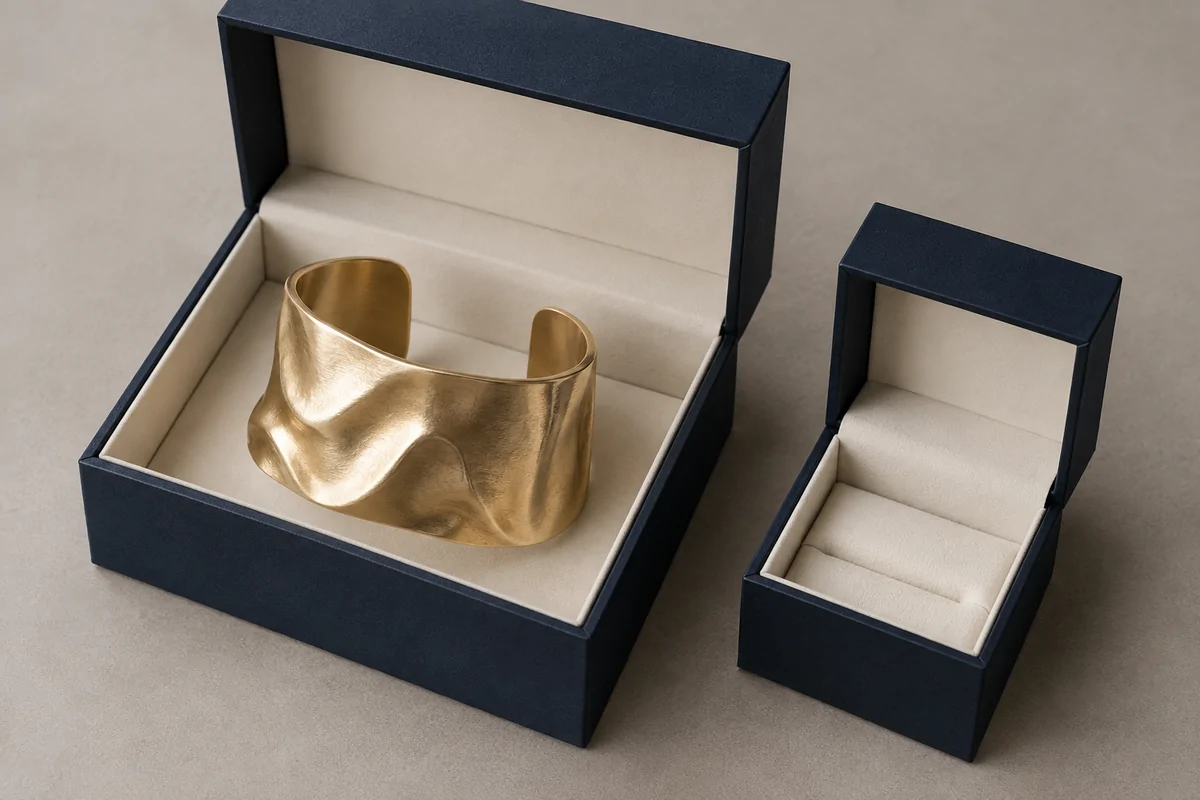
| Observed problem | Review first | Possible direction |
|---|---|---|
| The lid touches a setting | Seated height and lid lining | More usable height or a revised insert |
| A rigid cuff reaches the walls | Outer outline in display position | A wider or differently shaped cavity |
| The piece moves in an oversized cavity | Retention points and support | A closer-fitting insert |
| Several items contact one another | Set layout and separation | Repositioned slots or a larger footprint |
These checks help distinguish a box-size problem from an insert-layout problem.
Coordinate those decisions with the opening style and brand presentation. Our jewelry box design ideas guide can help connect the fit requirements to the overall design.
How do box sizes affect display, storage, and shipping?
Exterior size determines how the finished package fits display trays, storage shelves, and protective shipping packaging. Check those settings after confirming the jewelry’s interior fit.
For retail display, compare open-lid height and sightlines as well as closed-box dimensions. A coordinated family of heights can look orderly, but do not reduce clearance simply to make every box identical. For a multi-product range, review jewelry packaging for brands as a connected set of product and presentation decisions.
Check the packed parcel
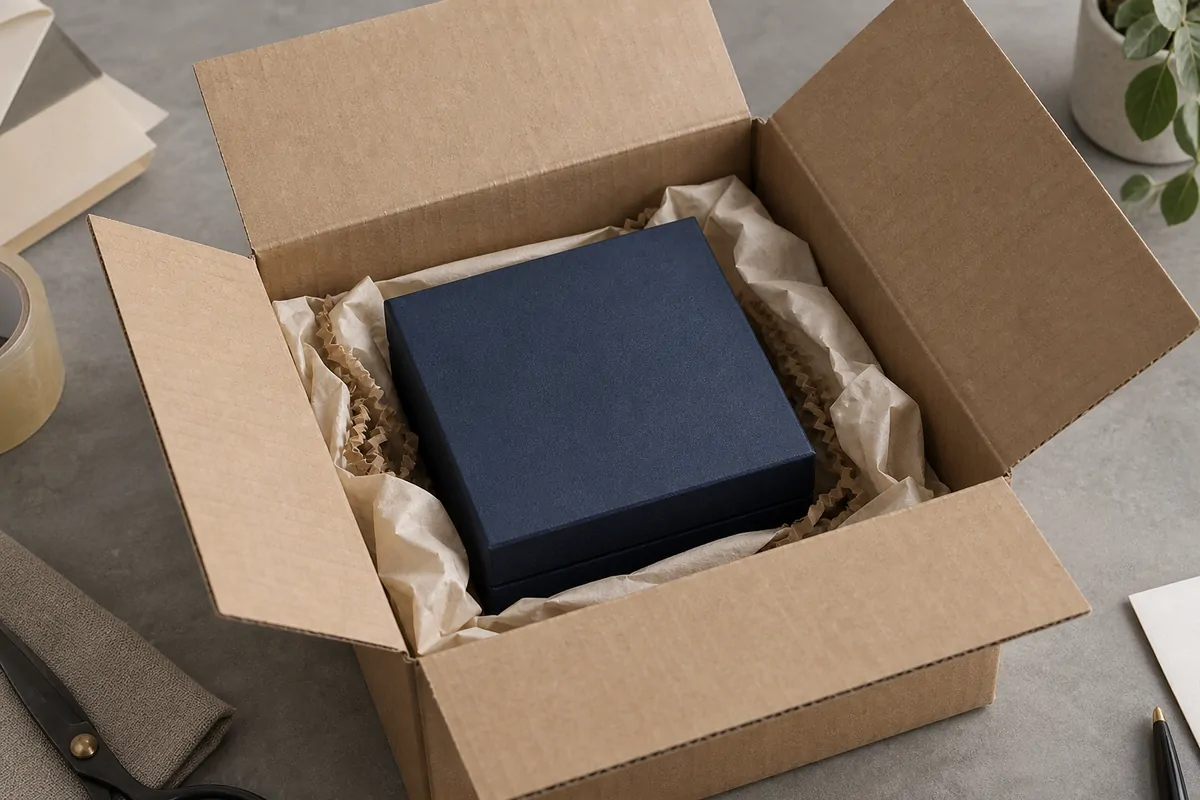
A presentation box is not automatically a shipping container. Trial the finished gift box inside the intended outer carton with its protective packing, then measure the closed parcel for the carrier’s requirements. Standard gift-box sizes do not guarantee a match with a particular mailer or a lower shipping charge.
What should you check before approving a box size?
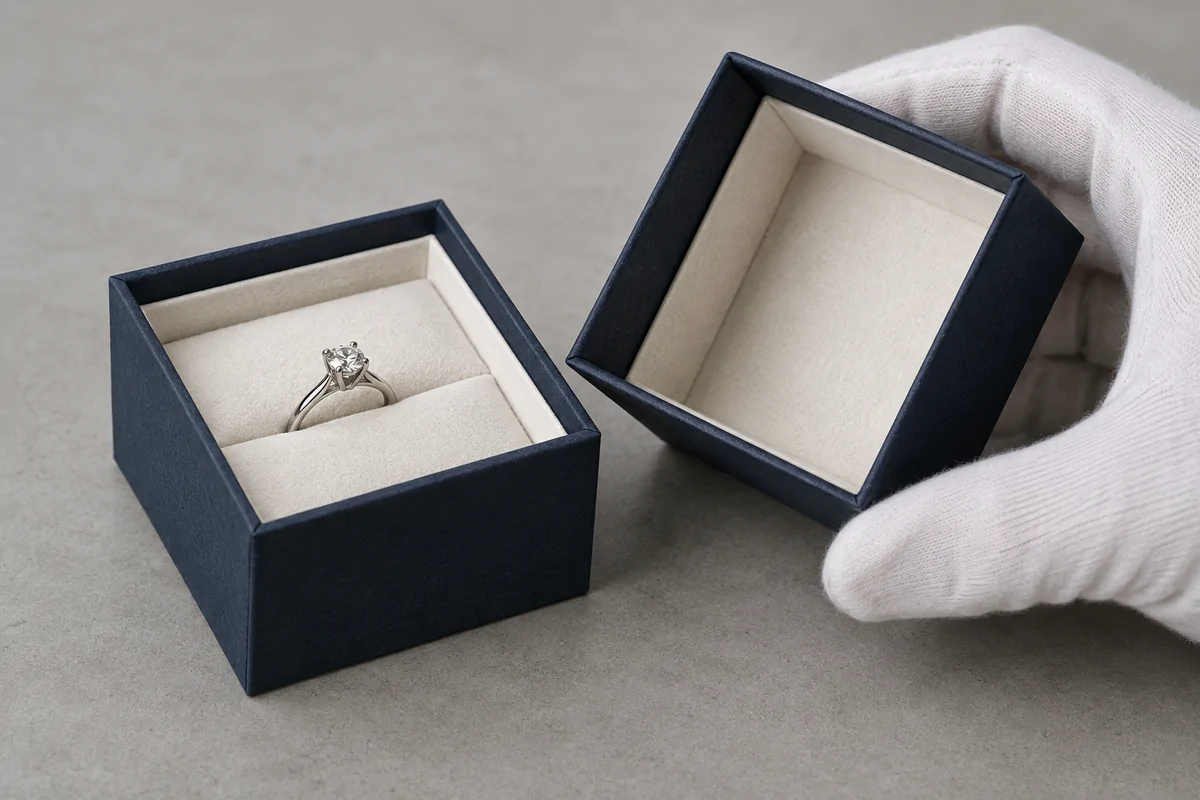
Approve jewelry box dimensions against a complete sample containing the actual jewelry, final insert, and any cards or accessories. A bare-box measurement cannot confirm the finished fit.
Record what the sample proves
Use a short approval record so the supplier and buyer refer to the same assembly. Photograph the loaded sample and identify the drawing or specification version alongside it.
- Record the external size, cavity size, units, and agreed tolerances separately.
- Confirm that each intended jewelry style seats and lifts out normally.
- Check the lid and closure without forcing them against the piece.
- Review retention during the agreed handling check.
- Confirm that the finished package fits the display and shipping setup.
Define tolerances and any transport tests for the project rather than borrowing an unsupported universal allowance. Keep the approved sample as the reference for production and record any later change to the insert, lining, or structure.
Choose the size around the finished fit. Useful jewelry box dimensions describe the outside package, its usable interior, and how the jewelry sits inside. Start with a suitable format, check the complete assembly, and approve the result before ordering. King Tai supports structural design, custom inserts, and quality inspection; discuss your packaging project with our team using your jewelry measurements and display requirements.
FAQ
Is there one standard jewelry box size?
No. Suppliers offer different formats for individual pieces, sets, and collection storage. Compare a stated length, width, and height rather than relying on labels such as small or medium.
Can the same box hold both rings and earrings?
Sometimes, if the insert suits both and each loaded configuration passes a fit check. An identical exterior does not make the internal slot or card layout suitable for every item.
How much extra space should I allow?
There is no single allowance that works for all jewelry. Agree clearance around the seated piece, room for removal, and the retention method through a sample review.
Should I choose dimensions in inches or millimeters?
Use the unit system agreed with your supplier and keep it consistent in the specification. You can include a conversion for reference, but identify which value controls production.
Does a bigger box provide better protection?
Not necessarily. A larger cavity can allow more movement unless the insert holds the piece. Protection depends on the complete package and the conditions it must withstand.