
Notebook cover material should be chosen from the product’s use, hand feel, protection, branding, and production requirements. A stationery brand can approve a beautiful cover design on screen and still receive a notebook that feels too thin, opens poorly, or varies in bulk. The problem is the missing connection between covering, board, finish, binding, and user expectation.
Start with the notebook’s job, then compare paper, cloth, PU, and leather as complete cover directions. This guide connects material choice to finishing, sampling, cost, and repeatability.
What are the main notebook cover material options?
The main notebook cover material options are paper or paperboard, cloth, PU, and genuine leather. Each can combine with board, wrap, coating, lining, print, or surface finish, so a material name describes only one layer.
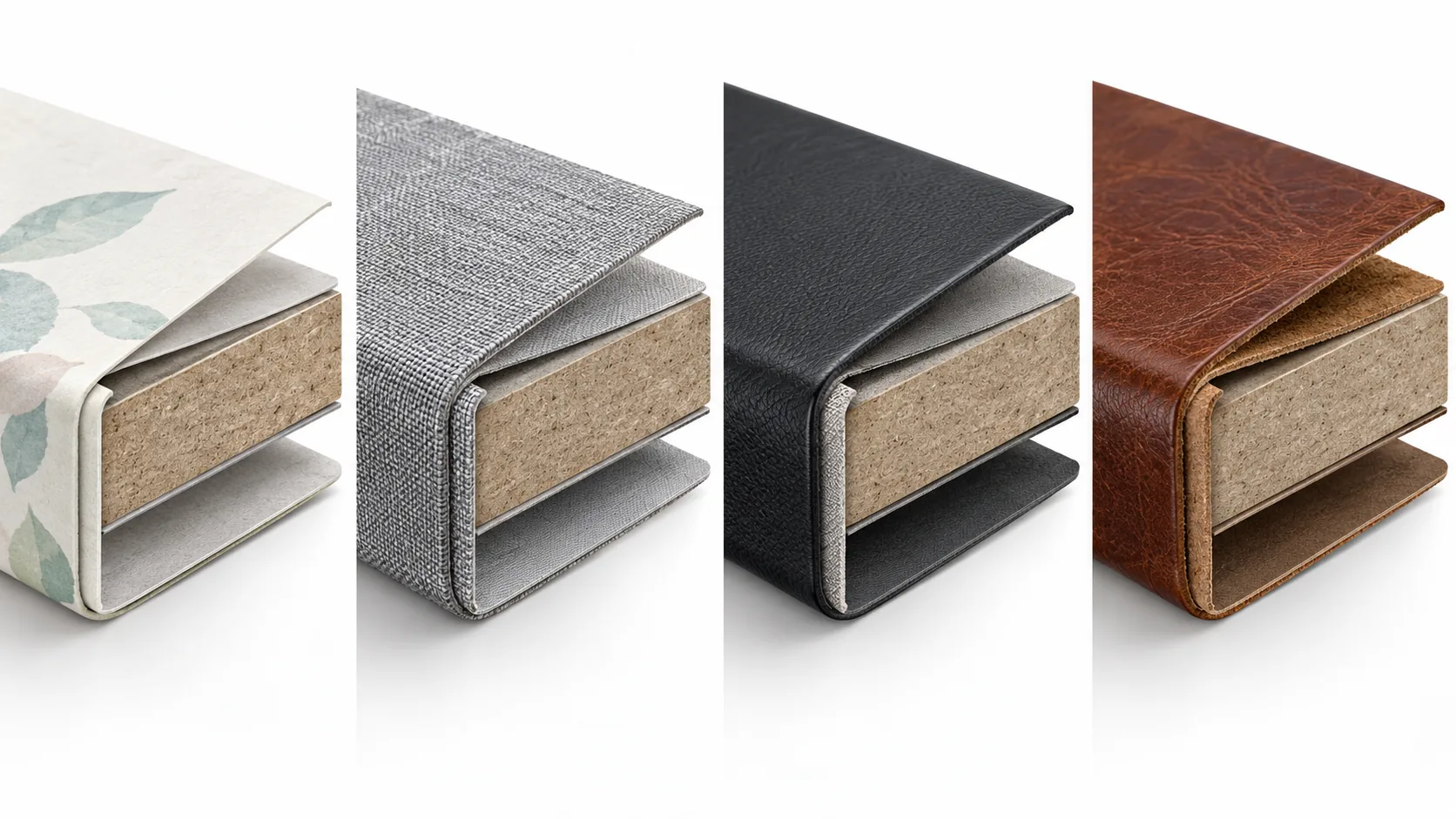
How should a buyer separate material from construction?
Treat the covering, board, artwork, finish, and binding as separate lines in the brief. King Tai’s custom notebook printing service connects cover material, surface treatment, inside pages, binding, sampling, and bulk consistency because the cover is part of a complete product system.
Start with four questions:
- Use: Will the notebook live in a bag, on a retail shelf, in a gift set, or on a desk?
- Feel: Should it feel light, flexible, textured, smooth, formal, or soft in the hand?
- Branding: Does the cover need printed graphics, foil, embossing, debossing, or a quiet material-led look?
- Production: What variation can the range accept across samples, SKUs, and repeat orders?
| Material direction | Typical strength | Common fit | Buyer question |
|---|---|---|---|
| Paper or paperboard | Print flexibility and cost control | Practical, education, campaign | What board and surface protect the page block? |
| Cloth | Tactile texture and book-like feel | Premium retail, journals, gifts | How will weave, color, and wrap alignment be controlled? |
| PU | Consistent synthetic covering and broad color choice | Branded, gift, and retail lines | Does the finish and hand feel match the positioning? |
| Genuine leather | Natural material character and premium positioning | Heritage, gift, and long-life products | What grade, finish, and variation standard will be approved? |
Key Takeaway: choose the covering with its board, finish, binding, and use condition in view.
How should brands compare paper and paperboard covers?
Paper and paperboard covers suit projects that need printed graphics, clear branding, flexible artwork, and controlled cost. They can support practical notebooks, educational formats, promotional programs, and retail lines when the board, wrap, coating, and edge treatment are specified together.
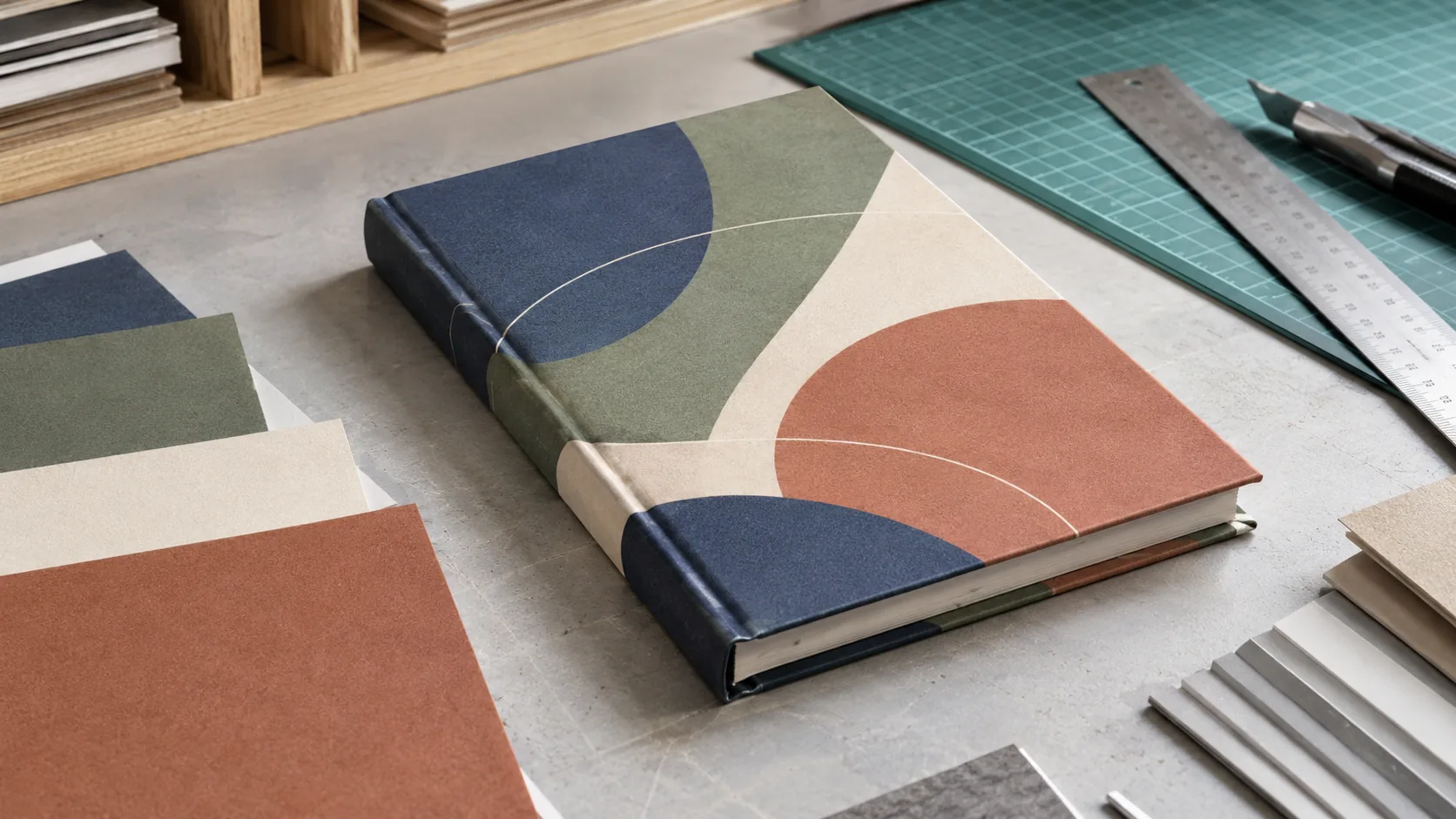
Which paper cover details belong in the brief?
Use the stationery and gifting printing solutions page as a reminder to connect paper, binding, finishing, sampling, and delivery. A paper cover can look simple while still requiring decisions about stiffness, corners, spine, surface, and how the printed sheet wraps around the structure.
Check these details:
- Cover stock and board direction.
- Surface treatment and printed color expectations.
- Corner, spine, and edge protection.
- Compatibility with foil, embossing, lamination, or spot effects.
| Paper direction | Best fit | Trade-off | Sample check |
|---|---|---|---|
| Printed paper wrap | Graphic-led retail or campaign notebooks | Surface can show scuffing or edge wear | Inspect wrap, corners, and color |
| Coated paper cover | Strong image or color presentation | Surface feel may be less natural | Test reflection and handling |
| Textured or uncoated cover | Tactile, practical, or understated lines | Fine graphics may reproduce differently | Review print clarity and hand feel |
| Rigid paperboard | More structure and protection | Adds bulk and material cost | Check spine, corners, and opening |
Paperboard becomes a stronger choice when its printed surface and structural support are planned together. Key Takeaway: approve the paper cover as a wrapped, bound object rather than as a flat artwork sample.
When does cloth make sense for a notebook cover?
Cloth makes sense when texture, a book-like feel, and a quieter premium signal matter more than a fully printed surface. Cloth can suit journals, gifts, commemorative products, and retail notebooks that need a distinct hand feel without using leather.
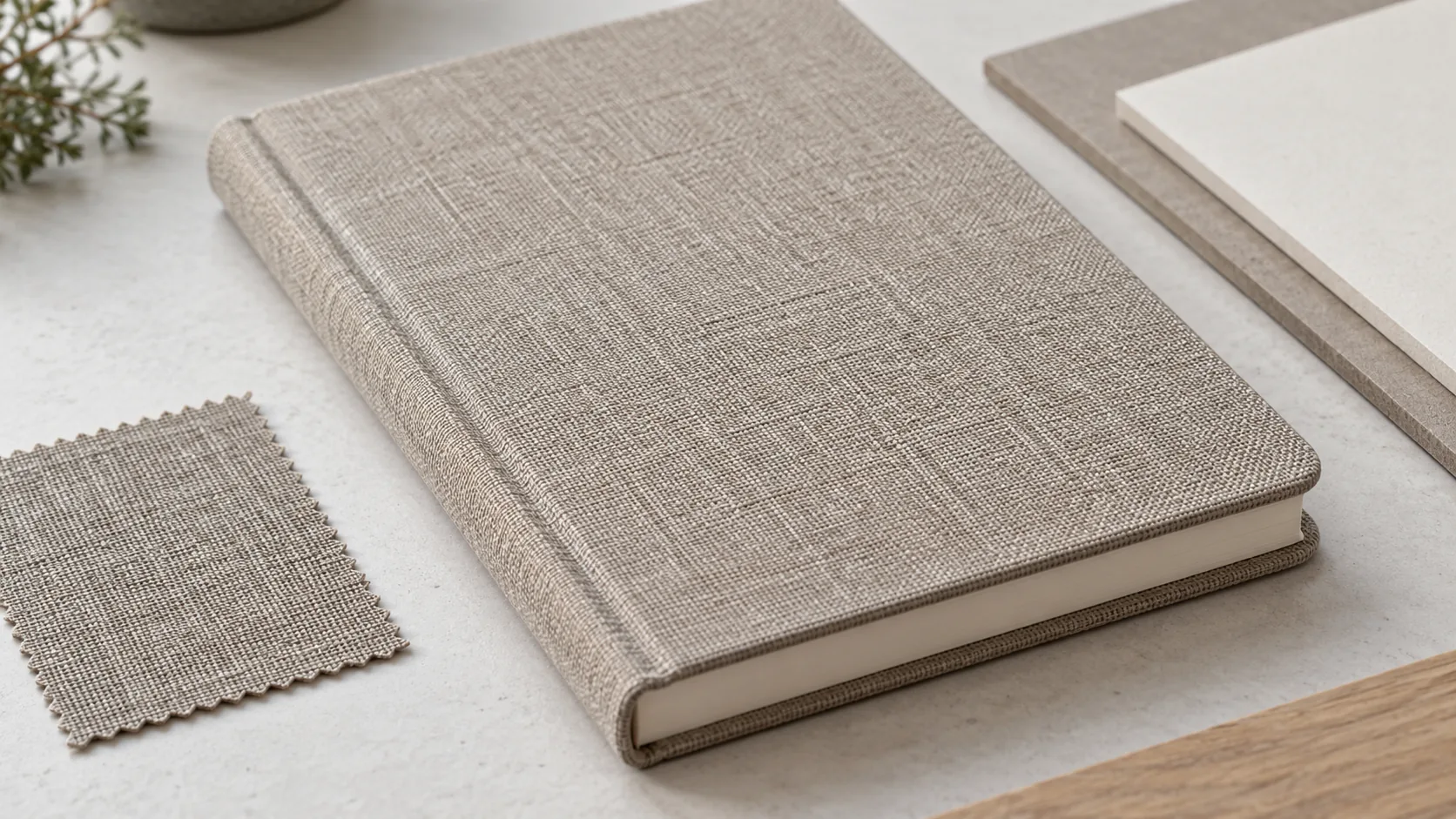
What should buyers check on a cloth cover?
Cloth is a surface and assembly decision at the same time. The custom printing services page describes matching materials, binding, finishing, sampling, and checking; that same order helps a buyer control weave, color, wrap tension, corners, and spine alignment.
Review the sample for:
- Weave direction, texture, color, and visible variation.
- Wrap tension around board corners and the spine.
- Adhesive or lining marks at edges and joints.
- Logo treatment and the amount of printed detail the fabric can hold.
| Cloth decision | Buyer goal | Risk | Check |
|---|---|---|---|
| Weave and texture | Distinct hand feel | Variation or loose fibers | Compare several sample areas |
| Color | Stable brand appearance | Shade shift between surfaces | View under consistent light |
| Wrap construction | Clean corners and spine | Wrinkles, lifting, or misalignment | Open and close the sample repeatedly |
| Logo treatment | Quiet but visible branding | Detail loss on texture | Test the actual mark and finish |
Cloth works when the texture supports the product instead of hiding unresolved construction problems. Key Takeaway: inspect the wrap, corners, spine, and finish together on the physical sample.
Is PU a practical alternative to leather for notebooks?
PU can be a practical covering direction when a brand wants a leather-like look or soft hand feel with a more controlled material appearance and repeatable color direction. It should still be assessed by the project’s use, finish, and quality standard rather than treated as a universal substitute.
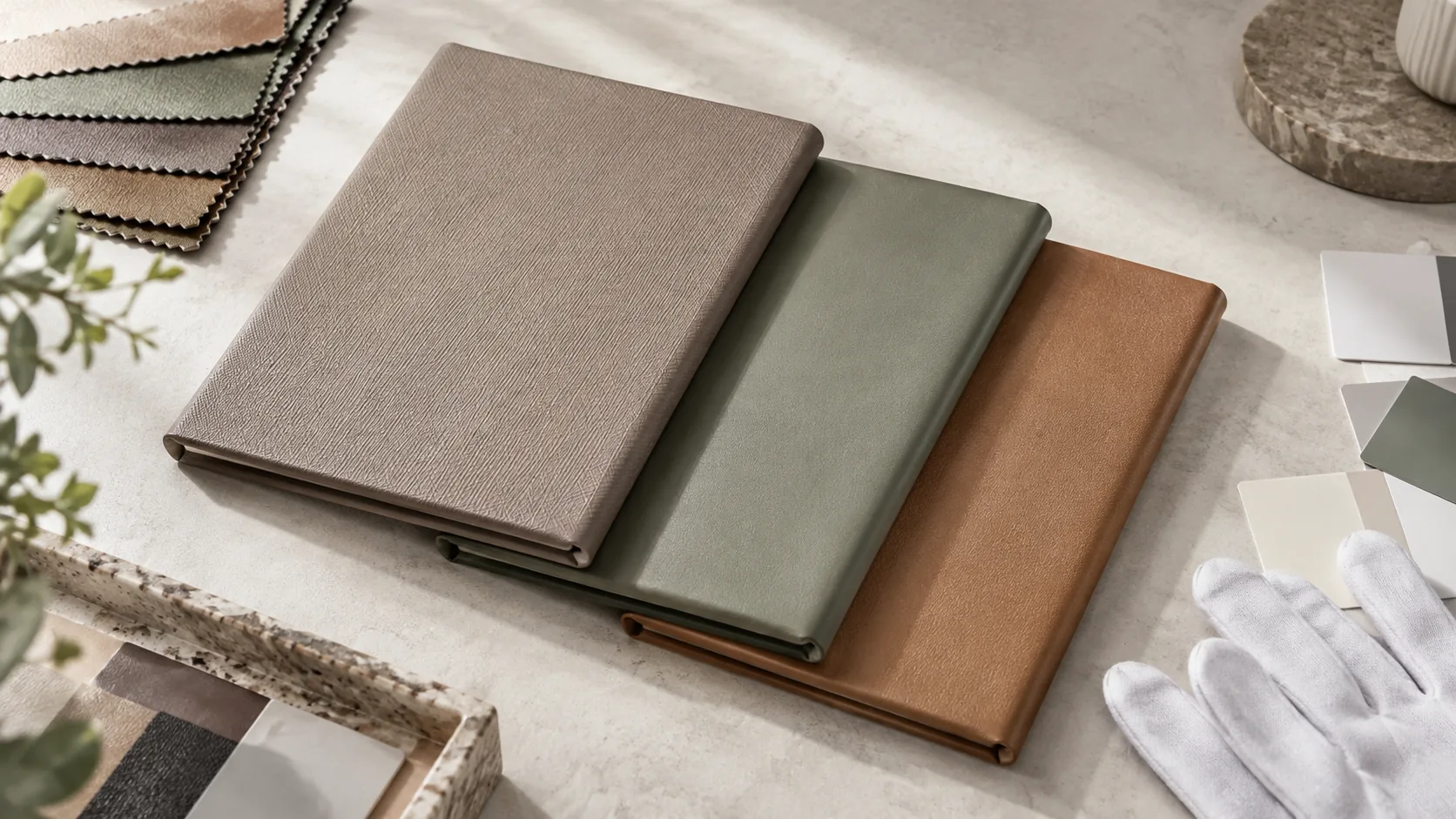
How should a buyer evaluate PU?
Compare PU samples for surface texture, flexibility, edge behavior, color, and compatibility with the selected logo treatment. King Tai’s notebook printing case study shows why a visually correct sample only helps when the same direction can be maintained through bulk production.
Ask the supplier to clarify:
- Surface texture and finish direction.
- Color matching and acceptable variation.
- Flexibility, edge wrap, and corner behavior.
- Foil, embossing, debossing, or printed-logo compatibility.
| Requirement | PU opportunity | Question to verify |
|---|---|---|
| Consistent appearance | Synthetic surface can support a repeatable look | What sample is the color and texture reference? |
| Soft hand feel | Flexible covering direction | Does it stay balanced over the selected board? |
| Branding | Broad choice of color and surface treatment | Which finish remains clear on the texture? |
| Repeat orders | Defined surface and color specification | How will batch variation be reviewed? |
PU is useful when its appearance and repeatability match the market position. Key Takeaway: compare PU by the approved surface standard and finished construction, not by the material name alone.
When is genuine leather worth considering?
Genuine leather is worth considering when natural material character, tactile value, and a long-life product position are central to the notebook. It also introduces more material variation and specification work, so the buyer should approve the exact finish, thickness direction, color, and acceptable natural marks.
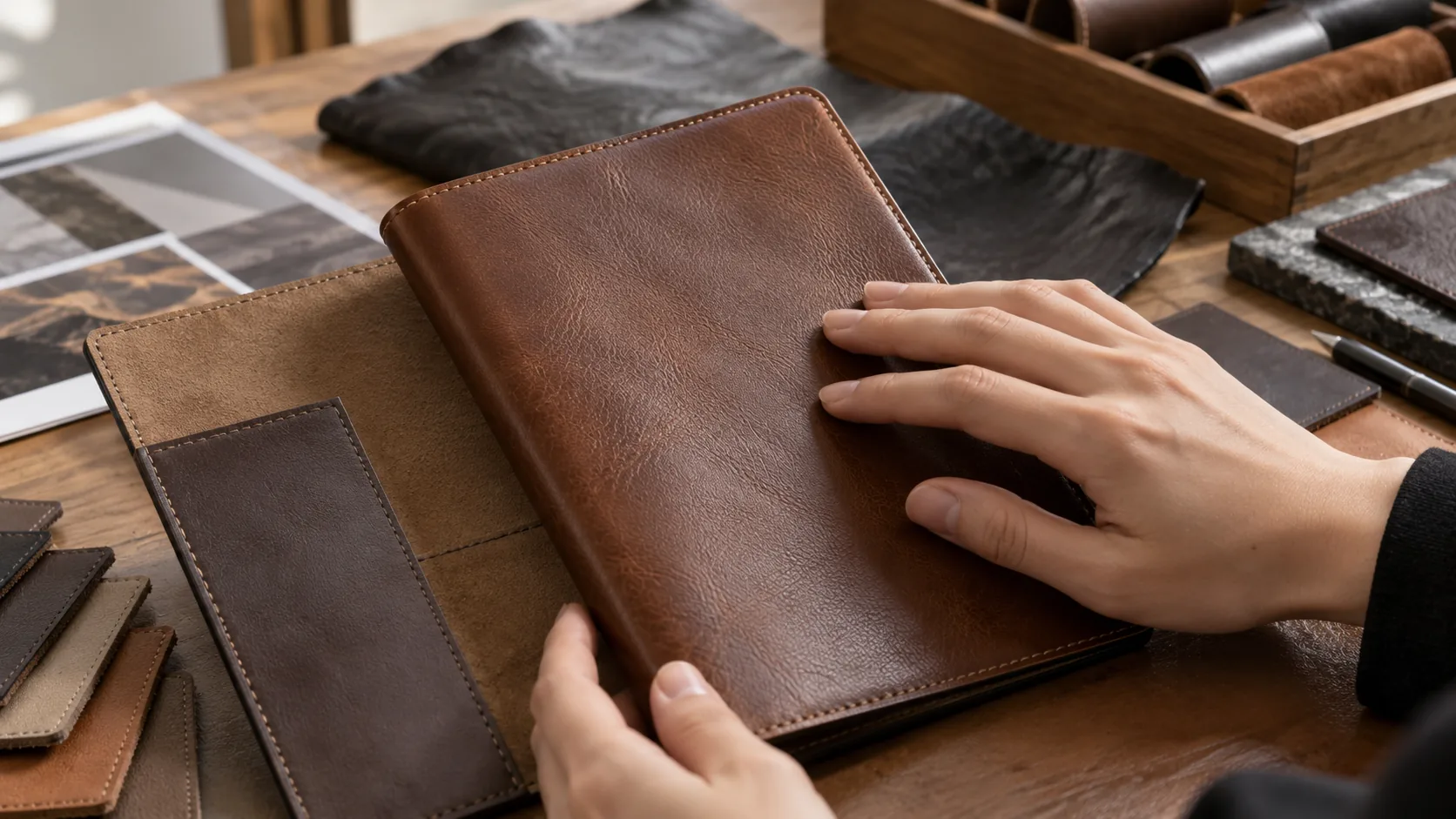
What evidence should support a leather cover decision?
Use a representative sample and define which variations are acceptable. If a project needs a recognized technical reference for leather softness, ISO 17235:2015 describes a non-destructive method for determining softness in non-rigid leather. That standard is a test reference, not proof that a notebook cover has passed a test.
Review:
- Leather type, surface finish, color, and natural variation.
- Cover thickness direction and how it wraps over the board.
- Edge, corner, spine, and lining execution.
- Logo treatment and the sample standard for repeat orders.
| Leather goal | Evidence | Approval condition |
|---|---|---|
| Natural character | Multiple representative areas | Agree which marks and grain variation are acceptable |
| Premium hand feel | Finished cover sample | Review touch, flex, edge, and spine together |
| Long-life positioning | Use condition and construction brief | Match cover, board, binding, and handling needs |
| Consistent branding | Color and finish reference | Confirm the approved sample before bulk production |
Leather creates value through the whole object, not through a label alone. Key Takeaway: define the leather standard and acceptable variation before approving the cover.
How do cover materials affect foil, embossing, and printing?
Cover materials affect how foil, embossing, debossing, UV, and printed graphics appear because texture, flexibility, surface reflectivity, and support underneath all change the result. The same artwork can look different on paper, cloth, PU, and leather.
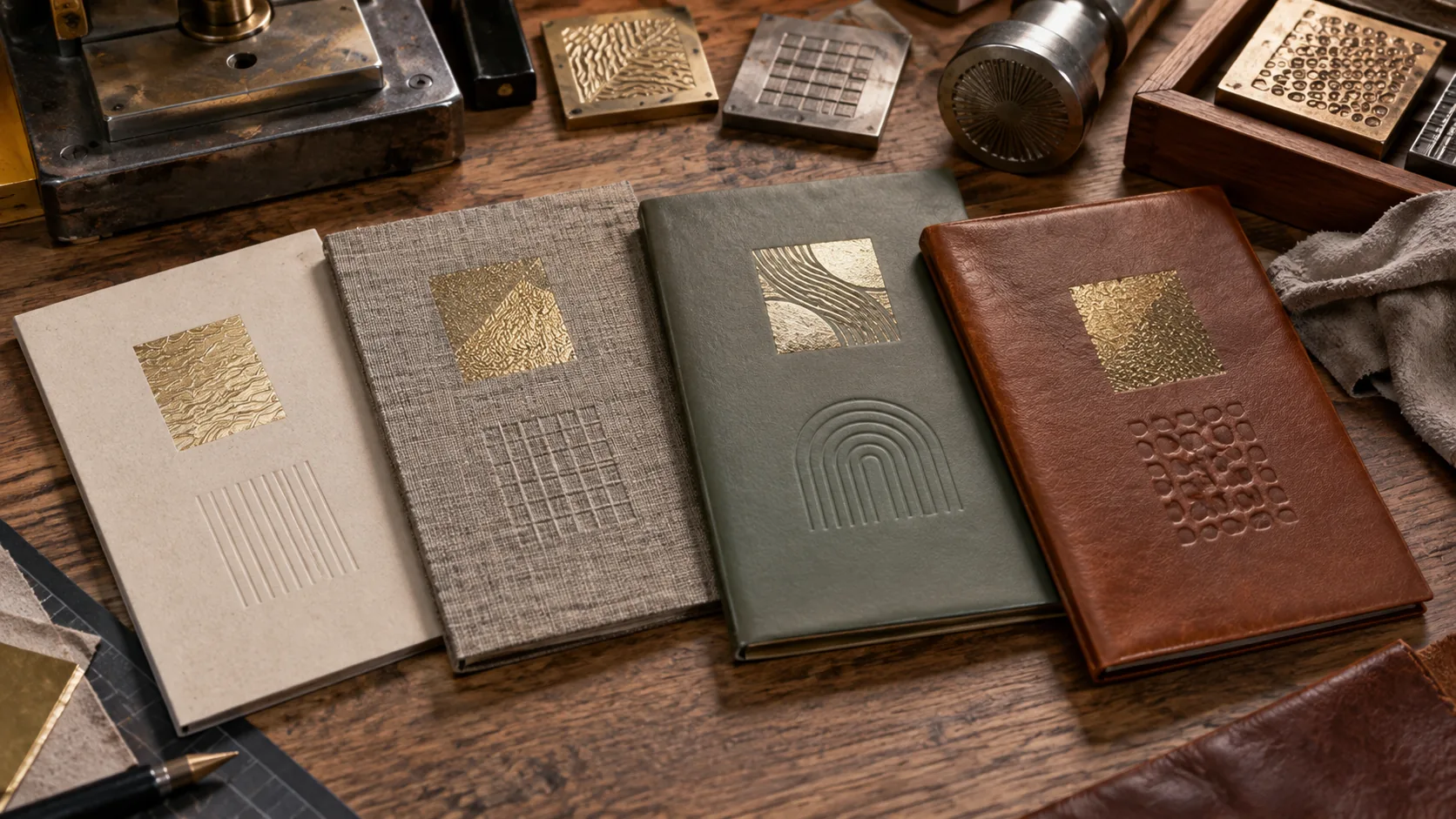
Which finish should be tested on the selected material?
Use the actual cover material, board, artwork, and finish in the sample. The existing custom leather-bound book printing page is a related internal reference for leather-bound production, while the notebook project still needs its own material and finish approval.
Test:
- Fine logo detail and edge sharpness.
- Foil adhesion, contrast, and surface reflection.
- Embossed or debossed depth and recovery after handling.
- Registration, placement, and consistency across the cover.
| Finish | Material question | Risk | Proof |
|---|---|---|---|
| Foil | Is the surface even enough for clean transfer? | Breaks, dull areas, or weak contrast | Test the real foil and cover |
| Embossing | Can the covering and board support the relief? | Soft detail or uneven depth | Open, close, and inspect under light |
| Debossing | Does the surface hold the recessed mark? | Wrinkling or lost definition | Review edges and repeated handling |
| Printed graphics | Will texture change line or color clarity? | Detail loss or uneven coverage | Approve a full-size color proof |
Finishing is a material decision as much as a design decision. Key Takeaway: approve the actual cover-and-finish combination, not artwork on a screen.
How do cover materials change notebook durability and feel?
Cover material changes feel and handling, but durability comes from the covering, board, corners, spine, binding, page block, and use condition working together. A flexible material can still be a poor choice if the structure does not protect the notebook where it will be handled.
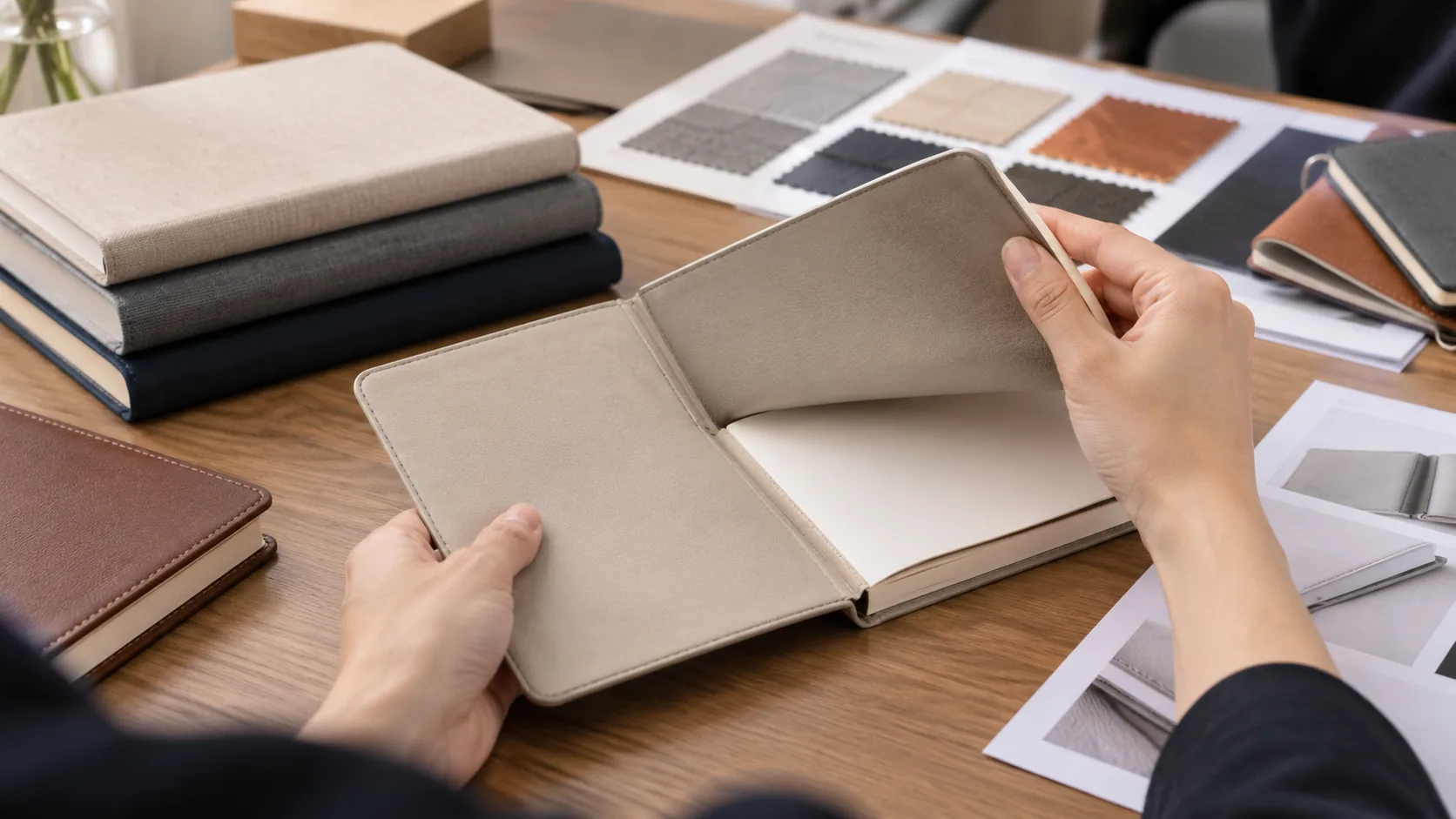
What should a physical sample prove?
Open, close, carry, stack, and inspect the notebook as the customer will. King Tai’s custom collection book printing page similarly treats paper, cover, binding, finish, sampling, and bulk stability as connected decisions.
Use a simple handling review:
- Flex the cover and inspect the spine and corners.
- Open the notebook to the pages the user will reach most often.
- Check whether the cover protects the page block in a bag or stack.
- Compare the approved sample with a second sample when repeatability matters.
| Use condition | Material concern | Test |
|---|---|---|
| Daily carry | Flex, scuffing, and corner wear | Carry and open the sample repeatedly |
| Retail display | Shelf face, texture, and edge appearance | Review face-out and spine-out display |
| Gift or premium use | Hand feel, finish, and presentation | Inspect under normal handling and light |
| Repeated orders | Material and finish consistency | Compare samples against one reference |
Durability only has meaning beside a use condition. Key Takeaway: judge cover feel and protection on the finished notebook, not on a material swatch alone.
How should brands compare cover materials by cost and consistency?
Brands should compare cover materials through the full production cost and consistency picture, not through a material price alone. Material conversion, board, wrap labor, finishing, yield, sampling, rework, packing, and repeat-order control can all change the practical result.
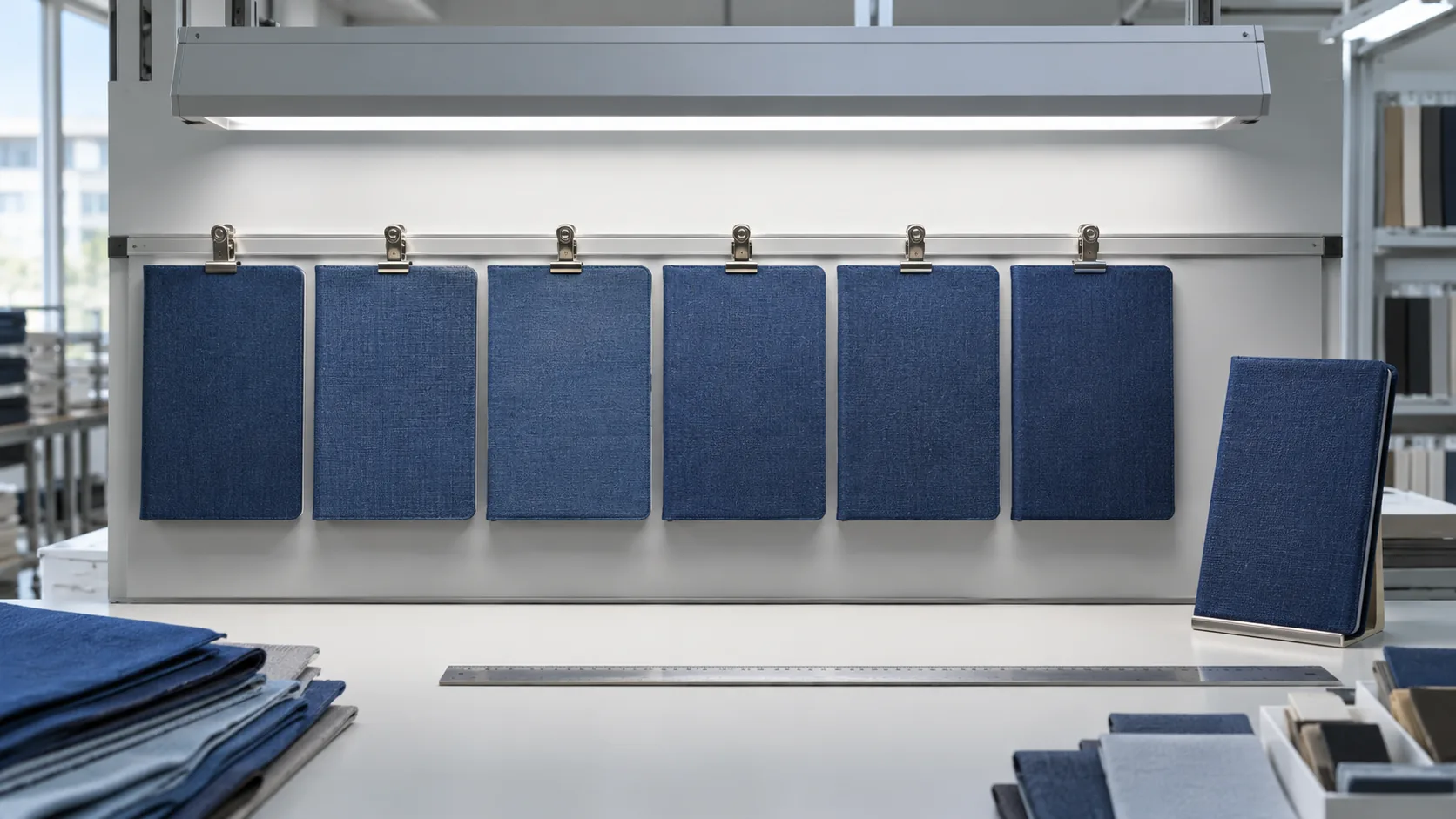
What evidence should a supplier comparison include?
Use the stationery printing planning page to keep material, finish, sampling, production, and delivery in the same discussion. A lower first quote may not be the lower project cost if the cover creates repeated corrections or visible variation.
Compare:
- Material and board specification.
- Cover preparation, wrap, assembly, and finish steps.
- Sample approval and production reference.
- Acceptable variation across colors, textures, and repeat orders.
| Cost driver | Consistency risk | Buyer evidence |
|---|---|---|
| Material supply | Shade or texture variation | Written material reference and samples |
| Conversion and wrap | Edge, corner, or spine inconsistency | Finished sample at the intended size |
| Surface finishing | Detail or adhesion variation | Actual finish proof |
| Sampling and rework | Extra approvals or corrections | Clear sample and revision checkpoints |
| Repeat production | Drift from the approved standard | Stored reference sample and specification |
The useful comparison is the complete cost of getting a stable finished cover. Key Takeaway: compare production control and repeatability beside the material quote.
What should a notebook cover material RFQ include?
A notebook cover material RFQ should state the use condition, cover material, board, finished size, page block, binding, finish, quantity, destination, and approval standard. If the buyer is open to paper, cloth, PU, or leather, ask for comparable samples.
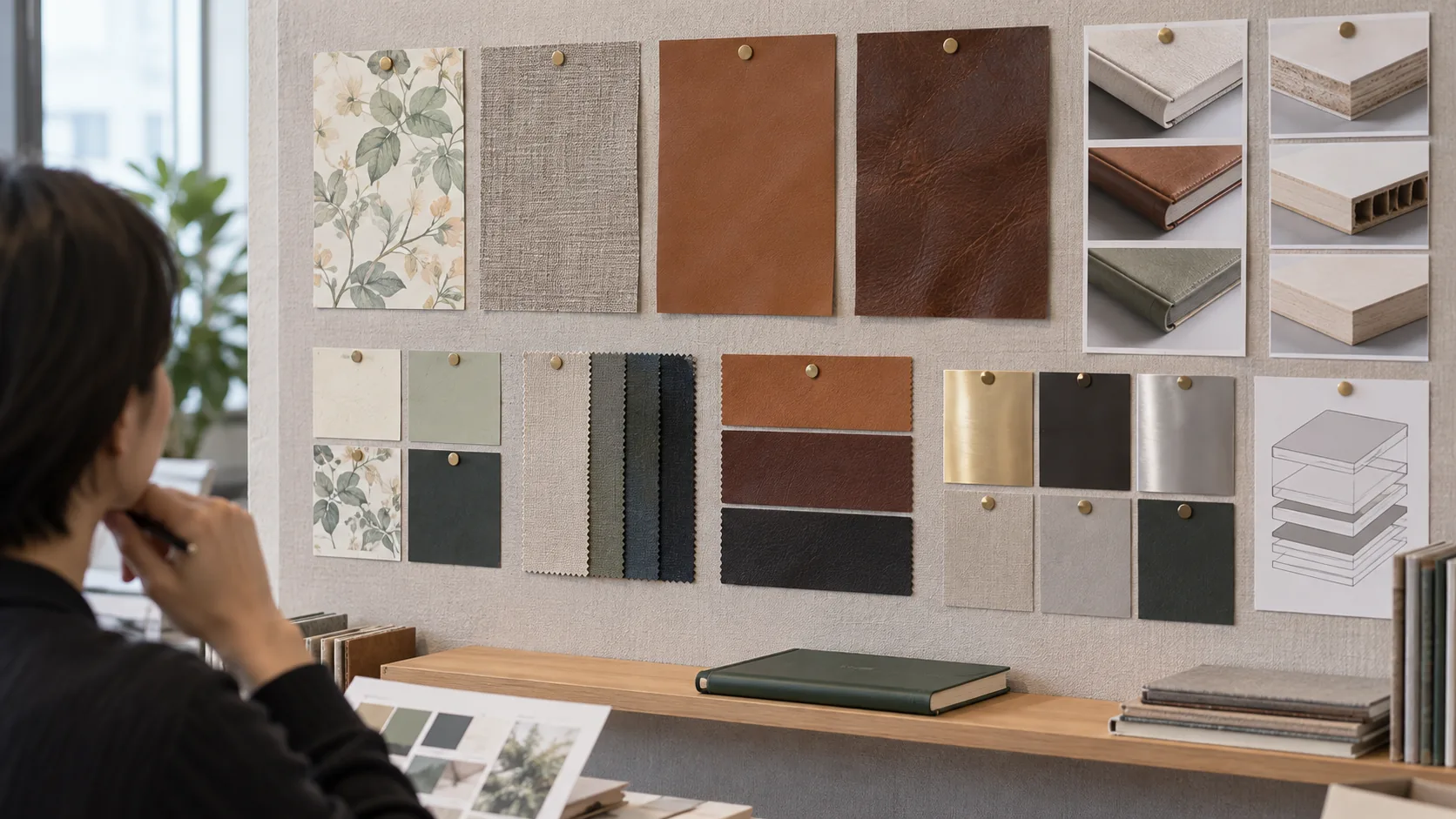
How can a buyer make material options comparable?
Send the supplier the product purpose and the finish you want to evaluate. The printing project requirements page supports a brief that starts with product purpose and then aligns format, materials, binding, sampling, checking, and delivery.
Include:
- Cover material and acceptable alternatives.
- Board, thickness direction, edge, and spine requirements.
- Surface finish, logo method, color, and artwork files.
- Quantity by SKU, destination, packing, and repeat-order plan.
- Sample approval standard and acceptable natural variation.
| RFQ field | Useful wording | Why it matters |
|---|---|---|
| Material | “Paper wrap, cloth, PU, or leather sample options” | Makes comparisons explicit |
| Structure | “Cover board, page block, binding, and finished trim” | Connects covering to the notebook build |
| Finish | “Foil, embossing, debossing, print, or no finish” | Tests the actual surface interaction |
| Quantity | “_ units across _ cover versions” | Supports production and consistency planning |
| Approval | “Bulk follows approved sample and variation standard” | Creates a reference for review |
A precise RFQ gives the supplier a fair way to recommend material and finish combinations. Key Takeaway: describe the intended experience and the measurable production details in the same brief.
How should a brand choose the right notebook cover material?
Choose notebook cover material by starting with use, then comparing hand feel, protection, finish compatibility, cost drivers, and repeat-production control on a physical sample. Paper, cloth, PU, and leather can each work when their construction and market role are clear.
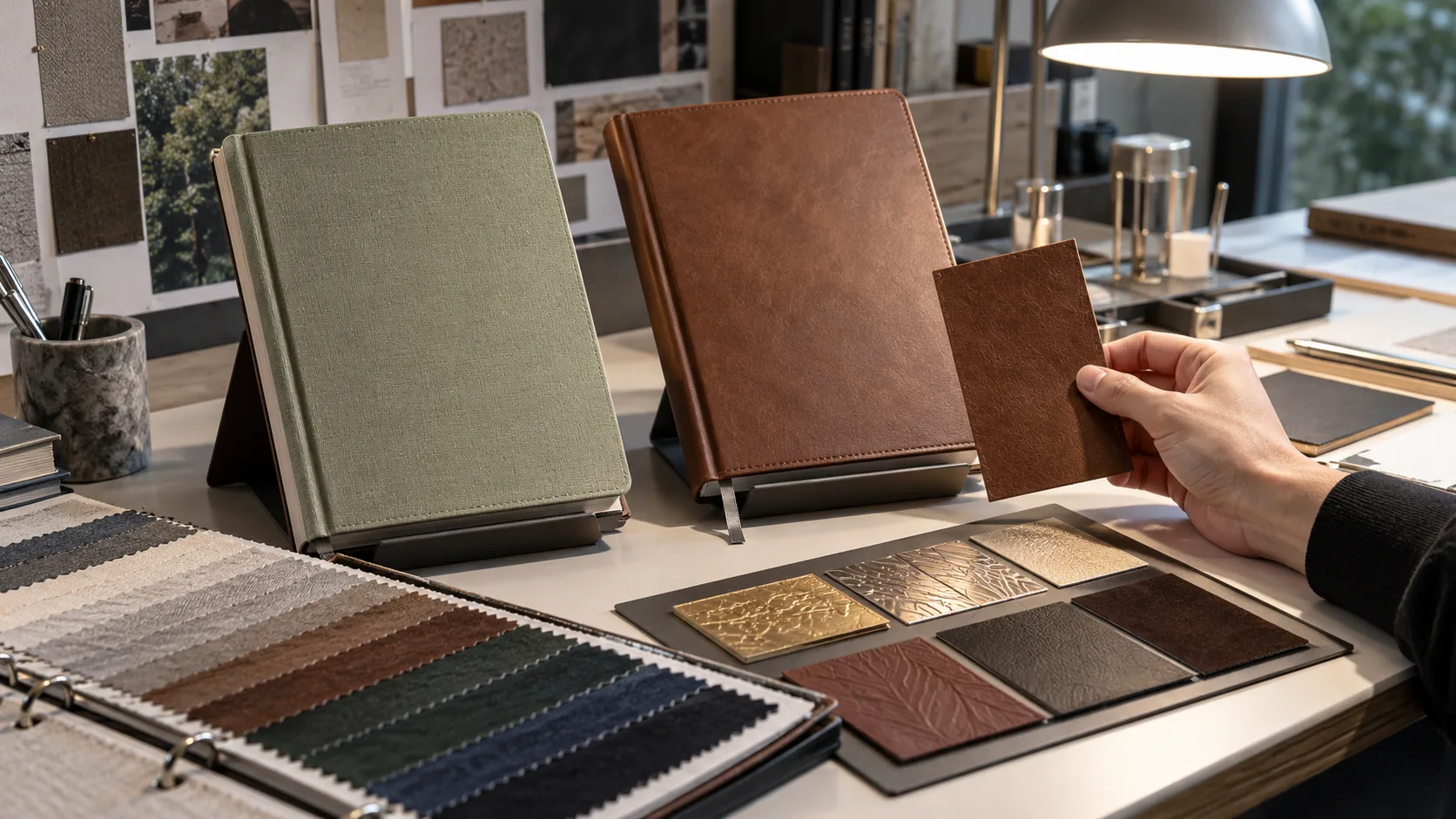
A useful brief tells the designer, buyer, and manufacturer how the notebook will be carried, opened, handled, displayed, branded, and reordered. King Tai can discuss those decisions with stationery brands, publishers, gift companies, and other B2B buyers before the cover specification is fixed.
Share the use case, preferred material, finish, page block, binding, quantity, and references through contact us today. A clear cover decision gives the rest of the specification a stable starting point.
Can I use the same cover material for every notebook SKU?
Sometimes, but not automatically. Different uses may need different flex, texture, protection, or finish priorities.
What’s the best notebook cover material for a retail line?
There is no universal best material. Start with use, hand feel, display, and repeatability, then compare physical samples.
Is PU always more consistent than leather?
Not automatically. PU may offer a controlled synthetic direction, while leather has natural variation; both need a written standard and sample approval.
How do I test foil or embossing on a cover?
Use the actual material, board, artwork, and finish in a full-size sample, then inspect detail, placement, adhesion, and handling.
What should I send before requesting a cover-material quotation?
Send the use case, material options, board and binding, finished size, finish, quantity, destination, artwork, and variation standard.