
Deciding how to ship books in bulk is a packaging and freight problem, not a larger version of mailing one book. A publisher or importer must protect covers and corners, stop inner packs from shifting, keep cartons stable under stacking, manage moisture exposure, and give the forwarder information that matches the physical load.
The safest workflow starts with the finished book and works outward: define the inner pack, test the outer carton, design the pallet load, agree on shipping marks and documents, then compare sea or air against the shipment’s volume, urgency, value, route, and handling needs. This guide focuses on B2B export cartons and pallets, including Bible and other high-page-count book projects.
What Changes When You Ship Books in Bulk?
Bulk book shipping adds compression, repeated handling, stacking, forklift movement, moisture exposure, and more opportunities for carton or label errors. A good plan protects the product at three levels: the individual book, the inner pack, and the palletized shipment.
| Shipping level | Main job | Approval question |
|---|---|---|
| Individual book | Protect cover, spine, corners, edges, and finish | Can the book be handled without scuffing or crushing the cover? |
| Inner pack | Keep a small group aligned and stable | Can the group be lifted and placed without books sliding or rubbing? |
| Outer carton | Resist compression, contain the load, and accept marks | Does the carton remain closed, dry, and identifiable through handling? |
| Pallet/load unit | Support cartons for forklift and freight handling | Does the load stay stable without overhang or loose cartons? |
The book specification affects the packing plan. A thin-paper Bible, a rigid hardcover, a foil-finished cover, and a softcover notebook have different vulnerable points. Kingtai’s custom printing services page is a relevant starting point for connecting product format, finishing, QC, and export-ready production planning.
How Should Books Be Packed Inside the Carton?
Books should sit flat or in the orientation agreed for the design, with their covers, spines, and edges supported. The inner pack should prevent books from sliding against one another while leaving enough clearance for removal without forcing a corner or spine.
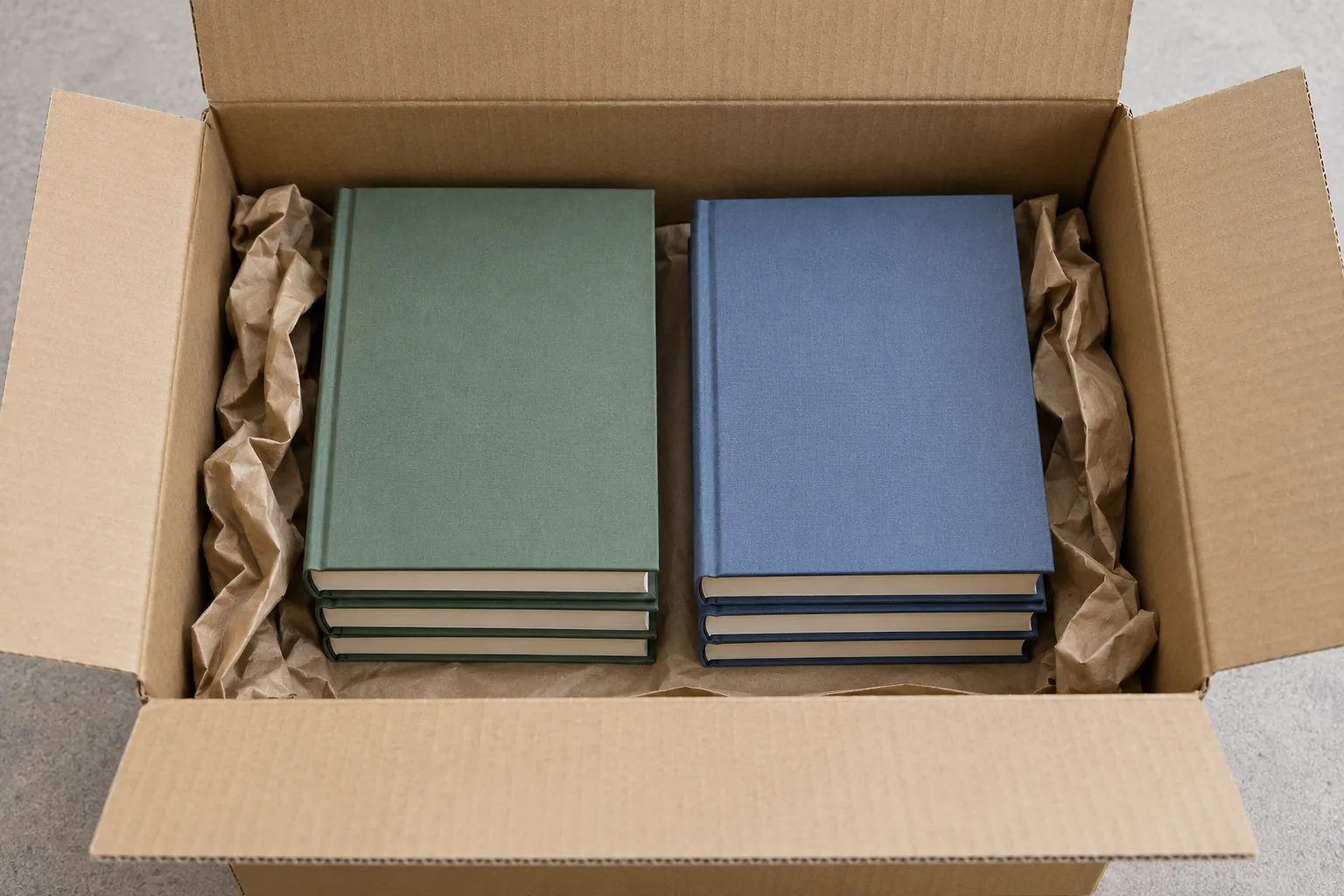
For a bulk order, decide whether books are packed as:
- fixed-count bundles with a paper or board separator;
- shrink-wrapped or film-wrapped groups;
- carton-ready stacks with edge protection; or
- a mixed configuration for different editions or language versions.
The pack must match the book’s surface. A glossy or laminated cover can scuff against another cover. A foil-stamped area can need a clean interleaf or a separation method. A thin or flexible cover can bend if the stack is not supported.
| Inner-pack risk | Protective action to evaluate | Sample check |
|---|---|---|
| Covers rub during movement | Add a clean separator, film, or approved interleaf | Open several books from the center and edges of the pack |
| Corners catch or flatten | Use aligned edge support or a rigid insert | Inspect the four corners after pack handling |
| Spines twist in a loose bundle | Keep the stack square and immobilized | Lift and set down the bundle without sliding |
| Editions or languages mix | Use clear pack identity and fixed counts | Reconcile pack labels with the packing list |
| Finish transfers or scuffs | Confirm cure/set and contact materials | Check foil, coating, and dark areas after storage simulation |
Pack books so the receiving team can count and identify them without dismantling a stable load. The inner-pack count is a project decision that should follow the book’s weight, dimensions, handling method, and customer warehouse process.
How Should You Choose and Fill Outer Cartons?
Use a strong carton that fully contains the inner packs and leaves no space for uncontrolled movement. A carton that is too large needs more void fill and may still allow shifting; one that is too tight can crush corners or make closure unreliable.

The carton plan should answer four questions:
- What is the finished outside size and gross weight of the packed carton?
- How will the inner packs be oriented and supported?
- What protects the top, bottom, and side walls from compression and impact?
- How will the carton be closed, identified, inspected, and stacked?
Commercial book-packing guidance recommends sturdy, clean boxes that fully contain books, even loading, flat packing, and void fill that immobilizes the contents without making removal difficult. Use those principles as a starting point, then validate the exact carton against the book and route.
Do not copy a universal carton dimension from another book project. Page count, trim size, cover material, inner-pack count, destination handling, and pallet pattern change the correct carton. Kingtai’s custom Bible printing page provides useful context for aligning paper, binding, cover, sampling, and delivery requirements before the carton is fixed.
How Do You Protect Books from Moisture?
Moisture protection should be matched to the paper, cover, route, container exposure, and storage conditions. Books can be packed dry and still face moisture risk if the carton, barrier, pallet, or storage handoff is unsuitable for the route.
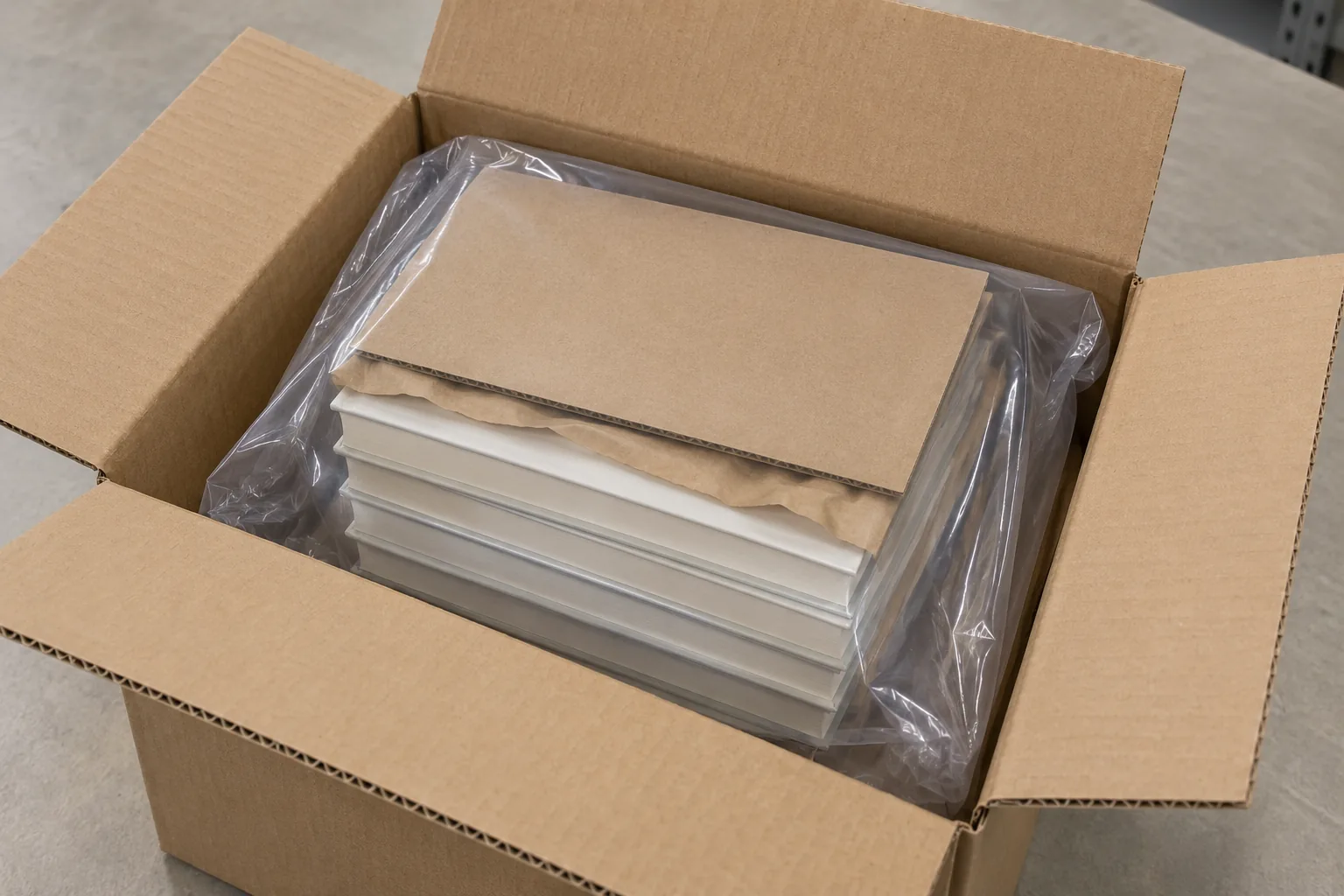
Use a layered plan:
- confirm that books, cartons, pallets, and packing materials are dry before packing;
- use a suitable inner film, bag, liner, or other barrier when the route and product justify it;
- keep books away from carton walls where condensation or leaks could reach the stack;
- make sure the outer carton closes and seals consistently; and
- agree whether a desiccant or humidity indicator is needed with the packer and forwarder.
Plastic film can act as a moisture and surface-scratch barrier, but it does not replace a dry carton, sound container handling, or a route-specific plan. Avoid inventing a humidity percentage or desiccant quantity. Test the actual pack and document the materials used.
Kingtai’s Bible paper guide explains why paper opacity, feel, thickness, printability, and binding affect a Bible’s physical behavior. Add moisture exposure and storage to that review when the books will travel in a mixed climate or remain in a warehouse after arrival.
How Do You Protect Corners, Spines, and Finishes?
Corners and spines need support because books can shift inside a carton even when the carton itself looks intact. Pressure from adjacent packs, forklift movement, and stacking can mark edges or deform a cover.
For a packed sample, inspect:
- the four cover corners and fore-edge;
- the spine and hinge area;
- foil, embossing, lamination, coating, or painted-edge surfaces;
- any protruding tabs, ribbons, or special inserts; and
- the first and last books in each inner pack.
Use rigid separators or edge protection where the product requires it. Keep protection aligned with the book rather than letting loose board or filler create new pressure points. If the cover has a high-touch finish, rub the packed sample through the planned handling sequence before choosing the final material.
Finished dimensions matter here. Kingtai’s Bible dimensions guide can help frame size, page count, spine, and handling questions before the packaging layout is approved.
How Should Cartons Be Palletized?
Palletize cartons on a load-bearing base that supports the weight, provides forklift or pallet-jack access, and keeps the load stable through storage and transport. The correct pallet footprint and stacking pattern depend on carton dimensions, weight, carrier equipment, destination, and warehouse practice.
| Pallet decision | What to check | Why it matters |
|---|---|---|
| Base type | Wood, plastic, or another approved handling base | The base must support the load and suit destination/carrier rules |
| Carton pattern | Interlocking or aligned layout chosen for the carton | Affects stability, compression, and count reconciliation |
| Edge position | No unsupported overhang or risky inboard placement | Protects cartons from forklift and handling damage |
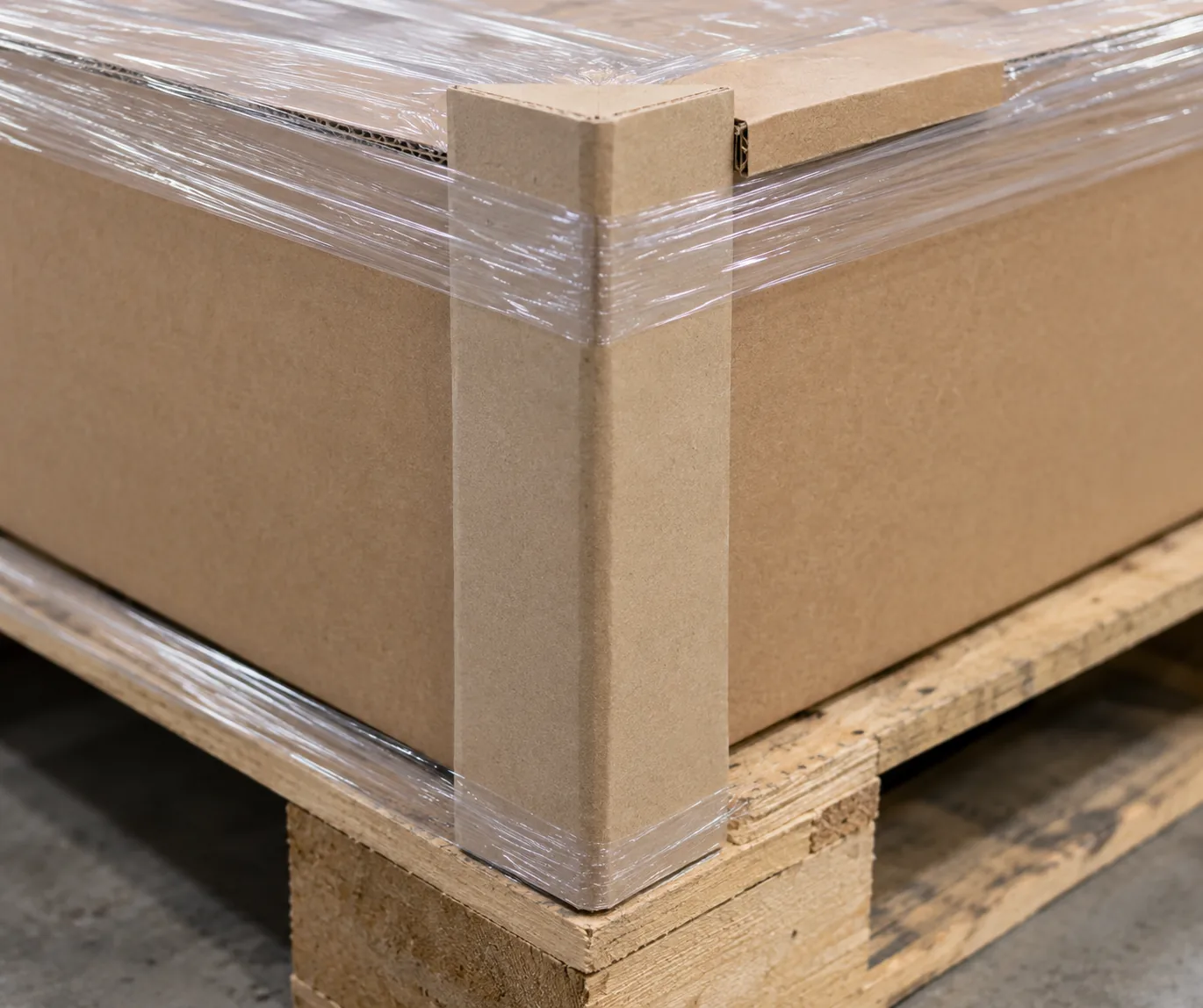
| Restraint | Stretch wrap, banding, corner boards, or approved combination | Keeps cartons together without crushing them |
| Marking | Pallet ID, carton range, gross weight, destination, and handling notes | Allows receiving teams to identify and inspect the load |
Carrier guidance commonly asks that pallets withstand the load, shock, vibration, and handling environment. It also warns that pallet patterns and carton counts are shipment-specific. Do not prescribe a universal pallet height or number of cartons. Request the forwarder’s allowable dimensions, stack rules, and handling requirements for the chosen service.
If wood pallets, crates, or dunnage are used internationally, check whether the destination requires ISPM 15 treatment and the official mark. The requirement is destination-specific and applies to regulated wood packaging, not to every paper carton or every shipment. Kingtai’s Bible printing case study is a useful related context for moving from product specifications to packing and delivery planning.
What Shipping Marks and Documents Should the Buyer Confirm?
Shipping marks should let the buyer, warehouse, carrier, and customs parties identify the load without opening every carton. The exact marks and documents depend on the transaction, destination, carrier, and agreed delivery rule.

Confirm whether the carton and pallet should show:
- seller and consignee names or approved abbreviations;
- purchase order, SKU, edition, language, or version;
- carton sequence, such as “1 of 24”;
- quantity per carton and gross/net weight fields;
- carton dimensions if required by the receiving plan;
- destination, handling, orientation, or moisture notes; and
- pallet ID matching the packing list.
The commercial invoice, packing list, transport document, and any origin or destination documents should describe the shipment consistently. U.S. Commercial Service guidance recommends starting with the importer or freight forwarder to identify the documents required for the destination. Air shipments and ocean shipments use different transport documents, so the shipping party must confirm which applies.
Kingtai’s Scripture publishing solutions page provides a relevant use-case context for publishers and religious organizations planning distribution. Keep the marks and documents tied to the actual edition and packing list instead of reusing an old template.
How Should You Compare Sea and Air Freight?
Compare sea and air using the shipment’s operational requirements. The right mode depends on volume, urgency, inventory value, route, handling risk, service availability, documentation, and the cost of waiting for replenishment.
| Decision factor | Questions for sea and air quotes | Evidence to compare |
|---|---|---|
| Volume and density | How much cubic space and chargeable weight does the shipment occupy? | Final carton/pallet dimensions and weights |
| Urgency | What launch, replenishment, or event date must the stock support? | Required arrival window and schedule buffer |
| Inventory value | What is the financial impact of delay or split delivery? | Stock value, sales plan, and replacement options |
| Handling and moisture | Which route and packaging system exposes the books to the greater risk? | Barrier plan, palletization, and carrier handling rules |
| Documentation | Which transport document, clearance, and delivery responsibilities apply? | Forwarder checklist and agreed delivery rule |
| Total landed decision | What is the full quote after origin, destination, handling, and service charges? | Comparable written quotes, not a rate headline |
Air can make sense for a time-critical partial shipment or replenishment, while a larger order may fit a different mode, but the buyer should let the shipment facts decide. Compare the same packing basis and delivery responsibility in both quotes. Kingtai’s custom printing services page can be used as a starting point for sharing product, format, and production details with the factory and forwarder.
What Should a Pre-Shipment Approval Checklist Include?
Approve the pack system before the full order is released. A practical checklist connects the book sample, carton sample, pallet plan, marks, documents, and freight quote.
| Approval item | What to record | Who should confirm |
|---|---|---|
| Finished book | Edition, version, cover/finish, and approved product sample | Buyer and production team |
| Inner pack | Count, orientation, separators, film, and handling notes | Packer and buyer |
| Outer carton | Material direction, closure, marks, dimensions, and packed weight | Packer and forwarder |
| Pallet load | Base type, pattern, restraint, ID, and destination rules | Packer, warehouse, and carrier |
| Moisture plan | Dry-pack procedure, barrier materials, and any validated indicators | Packer and buyer |
| Freight/document set | Mode, quote basis, delivery rule, packing list, invoice, and transport document | Buyer/importer and forwarder |
Photograph the approved inner pack, closed carton, marks, pallet, and any moisture protection. Keep the photos with the versioned packing list. If the book changes in trim, page count, cover, or finish, reopen the pack and freight review instead of assuming the previous plan still fits.
For a project request, use the contact page to share the product specification, quantity, destination, preferred delivery window, carton questions, and forwarder instructions. The supplier can then quote against a defined brief.
What Is the Practical Way to Ship Books Safely?
The practical way to ship books safely is to approve the complete system: protect the book inside an inner pack, immobilize the pack in a suitable carton, protect it from the route’s moisture and handling risks, stabilize the cartons on a pallet, apply agreed marks, and compare freight quotes on the same shipment basis.
Do not choose a carton, pallet height, moisture limit, or sea/air mode from a generic rule. Use the finished book, order quantity, destination, handling equipment, importer requirements, and forwarder guidance to set the actual specification. Kingtai’s custom Bible printing page and homepage are starting points for a production and shipment discussion.
FAQ 1: Should books be packed flat for bulk shipping?
Flat packing can help support books and reduce leaning, but the final orientation should match the book, inner pack, carton, and handling plan. Confirm it with a packed sample.
FAQ 2: Do book cartons need plastic or desiccant?
They may need a barrier or moisture-control material when the paper, route, storage, or container exposure creates that risk. Validate the material and quantity for the actual pack instead of using a universal rule.
FAQ 3: Do export pallets always need an ISPM 15 mark?
No. Check the destination’s current requirements for regulated wood packaging, pallets, crates, and dunnage. Paper or plastic handling bases follow different requirements.
FAQ 4: Is sea freight always best for bulk books?
No. Compare volume, urgency, value, route, handling, documentation, and the cost of waiting. Quote sea and air on the same product and delivery basis when both are possible.
FAQ 5: What should a book exporter send a freight forwarder?
Send the edition and quantity, packed carton and pallet dimensions, weights, marks, destination, delivery responsibility, requested arrival window, moisture plan, packing list, and any importer instructions.