
When buying a Bible, you need to know how translation styles, physical footprints, typography, paper qualities, and protective bindings harmonize to fit your specific reading routine and personal aesthetic. For many people, walking into a bookstore or browsing online quickly turns into an overwhelming chore. You pick up a gorgeous volume only to realize later that the font is too microscopic to read comfortably, or the book itself is a massive desk reference too heavy to carry to your weekly study group. Worse still, you might select a slim travel edition, only to find the pages are so paper-thin that the print from the reverse side completely ghosts through, making the text difficult to parse. To prevent these frustrating missteps, this comprehensive buyer’s guide breaks down the physical and typographic dynamics of scripture design, helping you evaluate layout choices, paper styles, and how big is the bible so you can choose a lifelong reading companion.
Why Care About the Physical Dimensions of Scripture?
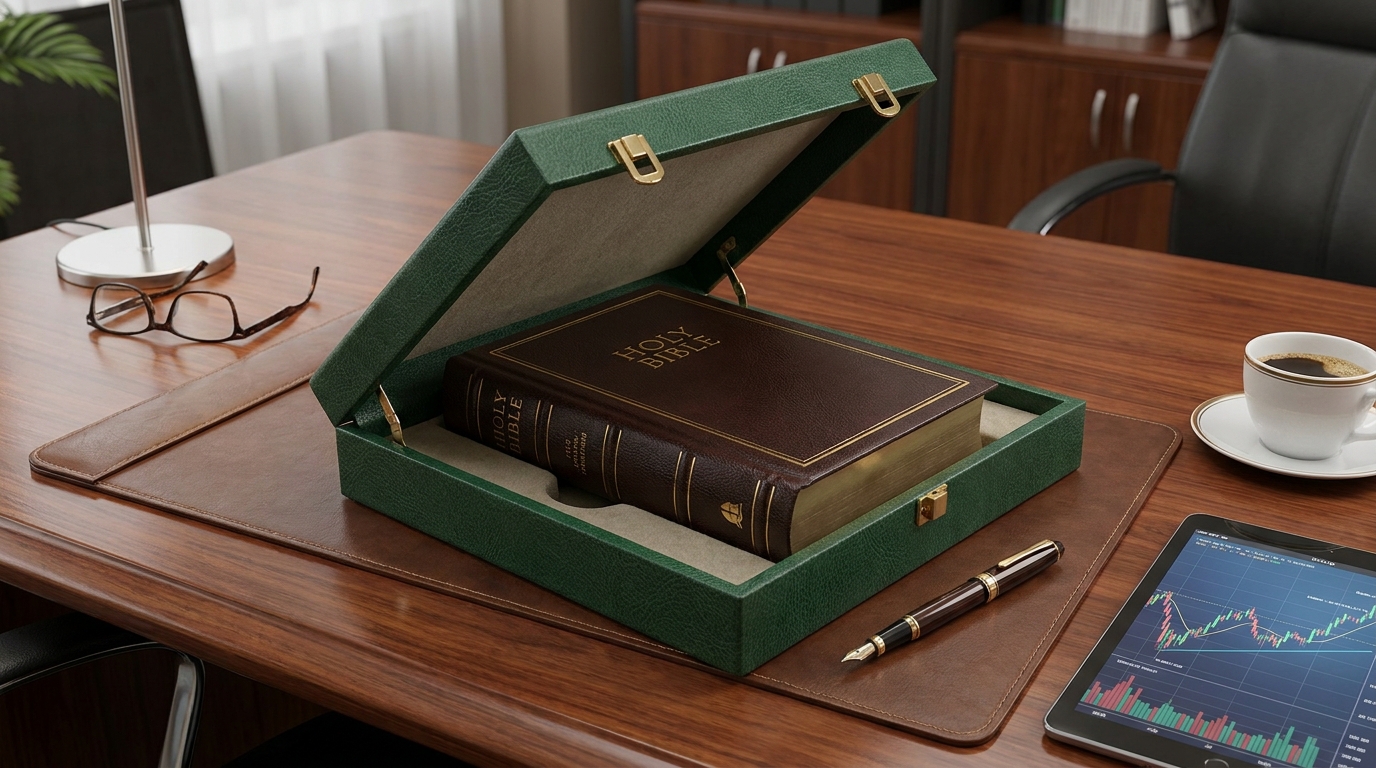
You must care about the physical dimensions of your Bible because size directly dictates when, where, and how comfortably you will read it. The physical footprint of scripture—specifically, understanding how big is the bible—influences whether a volume becomes an easy-to-carry daily companion or a desk-bound study reference.
What Are the Main Physical Dimensions?
When you evaluate your physical options, you will discover that book designs fall into distinct size categories. Finding the correct size ensures that you will actually enjoy reading instead of struggling with an awkward book.
Here is the key:
- Compact Sizes: Typically 6.25″ x 4.25″ x 1.25″ or smaller; lightweight and highly travel-friendly.
- Thinline Profiles: Usually around 9.5″ x 6.5″ x 1″; maximizes layout space while keeping depth under an inch.
- Personal Layouts: Roughly 9.5″ x 6.5″ x 1.5″; the standard, highly versatile format for general study.
How Does Spine Thickness Affect Reading Comfort?
A Bible’s spine thickness directly impacts how comfortable you feel during long reading sessions. Thicker spines create a deep “gutter margin” that swallows words, forcing you to pry the book open constantly.
Think about it:
- Stiff Glued Bindings: Require constant hand pressure to stay open.
- Sewn Bindings: Lay flat naturally, easing strain on your hands and wrists.
Choosing physical dimensions is the single most important factor in determining the daily utility of your Bible. Ensure you prioritize where you will do 80% of your reading before finalizing its size.
| Bible Class | Typical Dimensions | Average Page Count | Best Use Case | |
|---|---|---|---|---|
| Compact | 6″ x 4″ x 1.2″ | 1,000 – 1,200 | Commuting, travel, quick reference | |
| Thinline | 9″ x 6″ x 0.9″ | 800 – 1,000 | Carrying to services, slim modern feel | |
| Study | 10″ x 7″ x 1.8″ | 1,800 – 2,200 | Deep study, desk reading, sermon prep |
While compact versions win on portability, their thin margins and small print can limit the duration of focused reading sessions.
Does Translation Choice Change the Outer Footprint?
Translation choice directly changes the size of the Bible because different language philosophies require varying numbers of words and footnotes to convey original texts. Depending on these translation styles, the actual text length changes, directly affecting how big is the bible in your hands.
Why Translation Philosophies Alter Layout Densities
When you choose a literal, word-for-word translation, you are opting for high formal precision. These translations often require extensive footnotes to explain historical word choices, which expands the text layout.
Here is the deal:
- Word-for-Word Layouts: Often feature dual columns and numerous textual notes.
- Thought-for-Thought Styles: Allow a more natural, fluid text stream on the page.
Do Modern Paraphrases Require More Page Space?
You might assume a conversational paraphrase would save space, but expanded descriptive phrasing actually increases the word count. Publishers must design larger books to accommodate these modern interpretations comfortably.
Let’s dive deeper:
- Descriptive Phrasing: Increases paragraph length significantly.
- Modern Formatting: Requires generous line leading to remain visually clear.
Word-for-word translations tend to have tighter, more compact phrasing but can contain extensive translational footnotes that increase overall page size.
| Translation Style | Philosophy | Word Count (Approx.) | Layout Footprint | |
|---|---|---|---|---|
| Classical Formal | Formal (Word-for-Word) | 783,000 words | Compact to Regular | |
| Modern Formal | Formal (Word-for-Word) | 757,000 words | Standard Reference | |
| Modern Dynamic | Dynamic (Thought-for-Thought) | 727,000 words | Regular to Thinline |
Opting for a dynamic translation can reduce total page count slightly, though publishing layouts remain the true determinant of physical dimensions.
Why Do Built-In Study Tools Drastically Add Bulk?
When you opt for built-in study tools, the Bible physically grows to accommodate extensive commentaries, cross-references, historical charts, and theological profiles. Adding study tools radically alters how big is the bible, transforming slim volumes into massive reference libraries.

How Commentary Layouts Shape Book Depth
If you want expert explanations alongside the scripture, you will have to accept split-page layouts. These designs place the text on top and allocate the lower half to dense study notes.
Think about it:
- Split Layouts: Require wide pages to fit historical and theological sidebars.
- Extended Appendices: Add hundreds of resource pages to the back matter.
Managing the Weight of Desktop Study Editions
You can manage this substantial weight by opting for editions that use specialized thin paper. Premium paper allows extensive content to fit into a relatively compact spine.
But that’s not all:
- Archival Paper (20 GSM): Keeps heavy study volumes down to a manageable size.
- Multi-Volume Sets: Divide the vast commentary library into separate, portable books.
Study Bibles pack unparalleled library resources directly under the text, but this functionality demands a heavy, desk-oriented book size.
| Study Resource | Added Page Count Range | Spine Bulk Increase | Weight Impact | |
|---|---|---|---|---|
| Bottom-Page Commentary | 400 – 800 pages | + 0.50″ to 0.75″ | High | |
| Center-Column References | 50 – 100 pages | + 0.10″ | Low | |
| Back Concordance/Maps | 150 – 300 pages | + 0.25″ | Moderate |
If you require deep scholarship tools, prepare for a desktop footprint that trades portability for comprehensive insight.
What is the Best Size for Active Carry and Travel?
Bibles intended for daily carry and travel are specifically slimmed down to an average thickness of under one inch and a weight of less than 1.5 pounds. Commuters must balance print legibility with how big is the bible before committing to a daily-carry edition.
Why Compact Formats Challenge Visual Comfort
When you slip a compact edition into your travel bag, you are choosing ultimate physical convenience. However, these miniature layouts force text into incredibly small sizes that can strain your eyes.
Here is the key:
- Pocket Volumes: Extremely light to carry but require close-range reading.
- Cramped Margins: Offer zero room for personal note-taking during study.
Thinline Formats: The Traveler’s Dream Compromise
You will find that Thinline editions offer a brilliant middle ground for daily transit. By maintaining standard height and width while trimming spine depth, they slide easily into folders or backpacks.
Look at it this way:
- Trim Spines (0.75″): Minimize bulk while preserving clear, readable layouts.
- Standard Footprints: Keep font sizes comfortable for continuous reading sessions.
For transit, Thinline Bibles provide the absolute best balance, offering full-size text legibility with a highly slim, travel-friendly spine.
| Travel Format | Spine Thickness | Typical Weight | Readability Score | |
|---|---|---|---|---|
| Pocket / Vest | 1.10″ – 1.30″ | 0.5 – 0.7 lbs | Low (5pt – 6pt font) | |
| Thinline | 0.75″ – 0.95″ | 1.0 – 1.3 lbs | Moderate/High (8pt – 9pt) | |
| Personal Size | 1.25″ – 1.50″ | 1.5 – 1.8 lbs | High (9pt – 10pt) |
Minimizing travel bulk inevitably compromises font size, making layout style choices critical for on-the-go readers.
Does Font Choice Directly Expand Book Dimensions?
Yes, print and font size heavily affect Bible dimensions; larger fonts require more physical paper space, which significantly increases both page count and overall thickness. If you struggle with eye strain, font preferences will dictate how big is the bible you need to purchase.
The Readability Trade-Off with Standard Fonts
When you compare different text options, you will see how minor font increases alter physical thickness. Standard sizes (8pt to 9pt) balance legibility and paper usage perfectly for regular readers.
Let’s dive deeper:
- Standard 9pt Fonts: Provide great daily comfort without making the book heavy.
- Line-Matched Layouts: Align lines on both page sides to prevent visual overlap.
Why Giant Print Layouts Call for Solid Desks
You must expect a giant print edition (12pt or larger) to be significantly bulkier. To keep the print crisp and clean, publishers must use thicker, high-grade papers that expand the book’s spine.
What is the catch?
- Giant Print (12-16pt): Maximizes visual accessibility but creates a two-inch spine.
- Stationary Use: Best suited for sermons, teaching, or home devotional desks.
Do not compromise your eye comfort for portability. If you need 11pt font or larger, prioritize Large Print editions and accept a larger physical footprint.
| Font Size Category | Point Range | Impact on Bible Thickness | Ideal Reading Distance | |
|---|---|---|---|---|
| Compact/Pocket | 6pt – 7.5pt | Minimal (< 1.0″) | Close (8″ – 12″) | |
| Standard/Comfort | 8pt – 9.5pt | Moderate (1.2″ – 1.4″) | Normal (12″ – 15″) | |
| Large / Giant | 10pt – 14pt+ | Massive (1.7″ – 2.2″) | Arm’s Length (18″+) |
Premium typography design can offset small font limitations, allowing slightly smaller page formats to remain highly readable.
Why Do Journaling Formats Require Thicker Margins?
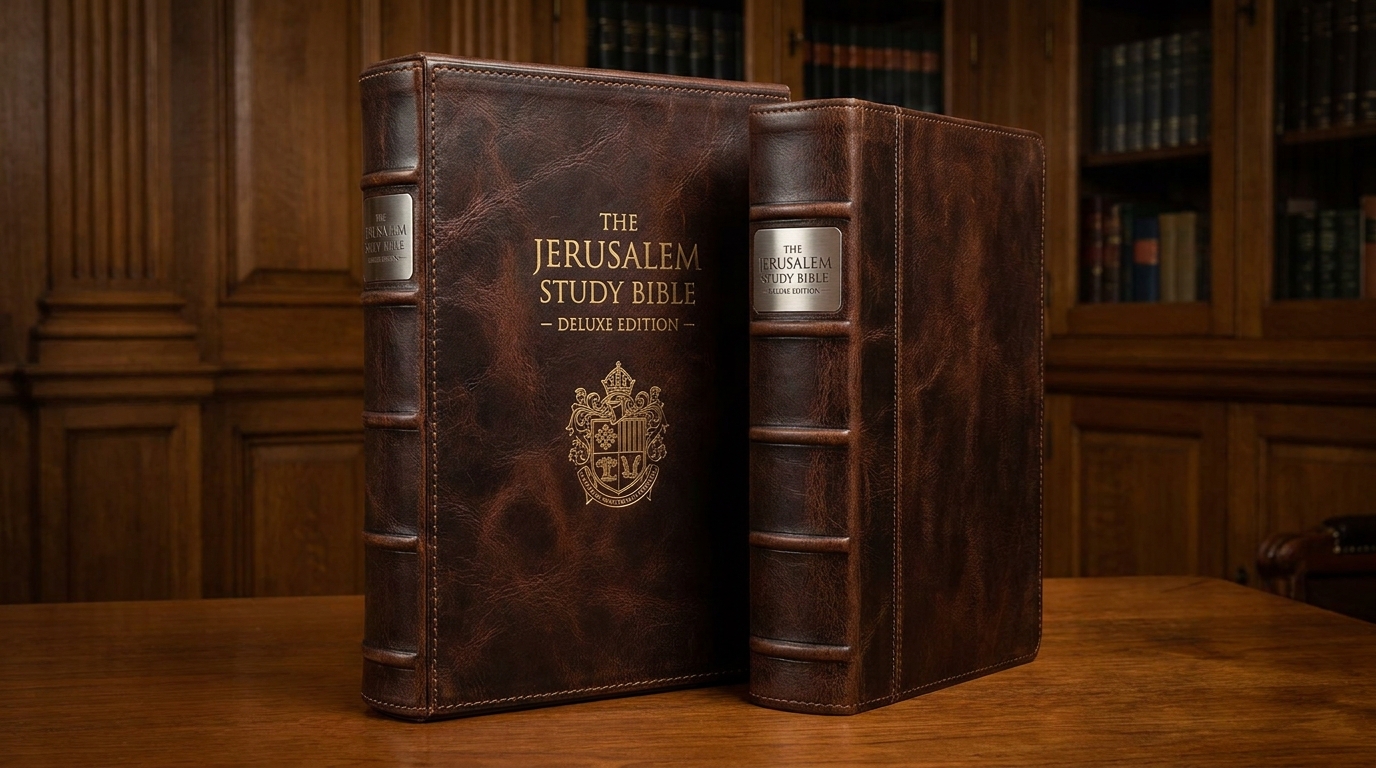
Journaling Bibles are significantly wider and thicker than standard editions to accommodate writeable margins and heavy, bleed-resistant paper. Creative writers must realize that paper density dramatically changes how big is the bible before committing to a journaling volume.
Why Ink Protection Demands Heavy Paper GSM
If you plan to sketch, write, or paint in your Bible, standard paper simply will not work. Standard bible paper is far too delicate, causing heavy inks to bleed right through to the reverse text.
To make matters worse:
- Premium Matte Paper (40 GSM): Stops bleed-through and provides a stable writing surface.
- Heavier Page Weights: Add substantial bulk, expanding the spine up to two inches.
Comparing Single-Column and Double-Column Workspaces
You will find that page layouts alter how much creative workspace you get. Single-column systems give you wide outer margins for extensive journaling but extend the cover width.
Here is the deal:
- Single-Column Margins: Provide comfortable lines but increase horizontal dimensions.
- Double-Column Margins: Keep the format compact but reduce creative note space.
Journaling Bibles are artistic workspaces. Accept their bulkier, wider dimensions as a necessary trade-off for creative and contemplative expression.
| Bible Style | Average Paper Weight | Spine Width | Outer Margin Width | |
|---|---|---|---|---|
| Standard Text | 22 – 28 GSM | 0.9″ – 1.2″ | 0.25″ – 0.5″ | |
| Journaling | 38 – 50 GSM | 1.5″ – 2.0″ | 1.75″ – 2.25″ |
High paper opacity is vital for journaling, making thick, heavy spines an unavoidable requirement for note-taking.
Do Premium Custom Covers Increase Outer Sizes?
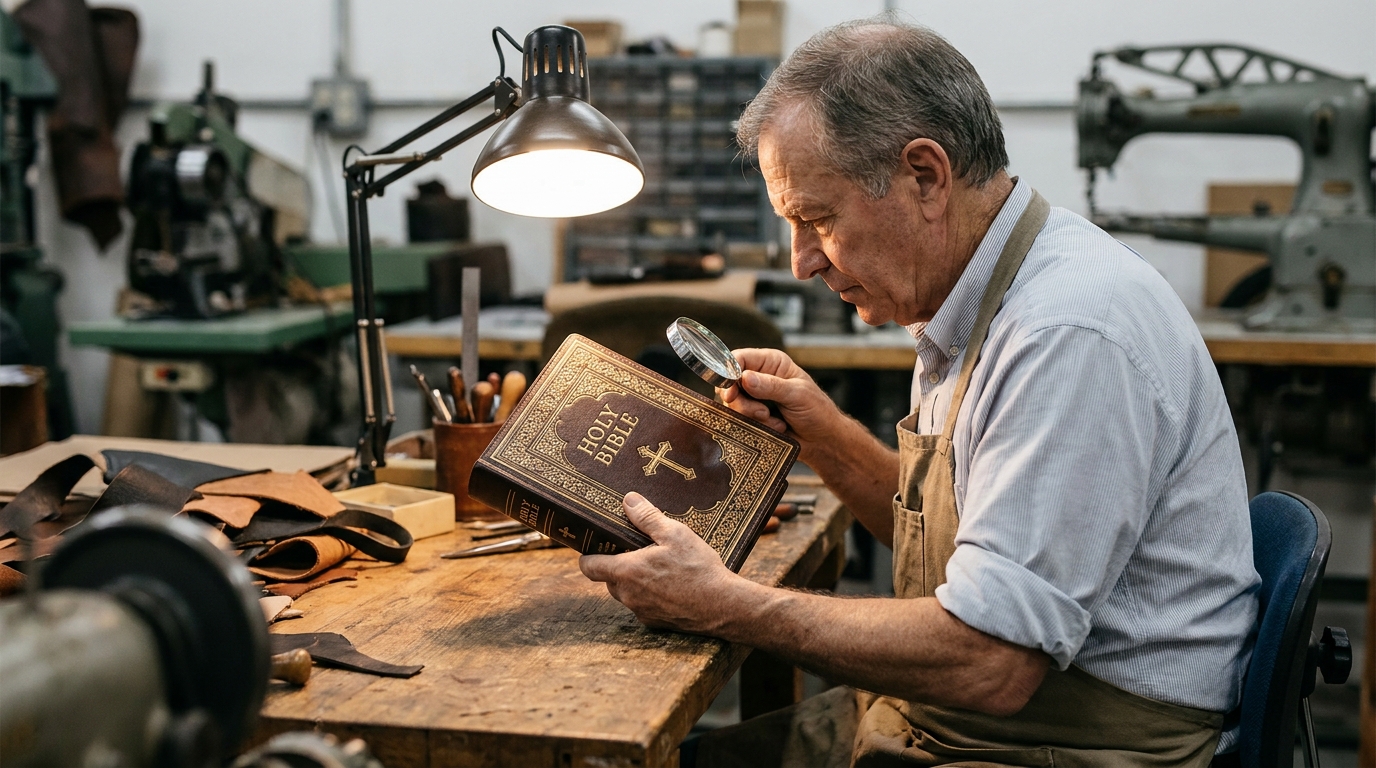
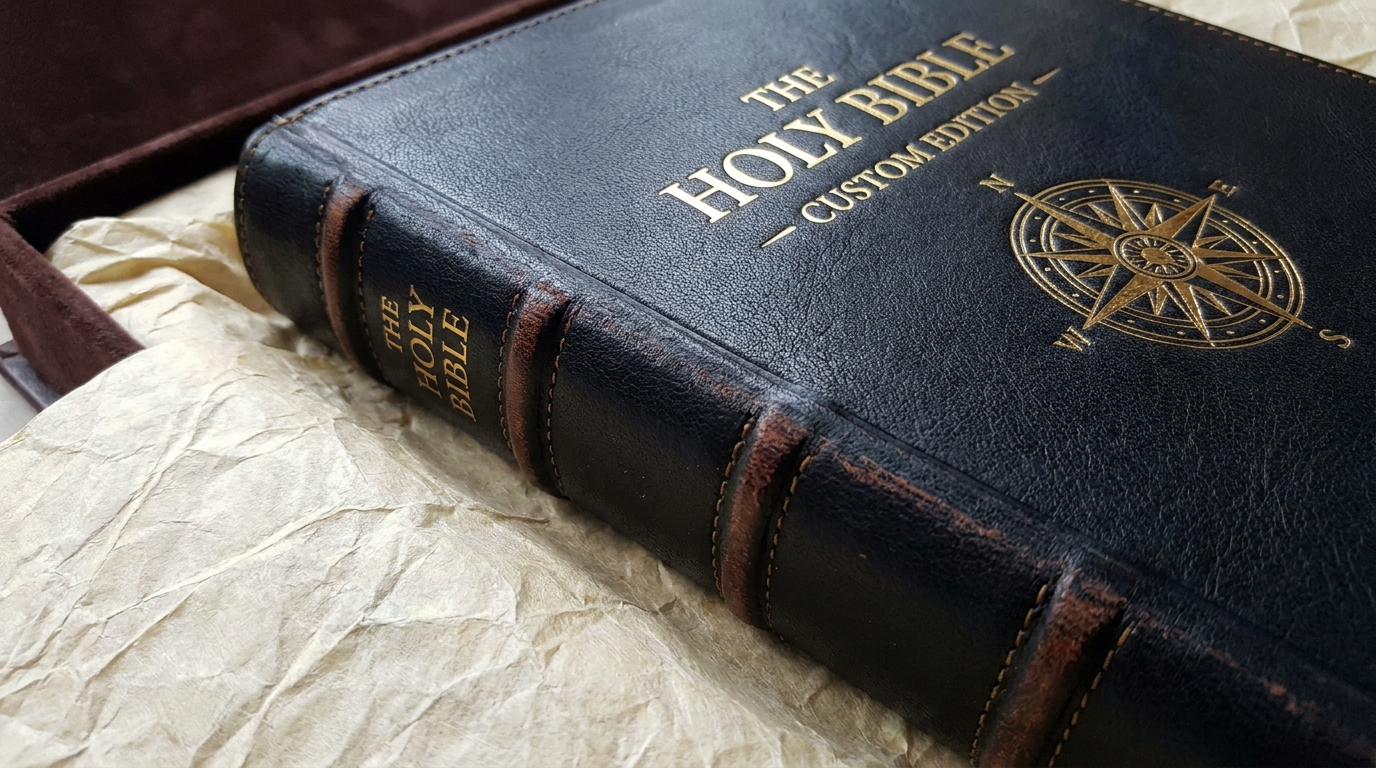
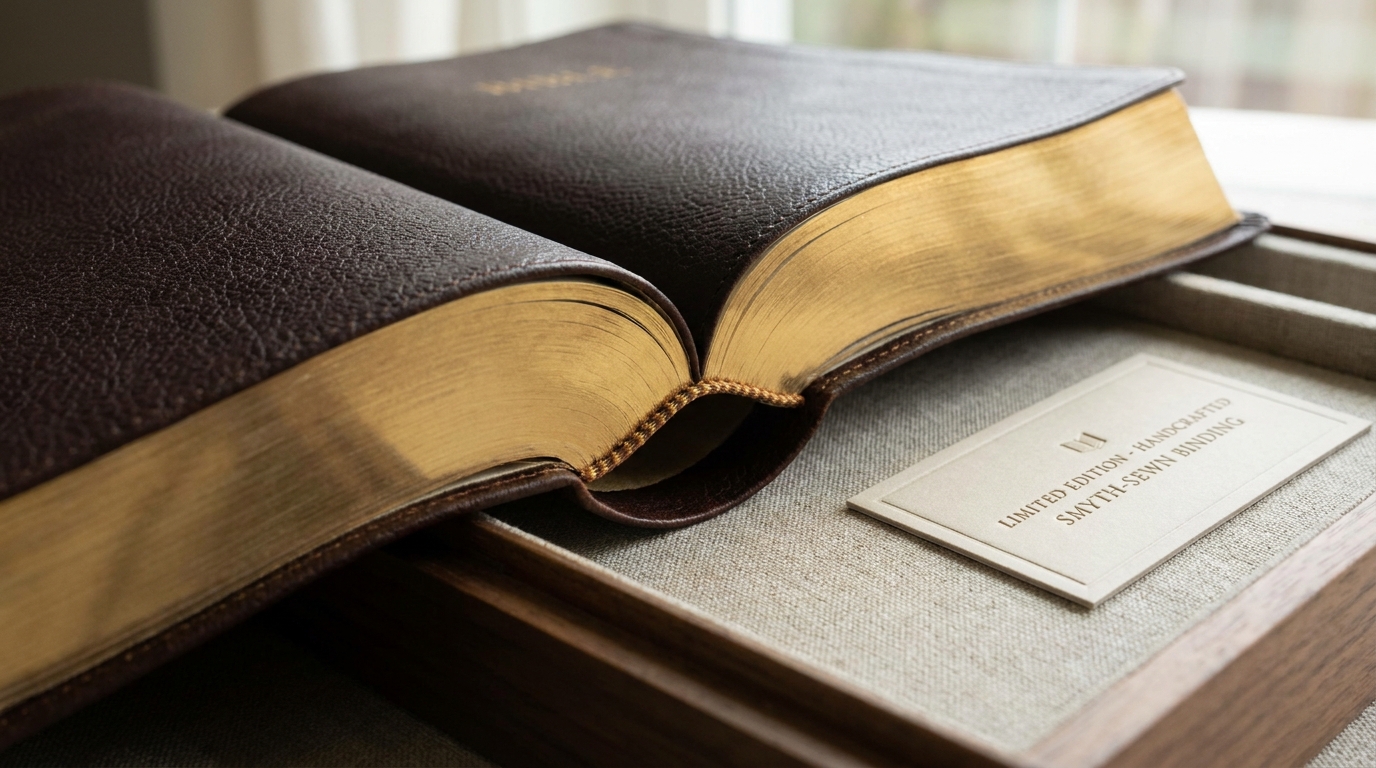
Selecting premium custom covers increases the outer dimensions of your Bible because edge-lined leathers and heavy hardcovers extend beyond the edges of the page block. Structural cover overhangs, known as “yapp,” will alter how big is the bible by adding up to a half-inch of extra leather around the perimeter.
Why the Yapp Protects Your Gold-Gilded Edges
When you purchase a hand-crafted leather volume, you will notice a soft leather lip hanging over the page block. This overhang folds gently over the page margins to seal them against wear.
Why is this important?
- Full-Yapp Overhangs: Fold completely over, offering excellent page protection.
- Semi-Yapp Trims: Provide minor coverage without adding excessive horizontal size.
Comparing Hardcover and Soft Cover Spine Flexibility
You must decide whether a rigid hardback or a flexible softcover suits your holding style. Hardcover boards maintain strict boundaries, whereas softcovers mold beautifully to your fingers.
But that’s not all:
- Rigid Hardbacks: Stand firmly on bookshelves but do not compress in travel bags.
- Flexible Softcovers: Compress easily but require secure storage sleeves to prevent bending.
Premium leather bindings add minor physical footprint increases via yapp overhangs, but they vastly improve hand feel, longevity, and ease of laying flat.
| Binding Style | Structural Support Type | Edge Overhang (Yapp) | Durability Rating | |
|---|---|---|---|---|
| Hardcover Board | Rigid Cardboard | None (Cut-Flush) | Moderate / High | |
| Pasted-Down Leather | Bonded/Genuine | Minimal (1/16″) | Moderate | |
| Edge-Lined Leather | Goatskin/Calfskin | Full (1/4″ to 1/2″) | Heirlooms (Extremely High) |
Investing in edge-lined leather protects your book’s pages, though it slightly increases the overall physical footprint.
Does Price Correlate Directly with Physical Dimensions?
Retail pricing does not correlate directly with Bible size, but rather with the quality of construction, materials, paper weight, and the sophistication of the binding process. A budget compact copy can occasionally cost more than a large paperback, showing that size alone does not determine how big is the bible cost-wise.
Craftsmanship and Material Choices Shape Value
If you want an heirloom that lasts for decades, you will find that manufacturing quality matters far more than height or width. Cheaper volumes rely on fast machine gluing, which degrades within a few years.
Let’s face it:
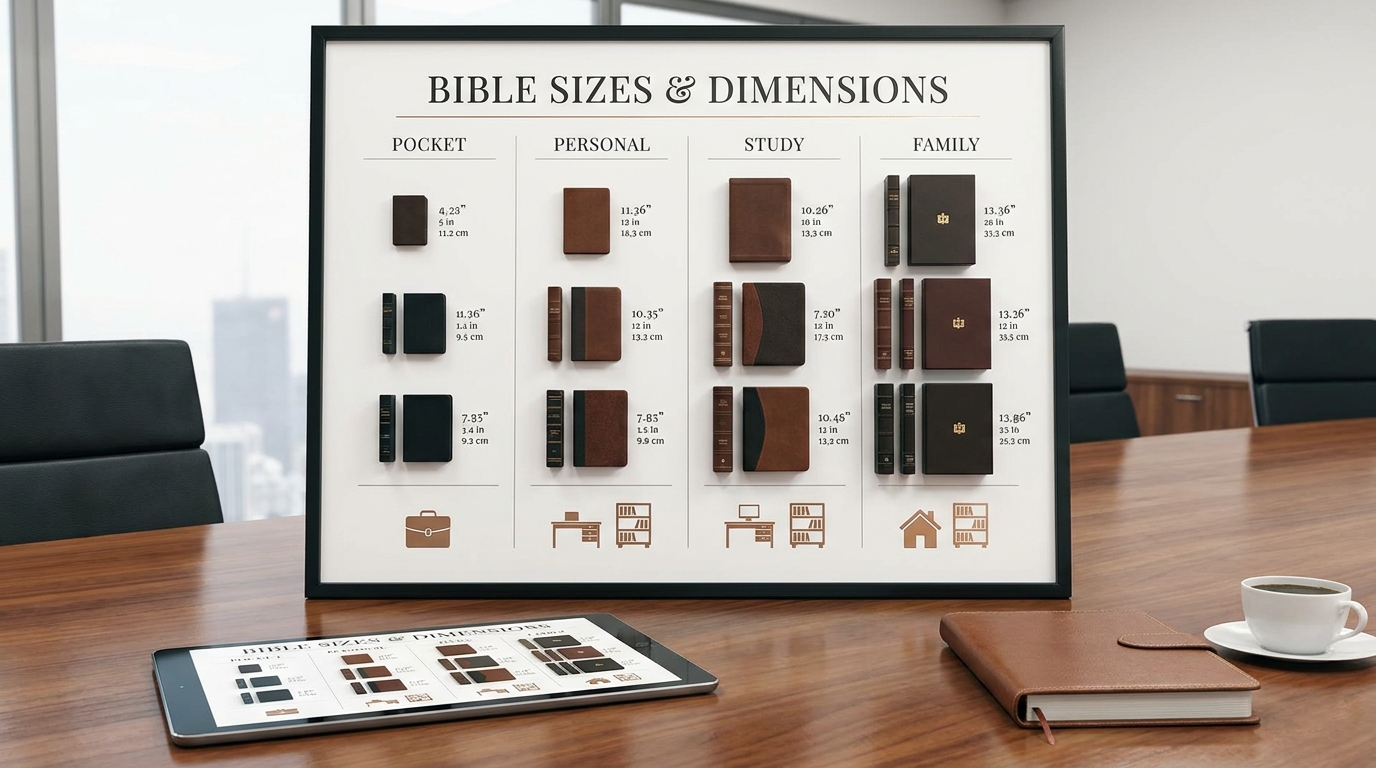
- Smyth-Sewn Signatures: Thread-bound sections that allow the spine to bend without cracking.
- Glued Assemblies: Are incredibly cheap to produce but split open under light wear.
Comparing Budget Editions with Heirloom Collections
You should view premium custom editions as a generational investment rather than a simple purchase. High-grade leather and hand-dyed page margins feel incredibly smooth and maintain structural integrity for fifty years.
Look at it this way:
- Budget Series: Feature synthetic covers and thin wood-pulp papers.
- Heirloom Collections: Feature full-grain leathers and silk ribbons.
When budgeting, focus on the binding method (sewn vs. glued) and paper quality rather than dimensions. A well-made compact Bible is a far better investment than a cheap study Bible.
| Price Bracket | Standard Bindings | Paper Grade | Expected Lifespan | |
|---|---|---|---|---|
| Under $15 | Glued / Paperback | Economy Wood-pulp | 1 – 3 years | |
| 20−70 | Sewn / Imitation Leather | Mid-grade Bible Paper | 5 – 15 years | |
| Over $110 | Smyth-Sewn / Edge-lined | Premium Acid-free | Generational (50+ years) |
A high price tag reflects quality craftsmanship and paper materials, not just physical bulk.
What Physical Formats Suit Children’s Hands Best?
Bibles designed for children are physically proportioned to suit small hands, using shorter page sizes, wider columns, and thick, rip-resistant paper. Depending on age-specific formats, how big is the bible for children varies from thick board books to compact youth editions.
Why Toddler Formats Prioritize Heavy Durability
When you purchase for the youngest readers, you must prioritize thick board construction. Standard Bible pages tear in seconds when handled by excited toddler hands.
As you might expect:
- Board Books: Feature glossy, thick boards that wipe clean of spills easily.
- Bright Visuals: Keep toddlers engaged without overwhelming them with text.
Transitioning Young Readers to Soft Intermediate Covers
You will find that school-aged children do best with mid-size formats that offer standard text. Soft, rounded synthetic covers protect hands and keep the total weight comfortable for small shoulders.
Think about it:
- Polyurethane (PU) Covers: Highly durable, stain-resistant, and comfortable to grip.
- Standard-Thin Profiles: Provide full text layouts with easy-to-turn pages.
Children’s Bibles are structured for physical durability and easy handling. Match the book size and weight directly to the child’s developmental age.
| Target Age Group | Recommended Dimensions | Material Type | Primary Focus | |
|---|---|---|---|---|
| Toddlers (Ages 1-4) | 5″ x 5″ (Compact/Thick) | Heavy Duty Board Book | High durability, rich imagery | |
| Early Readers (5-8) | 8″ x 6″ (Mid-size) | Matte Art Paper | Large print, illustrations | |
| Preteens (Ages 9-12) | 7″ x 5″ (Standard-thin) | Lightweight Flex-cover | Full text, basic study tools |
Selecting the correct physical size keeps children from feeling overwhelmed by the weight of scripture.
Why Must Protective Packaging Match Book Sizes Exactly?
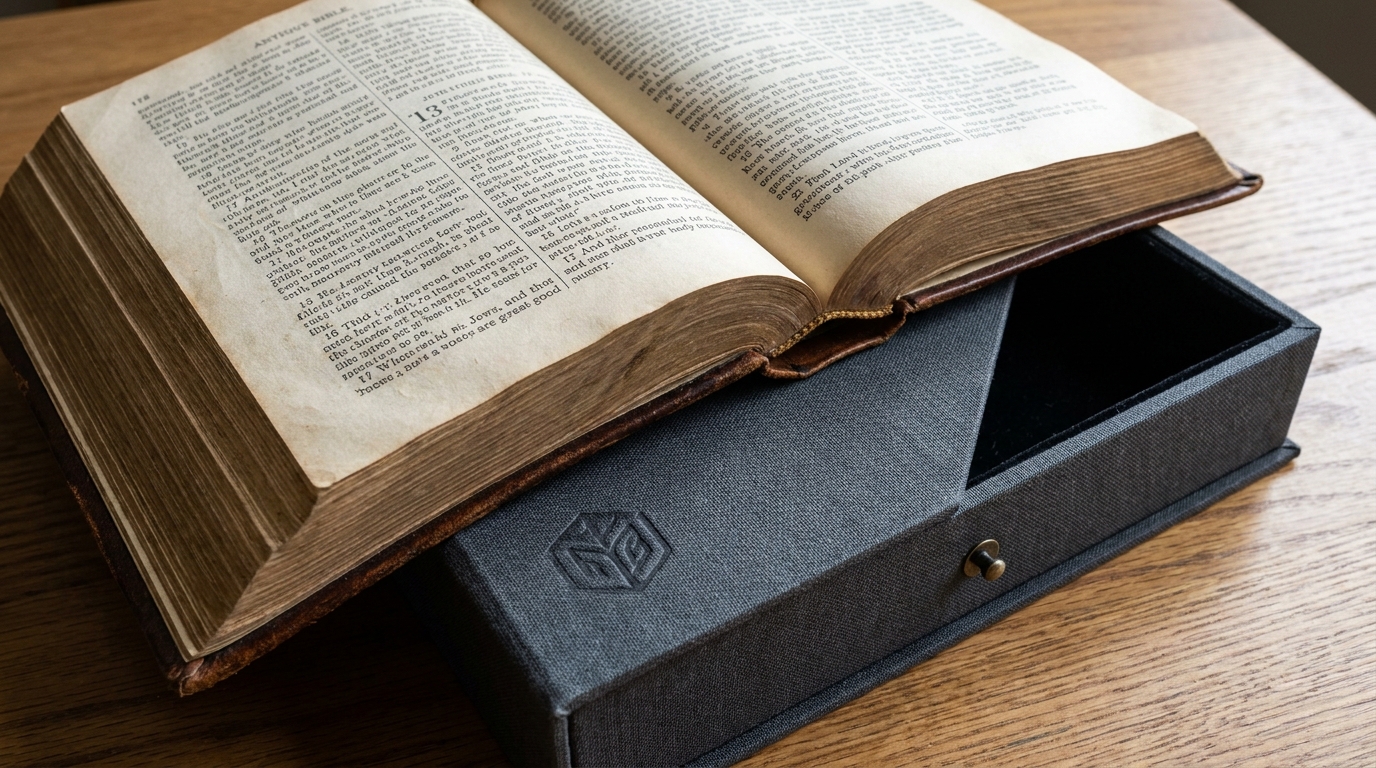
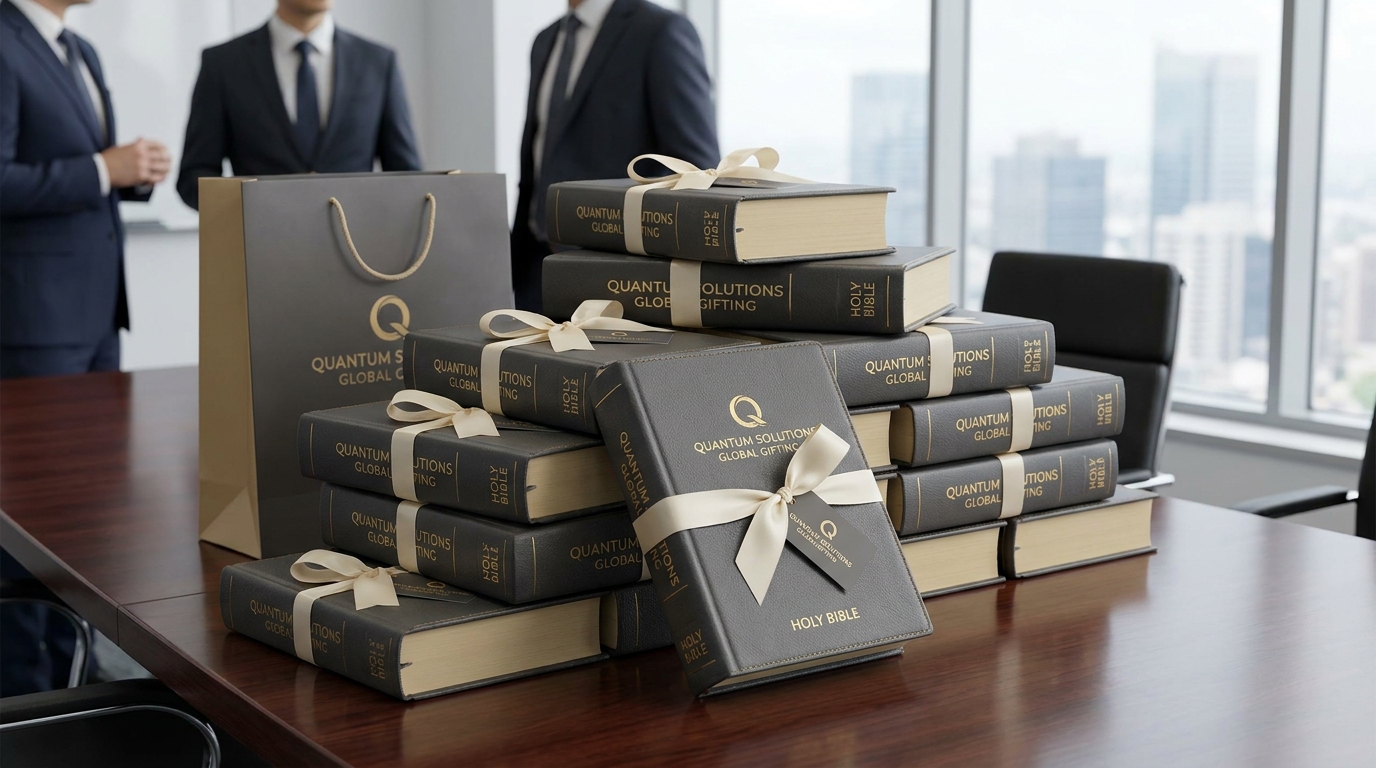
Yes, your protective packaging must match the exact dimensions of your Bible to prevent page warping, corner bending, and cover damage during shipping and storage. A heavy book requires structural support; you must design custom packaging based on how big is the bible to keep it protected.
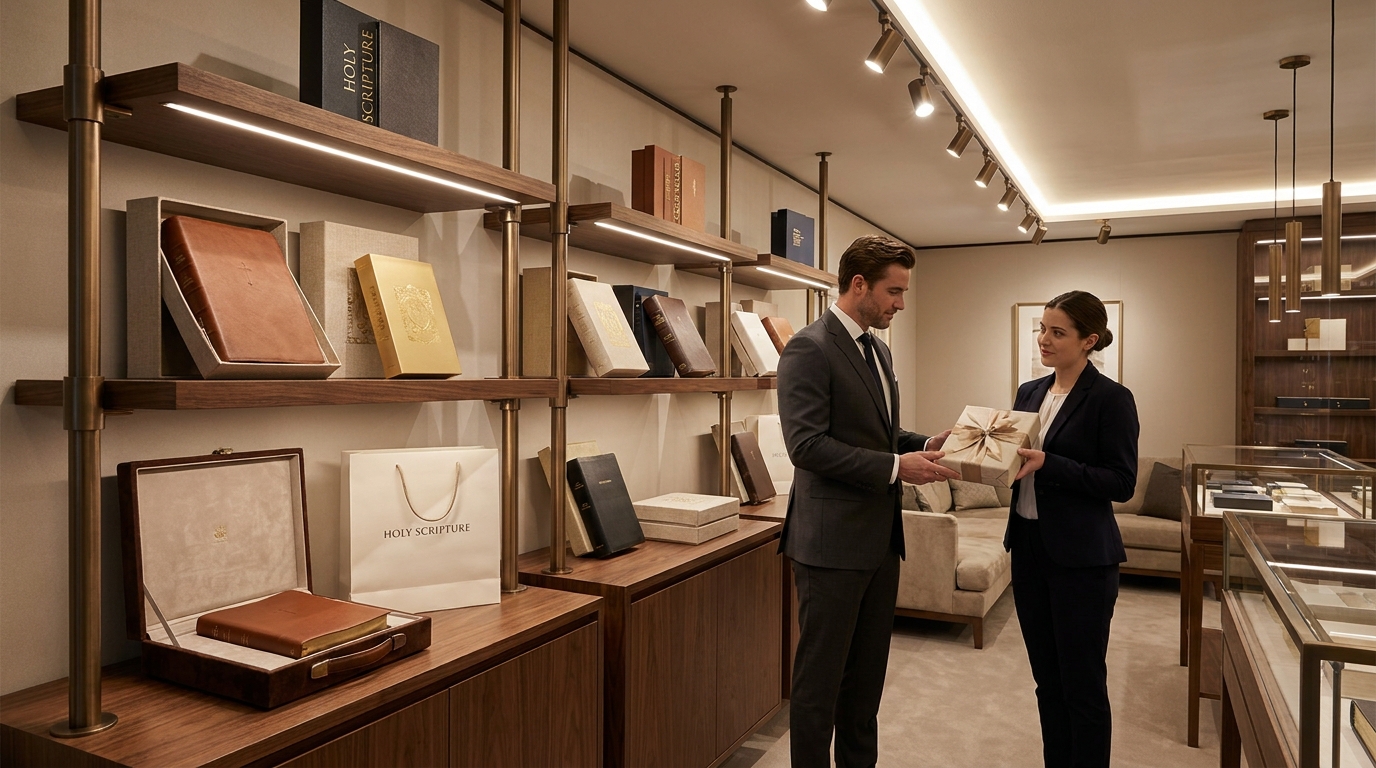
Why Custom Rigid Gift Boxes Provide Essential Defense
When you purchase a premium leather volume, you must protect it from moisture and crushing forces. Custom boxes with magnetic closures act as structural shields, keeping the cover flat.
Why does this matter?
- Magnetic Gift Boxes: Lock out dust and prevent humidity from warping page edges.
- Custom Cardboard Inserts: Prevent the volume from sliding around during transport.
Preserving Premium Leather with Elegant Sleeves
You can extend your Bible’s life significantly by keeping it inside a tight-fitting slipcase. These protective sleeves keep soft leather covers supported, preserving the gilding for generations.
But that’s not all:
- Rigid Slipcases: Maintain spine straightness and prevent soft covers from sagging.
- Luxury Unboxing: Transforms a regular book into a beautiful gift.
Premium Bibles require matching protective boxes. Custom packaging protects your book’s corners and keeps pages flat for years to come.
| Packaging Type | Structural Material | Ideal Dimensions | Main Benefit | |
|---|---|---|---|---|
| Rigid Slipcase | Dense Greyboard | Tight-fit Slide | Keeps spine straight | |
| Magnetic Box | Premium Art Paper Board | Exact Fit with Padding | Luxury unboxing, dust-proof | |
| Book Mailer | Corrugated Flute Cardboard | Adjustable depth | Heavy-duty shipping protection |
Custom packaging ensures that heavy, premium volumes survive travel and shipping without scuffing their delicate covers.
FAQ
Can I rebound a Bible if the cover gets damaged?
Yes, premium re-binding is an outstanding choice for transforming a worn book block into a custom heirloom. Specialized craftsmen can carefully remove damaged paper or synthetic covers, reinforcing the spine before encasing it in premium goatskin or calfskin leather.
What is the best translation for daily, comfortable reading?
Yes, modern thought-for-thought translations provide the smoothest reading experience for daily use. If you seek a balance between historical accuracy and contemporary English, choosing a modern formal translation will give you optimal clarity.
Why is Bible paper so incredibly thin?
Yes, using thin paper is structurally necessary to fit over 700,000 words into a single portable book. Utilizing specialized, high-opacity thin paper (20 to 28 GSM) keeps the overall spine width under 1.5 inches, ensuring the book remains lightweight.
How do I know if a Bible will lay flat?
Yes, you can easily tell by checking the binding style before purchasing. Smyth-sewn bindings use stitched groups of folded pages that drape open naturally, whereas glued spines remain stiff and require hand pressure to stay open.
Conclusion
Finding your ideal Bible requires balancing translation styles, physical footprints, and typography. By analyzing how paper weights, layouts, and leather covers interact, you can select a beautifully crafted edition that seamlessly fits your personal study habits and daily commute.
For authors, independent publishers, and global ministries looking to design exceptional custom Bibles, professional manufacturing is crucial. From choosing thin, high-opacity papers to producing hand-stitched leather bindings and custom-fit luxury magnetic gift boxes, bespoke book design turns standard volumes into generational keepsakes.
If you are ready to manufacture your own premium Bible editions or wish to develop custom packaging for your publications, please contact us today to bring your high-quality book printing vision to life.