
What is a Bible concordance? It is an alphabetical index of words or terms used in a particular Bible text, with references that help readers locate where those words occur. A built-in concordance may be concise, while a separate work can be much broader and may add original-language or analytical support.
For a publisher, the definition has a physical consequence. An index adds entries, references, context fragments, and sometimes dictionaries or other back matter. Those additions affect page count, type area, paper, spine, binding, and proofing. The production brief should define the concordance scope before the Bible page architecture is locked.
What is a Bible concordance?
A Bible concordance is an alphabetical index that organizes words or terms from a Bible text and points readers to the passages where they appear. Entries may include short context fragments, translation-specific references, or additional lookup information, depending on the edition.
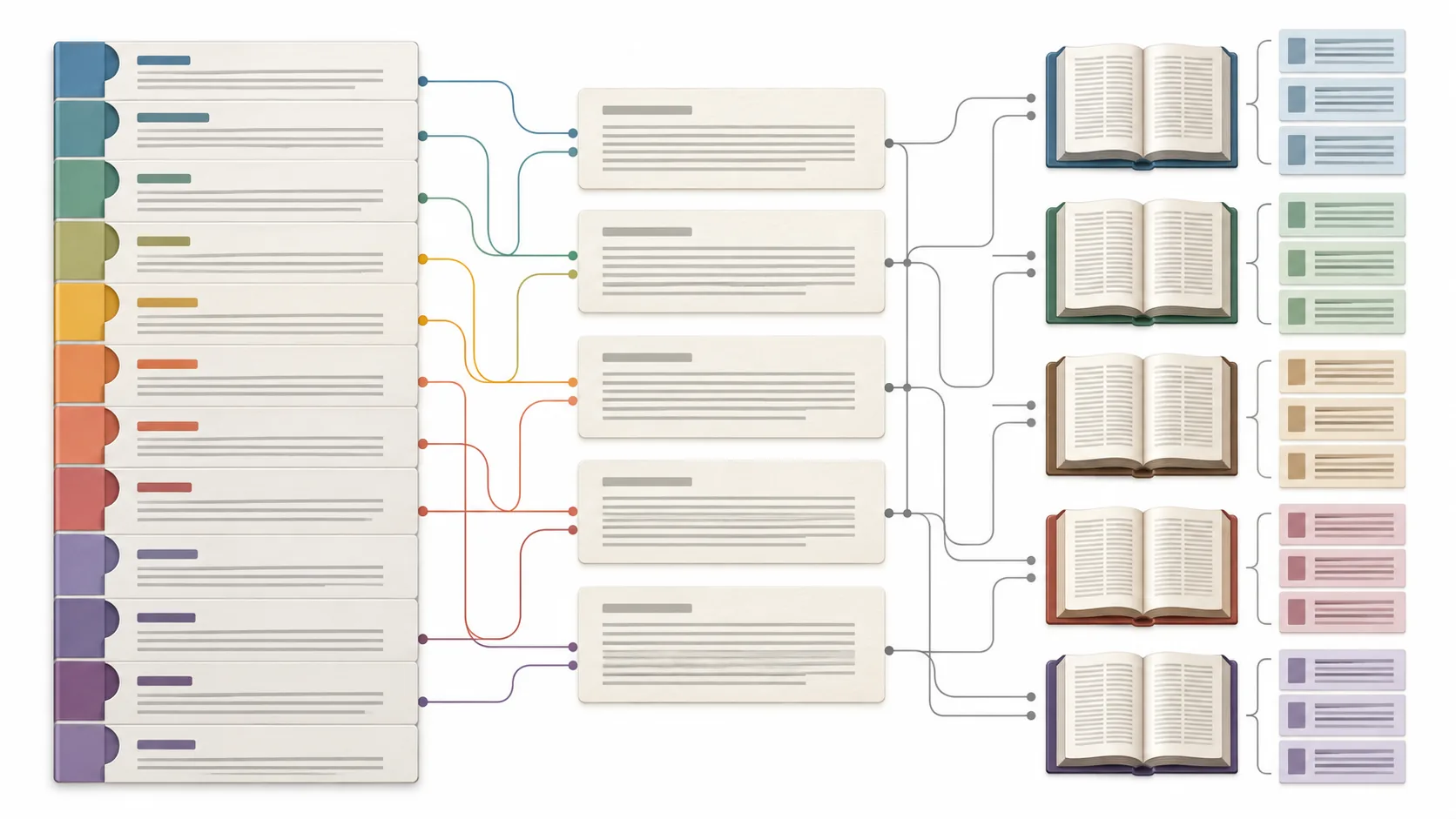
Which parts of a concordance matter to a publisher?
Start by defining what the reader should be able to find. King Tai’s custom Bible printing page frames Bible projects around use, audience, paper, binding, sampling, and production planning, which is the right order for a concordance-led edition.
Separate the functions:
- Word index: alphabetical entry points.
- Reference list: book, chapter, and verse destinations.
- Context fragment: enough surrounding language to identify an entry.
- Additional support: concordance notes, numbering, dictionaries, or related indexes.
| Concordance element | Reader use | Production consequence |
|---|---|---|
| Alphabetical headword | Find a remembered term | Needs consistent sorting and hierarchy |
| Reference list | Locate the passage | Needs compact but readable type |
| Context fragment | Confirm the right occurrence | Adds line length and page density |
| Additional lookup aid | Extend word or language study | Expands back matter and scope |
A theology library guide describes a concordance as an alphabetical word list tied to the passages where those words occur. The feature list makes the term useful for a production team. Key Takeaway: define the index scope before designing its pages.
How does a concordance help readers find a Bible passage?
A concordance helps a reader move from a remembered word to an alphabetical entry and then to a Bible reference. The process is simple for the user, but it requires a consistent dataset, citation format, context rule, and page design.

What does the lookup path require?
The Scripture publishing solutions page connects publishing goals to readability, format, materials, binding, and production coordination. A concordance adds another path through the book, so each step should be clear before typesetting.
The usual flow is:
- Choose the word or term the reader remembers.
- Find the alphabetized entry.
- Scan references and short context fragments.
- Turn to the main text and verify the passage.
| Step | Reader action | Design requirement |
|---|---|---|
| 1 | Recall a word or term | Use clear headwords and sorting |
| 2 | Find the entry | Provide visible alphabet navigation |
| 3 | Scan references | Keep citations and fragments legible |
| 4 | Confirm the passage | Align references with the chosen text |
The concordance is a navigation system, not a random list of words. Key Takeaway: build a predictable path from headword to entry to passage.
What are brief, expanded, and exhaustive concordances?
Brief, expanded, and exhaustive concordances differ mainly in scope and coverage. A brief concordance selects useful words and references, an expanded version adds more entries or context, and an exhaustive direction aims for much broader coverage within the chosen text and translation.

Which scope matches the edition?
The scope should follow the reader, format, and page budget. A short back-matter concordance may suit a portable Bible, while a larger reference edition needs more space, stronger navigation, and a physical build that can carry the added pages.
Compare the options:
- Brief or concise: selective headwords and representative references.
- Expanded or complete: broader headwords, references, and context.
- Exhaustive: a much wider word-coverage goal within the selected text.
- Separate analytical work: a larger resource that may be produced outside the Bible itself.
| Concordance type | Scope | Best fit | Production question |
|---|---|---|---|
| Brief or concise | Selected words and references | Portable or compact edition | Which entries earn the page space? |
| Expanded | Broader entries and context | Reference-led retail or study edition | How will density remain readable? |
| Exhaustive | Very broad coverage | Dedicated reference product | Can page, paper, and binding support the scope? |
| Separate analytical | Extended word or language study | Standalone resource | Should it be a separate volume or back matter? |
Scope determines the physical product more than the label does. Key Takeaway: choose coverage from the edition’s audience and page budget.
How do topical and analytical concordances differ?
A topical concordance groups passages by subject or theme, while an analytical concordance adds more structured word or language analysis beyond a simple alphabetical occurrence list. They help different reader tasks and create different editorial and layout workloads.
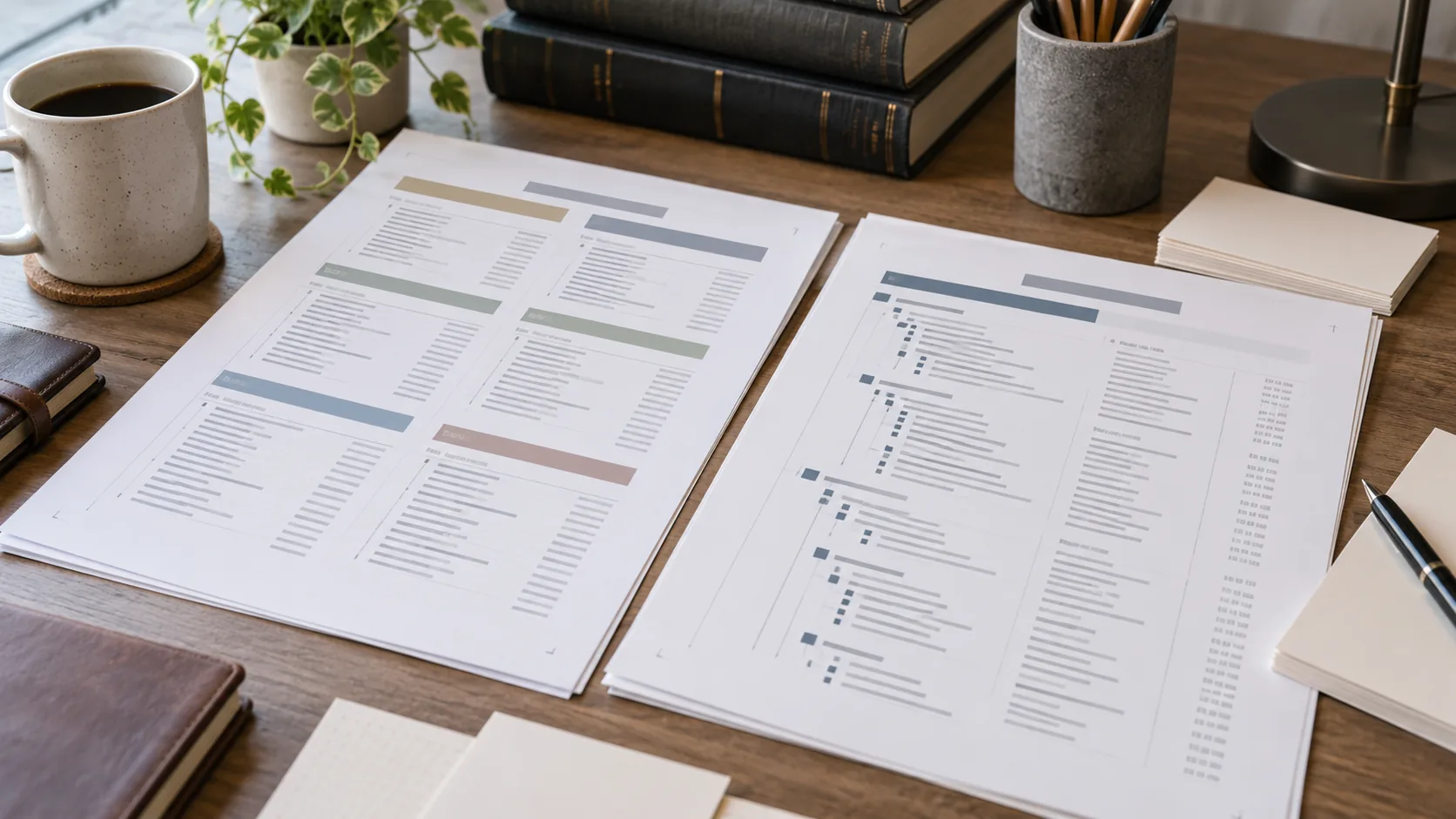
What organization should the publisher support?
Keep word occurrence, topic grouping, and analytical support separate in the brief. The custom printing services workflow helps a team align content type, page structure, material, sampling, and delivery instead of adding an undefined “extra reference section.”
Review the direction:
- Word concordance: find where a word occurs.
- Topical organization: find passages grouped under a subject.
- Analytical organization: follow word forms, language information, or structured subentries.
- Combined edition: include more than one navigation method with a clear hierarchy.
| Direction | Organization | Reader task | Layout effect |
|---|---|---|---|
| Word-based | Alphabetical headwords | Locate occurrences | Compact entries and citations |
| Topical | Subject headings | Explore a theme | More headings and grouping logic |
| Analytical | Structured word or language data | Compare forms and references | More hierarchy and back matter |
| Combined | Multiple systems | Move between search paths | Strong navigation and proof control |
The organization should be visible in the page architecture. Key Takeaway: choose the index structure before estimating editing and typesetting effort.
Why is a concordance tied to a Bible translation?
A concordance is tied to a Bible translation because the words, spelling, and phrasing determine which entries and references exist. A concordance generated from one translation cannot be treated as a drop-in index for another translation.
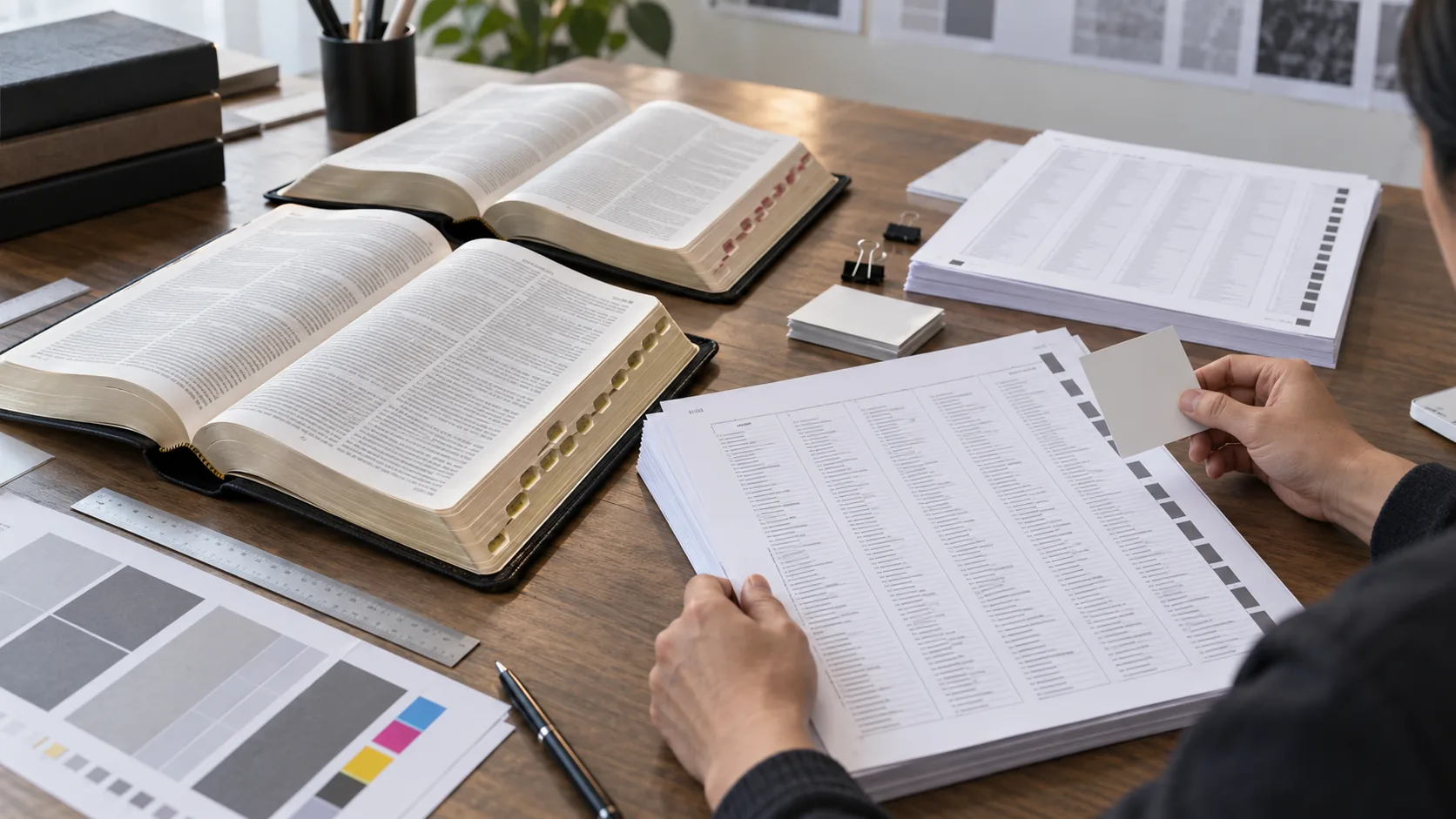
What must be locked before indexing?
Lock the text source and edition before building the index. A publisher should treat the text file, reference data, editorial rules, and proofing process as one controlled input set.
Confirm:
- Translation and text edition.
- Spelling, capitalization, and headword rules.
- Reference order and citation style.
- How revisions to the main text affect the index.
| Translation issue | Reader risk | Production control |
|---|---|---|
| Word variation | Reader cannot find the expected entry | Generate from the exact text file |
| Spelling or form changes | Duplicate or missing headwords | Lock editorial normalization rules |
| Reference changes | Citation leads to the wrong passage | Re-run data checks after revisions |
| Parallel editions | Different indexes appear inconsistent | Keep each text and index version paired |
Translation control protects both usability and proofing. Key Takeaway: do not typeset or approve the concordance before the source text is locked.
How does a concordance change Bible page layout?
A concordance changes page layout through alphabet headers, columns, entry hierarchy, context fragments, reference markers, and navigation cues. Back matter needs its own design system rather than leftover pages filled after the main text is complete.

Which layout variables need testing?
Use a representative page spread and a dense entry section. The Bible dimensions guide shows why trim, spine, and finished size must be considered with the page architecture.
Review:
- Column count and line length.
- Headword prominence and alphabet navigation.
- Context snippet width and reference separation.
- Margins, footers, running heads, and page transitions.
| Layout variable | Effect | Proof check |
|---|---|---|
| Columns | Controls density and scanning | Review short and long entries |
| Headword hierarchy | Helps readers find the right entry | Check type size and spacing |
| Context fragments | Confirm the occurrence | Check line wrapping and abbreviations |
| Page transitions | Keep alphabet navigation predictable | Review entries across page breaks |
The index needs a deliberate visual rhythm. Key Takeaway: design concordance pages as a system, not as spare back matter.
How do page count, paper, and binding change?
A larger concordance scope can add pages, increase page-block bulk, change the spine, and affect paper and binding choices. The physical consequences depend on the content density, type size, trim, paper, cover, and binding selected for the whole Bible.
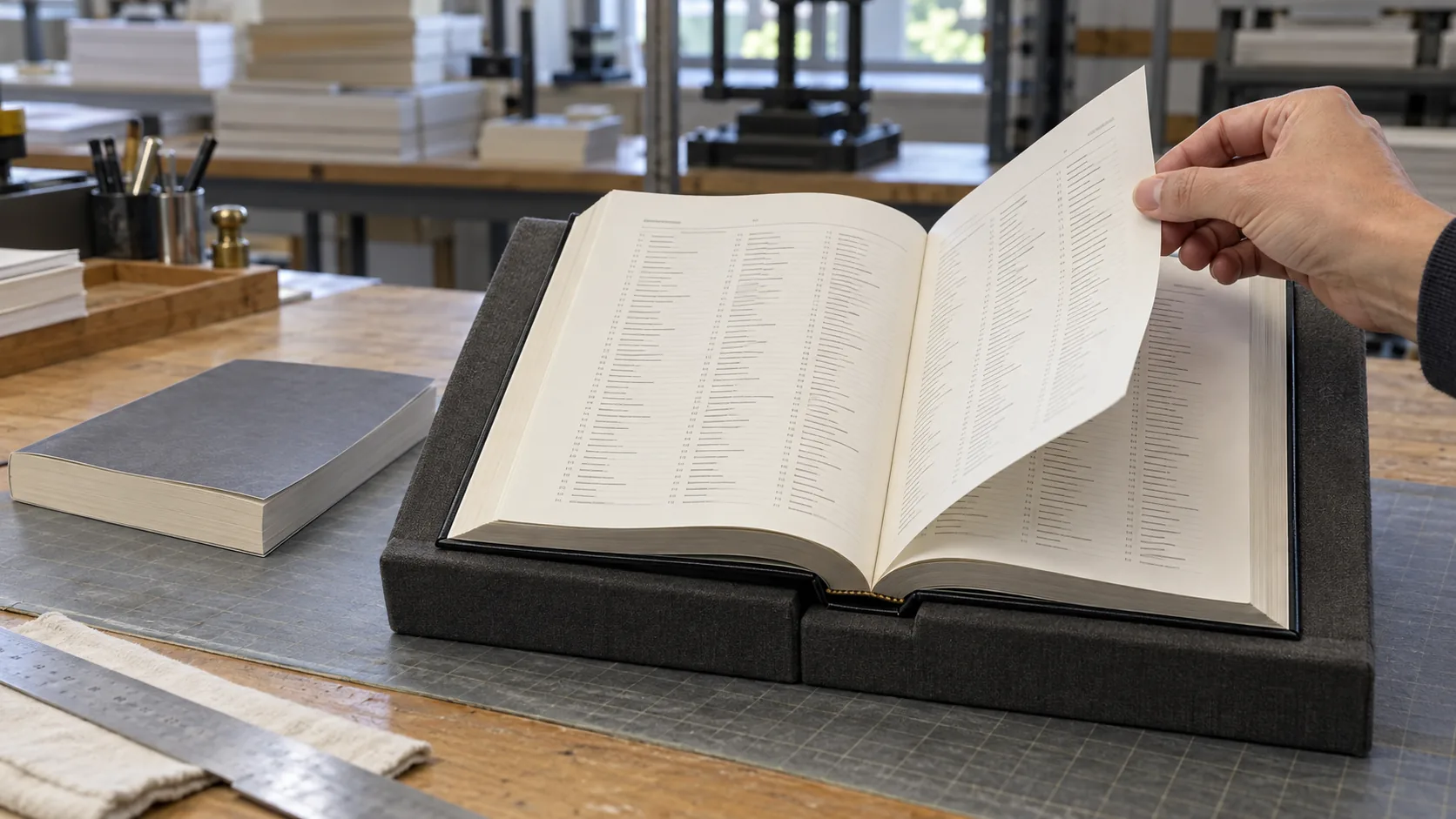
What should a publisher test physically?
Paper must support small reference type, page turning, and acceptable show-through. King Tai’s custom Bible printing page connects paper, layout, binding, sampling, and quality control because the concordance cannot be approved apart from the book.
Test:
- Dense concordance pages and open main-text pages.
- Fine type, markers, and reference lines under normal light.
- Page turning near the front, center, and back.
- Bound dummy thickness, spine, cover, and packing.
| Change | Physical consequence | Buyer check |
|---|---|---|
| More entries | More pages and larger page block | Recalculate spine and bulk |
| Smaller type | More information per page | Review actual reading size |
| Thinner paper | Less bulk but possible show-through | Test dense reference pages |
| Added back matter | More binding and packing pressure | Approve a complete dummy |
The concordance becomes part of the physical Bible. Key Takeaway: estimate page, paper, spine, and binding after the index scope is known.
How should publishers choose a concordance type for an edition?
Publishers should choose the concordance type from the edition’s audience, use case, translation, page budget, and desired navigation depth. A brief back-matter concordance may suit a portable edition, while expanded or exhaustive coverage may justify a larger reference product.

Which edition goal should guide the choice?
Use the audience and distribution goal before adding features. King Tai’s Scripture publishing solutions page supports planning Bible editions by use, readability, format, materials, binding, and production rather than adding features without a product role.
Match scope to the goal:
- Portable or broad-distribution edition: concise, useful entries.
- Retail reference edition: more navigation and back matter.
- Study or ministry project: broader editorial apparatus if the content requires it.
- Standalone research resource: expanded analytical scope outside the Bible block.
| Edition goal | Concordance direction | Product consequence |
|---|---|---|
| Portable use | Brief or concise | Protects size and reading comfort |
| Reference-led use | Expanded word and passage lookup | Adds page and navigation planning |
| Study-led use | Concordance plus wider apparatus | Increases editorial and layout scope |
| Research resource | Exhaustive or analytical volume | May require a separate book plan |
Feature count alone does not define value. Key Takeaway: select concordance scope from the reader and edition role, then confirm the physical budget.
What should a concordance printing RFQ include?
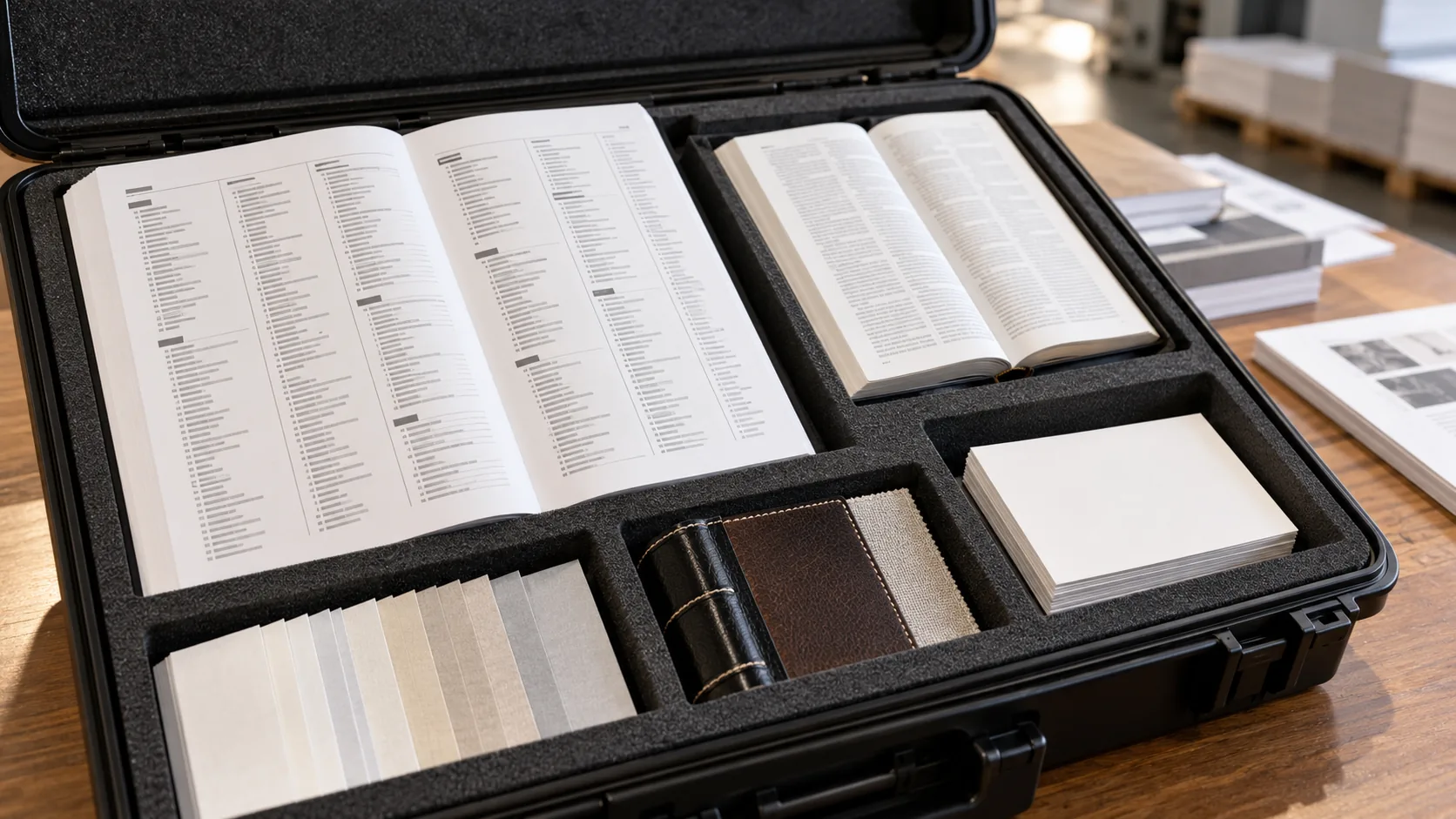
A concordance printing RFQ should state the Bible text source, translation, headword rules, entry scope, context length, references, columns, type hierarchy, page budget, paper, binding, cover, quantity, and approval standard. It should also identify which data files and revisions will be supplied by the publisher.
How can the first quotation be useful?
Use the custom Bible printing requirements discussion to send content architecture and physical specifications together. Ask which source files, page proofs, and data checks are needed before a bound sample.
Include:
- Text files, translation, and concordance dataset.
- Headword, reference, abbreviation, and context rules.
- Layout, columns, type, margins, trim, paper, and binding.
- Quantity, packaging, destination, and repeat-edition plan.
- Proof, sample, correction, and approval standards.
| RFQ field | Useful wording | Why it matters |
|---|---|---|
| Text and data | “Translation text plus concordance dataset” | Defines the source of every entry |
| Scope | “Concise, expanded, exhaustive, or analytical” | Establishes page and editorial scale |
| Layout | “Columns, headword hierarchy, context length” | Makes the design brief buildable |
| Physical format | “Trim, paper, page count, binding, cover” | Connects content to the book |
| Approval | “Bulk follows approved spread and dummy” | Creates a review reference |
A clear RFQ lets the supplier evaluate the content and the physical book together. Key Takeaway: treat the concordance dataset as a production input, not an afterthought.
How should a publisher choose the right concordance format?
Choose the concordance format by defining the reader’s search task, translation, scope, entry structure, layout, paper, page budget, and binding in that order. A concise built-in index, an expanded reference section, and an analytical resource can all be valid choices for different editions.
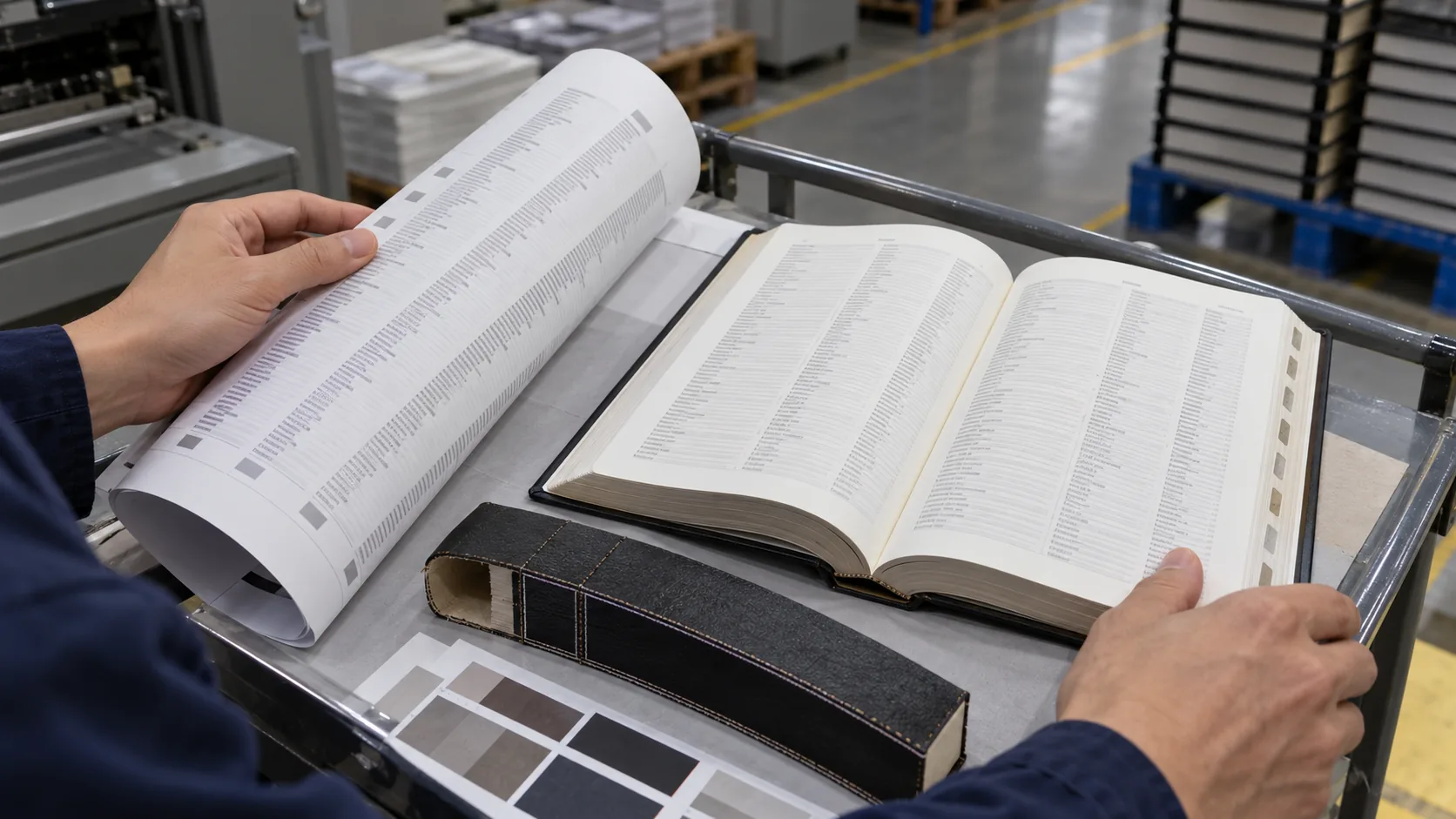
King Tai can discuss Bible printing projects with publishers, ministries, and faith-based brands before the production direction is fixed. Share the translation, concordance scope, rough format, quantity, and reference files through contact us today. A clear data and layout brief gives the physical Bible a reliable starting point.
What does a Bible concordance usually contain?
It commonly contains alphabetized words or terms, Bible references, and short context fragments. The exact scope depends on the translation and edition.
Is a concordance the same as a Bible dictionary?
No. A concordance primarily helps locate words and passages, while a dictionary focuses on explaining terms or concepts. Some resources combine both functions.
Are Bible concordances translation-specific?
Usually, yes. Word choice and phrasing vary by translation, so the concordance should be paired with the exact text edition.
What is the difference between a brief and exhaustive concordance?
A brief concordance selects useful entries, while an exhaustive direction aims for much broader word coverage and requires more page and production planning.
What should I prepare before requesting concordance printing?
Prepare the text source, translation, dataset, scope, layout, type, paper, binding, quantity, destination, and proofing standard.