
Selecting and engineering the most suitable custom watch box styles through a specialized OEM/ODM manufacturer is the foundational step for watch brands to establish their tactile brand identity, ensure flawless physical protection, and optimize production budgets. The structure of your packaging does not merely hold the timepiece; it actively drives the end-consumer’s perception of value, governs logistical safety, and frames the entire brand experience.
How Does Structure Shape OEM/ODM Watch Packaging?
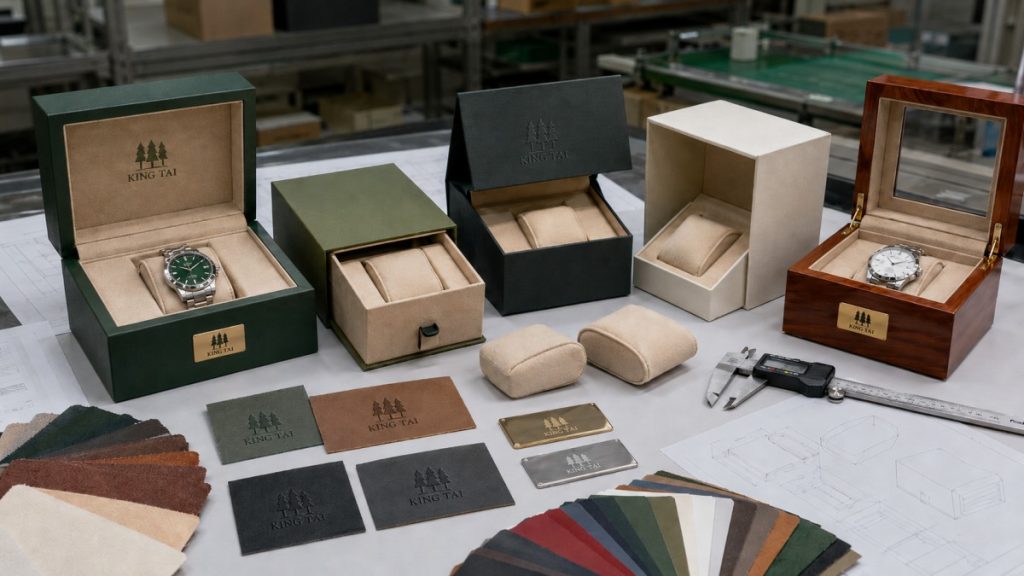
Structure shapes OEM/ODM watch packaging by defining the physical framework that balances aesthetic appeal, material integrity, and shipping protection. When evaluating various custom watch box styles for your product line, understanding the engineering behind these structures is essential. Every structural fold, hinge mechanism, and wall thickness directly impacts how your product is perceived by end consumers. As a result, selecting an optimized custom watch box structure ensures your luxury timepieces arrive safely and look impeccable.
Why Does Structure Define Brand Impression?
The physical structure of your packaging represents the first tactile touchpoint your customer encounters when unboxing their timepiece. A flimsy box that warps under pressure immediately diminishes the value of a high-end watch before it is even seen. Premium structures create an immediate sense of anticipation and quality through weight, resistance, and precise alignment.
- First Impressions: Solid structures suggest a high-value product inside, setting expectations high.
- Tactile Feedback: Smooth openings and secure closures elevate the user experience, transforming simple unboxing into an interactive brand ritual.
- Brand Alignment: Tailored structural shapes reinforce your brand’s unique identity, whether minimalist, rugged, or classical.
How Does Structure Affect Materials and Inserts?
Every specific box structure dictates the types of external materials and internal structural inserts your packaging can physically support. For instance, a rigid heavy-duty structure can easily support premium velvet-lined MDF inserts, whereas a lightweight paperboard setup requires lighter EVA foam. Matching the physical framework with compatible materials is critical to prevent warping or structural collapse.
- Material Compatibility: Heavy materials need rigid frames to prevent sagging and maintain clean lines over time.
- Insert Stability: Rigid custom packaging solutions keep heavy steel or gold watches perfectly centered, preventing damage to the crown or crystal during movement.
- Structural Synergy: Correct material pairings ensure seamless opening and closing actions, preventing binding or premature wear of the hinges or flaps.
Why Does Structure Affect Cost and Stability?
The complexity of your packaging’s structural engineering directly determines both the mass-production costs and the long-term shipping stability of the box. Simple folding structures minimize shipping space and labor costs, while intricate multi-part rigid setups require precise hand-assembly and higher material investments. Finding the perfect balance between structural complexity and budget is key to scaling your brand efficiently.
- Manufacturing Efficiency: Simpler structures translate to lower unit costs and faster lead times, which are ideal for high-volume fashion watches.
- Logistical Safety: Highly stable, rigid structures protect high-value watches during global freight transit, offsetting the risk of costly returns.
- Assembly Labor: Complex custom packaging with manual elements will naturally raise your per-unit costs, which must be factored into your margin calculations.
Which Hinged Lid Watch Boxes Fit Classic Brands?
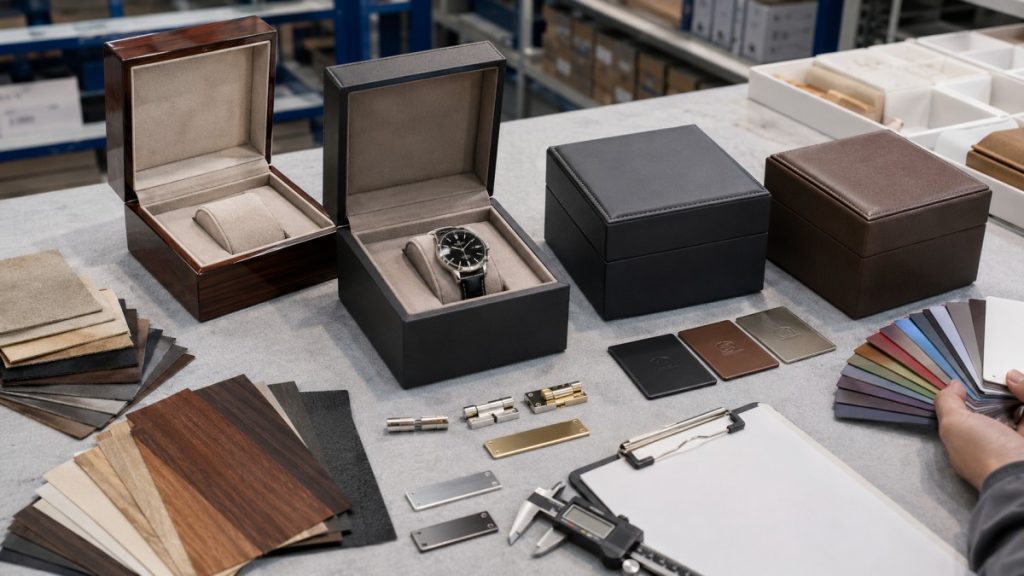
Hinged lid watch boxes fit classic brands best because they offer a traditional, heavy-opening unboxing experience that mirrors historical luxury watch presentations. When you are assessing classic watch box structures for a heritage collection, the classic hinged box remains an industry standard. Its rigid physical presence communicates weight and value directly to your customers. Working with a dedicated watch box manufacturer in China can help you customize this style to meet modern tolerances.
When Should Brands Choose This Structure?
This classic structure is ideal for luxury, heritage, and mechanical watch brands that want to communicate timeless elegance. It is particularly effective for high-ticket pieces where weight and deliberate resistance in opening add to the prestige of the purchase.
- Premium Collections: Perfect for mechanical, automatic, or luxury gold timepieces.
- Retail Display: Excellent for jewelry store showcases because the lid stands open automatically at an elegant angle.
- Collector Appeal: Enhances the storage value for customers who keep their boxes for years as home display units.
What Can Be Customized in OEM/ODM?
Partnering with an OEM watch box manufacturer allows you to fully customize every aspect of the hinge mechanism and outer casing. You can select from various materials like solid wood, MDF, or extra-thick rigid board, paired with custom tension hinges. You can choose between metal spring hinges for a satisfying snap, or soft-close friction hinges for a quiet, luxurious glide.
- Hinge Mechanisms: Select from hidden spring, external L-shape, or high-end brass piano hinges.
- Exterior Wraps: Choose genuine leather, premium PU leatherette, or textured specialty paper.
- Inner Lining: Customize with micro-suede, plush velvet, or microfiber watch pillows.
What Should Buyers Confirm Before Sampling?
Before you approve a sample from a factory, you must confirm the hinge alignment and lid-to-base flushness. Even a microscopic misalignment in a hinged box will cause uneven closing and ruin the luxury aesthetic. Poor quality control on hinge tension will lead to lid failure after only a few opening cycles.
- Tension Tolerance: Test how many cycles the hinges can handle without losing tension or squeaking.
- Flush Alignment: Ensure the lid sits perfectly flat on the base with zero visible gaps.
- Screwing and Adhesive: Verify that hinges are securely screwed or glued into the core material to prevent them from loosening.
| Structural Feature | Standard Hinged Box | Premium Piano Hinge Box | |
|---|---|---|---|
| Core Material | Heavy MDF or Plastic | Solid Wood or High-Density MDF | |
| Hinge Type | Metal L-hinge / Spring Hinge | Invisible Brass Piano Hinge | |
| Typical Cost | Moderate | High | |
| Best For | Retail Collections (200−1000) | Ultra-Luxury Timepieces (>$1000) |
Key Takeaway: Classic hinged boxes provide the ultimate luxury appeal for heritage watch brands. To secure the best return on investment, procurement managers must strictly verify hinge durability and alignment during the initial sampling phase with their manufacturing partner.
Are Drawer Style Watch Boxes Better for Modern Brands?
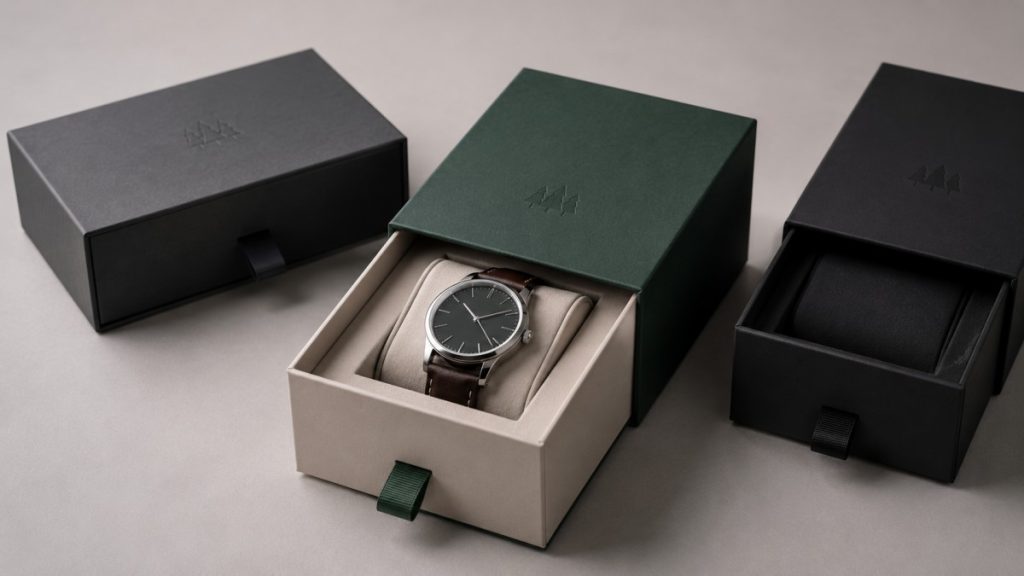
Drawer style watch boxes are better for modern brands because their sliding pull-out mechanism delivers a sleek, minimalist, and highly contemporary unboxing experience. This structure is a favorite among minimalist and smart watch designers seeking fresh presentation methods to captivate younger consumers. It provides a unique horizontal interaction that stands out on retail shelves and allows for striking, cohesive branding options.
When Does a Drawer Box Make Sense?
A drawer structure makes the most sense when your brand targets millennial and Gen-Z buyers who favor clean, industrial, or architectural aesthetics. The sliding action feels interactive and mimics the design language of high-end consumer electronics.
- Minimalist Aesthetics: Fits perfectly with clean lines, bold typography, and matte finishes.
- Smartwatch Packaging: Ideal for tech-focused watch brands seeking a modern, sleek profile.
- Stackable Storage: Great for brands that sell interchangeable straps and accessories in matching slim drawers.
What Details Can OEM/ODM Adjust?
Working with an experienced ODM watch packaging partner lets you adjust the pull ribbon, friction levels, and drawer sleeves. You can fine-tune how smoothly the inner drawer slides out of its outer protective sleeve. The pull ribbon is more than an accessory—it is the primary physical interaction point.
- Pull Mechanisms: Choose between woven ribbon loops, leather tabs, or finger-notch cutouts.
- Slide Friction: Adjust sleeve dimensions to ensure the drawer does not slip out unexpectedly.
- Sleeve Configurations: Select open-ended sleeves or five-sided drawer covers for extra protection.
What Production Risks Should You Check?
The primary risk in mass-producing drawer-style boxes is friction variance caused by atmospheric humidity changes. If the outer sleeve is constructed too tightly, humidity can swell the paperboard, making the drawer extremely difficult to pull open. Poorly measured clearances will either cause the drawer to fall out easily or jam completely.
- Sizing Tolerances: Ensure the manufacturer leaves a precise 0.5mm clearance for smooth movement across various climates.
- Gluing Consistency: Check that edge gluing is completely flat to prevent paper peeling.
- Ribbon Attachment: Ensure the pull ribbon is securely anchored under the inner tray liner.
| Slide Mechanism Details | Ribbon Pull Style | Thumb Notch Style | |
|---|---|---|---|
| User Interaction | Pulling ribbon or leather tab | Pushing/pulling via finger cutout | |
| Material Needs | Nylon/Polyester ribbon or PU tab | Die-cut greyboard with reinforced edges | |
| Friction Level | Low to Medium | Medium | |
| Visual Style | Elegant, clean, accessory-focused | Ultra-minimalist, industrial |
Key Takeaway: Drawer watch boxes offer an ultra-clean, modern unboxing experience that resonates strongly with contemporary buyers. To ensure high quality, focus on setting precise manufacturing tolerances for friction and slide clearance with your production partner.
When Are Magnetic Closure Watch Boxes the Right Choice?
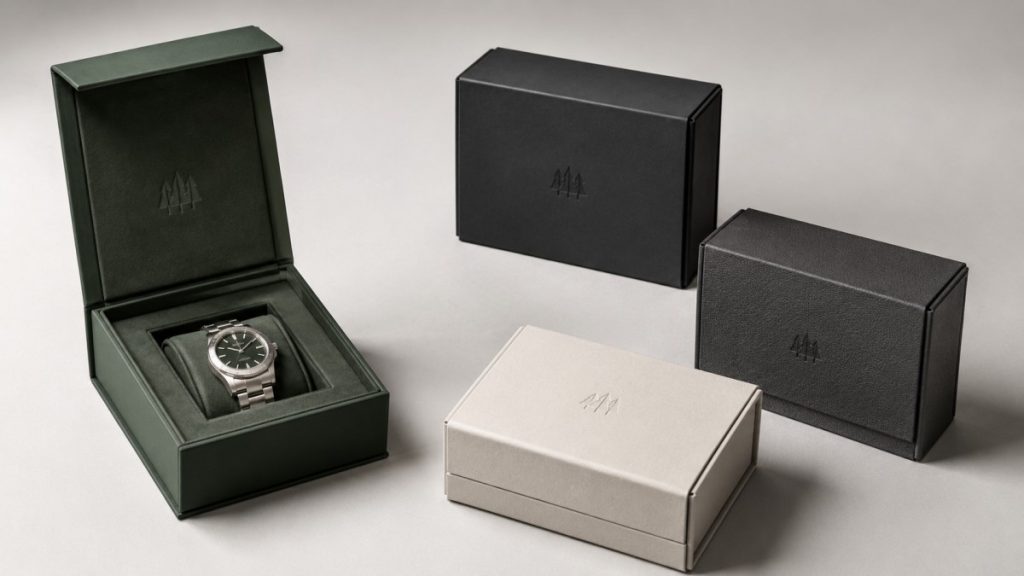
Magnetic closure watch boxes are the right choice when your brand requires a highly secure, satisfying snap closure without the bulky profile of traditional metal hinges. This option is increasingly popular for mid-to-high range product lines that focus on premium unboxing physics. The invisible closures create a modern, high-tech opening experience that elevates overall watch presentation. Procurement managers love this structure because it keeps packaging profiles slim and highly stackable.
Which Projects Benefit Most from Magnetic Boxes?
Magnetic boxes benefit projects that require sleek, flat-packing capabilities or modular book-style presentations. The satisfying ‘click’ of a magnetic seal provides an instant psychological cue of high product value and security.
- Limited Editions: Adds a refined, premium feel to exclusive, numbered watch series.
- Book-Style Packaging: Perfect for watch boxes that open like a book with integrated accessory compartments.
- Gift-Ready Retail: Great for brands selling directly to consumers without the need for extra gift wrapping.
What Can Be Customized in This Style?
An experienced OEM watch box manufacturer can adjust the quantity, positioning, and strength of the embedded magnets. You can fully customize the enclosure style, choosing between full flap closures, double-door gates, or subtle side flaps. You can completely hide the magnets beneath the paperboard for a seamless, magical aesthetic.
- Magnet Strength (Gauss): Choose heavy magnets for heavier wooden watches or light magnets for paperboard.
- Flap Configurations: Choose between book-style, triangular flaps, or full-wrap closures.
- Cover Materials: Wrap with premium art paper, embossed leatherette, or soft-touch laminate.
What Should Be Checked in Production?
During mass production, you must ensure that magnets are oriented correctly so they attract rather than repel each other. If the factory lines up opposing poles, the box lid will literally push itself open instead of locking shut. You must also confirm the magnets are glued securely so they do not dislodge and rattle inside.
- Polarity Checks: Establish a strict inspection step for magnetic polarity alignment.
- Depth of Insertion: Ensure magnets are flush with the cardboard to prevent unsightly bumps under the paper.
- Glue Bonding: Verify that industrial-grade adhesives are used to lock magnets in place forever.
| Magnet Placement Options | Hidden Single Magnet | Exposed Dual Magnet | |
|---|---|---|---|
| Aesthetic Effect | Seamless, invisible look | Industrial, bold, high-tech look | |
| Closure Security | Moderate | Very High | |
| Assembly Precision | Extremely High (0.1mm alignment) | High | |
| Cost Influence | Low-to-Moderate | Moderate |
Key Takeaway: Magnetic closure structures provide a high-value, tactile “snap” that modern consumers love. Ensure your watch box manufacturer in China strictly monitors magnetic polarity and adhesive quality to prevent defects in the field.
Why Choose Rigid Paperboard Watch Boxes for Scale?
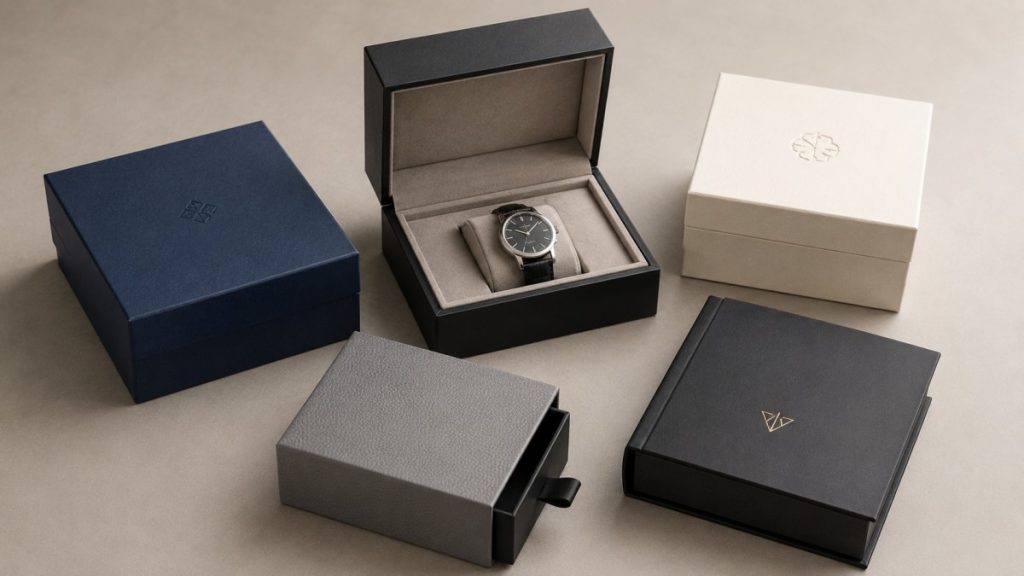
Rigid paperboard watch boxes are the best choice for scale because they deliver a premium, solid feel while remaining highly cost-effective and lightweight for shipping. When scaling your brand across international markets, utilizing these lightweight yet robust structures lets you maximize retail margins without sacrificing packaging quality. Modern production technologies allow paperboard to mimic wood or leather at a fraction of the cost. Ultimately, this structural choice protects your product and your bottom line.
Which Brands Should Consider Paperboard Boxes?
High-volume fashion watch brands, startup lines, and large e-commerce retailers should prioritize rigid paperboard boxes. They allow you to keep packaging weights low, which slashes your global postal and airfreight costs dramatically.
- Fashion Watch Lines: Excellent for keeping unit packaging costs low while maintaining high visual appeal.
- E-commerce Giants: Minimizes shipping weights and postal dimensional volume fees.
- Eco-Conscious Brands: Easily made from 100% recycled greyboard and soy-based inks.
How Can Paperboard Still Feel Premium?
You can easily elevate simple paperboard using custom box designs and high-end surface finishes. By applying foil stamping, structural embossing, and luxury soft-touch laminates, simple cardboard can feel identical to expensive leather or wood. The human eye reacts to texture and light reflectivity long before it notices the underlying paperboard core.
- Specialty Papers: Choose from soft-touch, pearlescent, metallic, or deeply textured papers.
- Embossing & Debossing: Add deep, tactile 3D branding elements onto the box lid.
- Foil Stamping: Apply gold, silver, or rose gold metallic accents to catch retail lights.
What Quality Points Matter in Mass Production?
When manufacturing with a watch box manufacturer in China, you must inspect the structural corners for splitting and check the edges for air bubbles under the paper wrap. Mass production lines must keep gluing machines calibrated perfectly to avoid uneven adhesive application. Bad edge wrapping can ruin the presentation of even the most beautiful artwork.
- Corner Sharpness: Ensure V-groove cutting is sharp and clean for precise 90-degree corners.
- Paper Bubbling: Prevent air pockets by enforcing strict pressing steps after wrapping.
- Core Thickness: Use minimum 1200GSM greyboard to guarantee the box cannot be easily crushed.
| Specification Parameter | Standard Greyboard Box | Premium V-Groove Greyboard Box | |
|---|---|---|---|
| Core Thickness | 1.5mm (approx. 900-1000 GSM) | 2.0mm – 2.5mm (1200-1500 GSM) | |
| Corner Precision | Rounded/die-cut fold lines | Sharp, clean 90-degree V-grooved edges | |
| Structural Rigidity | Moderate | Extremely High | |
| Cost Efficiency | High (Best for budget) | Moderate (Best for luxury paperboard) |
Key Takeaway: Rigid paperboard is the absolute king of scalable B2B packaging. For a luxury feel at a fraction of the cost, specify V-groove cutting and minimum 1200GSM greyboard during production.
Are Wooden Watch Boxes Worth It for Luxury Lines?
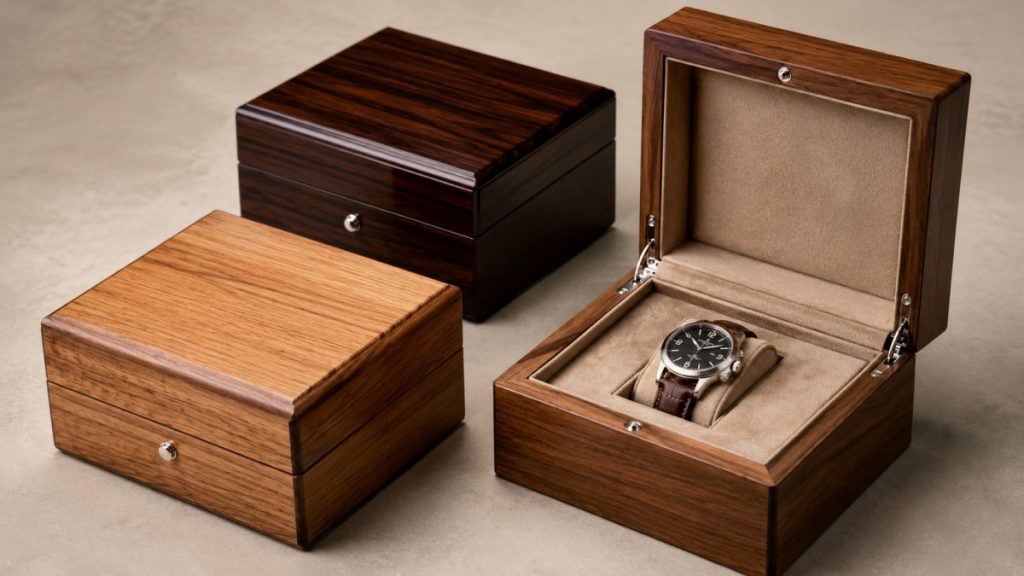
Wooden watch boxes are absolutely worth the investment for luxury lines because their exceptional weight, natural grain, and heirloom quality directly justify high retail price points. If your brand is looking to stand out in the premium segment, these artisan-level watch box styles offer unparalleled prestige. They provide the physical weight and scent of real timber that consumers associate with true luxury. Choosing wood builds an emotional, high-end connection with discerning watch collectors.
Which Projects Are Best for Wooden Boxes?
Wooden boxes are best suited for high-complication mechanical timepieces, limited heritage releases, and high-end luxury collections. A watch priced over one thousand dollars feels incomplete if it is housed in a basic paperboard box.
- Ultra-Luxury Lines: Essential for watches featuring precious metals, diamonds, or complex movements.
- Commemorative Editions: Perfect for historical brand anniversaries or special collaborations.
- Heirloom Packaging: Built to last decades, matching the lifetime of a premium automatic watch.
What Can Be Customized in Wooden Boxes?
Customizing through an ODM watch packaging specialist allows you to select rare wood species, interior velvet grades, and lacquer finishes. You can opt for a rustic natural wood look or a highly polished, multi-layered piano finish. Laser engraving your brand’s crest directly into the solid wood creates an indelible mark of luxury.
- Wood Types: Choose from walnut, cherry, mahogany, oak, or eco-friendly engineered MDF veneer.
- Finishing Options: Apply high-gloss piano lacquer, matte oil finishes, or textured wood stains.
- Interior Styling: Integrate custom watch pillows wrapped in premium alcantara or soft micro-suede.
What Makes Wooden Boxes More Complex?
Wooden packaging is inherently complex due to moisture-content control and the extended curing times required for premium lacquer. If the wood is not dried properly before assembly, changes in climate will cause the wood to warp or crack during shipping. Wooden boxes require specialized OEM/ODM expertise to survive varied international shipping climates.
- Moisture Monitoring: Ensure wood moisture content is strictly maintained between 8% to 12%.
- Lacquer Off-Gassing: Allow sufficient drying time to avoid paint odors being trapped inside.
- Weight Logistics: Account for higher shipping costs due to the heavy physical weight of wood.
| Material & Finish Type | Solid Walnut Lacquered | MDF with Wood Veneer | |
|---|---|---|---|
| Core Material | 100% Solid Natural Walnut Wood | High-Density MDF Board | |
| Exterior Surface | Hand-polished high-gloss lacquer | Paper or real wood thin veneer wrap | |
| Weight & Feel | Very heavy, solid luxury | Heavy, consistent weight | |
| Climate Stability | Moderate (Requires moisture control) | High (Less prone to warping) |
Key Takeaway: Wooden boxes are unmatched in creating a high-end collector unboxing experience. Work only with an experienced OEM watch box manufacturer who understands how to dry and seal wood to prevent warping during transit.
Can Travel Watch Boxes Support E-Commerce Packaging?
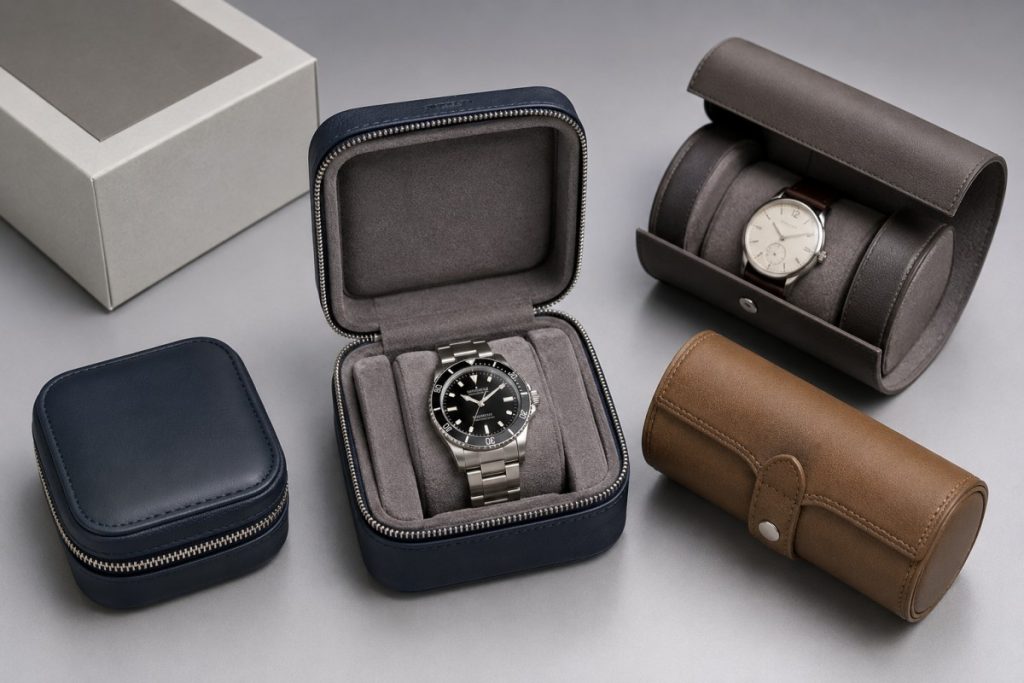
Travel watch boxes absolutely support e-commerce packaging by serving a double purpose as secure shipping containers and high-utility post-purchase travel accessories. Choosing these highly compact and versatile designs helps your direct-to-consumer brand cut down on wasted packaging space. They reduce both dimensional shipping volumes and global postal costs while offering a practical value-add. Your customers are far more likely to keep and use travel packaging rather than throw it away.
Which Brands Should Use Compact Watch Boxes?
Direct-to-consumer (DTC) watch brands, microbrands, and travel-oriented watch companies will benefit the most from compact travel-style packaging. Your customers will appreciate receiving packaging that they can actually use during trips rather than throwing it into the closet.
- Microbrands: Differentiates your brand by offering practical, high-value accessories.
- DTC Brands: Dramatically lowers shipping volumes, enabling cheaper global shipping rates.
- Adventure/Sports Lines: Aligns your brand packaging with an active, outdoor lifestyle.
What Custom Details Still Matter?
Even in a compact travel box, your custom watch packaging styles must stand out through functional design and premium accents. You can customize the watch roll dividers, zipper pull designs, and interior material textures. Adding slide-in watch pillows with side snaps ensures the watch remains completely stationary during rough travel.
- Watch Rolls & Cylinders: Choose round, hexagonal, or flat-folding shapes.
- Secure Closures: Customize with high-quality YKK zippers, snap buttons, or leather straps.
- Modular Dividers: Design removable watch slots so the case can double as an accessory organizer.
What Risks Should Brands Avoid?
The biggest risk with travel watch rolls is crush resistance during transit if the inner structural core is too weak. If an e-commerce parcel is stacked under heavy boxes, a flimsy travel case can collapse and scratch the watch bezel or shatter the sapphire glass. Choosing cheap cardboard cores for a travel roll will lead to high product return rates.
- Crush Testing: Ensure the plastic or rigid cardboard tube can withstand at least 25kg of direct pressure.
- Pillow Sliding: Prevent the watch from rocking side-to-side by using secured, snapped-in pillows.
- Material Peeling: Verify that interior lining adhesives are rated for extreme hot and cold travel temperatures.
| Travel Structure Type | Rigid Hexagonal Roll | Semi-Rigid Zippered Case | |
|---|---|---|---|
| Core Shell Material | Reinforced 1500GSM Greyboard | Molded EVA Foam / Plastic Shell | |
| Closure System | Dual Heavy-Duty Snap Buttons | Industrial Nylon Zipper | |
| Crush Resistance | High (Structured flat sides) | Medium-to-High (Flexible shock absorption) | |
| Internal Capacity | 1 to 3 Watches with dividers | 1 Watch with molded tray |
Key Takeaway: Travel watch boxes are a brilliant e-commerce packaging solution that reduces shipping volume while delighting customers. Protect your investment by selecting rigid, crush-resistant inner cores that can survive the bumps of global transit.
How Can OEM/ODM Manufacturers Guide Box Selection?
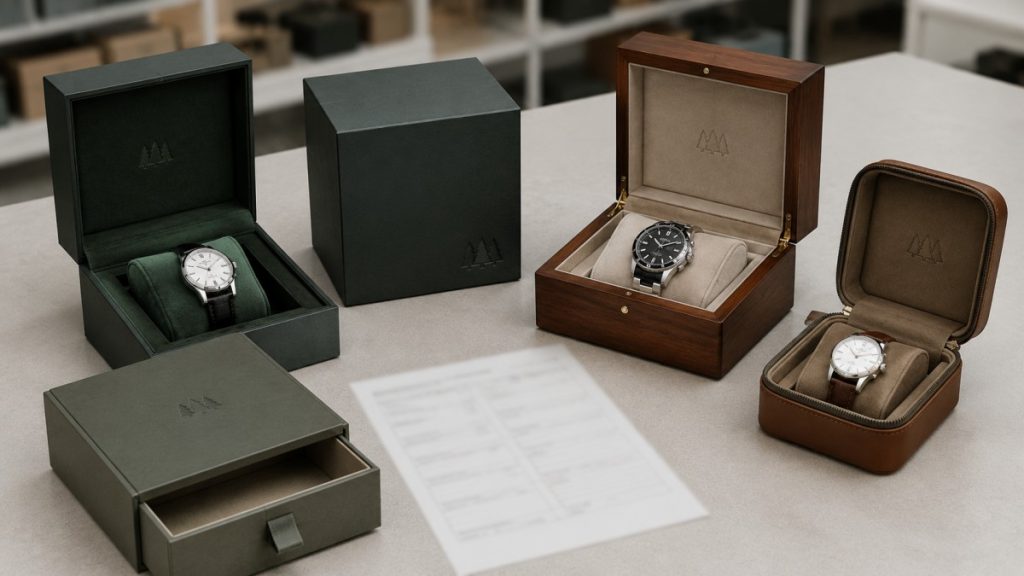
OEM/ODM manufacturers guide box selection by analyzing your target price, shipping logistics, and material preferences to recommend the most efficient manufacturing path. When exploring structural styles for a new launch, relying on a seasoned manufacturer’s engineering expertise saves time and money. They help bridge the gap between creative visual designs and realistic mass-production parameters. By evaluating your distribution channels, they ensure you pick a structurally sound and cost-effective layout.
What Should a Manufacturer Compare First?
A qualified factory must first compare your watch’s physical dimensions, weight, and target retail pricing against different structural styles. A heavy steel dive watch requires a completely different support structure than a thin quartz dress watch.
- Watch Weight vs. Insert Density: Heavier watches need high-density foam to prevent shifting.
- Box Footprint vs. Freight Costs: Matching box sizes to master cartons reduces shipping overhead.
- Target Margin vs. Material Costs: Ensuring your packaging cost does not exceed 5% to 8% of the watch’s retail price.
How Does This Reduce Sampling Risk?
A great OEM/ODM partner reduces sampling risk by creating digital 3D mockups and white-sample structural prototypes before cutting expensive dies. This guarantees you can test the fit and closure feel before investing in printed proofs. It completely eliminates the risk of ordering thousands of units only to discover the watch doesn’t fit the insert.
- 3D CAD Rendering: Visualizes the finished product structure before physical sampling.
- Unprinted White Samples: Tests structural strength, opening physics, and physical watch fit.
- Die-line Verification: Provides your graphic designers with 100% accurate layouts for artwork.
Which Style Fits Each Project Need?
Finding the correct style depends on matching your brand’s distribution channel with the right structural design. For retail boutiques, high-impact presentation is paramount; for direct-to-consumer channels, durability and shipping weight are the critical metrics. There is no single ‘best’ box—there is only the right box for your specific business model.
- Retail Focus: Go for hinged lid or magnetic book-style boxes.
- E-commerce Focus: Opt for rigid paperboard drawer boxes or travel watch rolls.
- Collectors Focus: Invest in high-gloss wooden or heavy leather cases.
| Sales Channel | Best Recommended Structure | Key Structural Benefit | Cost/Weight Impact | |
|---|---|---|---|---|
| Luxury Boutique | Heavy Hinged Wooden Box | Ultimate heritage & luxury weight | High cost & high freight weight | |
| Direct-to-Consumer | Drawer Style Paperboard | Modern unboxing with low weight | Low-to-moderate cost & light weight | |
| E-com / Travel | Semi-Rigid Zippered Roll | Practical double-use travel case | Moderate cost & high customer utility |
Key Takeaway: An experienced manufacturer doesn’t just make boxes; they advise you on how structure impacts logistics and margins. Engage your OEM/ODM partner early in the design stage to avoid costly re-sampling delays.
What Should Brands Prepare and Decide Before Mass Production?
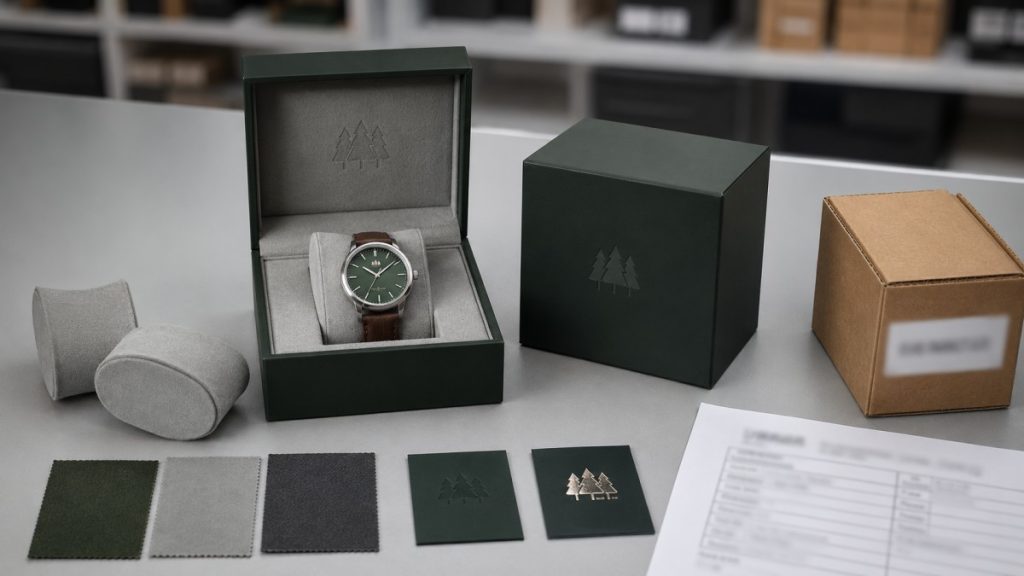
Brands must prepare complete watch 3D CAD files, finalized brand artwork, and precise order volume projections before committing to mass production. Establishing these technical details allows you to finalize your desired custom watch box styles and lock in accurate pricing quotes. Pre-production prep prevents alignment issues, sizing errors, and costly tooling changes down the line. A systematic approval process ensures that your factory production aligns perfectly with your design goals.
What Product, Packaging, and Order Details Should You Share?
To get an accurate quote, you need to share your watch’s physical dimensions, your target unit cost, and your exact order volume. Sharing this data early allows the factory to optimize material usage and nesting during the die-cutting process. Small changes in dimensions can sometimes slash your material waste and lower prices significantly.
- Watch Dimensions: Provide length, width, thickness, and strap/bracelet width.
- Order Quantities (MOQ): Larger volumes open up cheaper material procurement options.
- Finishing Preferences: Specify hot stamping, spot UV, or custom embossing requirements.
How Does Early Structure Selection Influence Later Decisions?
Your initial structural choice dictates every subsequent step, from the graphic design layout to the final outer carton palletization strategy. For example, selecting a heavy wooden box means you will need thicker, double-wall corrugated outer cartons to protect the wood from scuffs. Packaging engineering is a chain reaction where one initial decision ripples through your entire supply chain.
- Artwork Layout: Die-lines differ vastly between a sliding drawer and a hinged lid box.
- Shipping Costs: Heavier structures will require sea freight, while light paperboard can be air-shipped.
- Fulfillment Labor: Some boxes require manual assembly before packing, affecting your fulfillment speed.
How Should Brands Move Forward for Sample Approval?
To move forward, you should request a physical golden sample that represents the exact materials, printing, and hardware of your final production run. Testing a real physical proof with your watch is the only way to ensure absolute perfection before production.
- Golden Sample Inspection: Check color accuracy, gluing lines, and closure tension.
- Drop Testing: Perform simulated drop tests with a weighted watch inside to test protection.
- Final Sign-off: Issue a formal approval document to lock in the production standard.
| Prep Stage Task | Deliverable Needed | Why It Matters | |
|---|---|---|---|
| 1. Technical Specs | Watch CAD or Physical Sample | Ensures 100% accurate insert fitment | |
| 2. Structural Proofing | White Mockup Box | Confirms box hinges, magnets, and opening physics | |
| 3. Graphic Proofing | Vector Artwork on Die-lines | Guarantees perfect alignment of logos and textures | |
| 4. Golden Sample | Fully Finished Pre-production Unit | Serves as the official quality benchmark for QC teams |
Key Takeaway: Preparation is the ultimate defense against mass production mistakes. Secure a fully finished golden sample and run real-world drop tests before transferring final payment to ensure your watches arrive safely in customers’ hands.
Partner with Kingtai for Premium Custom Watch Packaging
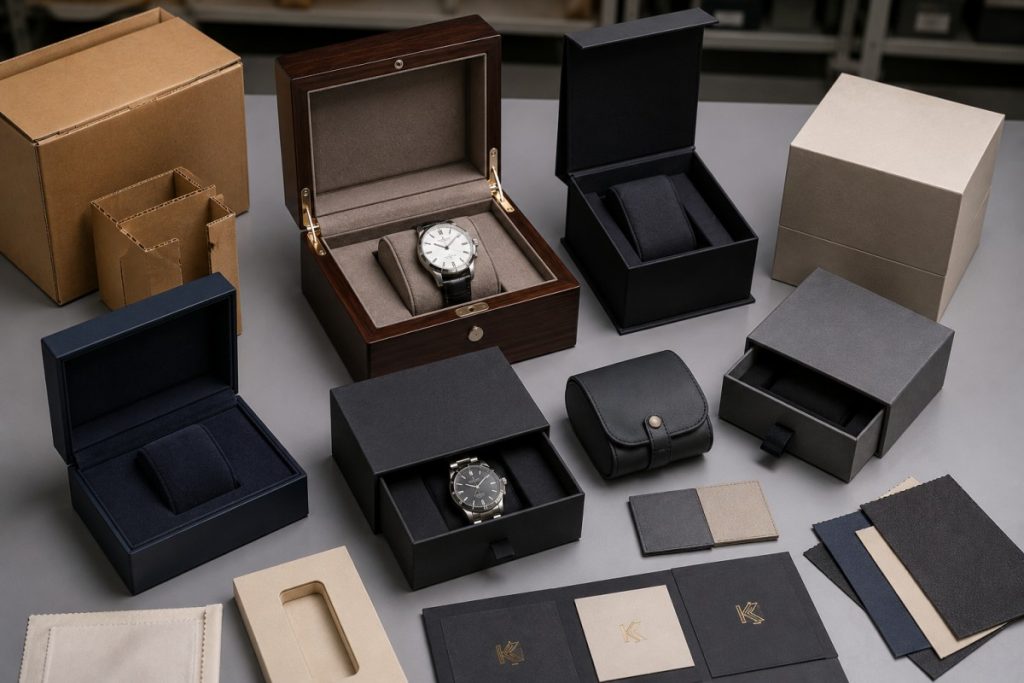
In the competitive timepiece industry, the physical structure of your watch box is just as critical as the movement inside the watch. It serves as your primary marketing ambassador in retail showcases and the ultimate protective armor during transit. Developing optimized custom watch box styles requires an experienced B2B partner capable of bridging high-end aesthetic designs with realistic, scalable manufacturing processes.
At Kingtai, we combine structural packaging engineering with state-of-the-art manufacturing to turn your brand concepts into robust physical realities. Whether you are scaling an elegant drawer paperboard setup for an international e-commerce roll-out, or launching a limited-run heritage timepiece in a hand-polished walnut wood case, our B2B team has the technical expertise to guide you through materials, tolerances, and logistics.
If you are ready to take your brand’s packaging to the next level, contact us today to start co-developing your custom packaging structures.
FAQ
This FAQ answers the most common structural, material, and logistical questions watch brands face when planning custom packaging projects.
Can I combine wood and paperboard in a single watch box?
Yes, you absolutely can. Many premium brands use an MDF wood base to provide a heavy, luxurious feeling while utilizing paperboard dividers and external sleeves to keep overall packaging costs and shipping weights balanced.
What’s the best watch insert material to prevent scratching?
The best option is micro-suede or alcantara wrapped over high-density EVA foam. Unlike cheap nylon or cardboard inserts, these premium textiles feature ultra-fine, soft fibers that will never scratch polished steel, gold, or ceramic watch cases.
How do I know if my watch box structure needs V-groove cutting?
You will know by inspecting the sharpness of the edges on your sample boxes. If your modern brand requires clean, sharp, 90-degree corners, you must specify V-groove cutting, whereas standard folding results in rounded, less precise edges.
Can I customize the opening angle of a hinged watch box?
Yes, you can easily do so. By working with an OEM watch box manufacturer, you can specify custom 90-degree, 110-degree, or full 180-degree flat-opening hinges to perfectly match your retail display or unboxing preferences.
How do I know if a magnetic closure is strong enough?
You will know by conducting a vertical suspension test with your heavy timepiece inside the closed box. If you hold the box solely by its lid and the weight of the watch causes the base to snap open, you must upgrade to higher Gauss magnets.