
Choosing the correct watch box inserts and pillows is the single most critical factor in determining whether your luxury custom packaging will protect your timepieces or cause costly product damage. Imagine finalizing your custom watch boxes with premium leatherette, foil-stamped logos, and elegant color schemes, only to realize during assembly that the physical sizing is slightly off. This oversight agitates your entire launch schedule, leading to non-centered watches, deformed leather straps, severe transit rattling, or frustrating sampling delays that drain your procurement budget. Fortunately, focusing on custom watch box inserts and precision-engineered pillows solves these challenges, ensuring flawless fitment and supreme presentation.
Why Do Watch Box Inserts Matter Before Production?
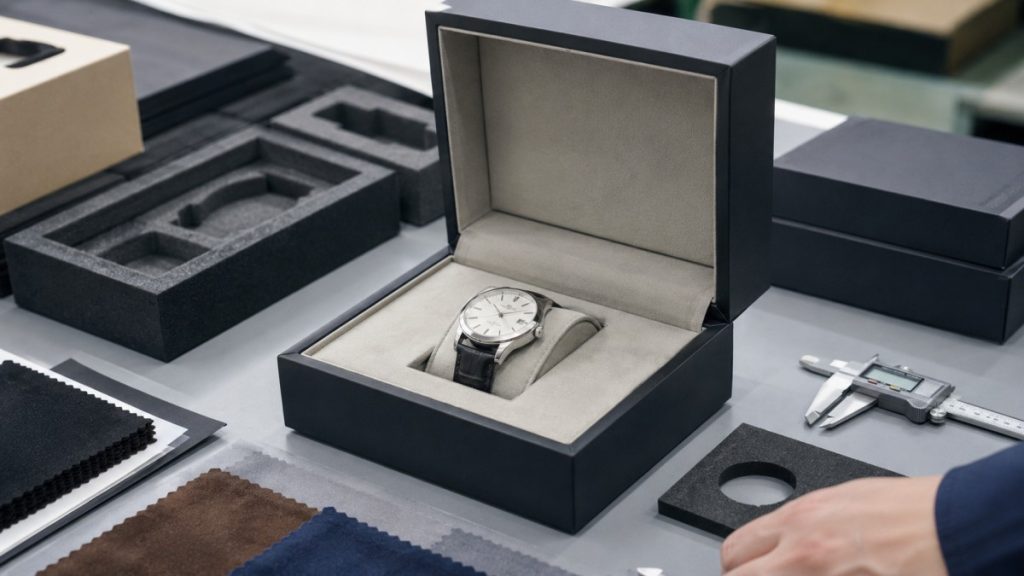
Designing watch box inserts before mass production is essential because it prevents sizing conflicts, transit damage, and expensive re-tooling fees later. If you skip this critical step, your luxury watches might slide around during shipping, leading to scratches on the bezel. By securing structural approvals early, your brand maintains high presentation standards. This simple step ensures complete alignment between the box walls and the timepiece itself.
How Do Inserts Protect High-Value Timepieces?
Your watches represent thousands of dollars in design and manufacturing value, which means they deserve unyielding protection. To achieve this high-level safety, you should prioritize specific structural details:
- High-density EVA foam backing to absorb heavy drops and external pressures during transit.
- Precision-die-cut cavities that lock the watch watch-head firmly in place.
- Soft velvet or microfiber linings that shield polished metals from abrasive marks.
You must ensure that every corner of the watch case remains isolated from external impact. If the interior structure of your packaging does not absorb shocks, the delicate movement inside can easily be thrown out of calibration. This simple precaution keeps your timepieces in pristine showroom condition until they reach the retail buyer.
Why Does Sizing Prevent Costly Delays?
Discovering that your watches do not fit into finished boxes is a procurement nightmare. You can easily bypass these scheduling disasters by validating physical dimensions against your product line during the design phase:
- Watch case diameter including the crown and pushers.
- Total thickness of the watch case and crystal.
- Maximum strap or metal bracelet width at the buckle.
Key Takeaway: Confirming your watch dimensions with a physical sample guarantees a seamless assembly process, protecting your brand from unexpected logistics costs and missed retail launch windows. This meticulous engineering approach ensures your packaging remains a powerful marketing asset rather than an expensive manufacturing liability.
| Sizing Factor | Impact on Protection | Risk of Failure | Solution | |
|---|---|---|---|---|
| Case Diameter | Keeps the watch centered | Watch slips side-to-side | Precision-molded side walls | |
| Crystal Clearance | Prevents glass scratching | Domed glass rubs lid | Adjust interior lid height | |
| Strap Thickness | Preserves strap shape | Strap bends or creases | Use compressible core pillows |
Analyzing these early-stage sizing factors reveals that proactive coordination prevents catastrophic delays before assembly begins.
What Types of Watch Box Inserts Are Best for Custom Packaging?
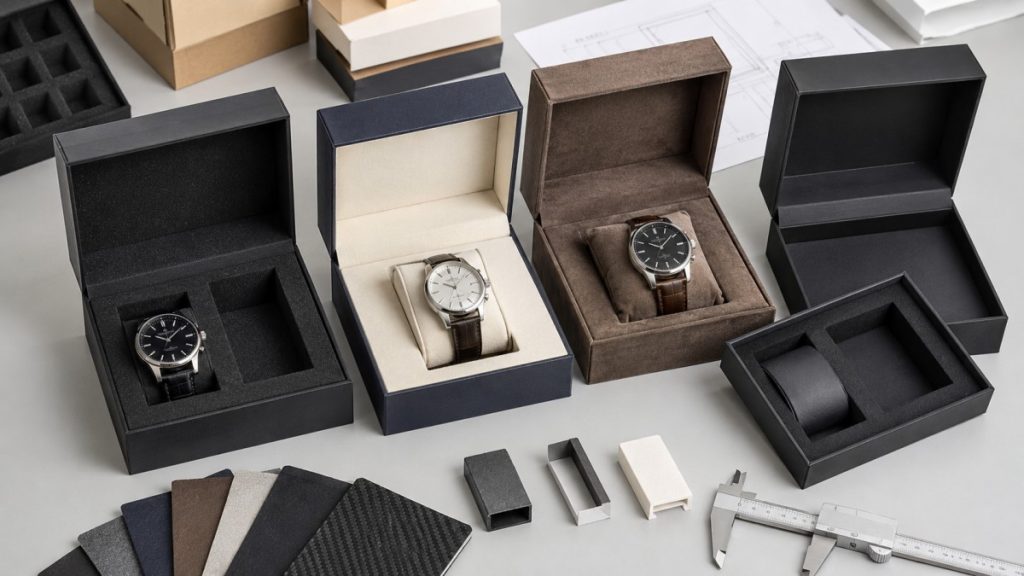
The best types of watch box inserts for custom packaging are high-density EVA foam, molded plastic, rigid cardboard, and plush fabric pillows. Depending on your brand positioning, you might choose a rigid card insert for smartwatches or an elegant leather pillow for luxury mechanical models. Finding the ideal fit requires weighing protection against aesthetic goals. Your selection will ultimately define how your customer perceives your product’s luxury value.
When Should You Choose Rigid Foam Inserts?
Rigid EVA foam inserts offer unparalleled shock absorption and clean, geometric lines that suit modern sport and smartwatches. When evaluating rigid foam for your custom project, you should consider these standard design features:
- High density that prevents tearing or compression over time.
- Laser-cut edges for a perfectly seamless finish inside the box.
- Flocked surfaces that protect the watch casing from scratches.
You will find that foam holds its shape perfectly, even when subjected to rough handling during international transit. It creates a modern, sleek aesthetic that younger watch collectors love and actively seek out. You can easily customize it with velvet flocking for a premium tactile feel.
Why Are Molded Pulp Options Rising in Popularity?
Modern consumers are demanding sustainable packaging, making molded pulp a powerful marketing asset for eco-friendly watch brands. You can achieve a surprisingly high-end look by wrapping biodegradable paper pulp in organic cotton or linen fabrics:
- Biodegradable materials reduce your brand’s environmental footprint.
- Light weight significantly lowers international air shipping costs.
- Organic fiber wraps maintain a premium and soft interior texture.
Key Takeaway: Sourcing sustainable molded pulp inserts allows you to capture the rapidly growing eco-conscious consumer segment while maintaining rigid structural defense. This strategic alignment elevates your overall brand equity and positions your product line as a modern, responsible luxury option.
| Insert Type | Material | Best Suited For | Pros | Cons | |
|---|---|---|---|---|---|
| EVA Foam | Ethyl-Vinyl Acetate | Modern & Sport Watches | High shock protection | Industrial appearance | |
| Molded Pulp | Eco-friendly Paper | Sustainable Brands | Biodegradable, light | Requires custom tooling | |
| Plush Pillow | Fabric & Poly-fill | Classic Luxury Watches | Ultra-premium presentation | Harder to automate packing |
Comparing these interior options demonstrates that balancing luxury presentation with structural resilience is the path to optimal packaging design.
How Should Brands Choose Watch Box Inserts and Pillows?
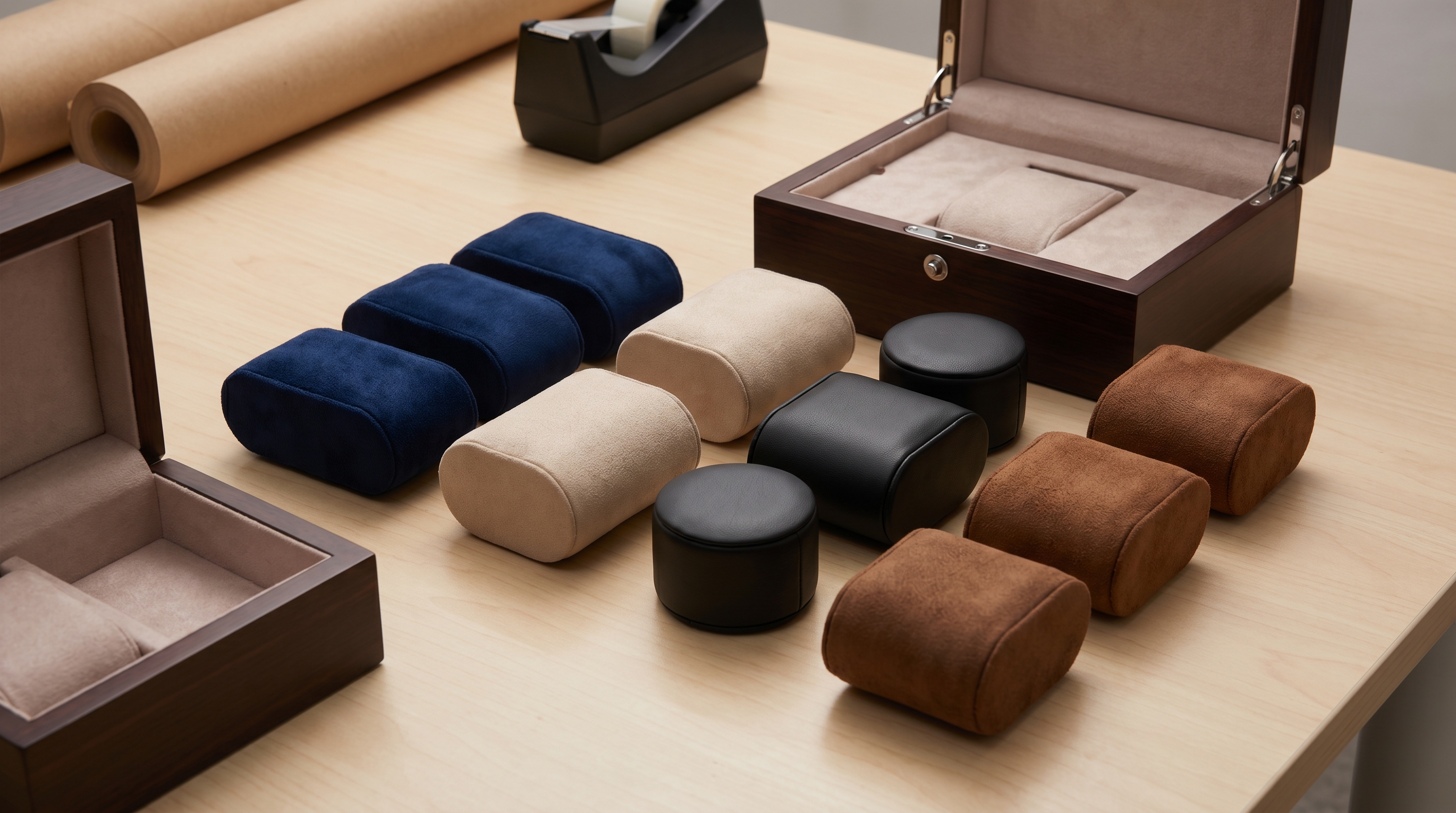
Brands should choose watch box inserts and pillows by evaluating the watch’s physical dimensions, overall weight, bracelet flexibility, and target market expectations. If your timepiece features a heavy metal bracelet, you will need a firmer, structurally supported pillow to keep it centered. Alternatively, lighter quartz watches can utilize softer, more flexible poly-fill cushions. By aligning these physical attributes with your packaging, you ensure a stunning shelf presentation.
How Do You Match Pillow Density to Watch Weight?
A heavy steel dive watch will quickly compress a cheap, low-density pillow, leaving the watch loose inside the box. To ensure you select the correct density, you must look for specific material specifications:
- High-resilience polyurethane foam cores for heavy mechanical timepieces.
- Medium-density polyester fiber fill for versatile wrist sizes.
- Solid wood or plastic interior frames for rigid luxury cuffs.
You must select a foam or fiber fill that resists collapse while remaining soft enough to wrap the strap. If the pillow is too firm, you risk stretching delicate leather straps or scratching metal links. Finding that perfect middle ground is crucial for a luxury presentation that lasts.
What Dimensions Ensure Perfect Alignment?
If your pillow is even 1 millimeter too small for the insert cavity, it will wobble during shipping. You must measure the interior clearance of the box lid to ensure the watch crystal does not press against the top:
- Interior box height must accommodate your watch thickness.
- Pillow width must equal cavity width within a 0.5mm tolerance.
- Strap circumference must match the pillow outer perimeter.
Key Takeaway: Matching your pillow’s width perfectly with the insert’s side-walls creates a locked-in presentation that highlights your watch’s craftsmanship. This precise alignment guarantees that the watch face always greets your customer at the perfect angle.
| Pillow Core | Compressibility | Shape Retention | Best Watch Type | |
|---|---|---|---|---|
| Poly-Fill | High (50%) | Medium | Light strap watches | |
| Foam Wrap | Medium (25%) | High | Heavy bracelet models | |
| Rigid Plastic | Low (5%) | Maximum | Luxury cuffs & bangles |
Evaluating these pillow characteristics shows that matching density to timepiece weight is the foundation of a high-end display.
Which Materials Work Best for Watch Box Inserts?
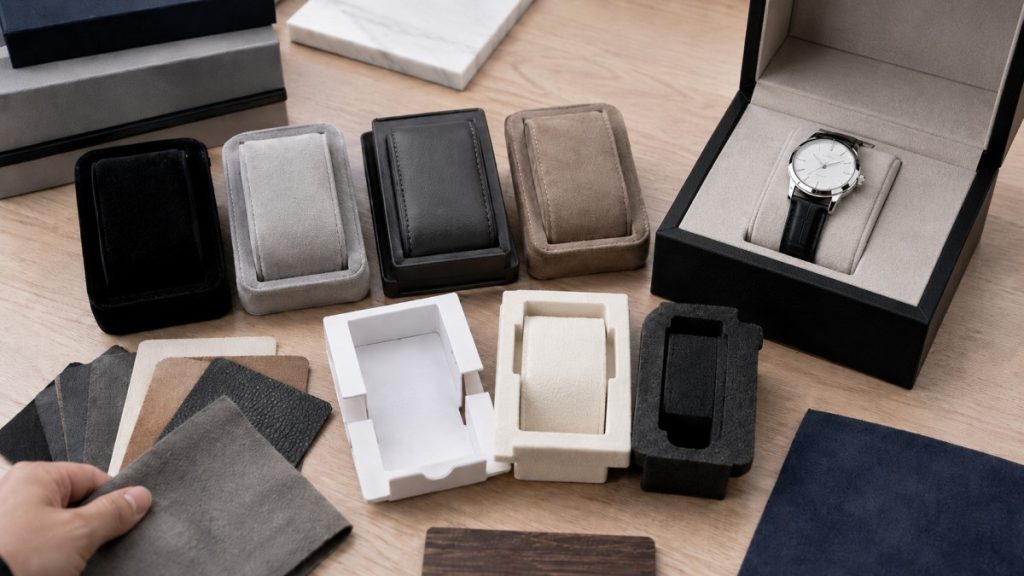
The materials that work best for watch box inserts are premium velvet, high-grade PU leather, microfiber suede, and eco-friendly specialty papers. Selecting the correct lining material is essential because it is the primary surface that touches your watch. You must balance the physical softness of the fabric with the manufacturing durability of the backing material. This thoughtful choice ensures that your packaging feels as premium as the watch itself.
Why Is Premium Velvet a Classic Choice?
Velvet has been the gold standard for luxury watch packaging for centuries because of its rich texture and light-reflecting properties. When selecting velvet, you must evaluate these standard characteristics:
- Dense pile that does not shed fibers onto the watch crystal.
- Silk or cotton backing to ensure long-term flexibility.
- Colorfast dyes that do not bleed under humid storage conditions.
You will find that high-quality velvet highlights the metallic sheen of gold, silver, and platinum watch cases. It provides a soft, non-abrasive surface that prevents fine hairline scratches during shipment. Your customers will immediately associate velvet with prestigious, heritage watch brands.
How Does PU Leather Elevate Presentation?
PU leather delivers the elite, tactile feel of genuine leather while offering far better consistency and water resistance at a lower price point. You can choose from hundreds of grain textures to match your brand’s unique identity:
- Wipe-clean surface resists dust, fingerprints, and natural skin oils.
- Consistent grain simplifies large-scale custom manufacturing.
- Eco-friendly vegan options appeal to modern watch buyers.
Key Takeaway: Utilizing premium PU leather inserts elevates your brand’s perceived value and ensures that the unboxing experience feels exceptionally upscale. This premium material keeps your watches secure while adding a touch of sophisticated, modern elegance.
| Material Class | Aesthetic Quality | Abrasion Resistance | Unit Cost Impact | |
|---|---|---|---|---|
| Velvet | Classic Luxury | Excellent | Medium | |
| PU Leather | Sleek & Modern | High | High | |
| Microfiber Suede | Contemporary Luxury | Maximum | Premium | |
| Specialty Paper | Minimalist | Medium | Low |
Reviewing these material properties proves that lining choices must align with both luxury branding and raw product protection.
What Watch Box Inserts Checks Are Needed During Sampling?
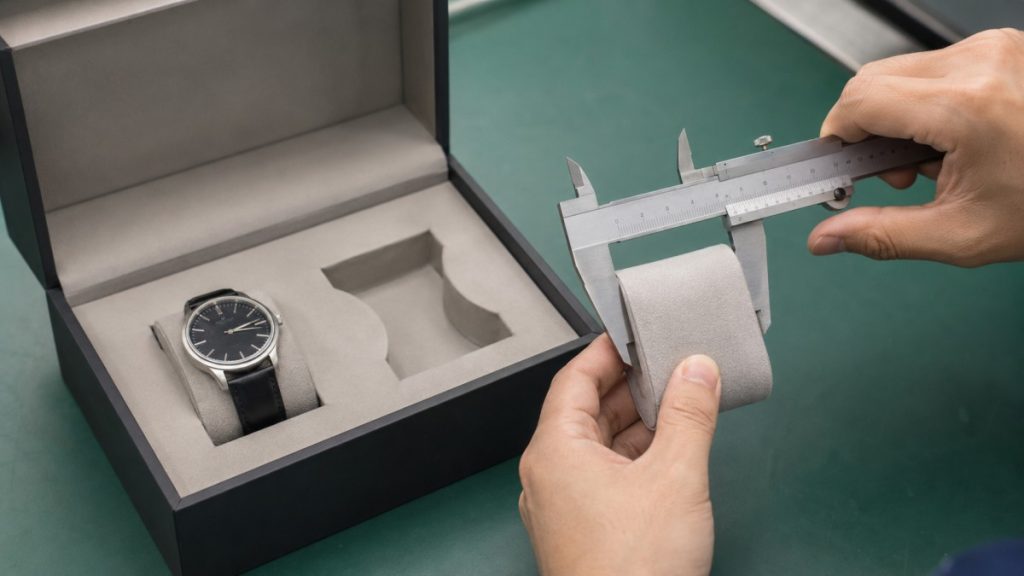
The watch box inserts checks needed during sampling include physical fitment tolerances, glue residue inspections, lining tension assessments, and strap closure tests. You must treat the sampling phase as your final defense against massive production errors. Skipping these visual and structural evaluations can result in thousands of unusable boxes arriving at your warehouse. By identifying these microscopic issues early, you ensure a flawless bulk manufacturing run.
How Do You Test Fitment Tolerances?
A watch insert that is too tight is just as problematic as one that is too loose. Your fitment tolerance checklist should include these real-world tests:
- Drop test with the watch inside to ensure zero movement.
- Finger clearance test to check how easily the watch is removed.
- Compression test to see if the pillow returns to shape quickly.
You need to physically place your watch sample onto the pillow and slide it into the cavity multiple times. If you have to force the pillow in, the fabric wrapping will quickly wear down and tear. You must establish clear, realistic tolerances before signing off on mass production.
What Color Consistency Verification Is Needed?
If your brand’s signature blue interior looks purple under retail lighting, your entire display will suffer. You must inspect your fabric samples under standardized D65 light sources to verify true color output:
- Color matching using standardized Pantone color libraries.
- Texture consistency checks across different fabric batches.
- Inspection under multiple light sources (LED, daylight, and retail incandescent).
Key Takeaway: Rigorous sampling checks guarantee that the finalized color and fit are perfectly executed, shielding you from consumer returns due to defective packaging. This attention to detail protects your profit margins and reinforces your reputation as a high-quality watch brand.
| Check Type | Sourcing Target Metric | Measurement Tool | Sourcing Priority | |
|---|---|---|---|---|
| Dimension Check | +/- 0.5 mm variance | Digital Caliper | Critical | |
| Adhesive Check | Zero odor, zero residue | Sensory Evaluation | High | |
| Wrapping Check | No visible seam wrinkles | Visual Under Loupe | Medium |
Assessing these testing parameters confirms that meticulous quality screening during sampling prevents mass manufacturing defects.
What Watch Box Inserts Problems Occur in Mass Production?
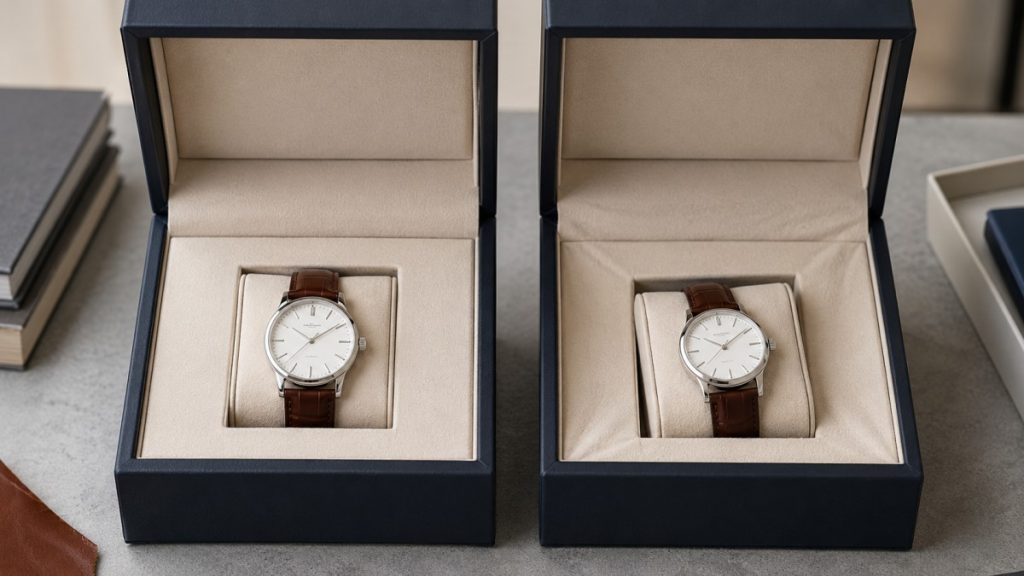
The most common watch box inserts problems in mass production are dimension shifting, strong chemical glue odors, uneven fabric wrapping, and poor density control. If your manufacturer does not utilize precision molds, small variations can accumulate across thousands of units. This results in some watches fitting perfectly while others rattle loosely in transit. Understanding these manufacturing pitfalls is the first step toward preventing them.
Why Do Sizing Deviations Happen Post-Production?
Paper-based inserts are highly sensitive to humidity and temperature changes, which can cause subtle warping after they leave the factory. To mitigate sizing deviations during manufacturing, you must monitor these areas:
- Cutting die wear rates and replacement schedules.
- Environmental humidity levels in the assembly workshop.
- Material moisture content prior to wrapping and gluing.
If you do not specify humidity controls during warehousing, the rigid frames can contract or expand by up to 2 millimeters. You must also ensure that the supplier does not use worn-out cutting dies that dull over time. These small physical deviations quickly add up to major fitting issues.
How Can You Avoid Material Cracking Issues?
Nothing ruins the unboxing experience faster than opening a luxury box to find cracked leatherette or fraying velvet corners. This usually happens when the factory uses cheap adhesives that dry out and lose flexibility:
- Premium, flexible backing boards prevent structural cracking.
- Double-stitched corners increase durability under high tension.
- Non-toxic, odorless adhesives preserve metal finishes on watches.
You should always insist on water-based, odorless adhesives that maintain their bond over long periods. This keeps your custom watch packaging looking flawless, even after months on a retail shelf. This proactive material selection is key to maintaining your brand’s luxury standard.
Key Takeaway: Partnering with a manufacturer that uses high-quality raw materials and stable adhesives guarantees that your box interiors will not deteriorate over time. This keeps your brand looking exceptionally professional and prevents costly customer returns.
| Mass Production Defect | Root Cause | Impact on Brand | Corrective Action | |
|---|---|---|---|---|
| Glue Off-Gassing | Low-grade solvent glue | Bad odor upon unboxing | Switch to water-based glue | |
| Corner Lifting | Poor tensioning in assembly | Cheap appearance | Adjust automatic wrapping tension | |
| Pillow Deformation | Low-density scrap fiber | Watch slips out of position | Specify pure virgin polyester |
Studying these production hazards indicates that robust supplier oversight is critical to maintaining physical packaging standards.
How Can Manufacturers Control Watch Box Inserts Quality?
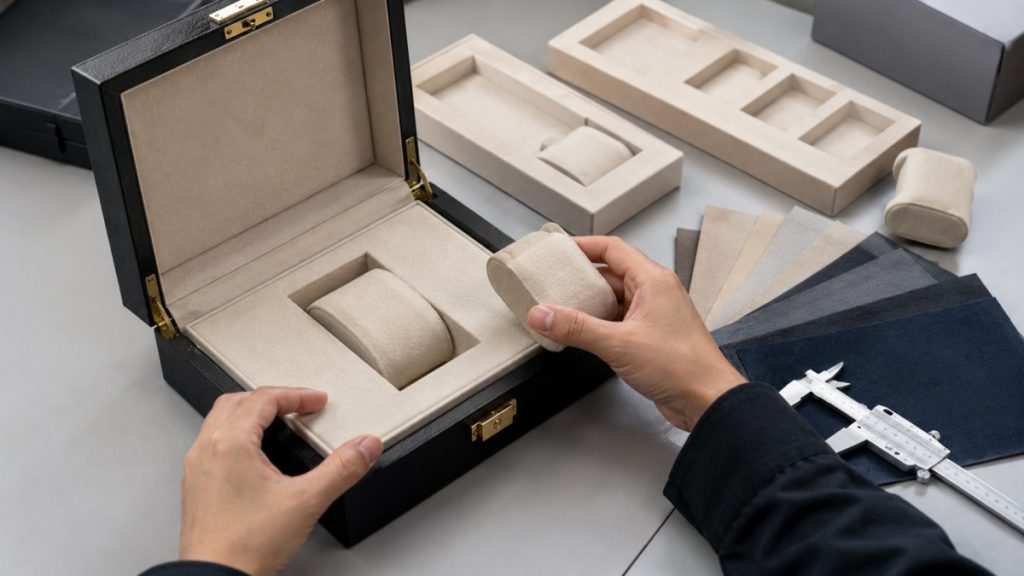
Manufacturers can control watch box inserts quality by using precision aluminum molds, implementing multi-point in-line inspections, using odorless water-based glue, and performing rigorous physical drop tests. At King Tai, we believe that quality is built into the manufacturing process, not just checked at the end. If your supplier does not monitor each production stage, errors will go unnoticed until the boxes are already shipped. A proactive quality management system is the only way to ensure batch-to-batch consistency.
What In-Line Inspection Steps Prevent Defects?
Waiting until the very end of a production run to check for errors is a recipe for disaster. A robust in-line quality control plan must feature these checkpoints:
- Visual inspection of raw die-cut frames for dimensional accuracy.
- Manual checks for uniform adhesive application on fabric backs.
- Tension tests to ensure fabric is pulled tightly over corners.
You want your manufacturing partner to inspect the raw cardboard frames before they are wrapped in fabric. If a frame is slightly crooked, it must be discarded immediately before premium velvet is applied. This strict in-line inspection approach saves materials and keeps your project on track.
How Do Final Drop Tests Ensure Durability?
Your custom boxes will be stacked, shipped, and handled by delivery drivers worldwide, so they must be built to survive. A standardized drop test simulates these harsh conditions by dropping packaged watches from various heights:
- Multi-angle drops simulate real-world logistics challenges.
- Post-test inspection verifies that watches remain securely centered.
- Structural evaluation ensures zero seam splitting on the box.
You need to know that your insert will keep the timepiece safe, even during a high-impact fall. This rigorous testing protocol protects your product and your reputation. By requiring these physical tests, you ensure that your shipping boxes deliver maximum protection.
Key Takeaway: Implementing standardized transit testing ensures that your packaging is completely flight-ready and protected against shipping damages. This proactive quality control drastically reduces warranty claims and builds immense trust with global distributors.
| QC Stage | Sourcing Quality Checkpoint | Target Metric | Inspection Rate | |
|---|---|---|---|---|
| Pre-Production | Board moisture level | < 8% moisture content | 100% of material rolls | |
| In-Line Assembly | Wrapping alignment | No visible white board | 1 in 50 units checked | |
| Post-Production | Fitment tolerance | Watch snug on pillow | 100% of finished batches |
Examining these quality control checkpoints highlights that structured factory-level testing ensures batch-to-batch product consistency.
What Watch Box Inserts Details Should You Send to Suppliers?
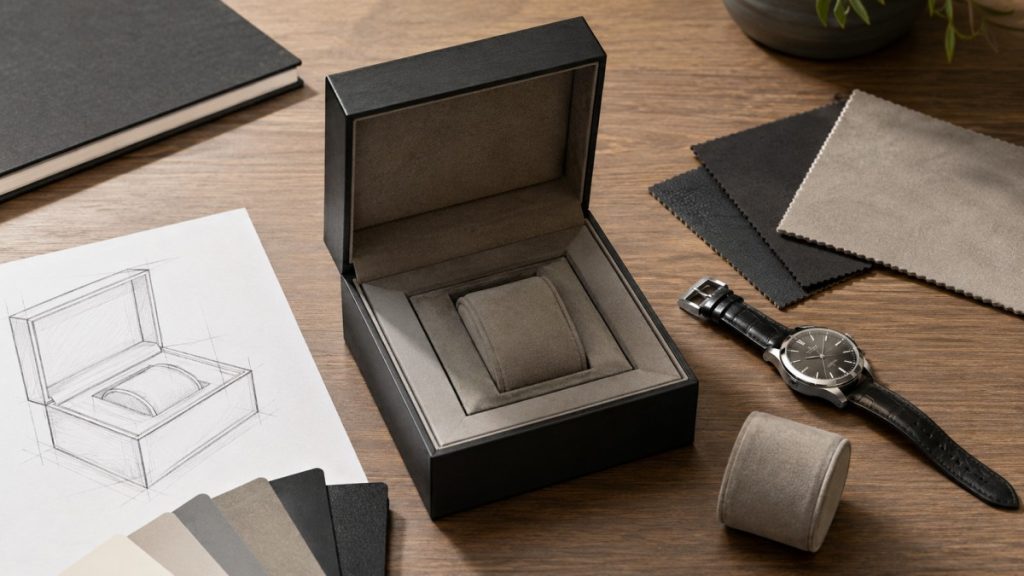
To ensure a smooth manufacturing process, you should send your supplier detailed CAD files, precise watch dimensions, desired fabric material codes, and targeted packaging budget parameters. Providing incomplete specifications to your manufacturer often leads to misaligned expectations and costly sampling revisions. You should be as descriptive as possible during the initial design kickoff phase. This upfront preparation saves valuable engineering time and gets your watch box inserts into production much faster.
What CAD Dimensions Are Absolutely Critical?
Detailed 2D and 3D CAD drawings eliminate guesswork by defining the exact clearance tolerances required for your watches. Your design blueprint package must include these key details:
- Outer dimensions of the insert tray (length, width, depth).
- Exact radius of rounded corners on the insert frame.
- Pillow width and circumference measurements.
You should provide top-down, side-profile, and cross-sectional views of the insert cavity and pillow. If you do not have CAD expertise, sending a physical watch sample is the best alternative. This allows us to reverse-engineer the perfect packaging structure for you.
How Do You Specify Finish Expectations Clearly?
‘Soft fabric’ can mean anything from cheap polyester to luxury microfiber suede, so you must be highly specific. You should use standardized material codes or request swatches from your manufacturer’s library:
- Specify exact stitching color and thread thickness.
- Request specific fabric weight and density specifications.
- Align on debossing or hot-stamping foil brand codes.
This ensures that the texture, color shade, and seam stitching match your design brief perfectly. Clear specifications leave absolutely no room for supplier misinterpretation. It makes the entire production process more predictable and transparent.
Key Takeaway: Sending highly detailed material and structural briefs ensures that your first packaging sample is nearly perfect, saving weeks of back-and-forth development. This precise alignment sets up your mass production run for total success.
| Specification Element | Required Format | Critical Value | Sourcing Outcome | |
|---|---|---|---|---|
| Pillow Sizing | CAD/PDF Blueprint | Snug fit within box | Eliminates watch shifting | |
| Material ID | Pantone / Swatch Code | Color match under D65 | Ensures color branding | |
| Stitching Type | Gauge & Thread Count | Reinforced corners | Prevents seam tearing |
Synthesizing these specification details demonstrates that comprehensive technical documentation is key to getting samples approved quickly.
How Do Watch Box Inserts Affect Cost, MOQ, and Lead Time?
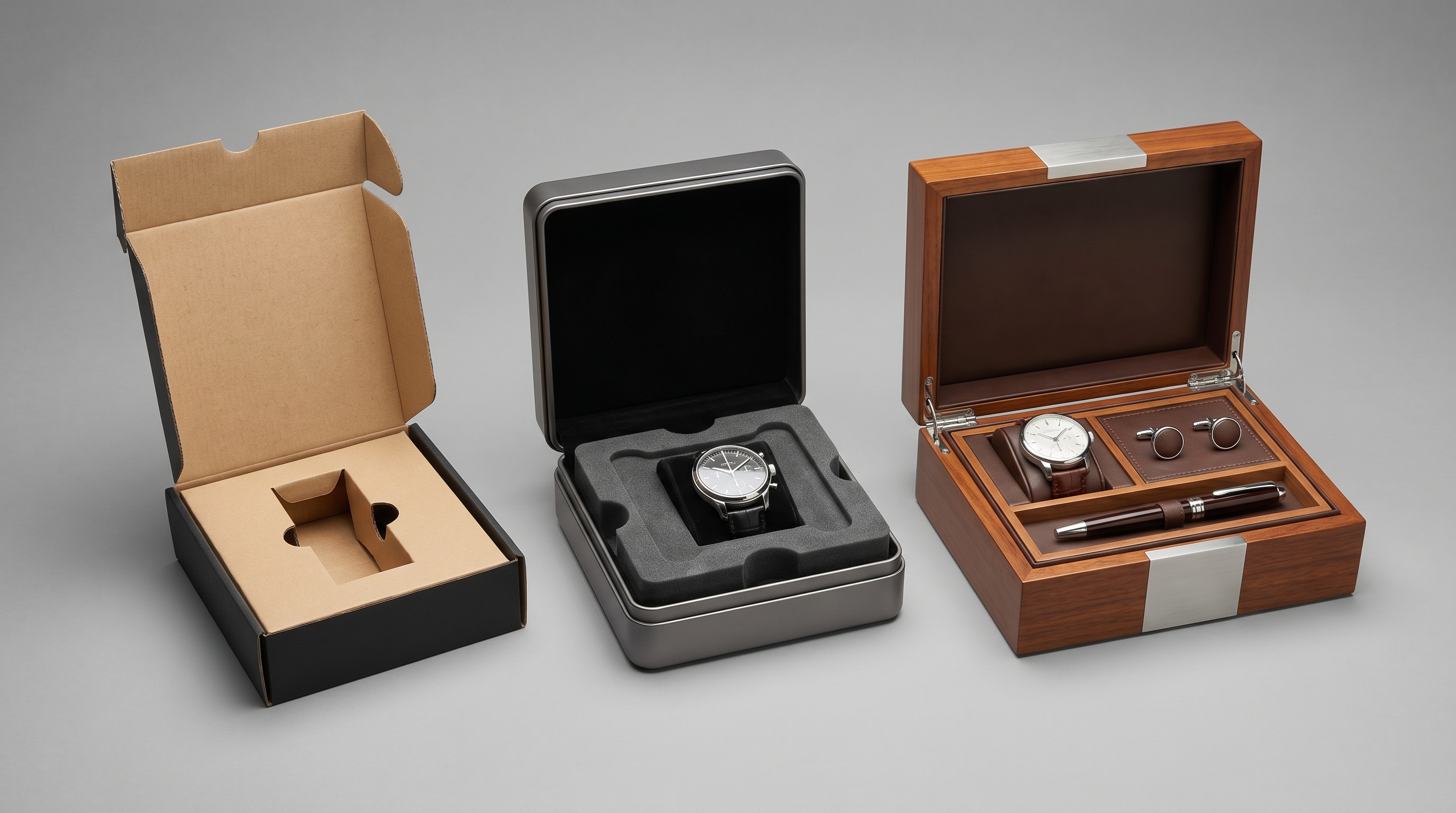
Watch box inserts directly influence overall packaging costs, minimum order quantities (MOQs), and production lead times depending on their design complexity and raw material choices. Simple die-cut cardboard trays require less labor and tooling, leading to lower MOQs and faster delivery schedules. Conversely, complex multi-compartment leather inserts with hand-stitched pillows will increase your unit cost and require longer lead times. Understanding these commercial trade-offs is vital for managing your packaging budget effectively.
How Do Complex Insert Designs Influence MOQ?
Manufacturers must set higher MOQs for intricate, hand-assembled inserts to cover the costs of custom cutting dies and labor setups. When planning around MOQs, you must keep these production realities in mind:
- Fully custom molds usually require a minimum of 1,000 units.
- Standard mold sizes can drastically reduce MOQ requirements.
- Premium handmade fabric wraps require higher labor-hour allocations.
If your design requires complex embroidery or multiple hidden compartments, the setup time on the factory floor increases dramatically. You can keep your MOQs manageable by utilizing semi-custom structures that use existing mold sizes. This smart design choice keeps your initial orders flexible and cost-effective.
What Structural Choices Reduce Lead Times?
If your packaging materials must be imported from specialty mills, your lead times will immediately stretch by several weeks. You can accelerate production by choosing locally sourced, high-grade cardboard, PU leather, and velvet:
- Standardized pillow sizes eliminate custom tooling wait times.
- Locally stocked fabrics reduce raw material transit delays.
- In-house assembly minimizes cross-factory logistics bottlenecks.
Working with vertically integrated manufacturers like King Tai also streamlines the entire process. We manage both box production and custom insert assembly under one roof to save you time. This integrated approach ensures consistent quality control and rapid order fulfillment.
Key Takeaway: Streamlining your insert’s structural complexity allows you to launch your watch collections faster while maintaining a highly professional presentation. This quick-to-market advantage is crucial in the highly competitive luxury retail space.
| Insert Complexity | Average MOQ | Cost Level | Production Lead Time | |
|---|---|---|---|---|
| Standard Card Tray | 500 units | Low | 15 – 20 days | |
| Die-Cut EVA Foam | 1,000 units | Medium | 20 – 25 days | |
| Handmade PU Leather | 1,500 units | High | 30 – 35 days |
Understanding these commercial dynamics clarifies that selecting pre-engineered mold shapes optimizes both upfront cost and production speed.
FAQ
Can I Use One Watch Pillow for Different Watch Sizes?
Yes, you can absolutely design a single watch pillow that accommodates various wrist sizes by using flexible fiber filling. This soft, compressible material easily shrinks to fit small women’s watches and expands naturally for larger men’s chronographs. If you use a rigid foam core, however, the size range will be highly restricted. Selecting the right stuffing material is the key to universal fit.
What’s the Best Material for Watch Box Interiors?
High-grade PU leather and premium velvet are the best materials for watch box interiors due to their durability and protective qualities. Velvet offers a classic luxury look and completely scratch-resistant support for high-polished metals. Meanwhile, PU leather provides a clean, modern aesthetic that resists dust and oils. Your final decision should depend on your target audience and brand identity.
How Do I Know if the Insert Is Too Loose?
The easiest way to know if your insert is too loose is by performing a standard five-directional shake test on a sample. Place the watch on its pillow inside the cavity, close the box lid, and gently shake it in all directions. If you can hear or feel the watch rattling inside, the tolerances are too large. You must adjust the cavity depth or increase the pillow’s thickness immediately.
Can I use removable inserts and still maintain a premium look?
Yes, removable inserts can look exceptionally premium when wrapped in high-quality materials with hidden pull-tabs. You can design the insert tray to sit perfectly flush with the box edges, creating a seamless, integrated appearance. This dual-purpose design allows your customers to use the watch box as a travel case or jewelry tray. It adds immense functional value to your custom packaging.
Is Confirming the Insert Before Mass Production Necessary?
Yes, confirming the insert before mass production is absolutely necessary to avoid catastrophic fitting issues. Even a tiny 1-millimeter error in calculations can result in watches that fail to center or slide around during transit. Developing a physical prototype allows your team to test the actual fitment, materials, and colors. This simple step guarantees that your bulk order will be manufactured without costly structural defects.
Conclusion
In summary, the quality, dimensions, and materials of watch box inserts and pillows directly impact fit, transit safety, retail display, sampling speed, and overall mass production costs. Neglecting these interior components can lead to costly launch delays and product damage, while careful planning guarantees a flawless unboxing experience.
King Tai is uniquely positioned to support your next custom packaging project with over 20 years of expert manufacturing experience and tailored structural recommendations. To receive a detailed structural assessment, sample prototype, or cost quotation for your brand, please contact our team today.
Good watch packaging should protect the product, support the brand, and make production easier to control.