
A watch box that keeps watches ticking is a watch winder: it rotates a compatible automatic watch at controlled intervals so it can remain ready to wear. If you alternate between automatic watches, the practical challenge is keeping the right one set up without treating a display box as if it were a winder. For brands and collectors, this guide explains what to evaluate—from movement compatibility to fit, presentation, and production control. If you are developing the outer presentation, explore custom watch boxes designed around the product and brand brief.
When Do You Need a Watch Box That Keeps Watches Ticking?
You need a watch winder when a compatible automatic watch is not worn often enough to stay powered through normal wrist movement and you want it ready to wear. It is a convenience and presentation decision, not a requirement for every watch or every owner.
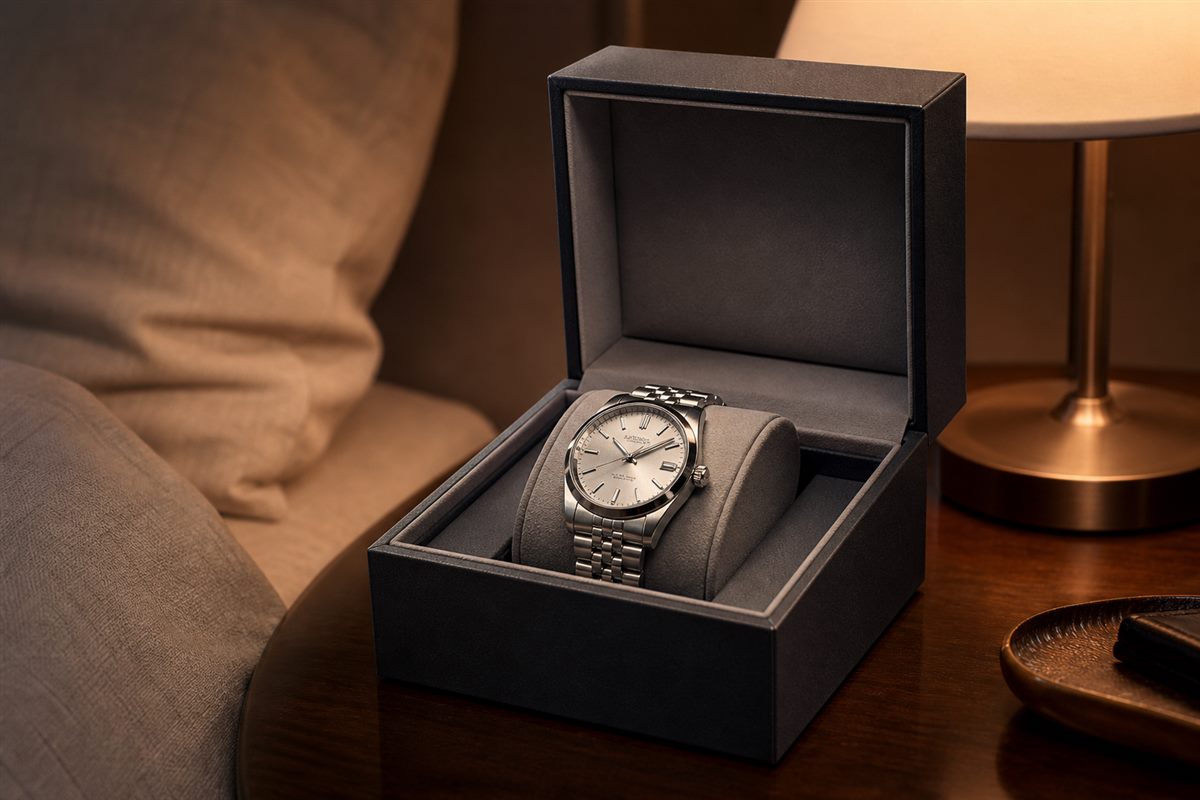
Which watches benefit most?
Automatic watches that are rotated infrequently, or watches with settings that take time to reset, are the clearest candidates. Manual-wind and battery-powered watches should not be placed in a winder simply because the box has a rotating function.
Key Takeaway: Start with the watch type and wearing pattern; a winder solves a readiness problem, not a general storage problem.
How Does a Watch Winder Box Work?
A watch winder box holds an automatic watch on a cushion and moves it through programmed rotations intended to simulate wrist motion. The mechanism and the presentation enclosure have separate jobs: one manages movement, while the other supports positioning, access, and appearance.
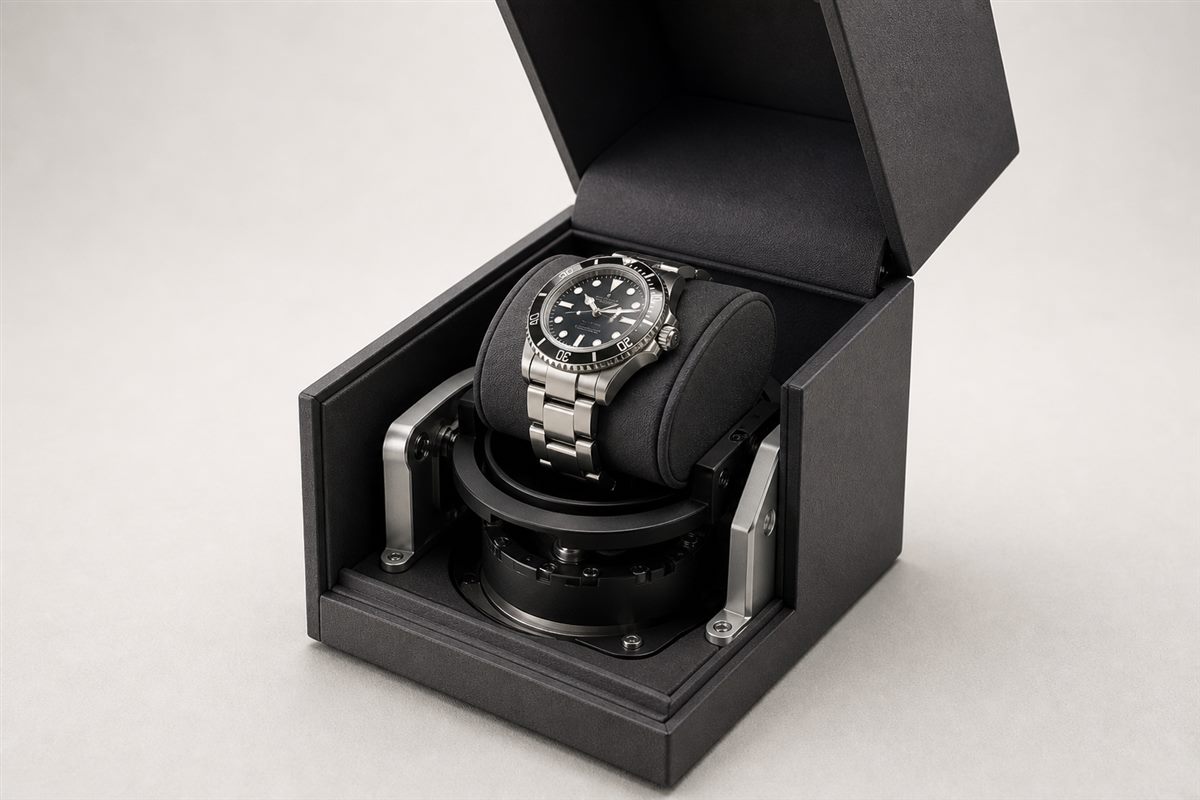
What are the two core parts?
The winding module supplies motion, and the cushion or holder secures the watch during that motion. A good evaluation checks both, because an attractive enclosure cannot compensate for an unsuitable setting or poor fit.
Key Takeaway: Assess the winding system and the box as one functional assembly, rather than buying for appearance alone.
Which Settings Should You Confirm First?
You should confirm the watch maker’s guidance for winding direction and operating settings before using a winder. Requirements can vary by movement, so a universal setting is not a reliable assumption.
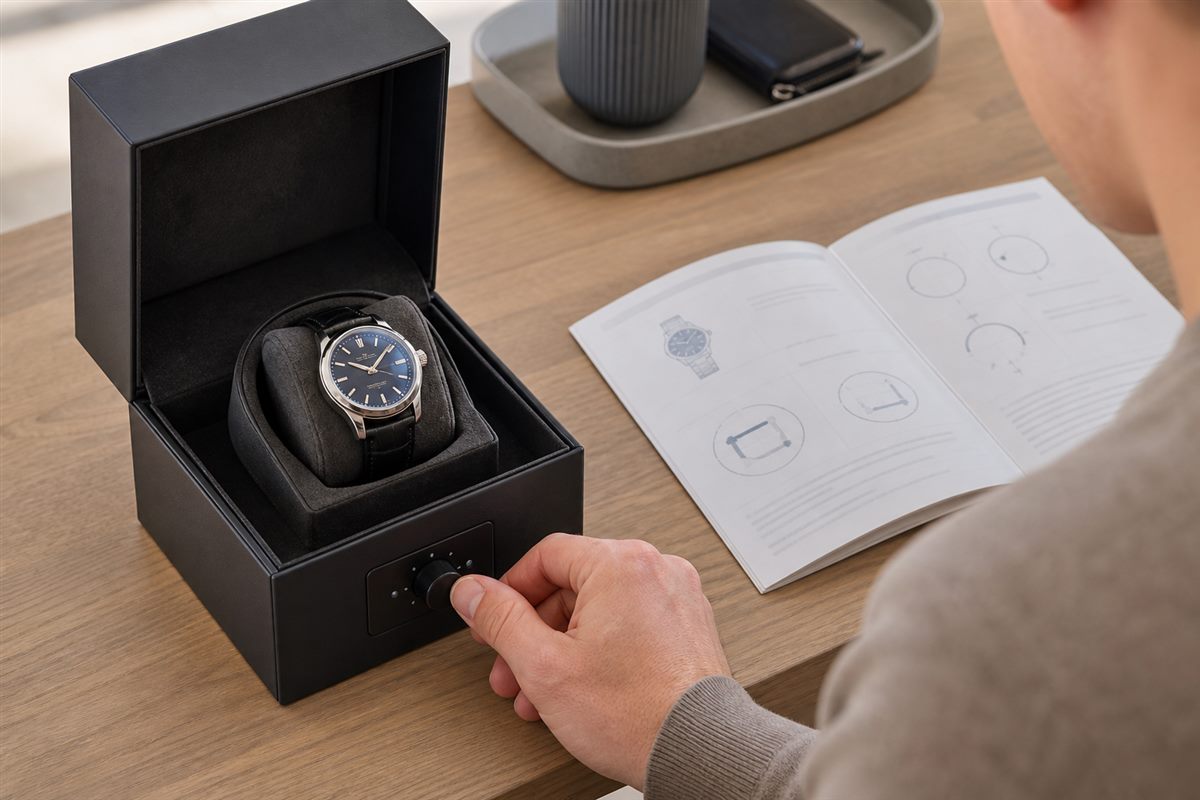
What should the owner check?
Use the watch documentation or the manufacturer’s support channel as the primary reference. This avoids choosing settings based on another watch’s movement or on broad online claims.
- Whether the watch is automatic and suitable for a winder
- Recommended rotation direction or bidirectional operation
- Recommended daily operating range, if supplied
- Any model-specific restrictions
Key Takeaway: Compatibility evidence should drive the settings—not the winder’s marketing list of features.
What Capacity Fits Your Collection?
The right capacity matches the number of automatic watches you realistically want ready at the same time. A single unit suits one frequently rotated watch; multi-watch formats suit collections only when each position can be used and serviced sensibly.
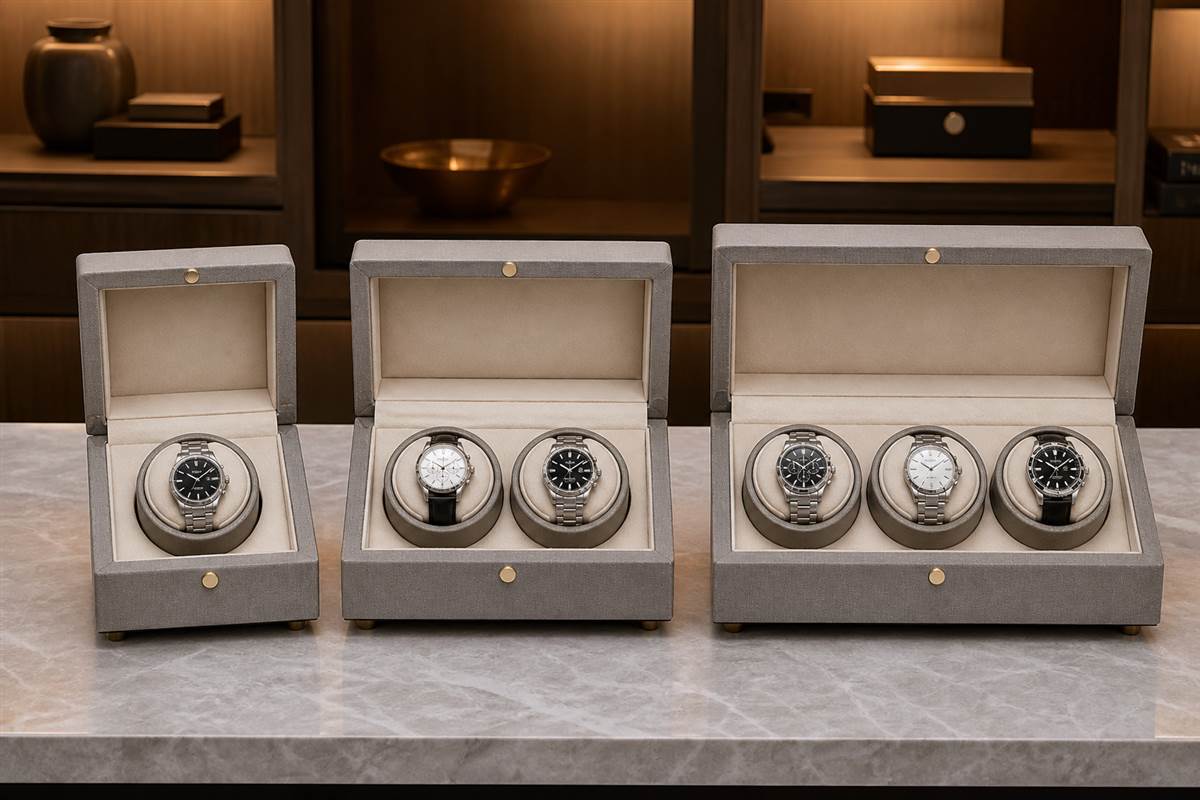
How should you plan for growth?
Allow for a modest collection change, but avoid buying capacity that adds unused size, cost, and placement constraints. For a branded collection, the same planning also informs a coherent watch packaging solution across different product tiers.
Key Takeaway: Choose capacity from actual rotation habits and available space, then check that every station offers usable fit and settings.
How Do You Check Watch and Cushion Fit?
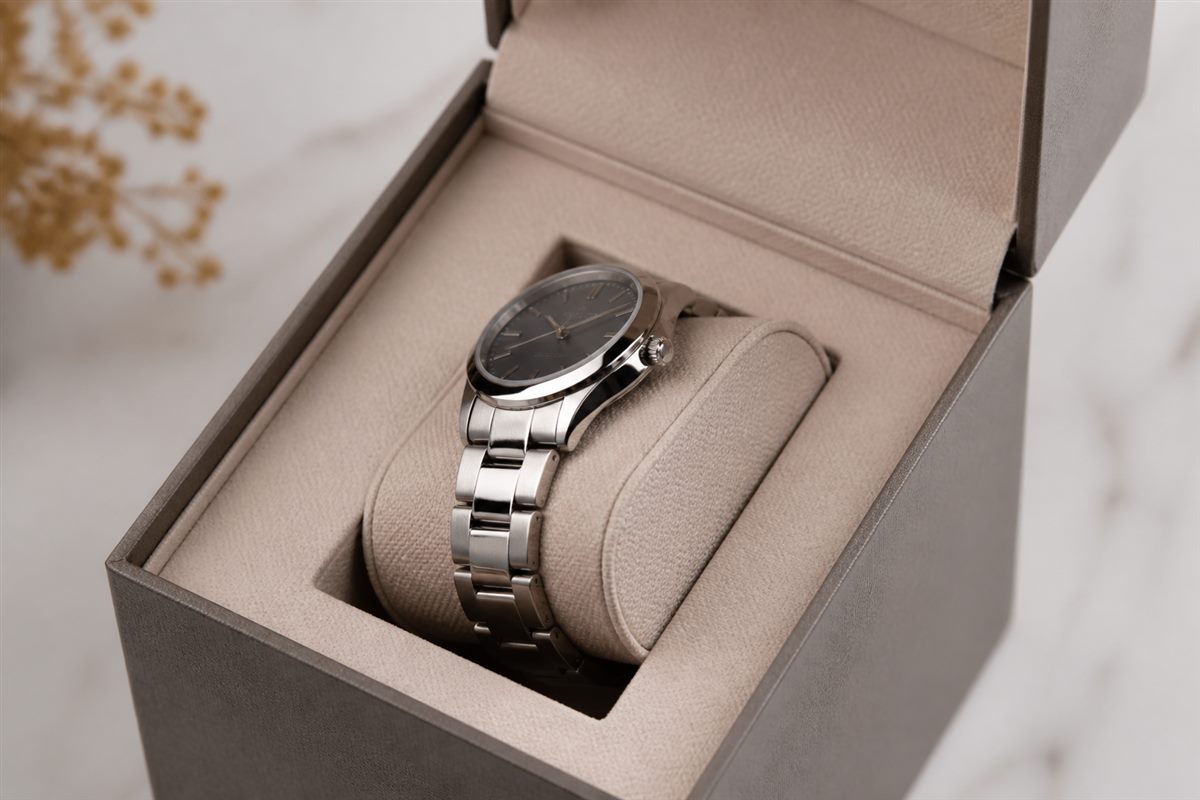
You check fit by confirming that the cushion supports the bracelet or strap without forcing it, while the case clears the lid and surrounding structure. The watch must remain positioned throughout the intended motion.
What fit risks deserve attention?
Fit is more than case diameter: strap geometry, clasp shape, crown clearance, and cushion firmness can all matter. Inspect the product in the intended position instead of relying on a generic size label.
- The watch sits centered and is not loose on the cushion
- The strap is not stretched beyond its normal shape
- The case and crown clear the enclosure
- The watch can be removed without a struggle
Key Takeaway: A secure, non-forced fit protects both usability and the quality of the presentation.
What Power and Placement Choices Matter?
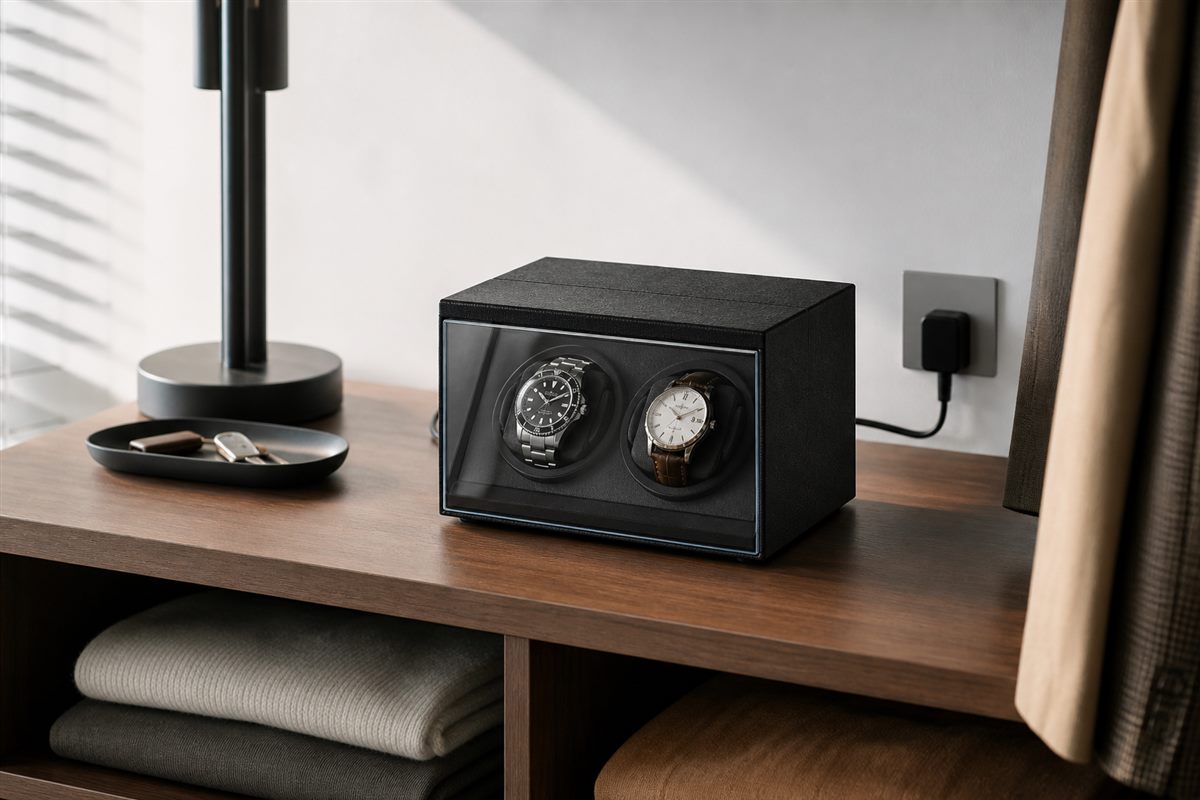
Power and placement matter because a winder must operate in a stable, appropriate location for its intended routine. Choose the power approach and location based on access, cable management, and how often the unit will be moved.
How should you choose the location?
Keep the winder on a stable, level surface and avoid locations that make inspection or normal access awkward. Check the product instructions for environmental and power-use guidance rather than assuming every unit suits the same location.
Key Takeaway: Treat placement as part of the buying decision; a suitable winder is only useful when its daily setup is practical.
What Build Details Affect Daily Use?
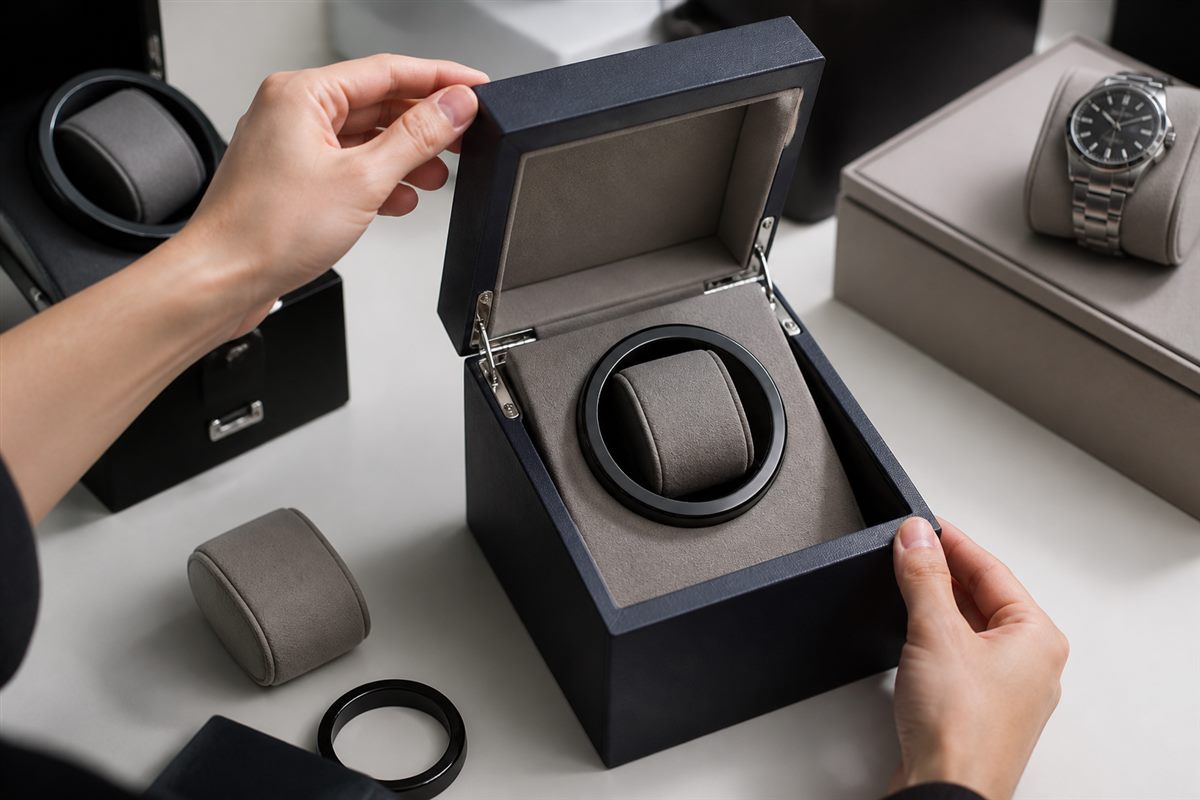
Build details affect how the enclosure opens, protects the watch, presents the product, and holds up to routine handling. Look for clean lid alignment, stable hinges or closure hardware, a well-finished interior, and a cushion that supports the intended watch.
Which details should you inspect in person?
A close inspection can reveal problems that product photos hide. Evaluate the enclosure as a functional presentation object, especially if it will represent a premium watch brand at retail or at unboxing.
- Corner and lid alignment
- Opening and closing feel
- Interior cleanliness and cushion placement
- Clearance around the watch and moving components
Key Takeaway: Daily usability comes from alignment, fit, and finishing discipline—not from a luxury-looking surface alone.
How Important Are Noise and Access?
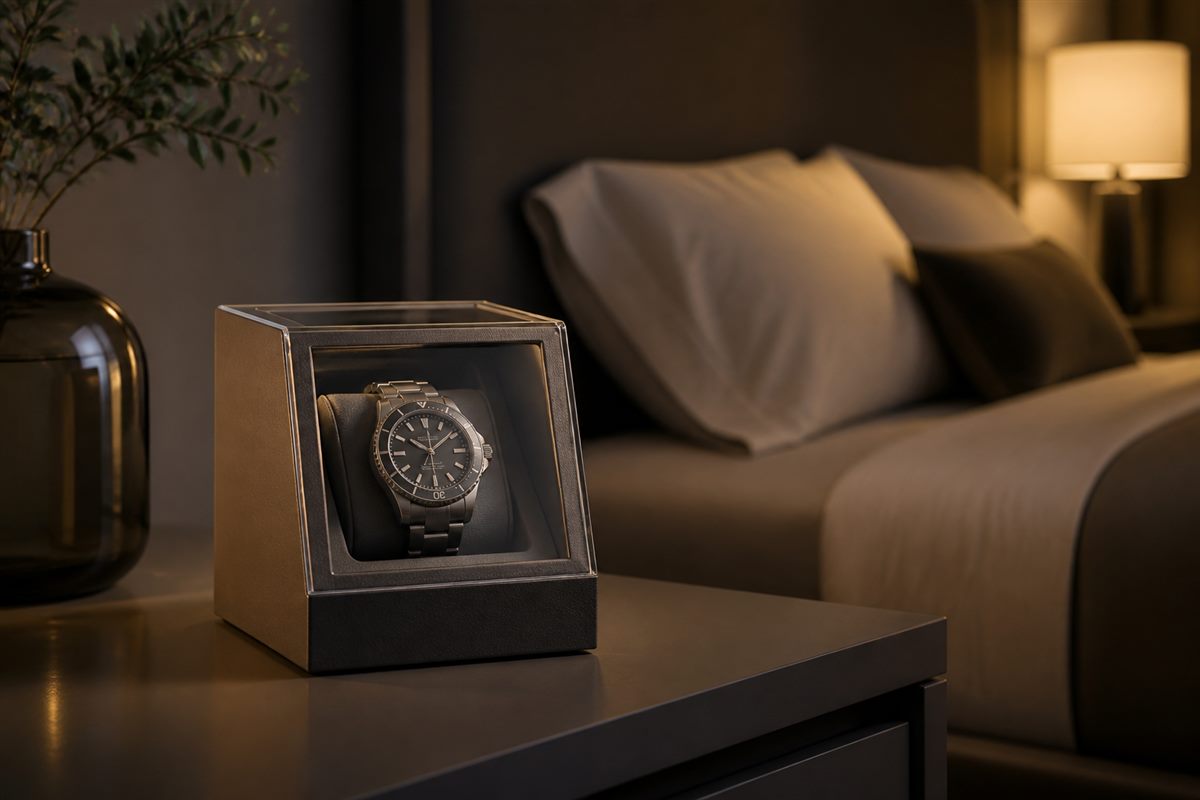
Noise and access are important because they determine whether a winder fits comfortably into the room and routine where it will be used. A unit placed near a bed or desk should be evaluated in that context, while the watch should remain easy to view and remove.
What should you test before deciding?
Where possible, experience the unit in a quiet setting and open it as you would in normal use. Product descriptions alone cannot show how the lid, cushion, viewing panel, and operating cycle feel in your space.
Key Takeaway: Quiet operation and uncomplicated access are practical selection criteria, especially for winders used in living spaces.
How Should You Maintain a Watch Winder Box?
You should maintain a watch winder box by keeping its surfaces and cushion clean, checking fit and closure condition, and following the maker’s operating instructions. Maintenance is primarily about preserving safe, reliable everyday use rather than applying a universal repair routine.
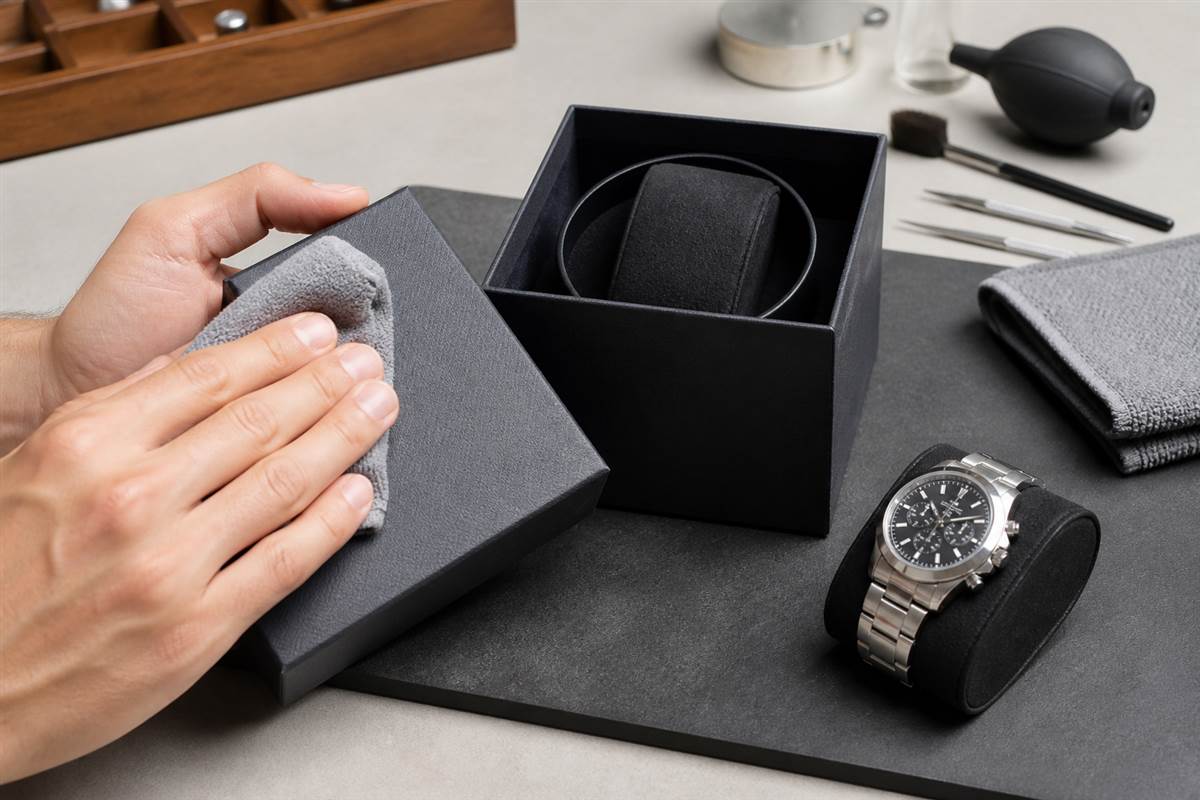
What belongs in a simple care routine?
Use gentle, product-appropriate cleaning and inspect the enclosure whenever you change watches. If performance or fit changes, stop using the unit until the product guidance or a qualified service path has been checked.
- Remove dust from the exterior and interior
- Check the cushion and holder for wear
- Keep the unit stable and dry as instructed
- Review power and battery guidance for the specific model
Key Takeaway: Regular light inspection is more useful than aggressive maintenance or unverified repair advice.
How Do Brands Design and Quality-Control Winder Packaging?
Brands can design and quality-control winder packaging by developing the outer box, internal support, and product-access sequence around the actual winder dimensions and use case. The goal is not merely a premium look; it is a presentation system that holds the product correctly and can be produced consistently.
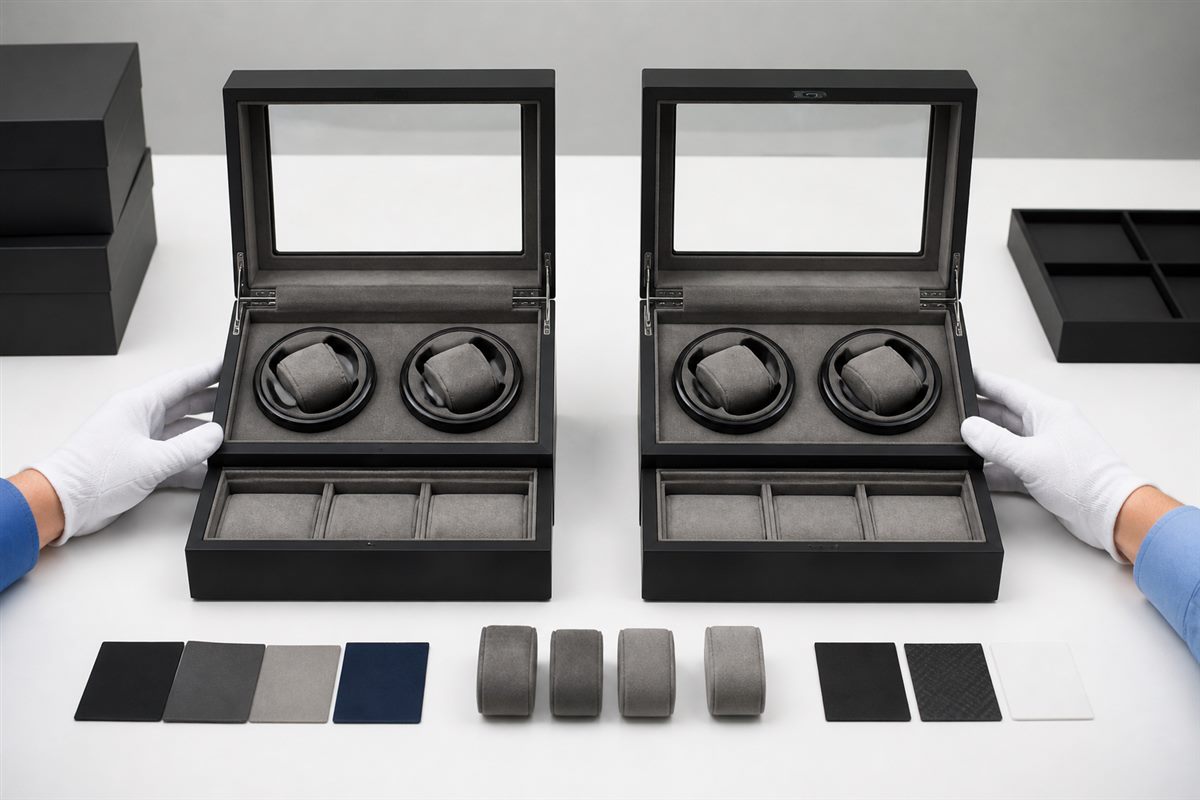
What should a packaging brief include?
A clear brief gives the manufacturer the product dimensions, opening preference, brand artwork, intended finish, insert requirements, quantity, and shipping considerations. King Tai can support structural design, paper selection, printing, surface finishing, assembly, custom inserts, quality inspection, and logistics support for custom packaging projects.
Which checkpoints matter before production?
You control packaging quality at scale by turning the approved sample into the reference for materials, printing, finishing, structure, assembly, and insert fit. Confirm the elements that affect both appearance and product protection, then preserve them as the production reference. For context on a relevant project route, see this watch box case study.
- Outer dimensions and opening behavior
- Material and print appearance
- Finish placement and visual registration
- Insert fit, product position, and removal experience
- Approved-sample expectations for mass production
Key Takeaway: For branded winders, the approved sample is the practical link between a design decision and repeatable production control.
A watch winder can keep a compatible automatic watch ready to wear, but the best choice depends on movement guidance, fit, capacity, placement, and daily usability. For brand projects, presentation quality also depends on whether the packaging can carry the approved design through production. Talk with King Tai about your custom packaging project when you are ready to align structure, materials, inserts, and production requirements.
FAQ
Can every automatic watch go in a winder?
No. Confirm that the watch is automatic and check its maker’s guidance before using a winder.
Can a winder replace normal watch storage?
No. A winder provides controlled motion for compatible watches; it does not remove the need for appropriate storage and handling.
How do I know whether the cushion fits my watch?
Check the watch in its intended position for secure support, normal strap shape, and clearance around the case and lid.
What should a brand confirm before producing winder packaging?
Confirm the winder dimensions, insert fit, opening sequence, artwork, finishes, and approved sample before mass production.