
Watch box dimensions should be planned around the actual watch, its strap or bracelet, and the clearance needed to remove it safely. A box that looks spacious in a drawing can still pinch a tall case, crowd adjacent watches, or leave a loose watch moving inside the compartment. This guide helps you define the dimensions that matter before selecting or developing a watch box.
Which Watch Box Dimensions Matter Most?
The most important dimensions are the usable internal length, width, depth, slot spacing, and the size of the insert or pillow. Exterior size is secondary because it does not show how the watch sits inside.
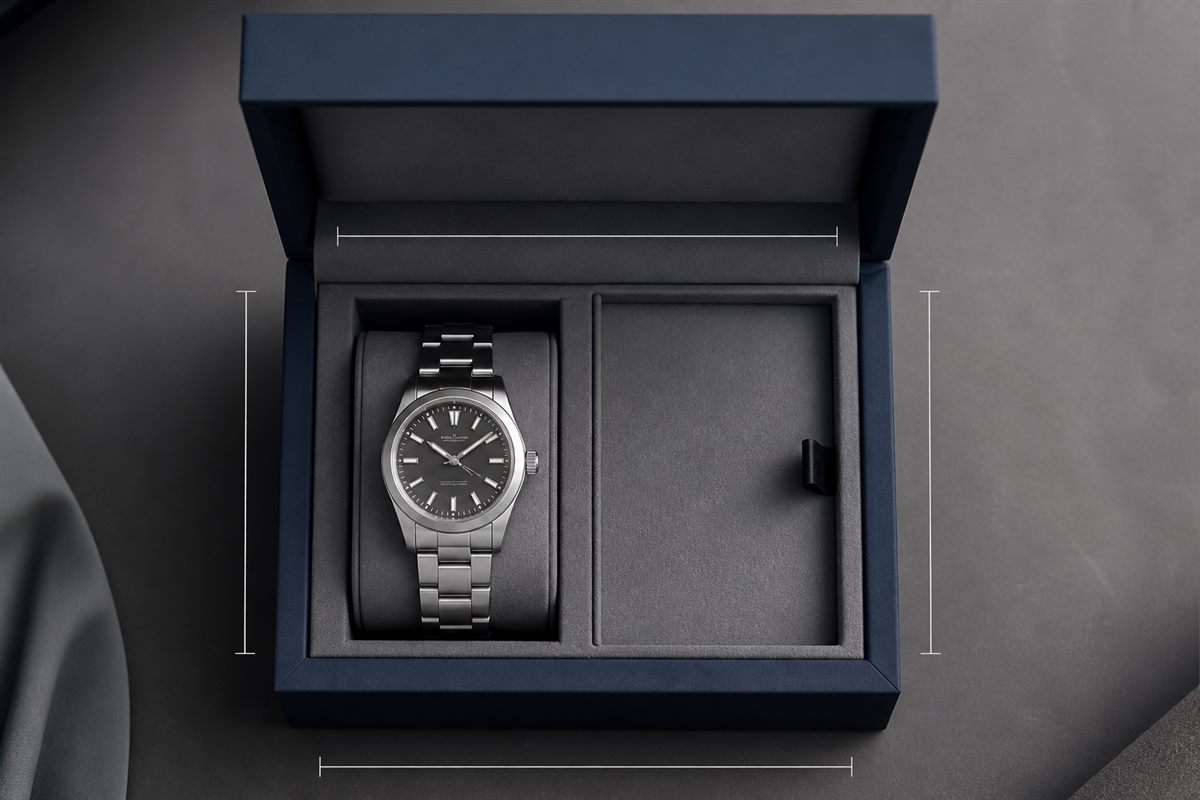
For a branded presentation package, the inside must work as a system. Explore custom watch boxes when you need to coordinate the outer form, insert, and product presentation.
Start with the usable internal space
Measure the space the watch can actually occupy after lining, dividers, and inserts are in place. A nominal compartment size can be misleading if the usable area is reduced by a pillow or a thick divider.
- Internal length for the case and lugs
- Internal width for the bracelet or strap profile
- Internal depth for the case, crystal, and lid clearance
Key Takeaway: Specify usable internal dimensions, not only the outside dimensions of the box.
How Should You Measure a Watch Before Designing a Box?
Measure the actual watch in the position it will take inside the box. Case diameter is useful, but it cannot represent the full footprint of a watch with extended lugs, a bulky clasp, or a thick strap.
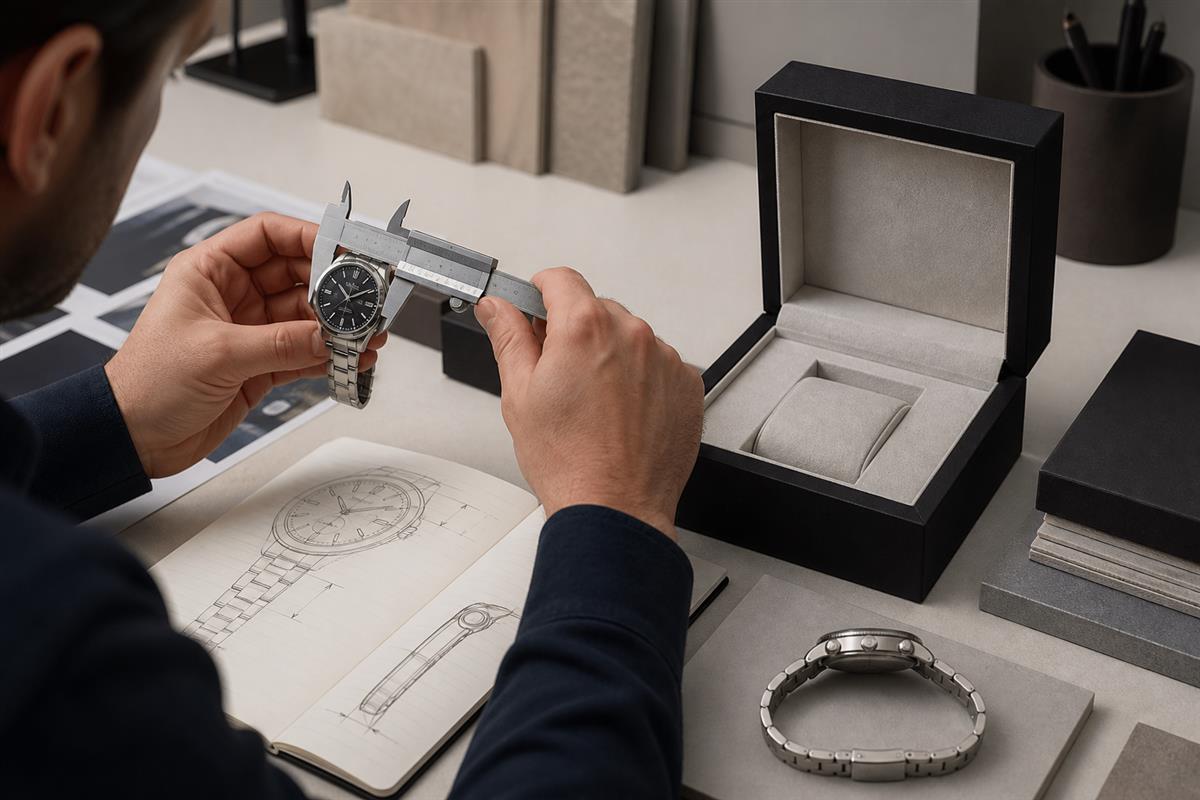
Record the full dimensional profile
Use a physical sample where possible. If the final watch is unavailable, request a reliable drawing or representative substitute and identify any dimensions that still need confirmation.
- Measure lug-to-lug length and case diameter.
- Measure overall height at the tallest point.
- Measure strap or bracelet width and clasp bulk.
- Note crowns, pushers, curved cases, and other protrusions.
Key Takeaway: The box should fit the watch?? complete profile rather than a single headline measurement.
How Much Slot Width Does a Watch Need?
A slot needs enough width for the bracelet or strap to rest naturally without being compressed against the divider. The needed space depends on the widest part of the watch when it is stored, not only the width between lugs.
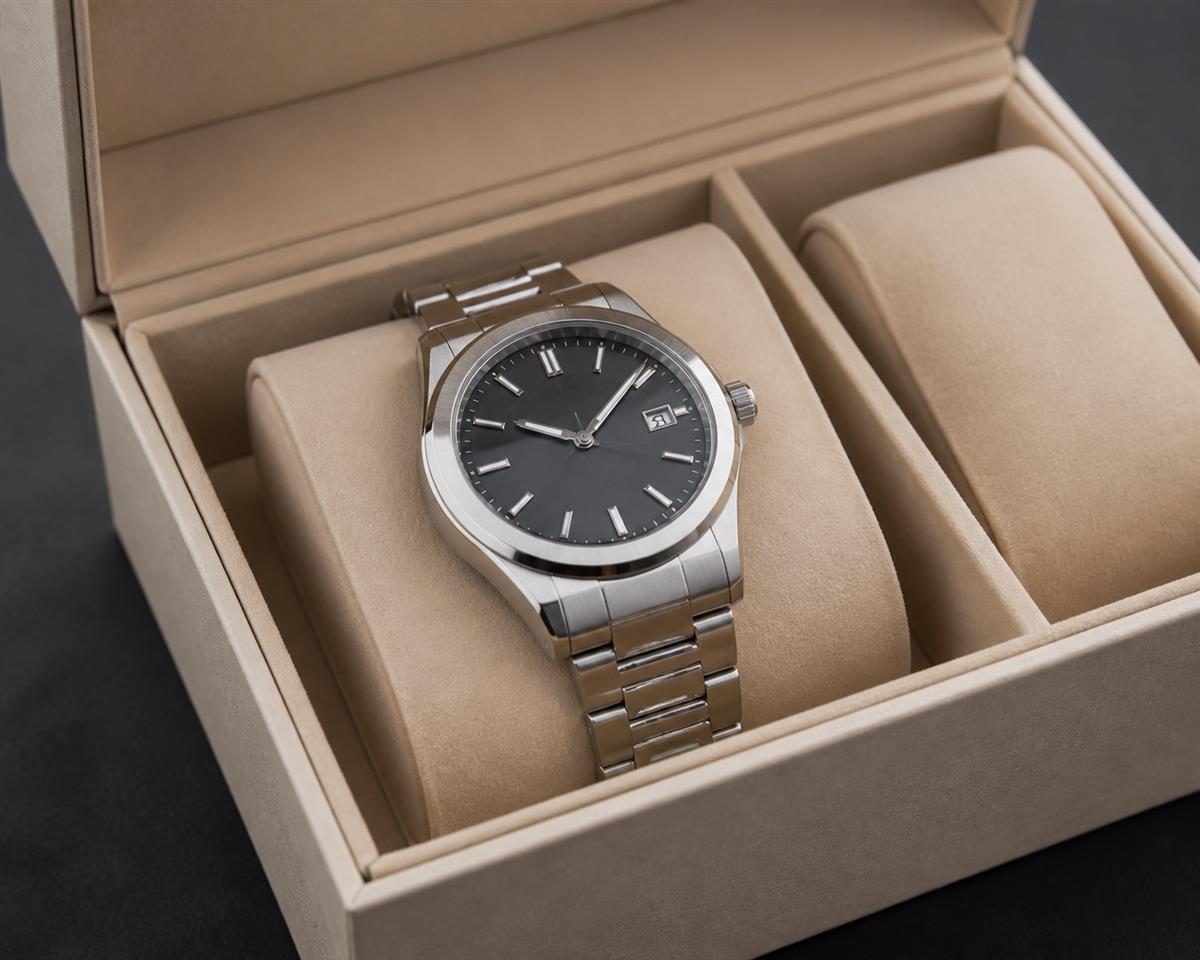
Check the stored bracelet shape
Place the watch in its intended display position and look for bunching, raised links, or a clasp that is forced against the sidewall. Those signs show that the slot layout needs review.
- Allow room for the bracelet?? natural curve.
- Check the clasp or deployant in its closed position.
- Keep sidewalls clear of the case and strap hardware.
Key Takeaway: A wider slot is valuable only when it protects the stored shape and makes the watch easy to handle.
What Internal Depth Should a Watch Box Have?
Internal depth must accommodate the watch at its tallest point plus the insert and practical lid clearance. A watch can appear to fit until the lid presses on a crystal, bezel, crown, or raised bracelet section.
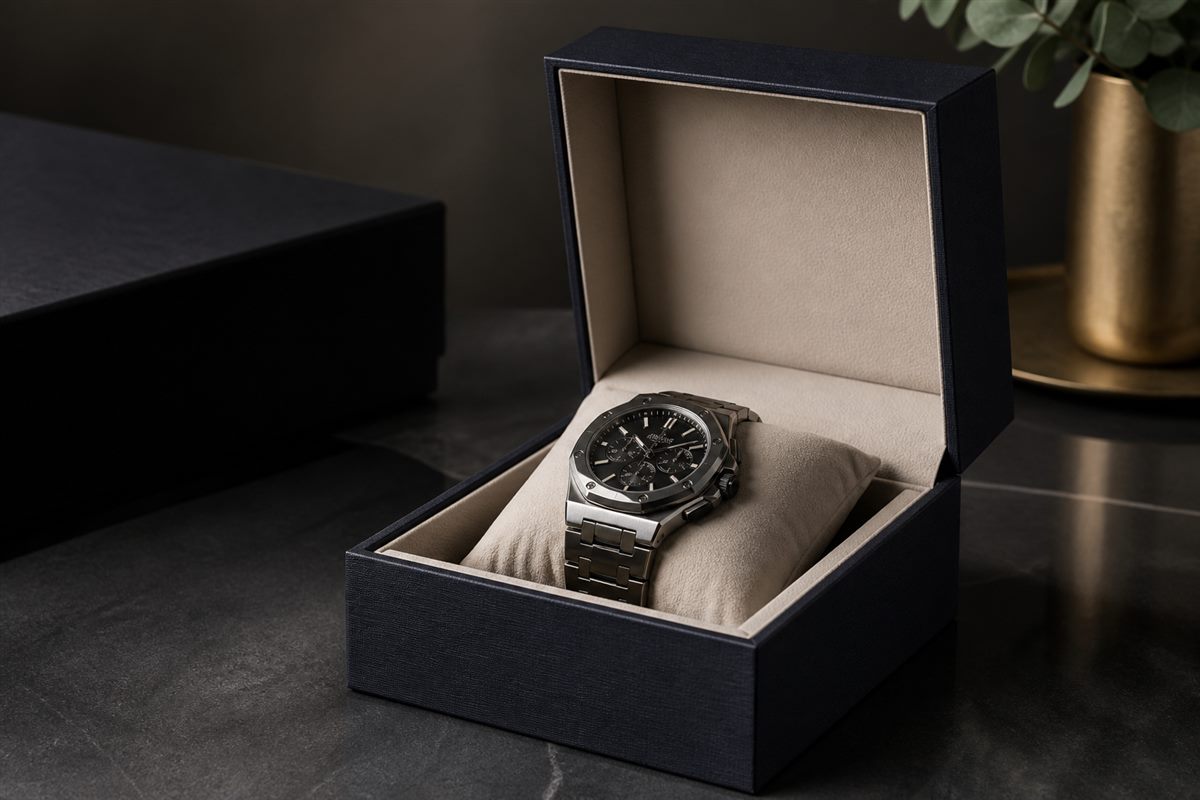
Assess clearance with the lid closed
Check the actual closing path rather than estimating from an open box. The lining, pillow height, and lid construction can all change the free space above the watch.
- Review the tallest case in the collection first.
- Check whether the insert raises the watch above the compartment base.
- Confirm that lid hardware and lining do not create pressure points.
Key Takeaway: Depth is a fit-and-function decision; confirm it with the intended watch in the closed box.
How Should a Pillow or Insert Fit the Watch?
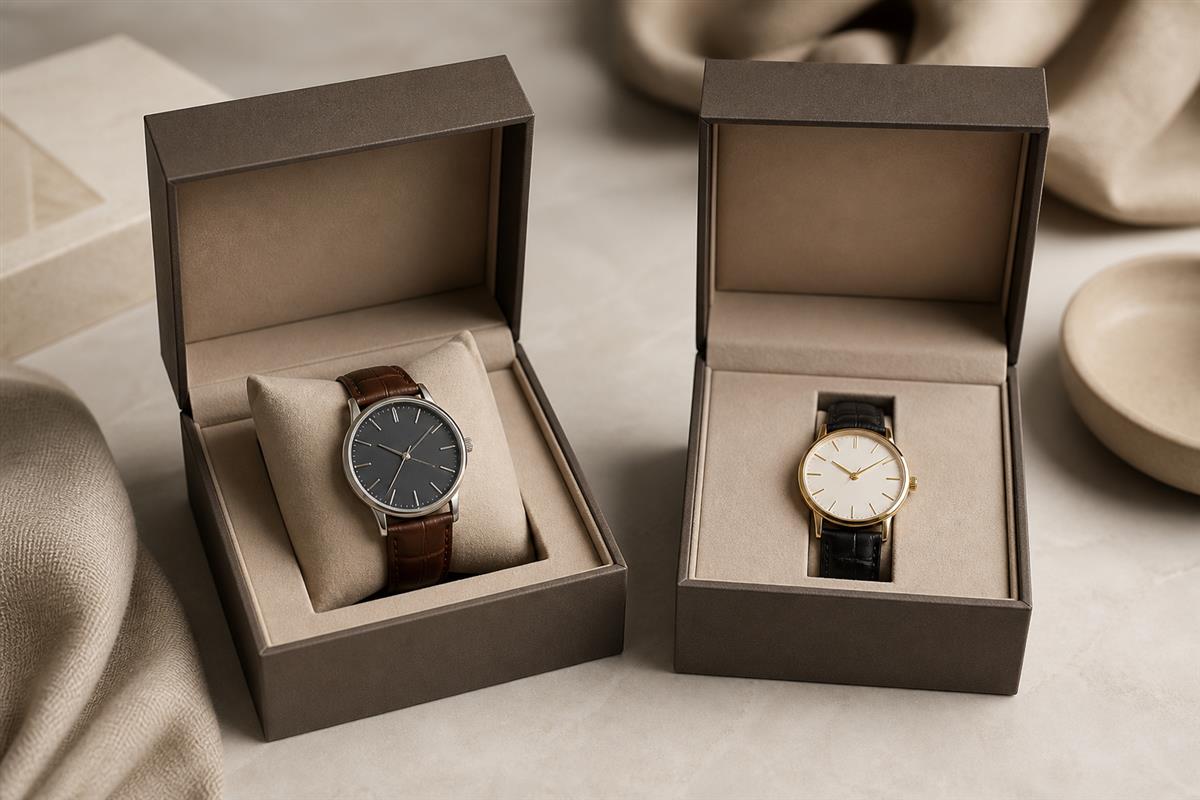
A pillow or insert should keep the watch positioned without forcing the bracelet, strap, or clasp into an unnatural shape. The right fit is secure enough to limit movement while remaining easy to load and remove.
Match the support to the retention need
Different watch formats can need different support. A slim leather strap, a metal bracelet, and a watch with a deployant clasp may not sit correctly on the same pillow shape.
- Check whether the watch remains level and centered.
- Make sure the strap can close naturally around the support.
- Review removal comfort as well as retention.
Key Takeaway: Treat the pillow or insert as part of the dimensional design, not as a separate decorative component.
How Far Apart Should Watch Slots Be?
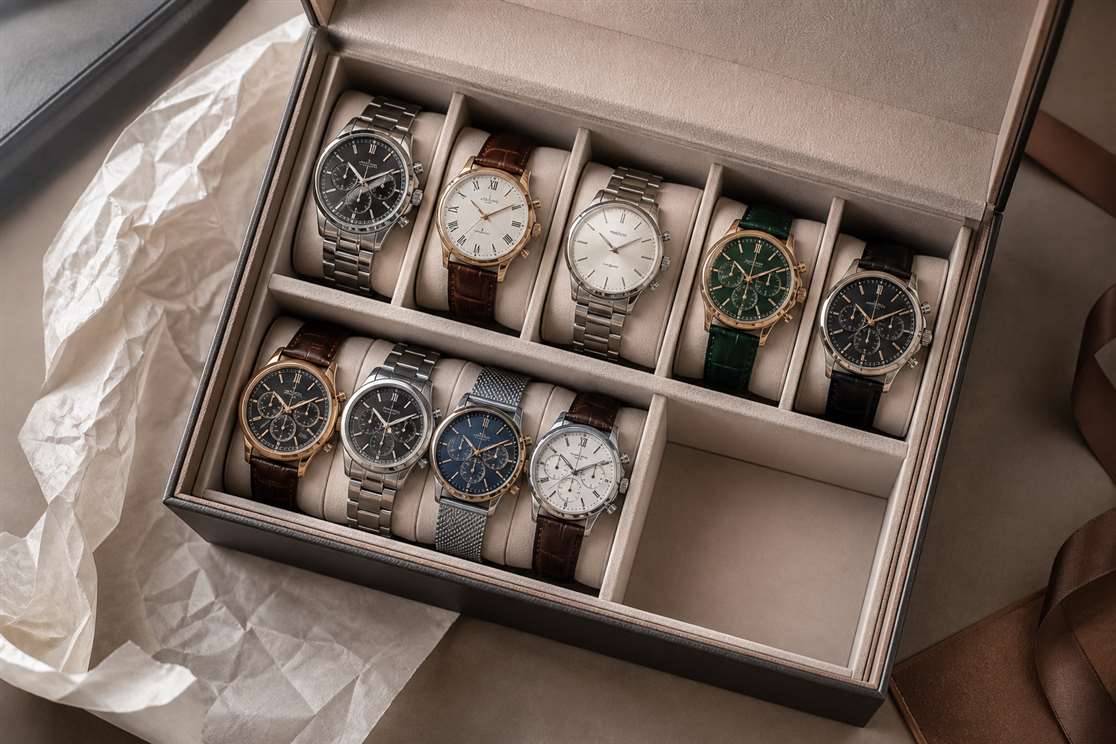
Slot spacing should leave enough room to access one watch without knocking or rubbing against its neighbors. Capacity labels do not guarantee practical access when large cases are placed side by side.
Plan for handling, not just capacity
Consider the largest watches and the fingers needed to lift them out. If a design depends on empty slots to avoid contact, its nominal capacity is not its usable capacity.
- Check case-to-case clearance between neighboring positions.
- Allow access around the most frequently handled watches.
- Use the largest watch as the test case for the tightest slot.
Key Takeaway: A lower slot count with workable spacing can be more useful than a crowded high-capacity layout.
Do Large Watches Need Different Dimensions?
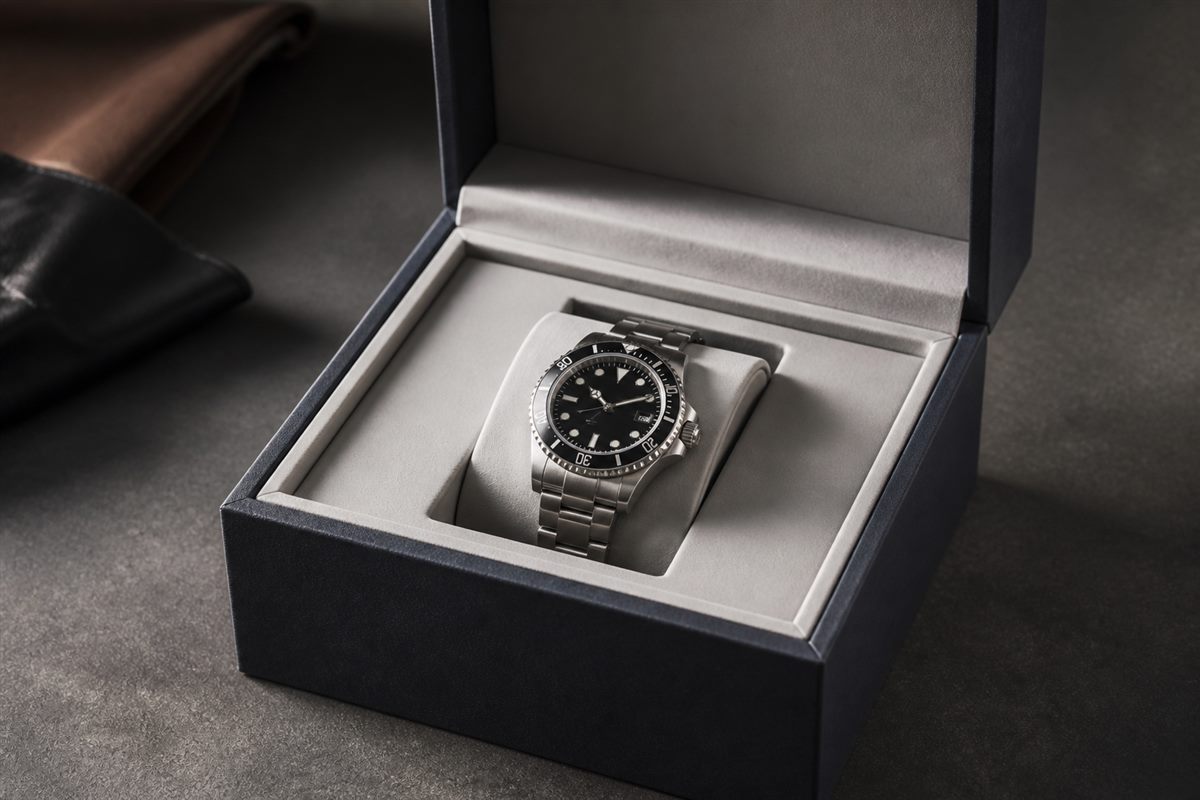
Large watches often need a different layout because their longer lugs, greater height, and thicker bracelets can consume more usable space. The correct response is to measure the individual product rather than rely on a broad size label.
For wider context on packaging decisions for this category, see King Tai?? watch packaging solutions.
Use the most demanding watch as the reference
Designing around the largest or most complex watch helps expose conflicts early. A range that includes both small dress watches and larger sport watches may need more than one insert configuration.
- Compare lug-to-lug length across the range.
- Identify the tallest case and thickest bracelet.
- Confirm whether mixed-size slots are needed.
Key Takeaway: Large-watch compatibility is a product-specific fit question, not a promise that can be made from case diameter alone.
How Do Box Materials Affect Usable Space?
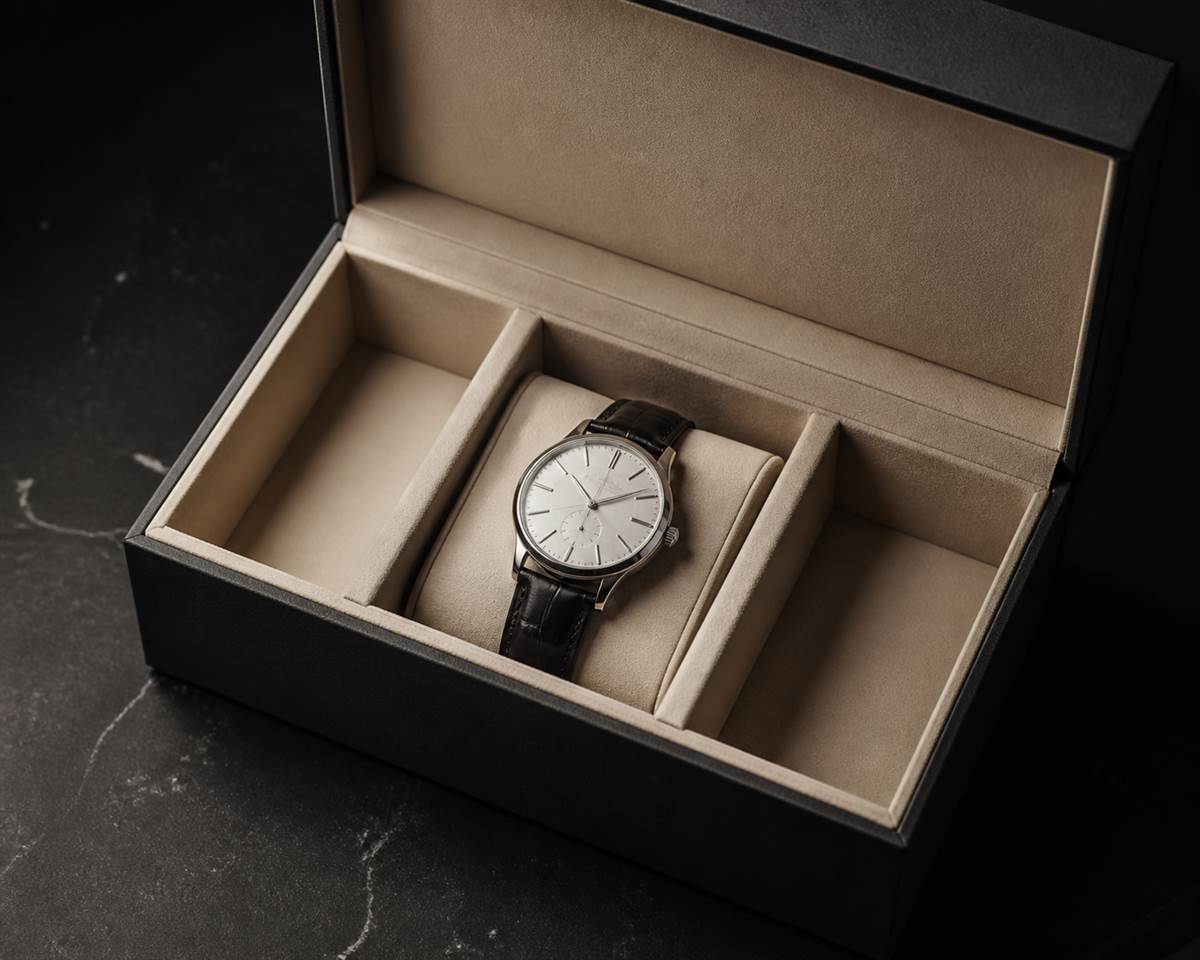
Materials and construction affect usable space because walls, dividers, linings, and wrapped surfaces all take up part of the internal volume. A layout should be reviewed after the intended structure and finish are defined.
Account for the finished interior
Do not base the final dimensions only on an early structural sketch. The finished package must accommodate the selected internal components while keeping a clean, stable presentation.
- Confirm divider and lining thickness in the sample.
- Check how wrapping and assembly affect corner space.
- Review the relationship between the insert and the finished inner walls.
Key Takeaway: Finished interior dimensions matter more than a pre-finish structural estimate.
What Should You Check in a Watch Box Sample?
A sample is the practical point at which you can confirm fit, opening, insert position, and presentation together. It should be checked with the actual watch or a representative item before it becomes the production reference.
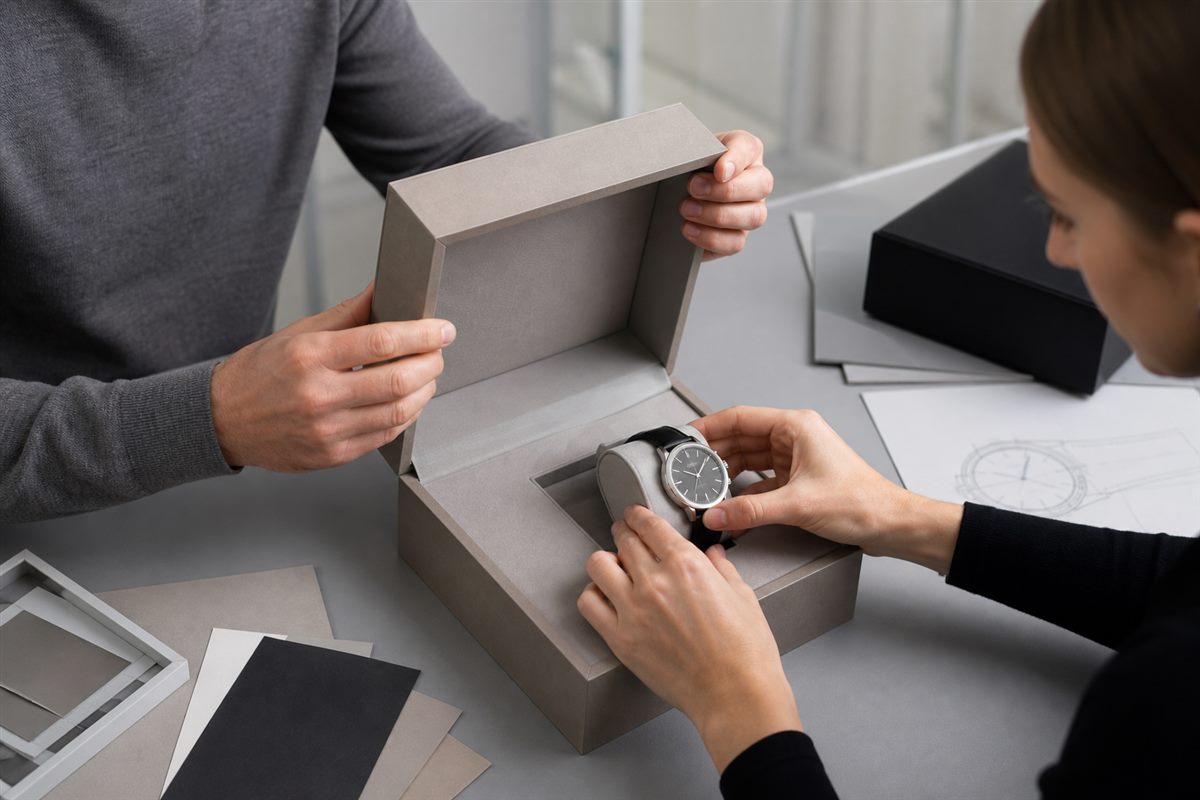
See how a custom watch box project can move from a defined requirement toward a reviewed packaging solution.
Run a fit-focused sample review
Review the sample as it will be used, including loading, closing, removing, and re-storing the watch. Record changes in a clear specification before approval.
- Check fit at every slot, especially corners and end positions.
- Confirm lid clearance and opening function.
- Review insert alignment, product position, and visible finish quality.
Key Takeaway: Sample approval is the best time to resolve dimensional issues before the design becomes a mass-production reference.
What Should You Include in a Watch Box Brief?
A useful brief gives the supplier enough information to assess the dimensional design and identify open questions. It should define what the box must hold, how it should present the watch, and which requirements require confirmation.
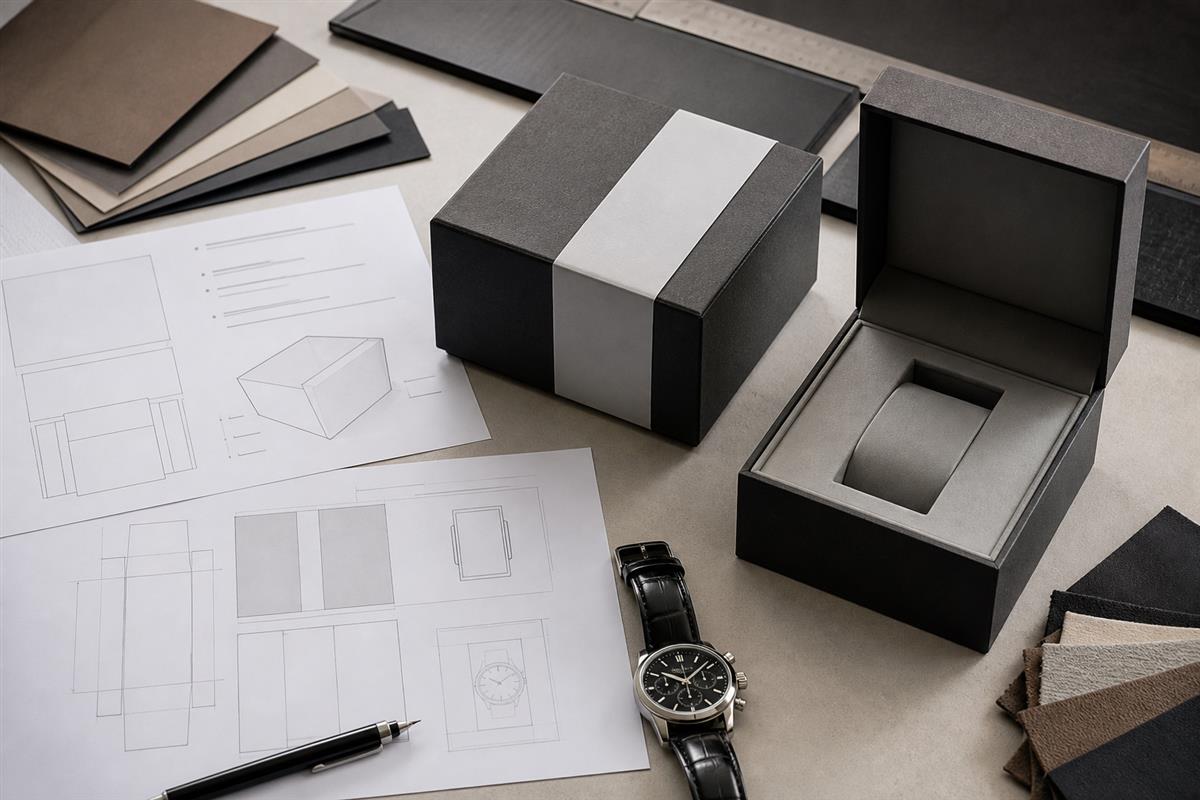
Provide the inputs that affect fit
Clear inputs reduce avoidable assumptions. Final feasibility, MOQ, sampling time, and production lead time depend on the confirmed specification and should be discussed for the individual project.
- Watch measurements, weight where relevant, and a physical sample or drawing
- Required slot count, opening style, insert direction, and artwork
- Material, finishing, packing, quantity, and target delivery requirements
Key Takeaway: A complete brief turns watch box dimensions into a reviewable requirement rather than a late-stage correction.
Conclusion: Good watch box dimensions begin with the real watch and continue through the slot, insert, lid, and finished interior. Prioritize usable space, natural retention, accessible spacing, and a sample review with the intended product. Discuss your custom packaging options with King Tai when you are ready to turn a clear watch-box brief into a specification-led project.
FAQ
What is the most important watch box measurement?
Usable internal space is the most important measurement. It shows whether the completed compartment, insert, and lid can accommodate the watch safely.
Can case diameter tell me whether a watch will fit?
No, not by itself. Lug-to-lug length, height, bracelet profile, and clasp bulk also affect fit.
Should every watch use the same pillow?
Not necessarily. Different straps, bracelets, and clasp configurations can need different support shapes or levels of retention.
Why should I test a watch box sample?
A sample lets you check the complete fit before mass production, including the opening action, lid clearance, insert position, and final appearance.