
A sustainable jewelry box is one that reduces avoidable material impact while still meeting the needs of the product, the customer, and the production process. If you are developing custom jewelry boxes, the practical question is not simply which material sounds green; it is whether the whole pack is appropriate in size, durable enough for its intended use, and described honestly. This guide helps brands turn that question into a clearer packaging brief.
What Does Sustainable Mean for a Jewelry Box?
Sustainable packaging is a design approach, not a single material claim. For a jewelry box, it means examining material choice, pack size, reusable value, component complexity, and what can be credibly confirmed at the end of use.
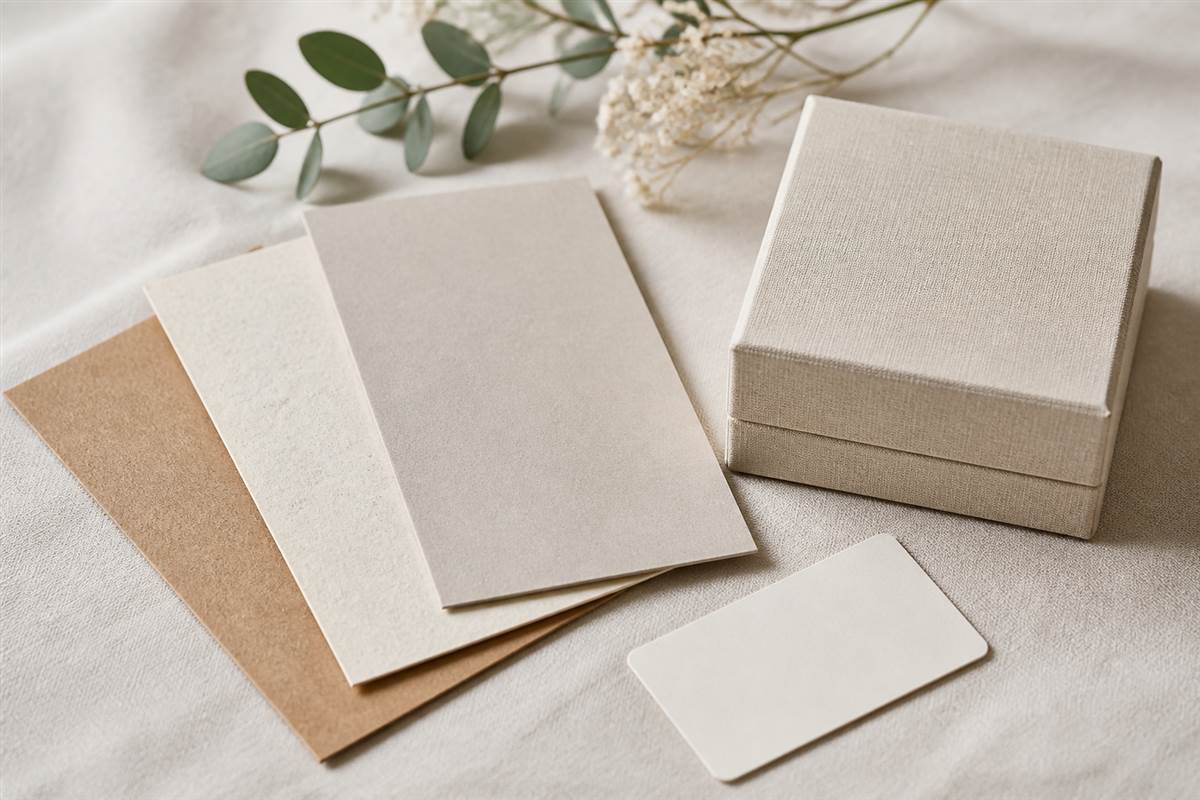
Start with the full packaging job
A jewelry box still has to present, position, and protect the item. A reduced-material concept that fails to fit the jewelry or creates avoidable damage is not a strong outcome.
- What must the box hold and how is it opened?
- Which parts are essential to presentation or positioning?
- Can a component serve more than one purpose?
Key Takeaway: Define sustainability through the complete packaging function, not through one headline material.
Which Material Decisions Matter Most?
Material decisions matter most when they affect the box?? structure, visual finish, and realistic end-of-use options. Paper-based packaging can be a useful direction, but its suitability depends on the actual board, wrap, inks, coatings, adhesives, and project requirements.
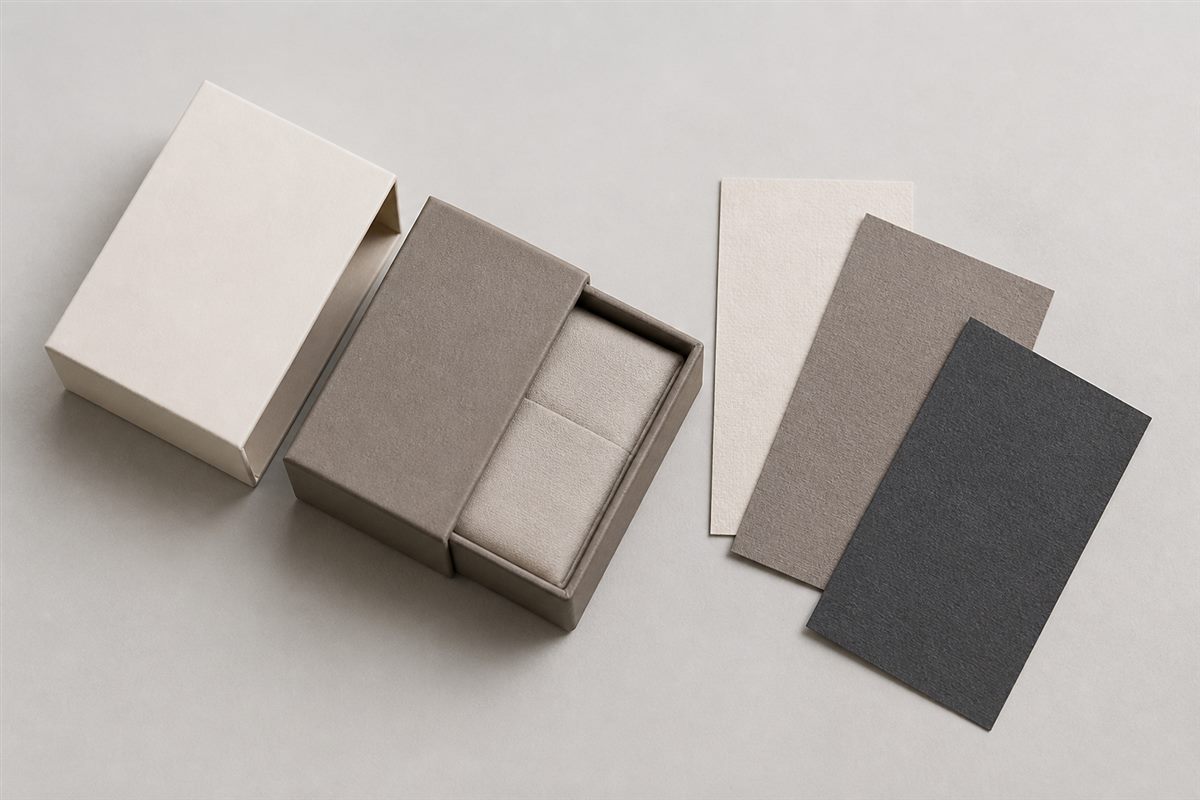
Compare components, not just the exterior
The outer wrap may be paper while the insert, closure, and decorative layers have different material paths. Ask suppliers to identify each component before you describe the finished pack.
Keep evidence separate from preference
A material preference is a design choice. Claims about recycled content, certification, recyclability, compostability, or sourcing need project-specific documentation before they are used in marketing.
Key Takeaway: Choose materials by function and verify each environmental claim at component level.
How Can You Reduce Unnecessary Packaging?
You reduce unnecessary packaging by removing layers that do not improve fit, protection, presentation, or the customer experience. The result should be simpler because it is better resolved, not because essential packaging work has been ignored.
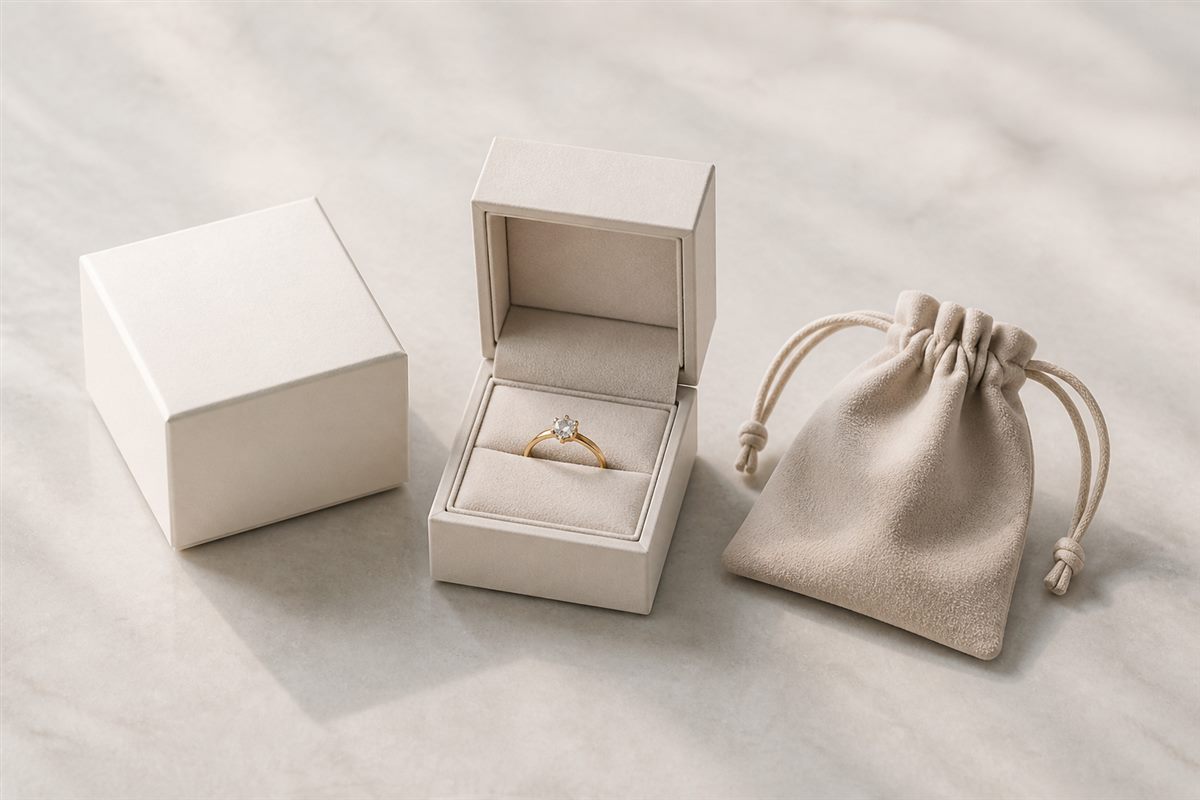
Test every layer?? purpose
A useful way to review a concept is to list the role of the primary box, insert, outer carton, sleeve, tissue, pouch, and any promotional component. If a layer has no clear job, redesign or remove it.
For broader structure and material discussions, see King Tai?? custom packaging solutions.
Use proportion as a design control
Oversized presentation can consume material without adding value. Product dimensions, access, display needs, and packing requirements should shape the final footprint.
Key Takeaway: Remove only what does not earn its place; right-sizing must still support the jewelry and its presentation.
Why Does Reuse Matter?
Reuse matters because a box that remains useful can stay with the customer longer than a single unboxing moment. Jewelry packaging is particularly suited to this idea when its format works as a storage or organization object after purchase.
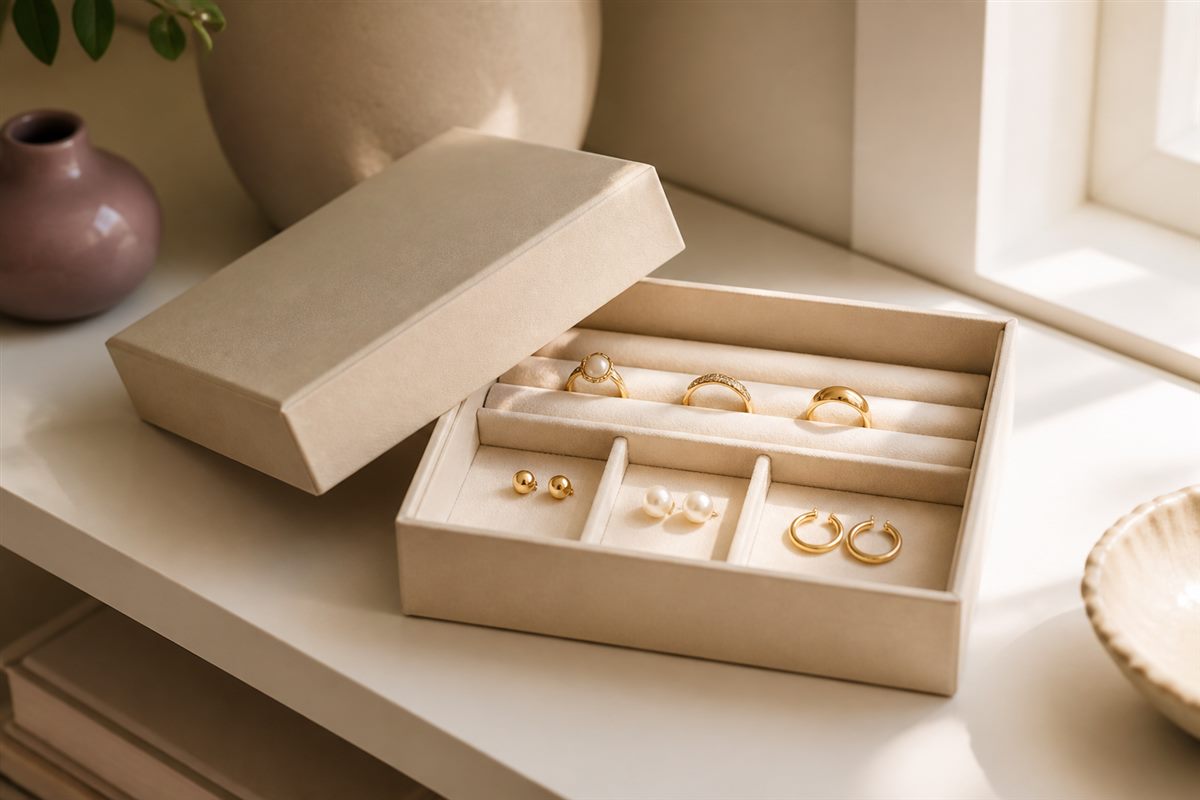
Design for a second use
Consider whether the customer can open, close, store, and revisit the box comfortably. A clean, unbranded interior layout can be more useful than a highly disposable construction.
Avoid promising durability you have not tested
You can design for repeat use without claiming a fixed lifespan. If long-term performance is central to your proposition, define the intended use and confirm the necessary validation with the supplier.
Key Takeaway: Reuse is strongest when it is built into a useful format, not added as a slogan.
How Do Structure and Fit Affect Sustainability?
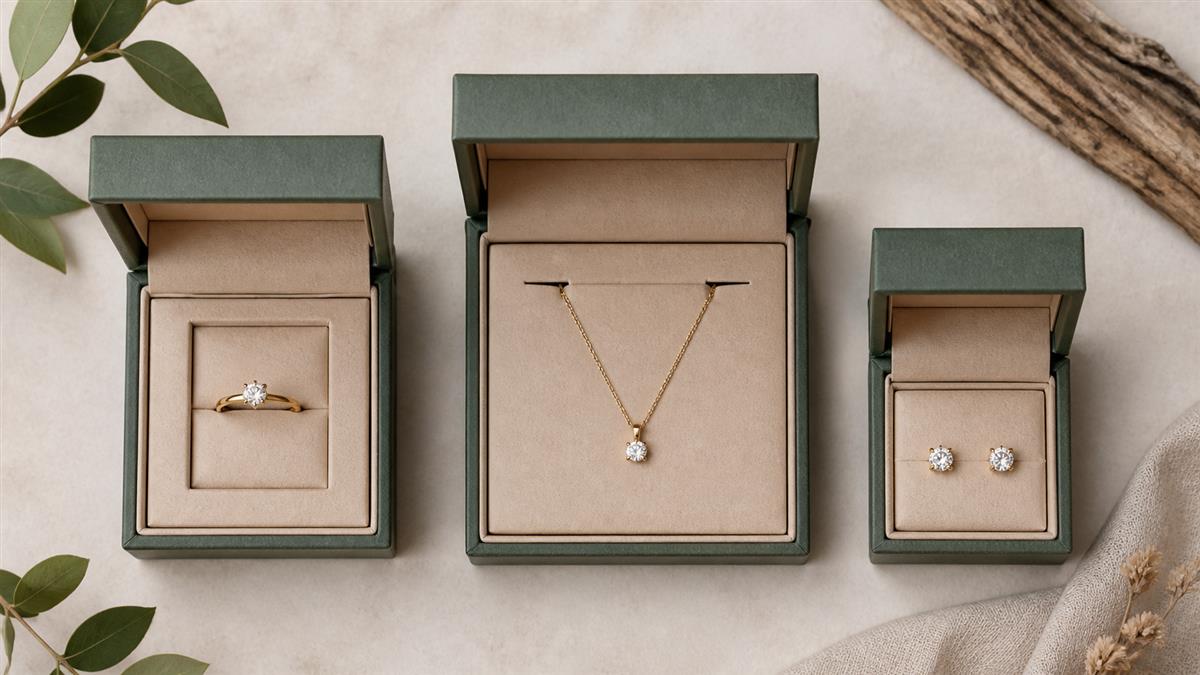
Structure and fit affect sustainability because a well-resolved box uses the space it needs and keeps the jewelry appropriately positioned. Poor fit can lead to excess inserts, inconsistent presentation, or a box that is discarded because it does not work.
Match the format to the item
Ring, necklace, earring, and set packaging have different positioning needs. Confirm product dimensions, removal experience, opening method, and display angle before finalizing the structure.
Review inserts as a system
An insert is not an isolated component: it must work with the product and the internal dimensions of the box. Ask how fit, alignment, and assembly will be checked in the approved sample.
Key Takeaway: Good structural fit can reduce avoidable complexity while protecting the presentation your brand actually needs.
Which Finishes Need a Careful Review?
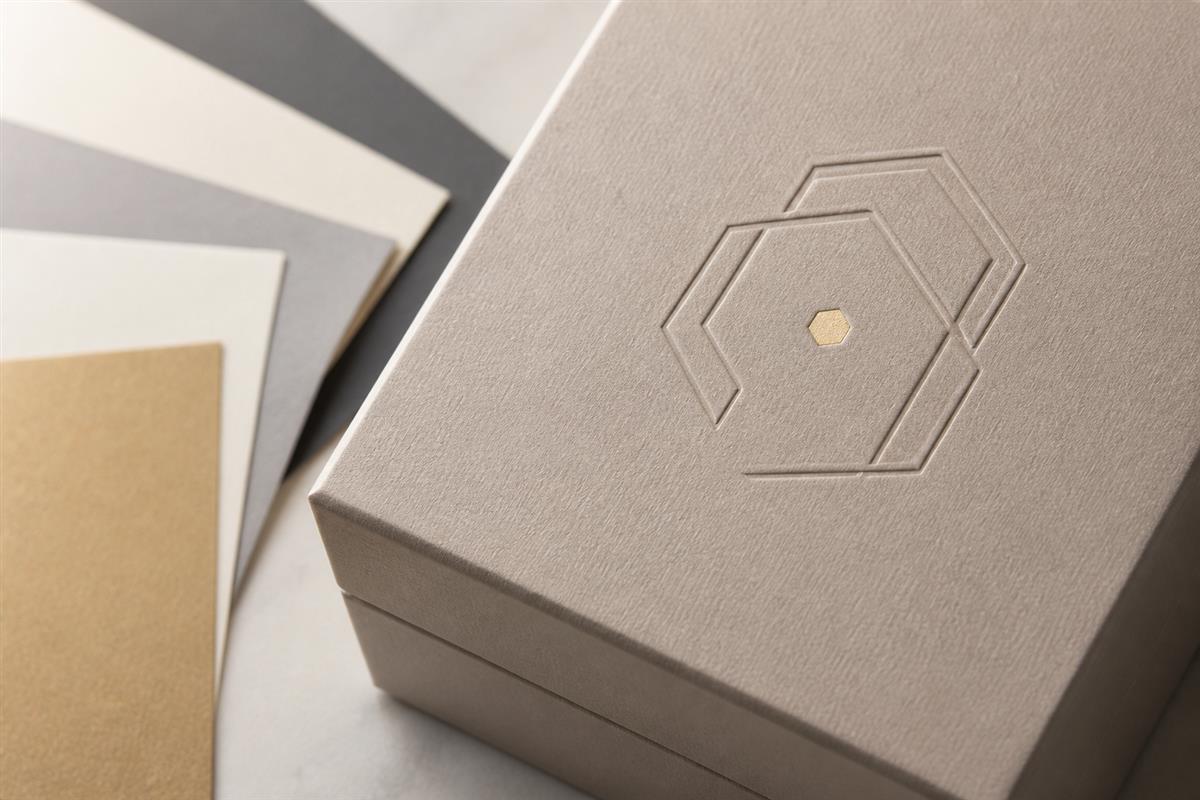
Finishes need a careful review because they affect the look, material mix, and manufacturing complexity of a jewelry box. A premium appearance does not require every available decorative treatment.
Specify the visual hierarchy first
Decide which detail must carry the brand: the paper texture, a printed mark, a foil accent, or an embossed element. This prevents decorative effects from accumulating without a clear purpose.
Confirm production implications
King Tai supports printing, surface finishing, hot stamping, spot UV, and embossing where appropriate to the project. The final combination should be confirmed against the selected structure, material, artwork, and sample.
Key Takeaway: Prioritize the few finish decisions that support your brand, then confirm their material and production implications.
How Should You Evaluate End-of-Life?
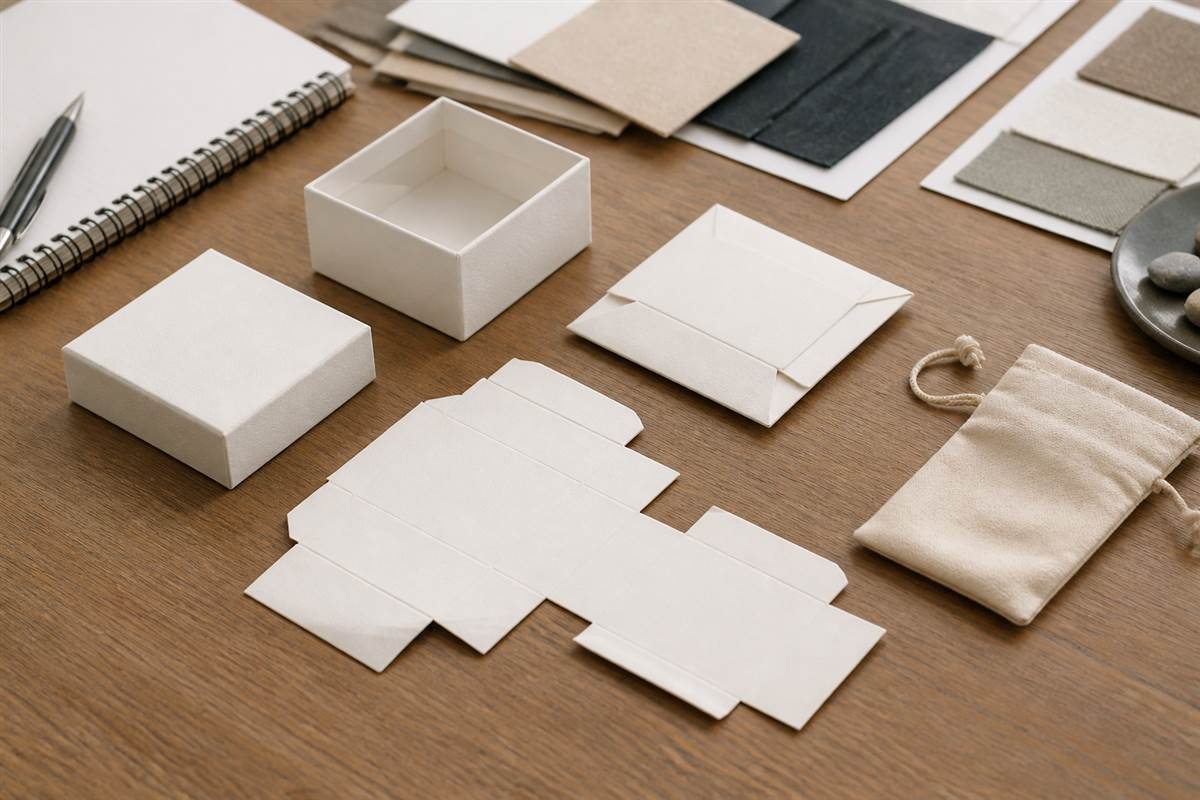
End-of-life should be evaluated component by component and by the disposal systems available to the end user. A packaging design cannot be called recyclable, compostable, or plastic-free without confirming the specific materials and local conditions that make that claim true.
Make separation easier where possible
When a pack combines several components, consider whether users can understand and separate them. Fewer unnecessary mixed materials can make the design easier to explain and evaluate.
Use conditional language until confirmed
For a live project, document the material specification, coatings, inks, adhesives, and insert components. If the evidence is incomplete, mark the claim NEEDS VERIFICATION rather than filling the gap with general assumptions.
Key Takeaway: End-of-life language must reflect the exact pack and the real conditions in which it will be handled.
What Should You Ask a Packaging Supplier?
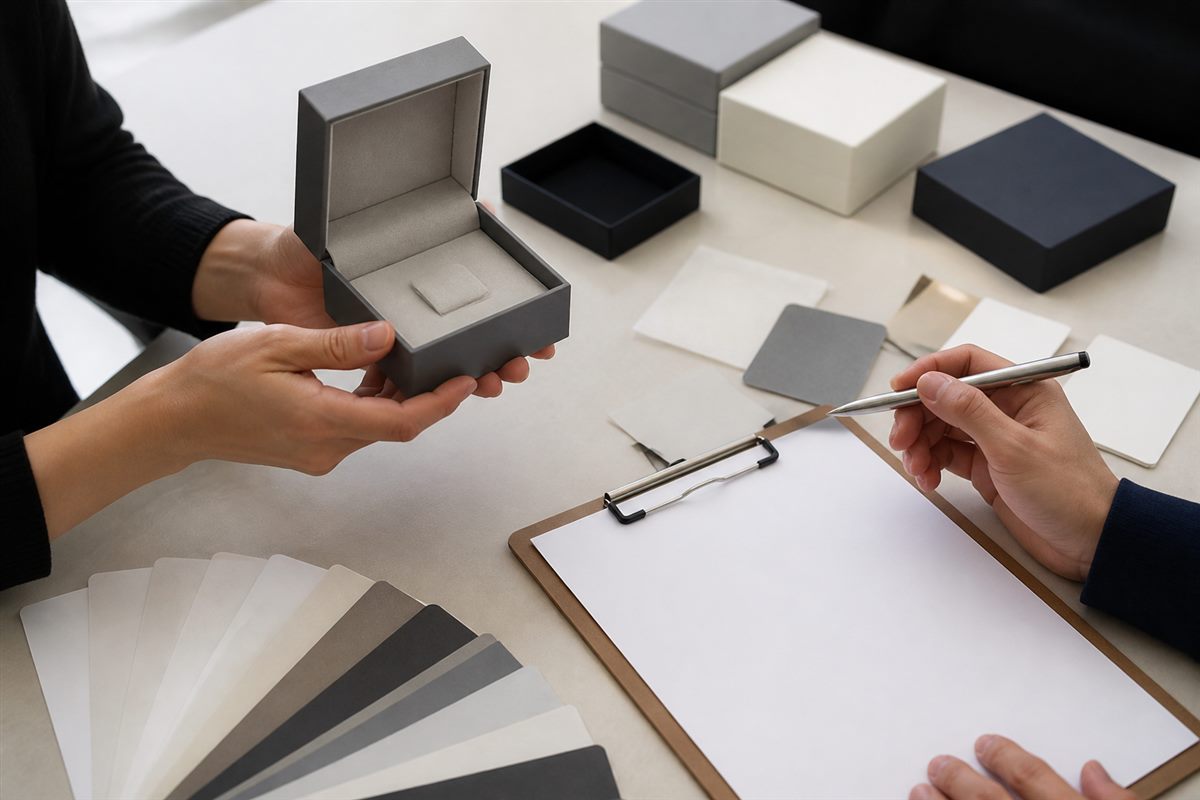
You should ask a supplier questions that connect environmental objectives to a manufacturable specification. Clear answers on materials, structure, finishing, sampling, and evidence help prevent a sustainability brief from becoming a vague request.
Use a decision-focused brief
King Tai can support structural design, paper selection, printing, finishing, assembly, custom inserts, quality inspection, and logistics support as part of a custom project. Its jewelry packaging solutions page is a useful starting point for defining the product category.
- Which components and finishes are proposed?
- What documentation can support a specific material claim?
- How will product fit and approved-sample requirements be reviewed?
- What changes may affect cost, consistency, or production planning?
Key Takeaway: A supplier conversation is useful when it turns goals into specific components, proof requirements, and sample checks.
How Can You Keep Sustainability Claims Accurate?
You keep sustainability claims accurate by saying only what the project evidence supports. This is especially important for certifications, recycled-content percentages, biodegradability, compostability, recyclability, and carbon claims.
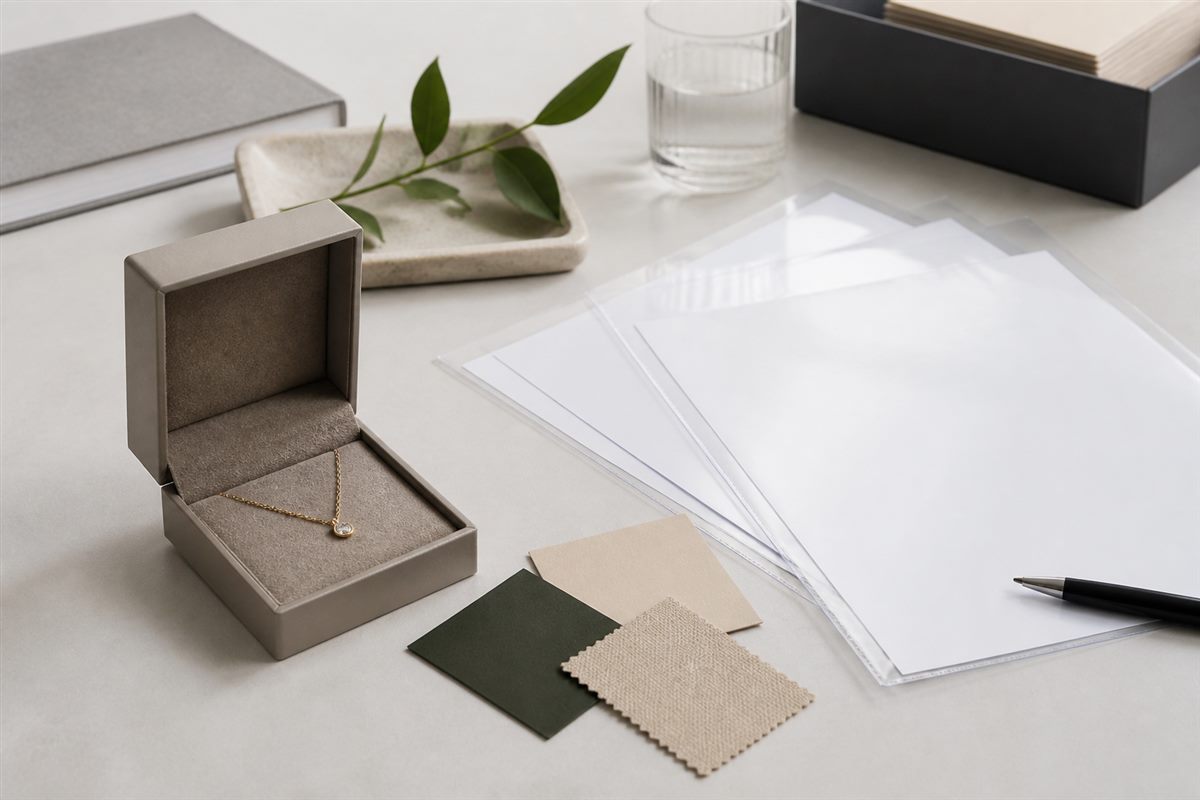
Separate education from product claims
It is appropriate to explain general packaging considerations. It is not appropriate to present a general industry option as a confirmed property of a specific jewelry box.
Build a simple evidence file
Keep supplier documents, material specifications, relevant certificates, and approved artwork together with the project record. Marketing, sales, and purchasing teams should use the same verified wording.
Key Takeaway: Accurate claims protect trust; if proof is missing, use conditional wording or pause the claim.
How Should You Review a Sustainable Jewelry Box Sample?
You should review a sustainable jewelry box sample against the agreed structure, material, finish, fit, and claim evidence before it becomes the reference for production. The approved sample is where sustainability intentions meet real packaging execution.
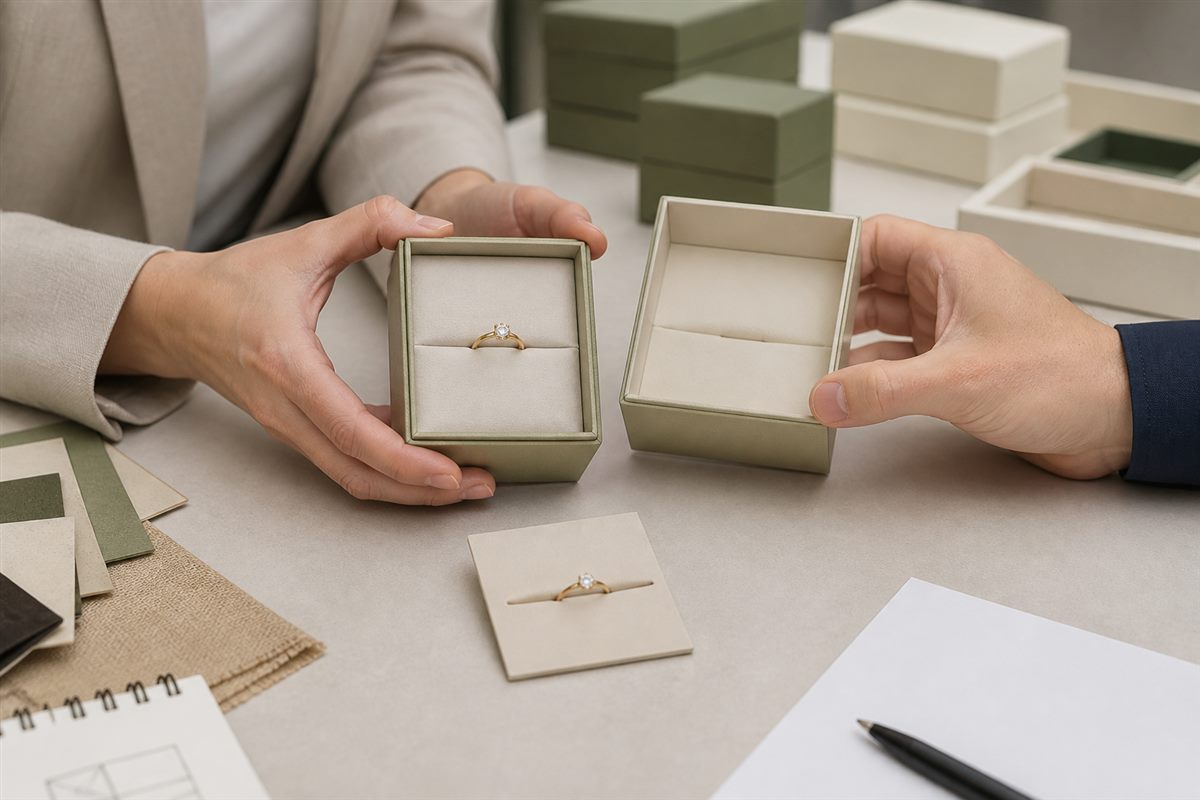
Check the physical and communication details together
Review box formation, opening and closing, product position, surface appearance, print and finish registration, and component list. Also compare every proposed environmental statement with the supporting documents.
Make the approval usable for production
King Tai?? quality approach treats the approved pre-production sample as a reference for mass-production consistency. Record the accepted materials, artwork, structural details, and open questions so the team has one clear basis for follow-through.
Key Takeaway: Approve a sample only when the packaging works physically and the claims attached to it are supportable.
FAQ
Can a jewelry box be called sustainable if it has a premium finish?
Possibly, but the finish must be evaluated alongside the full material system and any claim evidence. Premium appearance alone neither proves nor prevents a more responsible design.
Is paper packaging always recyclable?
No. Coatings, inks, adhesives, inserts, and local collection systems can affect the result. Confirm the exact finished specification before making the claim.
What is the most useful first step for a brand?
Start with a component-level brief: product size, required presentation, intended reuse, materials to investigate, and claims that need proof.
A well-designed sustainable jewelry box balances material choices, product fit, presentation, reuse, and honest communication. For brands, the priority is a pack that can be produced consistently without relying on claims that have not been verified. King Tai is a direct B2B manufacturer that can support custom packaging development from structural design and material selection through finishing, assembly, quality inspection, and logistics support. To discuss a project specification, talk with our team.