
To organize your jewelry box effectively, you must utilize an engineered compartment placement system that separates pieces by structure, wear frequency, and material sensitivity. When you simply toss your precious accessories into a single open drawer, they quickly degenerate into a chaotic, tangled heap of metal. This chronic clutter not only ruins your morning preparation flow but also causes micro-scratches, broken clasps, and severely tarnished gold. Discovering how to use a jewelry box with structured layers provides the premium, systematic solution you need to fully protect your investments and enjoy effortless daily access.
How to Use a Jewelry Box for Maximum Protection?
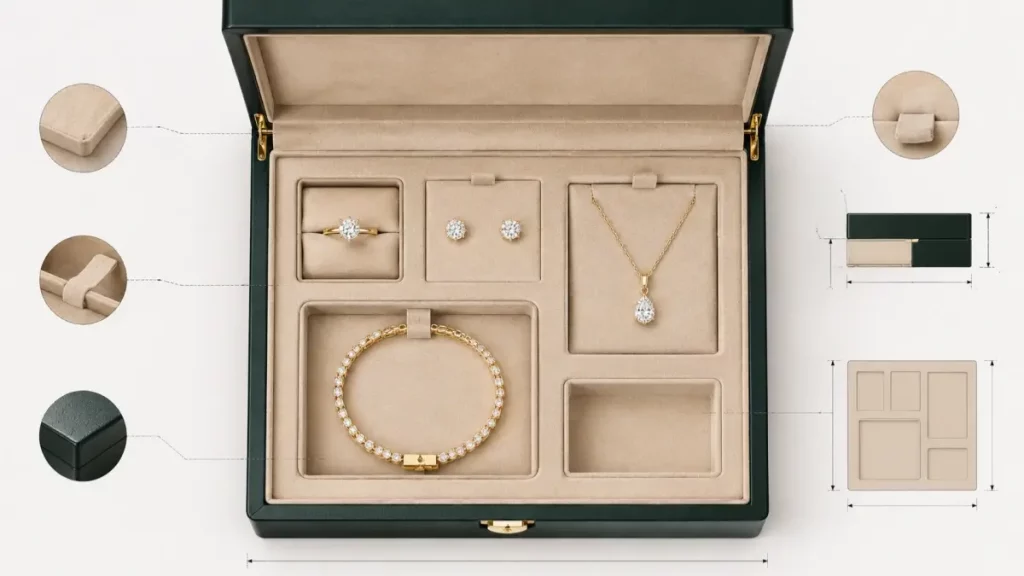
You achieve maximum protection by assigning each unique jewelry classification to an engineered compartment that isolates its metals and gemstones. When exploring how to use a jewelry box correctly, physical barrier protection must remain your absolute top priority. Without rigid partitions, your pieces will slide, collide, and cause irreversible friction damage to delicate diamond prongs. Proper storage ensures that your fine collection remains as pristine as the day you acquired it.
What is the main purpose of a jewelry box?
The primary purpose of your jewelry box is to serve as a secure barrier system that protects your valuables from physical impacts and environmental hazards. When you leave your pieces exposed on an open vanity, they gather abrasive dust and suffer from constant light exposure. Think about it: a dedicated storage unit keeps your precious assets shielded in a dark, climate-controlled environment. This simple separation ensures that external factors never degrade the structural integrity of your collection.
Why is proper compartment engineering important?
Proper compartment engineering ensures that different metal karats and fragile gemstones never rub against one another. Velvet linings and rigid partitions cushion your pieces while maintaining organizational structure.
Here are the top three structural features you must prioritize:
- Deeply cushioned ring rolls that hold bands completely upright.
- Individual fabric-covered compartments for earring studs.
- Sturdy vertical hook sections that suspend long chains.
| Compartment Type | Ideal Lining Material | Intended Jewelry Class | Primary Protective Benefit | |
|---|---|---|---|---|
| Padded Ring Roll | Plush, high-pile micro-velvet | Sterling silver & karat gold bands | Eliminates band spinning and friction | |
| Grid Divider Tray | Medium-nap suede or felt | Delicate studs and gemstone drops | Prevents pairs from rubbing or chipping | |
| Vertical Hook Panel | Tight-woven satin backing | Fine link chains & heavy pendants | Direct gravity pull prevents tight knotting |
Selecting the correct lining texture directly dictates how well your metal surfaces are preserved over years of storage.
Key Takeaway: Investing in customized, engineered compartments shields your jewelry from micro-abrasions and eliminates the risk of physical impact damage during daily handling.
How to Use a Jewelry Box to Prevent Tarnish?
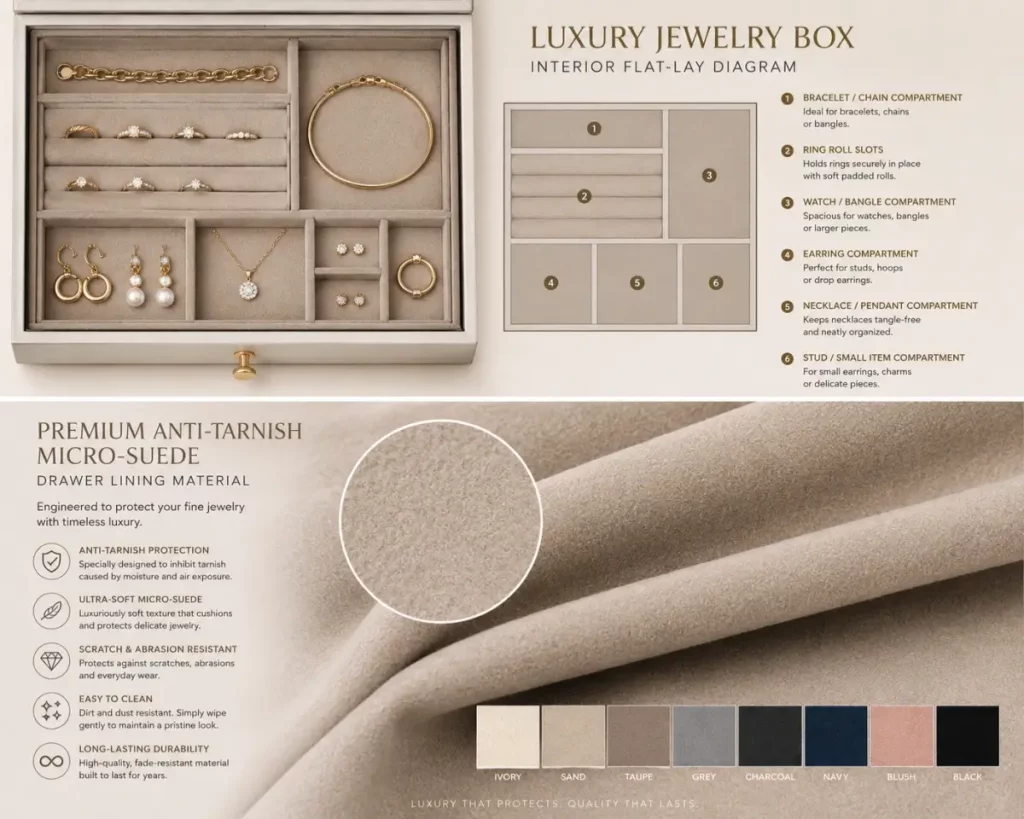
You prevent tarnish by keeping your silver and gold pieces in airtight, fabric-lined environments that actively absorb airborne chemical pollutants. Learning how to use a jewelry box to control oxidation is critical for maintaining the brilliant luster of raw metals. Ambient humidity and sulfur gases react with silver, causing it to darken and corrode rapidly. Utilizing protective lining materials stops this destructive chemical reaction before it starts.
Why do metal pieces oxidize so quickly?
Your jewelry tarnishes when susceptible alloys react directly with oxygen and moisture in the atmosphere. Here is the thing: sterling silver is highly vulnerable to moisture, leading to a dull black sulfide film. If you store your precious metals in a humid bathroom, you accelerate this chemical degradation. By shutting your box securely, you minimize air circulation and protect your pieces from environmental damage.
Can anti-tarnish linings stop corrosion?
Specially treated fabrics contain micro-particles that actively absorb atmospheric sulfur before it can touch your jewelry. These protective materials act as an invisible shield for your precious collection.
To maximize the lifespan of your sterling silver, follow these simple guidelines:
- Place activated tarnish strips in every closed drawer.
- Avoid mixing tarnished pieces with clean metal items.
- Keep silica gel dehumidifying packs in humid regions.
| Environmental Threat | Primary Damage Risk | Preventative Material Tool | Replacement Cycle | |
|---|---|---|---|---|
| Excessive Humidity | Rapid sterling silver tarnishing | Silica gel dehumidifying packs | Replace every 3 to 6 months | |
| Atmospheric Sulfur | Black silver sulfide crust | Reactive carbon tarnish strips | Replace every 12 months | |
| Acidic Wood Gases | Deep metal pit corrosion | Inert plush micro-velvet lining | Permanent structural barrier |
A proactive defensive barrier remains the most cost-effective method to avoid frequent and abrasive polishing routines.
Key Takeaway: Storing your metals inside closed, treated fabric drawers eliminates chemical oxidation and maintains their original showroom polish indefinitely.
How to Use a Jewelry Box for Daily Essentials?
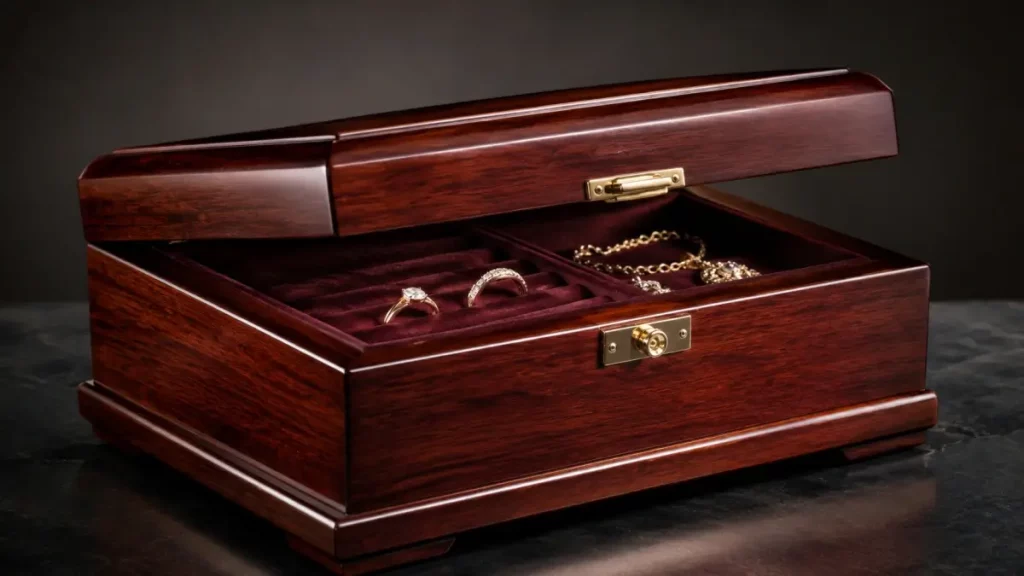
You organize daily essentials by placing your most frequently worn accessories in the highly visible, easily accessible top tier of your box. Master exactly how to use a jewelry box layout to ensure your morning routine flows with absolute ease. Placing high-rotation items in deep, lower drawers forces you to search blindly through cluttered spaces. A dedicated top tray keeps your primary bands and simple studs ready to grab at a moment’s notice.
How do you build an efficient daily tray?
Creating a functional top tray requires you to categorize your items based on their wearing frequency. Look: when you place your wedding bands, daily diamond studs, and simple gold chains in the center, you eliminate morning decision fatigue. This high-priority zone should only house the core twenty percent of your collection. Keeping this area sparse prevents items from overlapping and scratching during quick retrievals.
Where should you store seasonal pieces?
Seasonal statements and heavy heirloom pieces belong in the lower, deeper drawers where they remain protected from daily dust. You do not need to look at these specialized items every single morning.
Organize your secondary layers with these strategic steps:
- Reserve the bottom compartment for heavy gemstone necklaces.
- Use deep square wells for wide holiday bangles.
- Group winter and summer statement accessories separately.
| Accessibility Zone | Placement Priority | Frequency of Use | Example Jewelry Class | |
|---|---|---|---|---|
| Tier 1: Top Tray | High visual path, center | Daily (3 – 5 times weekly) | Wedding bands, diamond studs, simple chains | |
| Tier 2: Mid Drawers | Pull-out drawers, segmented | Weekly (1 – 2 times weekly) | Statement earrings, silver cuffs, birthstone rings | |
| Tier 3: Lower Wells | Deep drawers, solid boxes | Monthly (Special occasions) | Heirloom pearl necklaces, heavy diamonds |
A disciplined three-tier accessibility hierarchy dramatically speeds up your dressing routine while keeping rare pieces safe.
Key Takeaway: Positioning your high-frequency daily essentials in a dedicated top-tier tray reduces morning clutter and protects your luxury investments from unnecessary handling.
How to Use a Jewelry Box to Organize Necklaces?
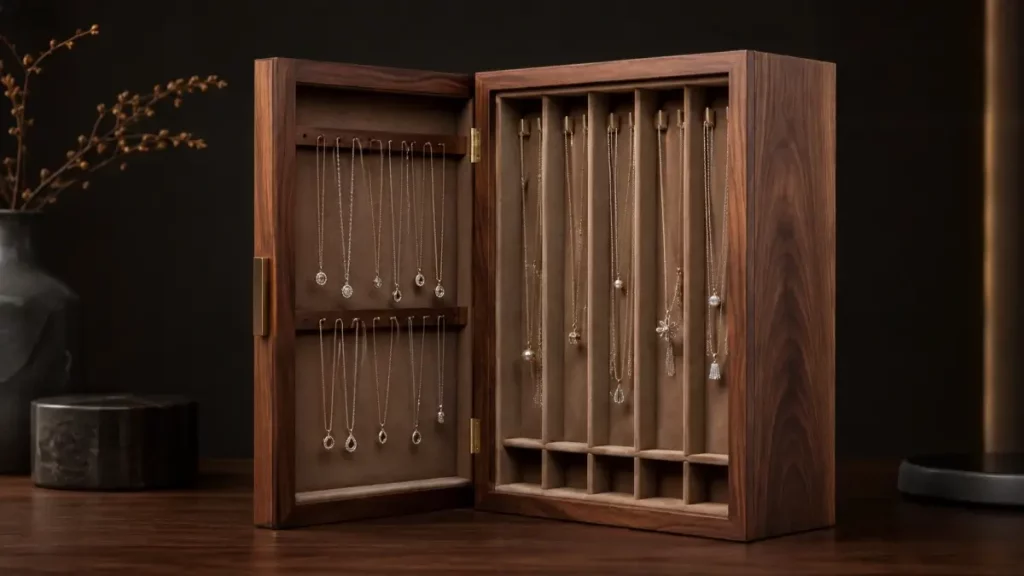
You organize necklaces by hanging them vertically on dedicated hooks to let gravity naturally prevent the chains from tangling. Many collectors struggle with metal knots simply because they do not know how to use a jewelry box vertical panel correctly. Laying fine chains flat in open drawers is a recipe for instant knotting and micro-movements that damage delicate links. Suspending your pendants ensures they stay perfectly straight and immediately accessible.
Why is vertical hanging superior?
Vertical suspension utilizes gravity to keep independent chain links separated, completely eliminating the friction that causes tight, complex knots. Think about it: a dangling chain has zero opportunity to wrap around neighboring pieces. When you mount your fine necklaces on independent brass pegs, you preserve the structural alignment of the metal. This method is especially vital for fragile cable and rope chains.
How do you protect delicate fine chains?
Delicate fine chains require separate satin-lined pockets at the bottom of the hanging wall to secure dangling pendants. But that is not all.
To ensure complete protection, adopt these critical storage habits:
- Always fasten the necklace clasp before hanging it.
- Place heavy, large pendants in individual soft pouches.
- Keep only one single chain on each vertical hook.
| Chain Type / Sizing | Recommended Hanging Method | Tension Level | Backing Surface Material | |
|---|---|---|---|---|
| Ultra-Fine Cable / Rope | Hang vertically on rubberized pegs | Free-hanging | Soft satin drop-cloth back panel | |
| Heavy Pendant Necklaces | Secure on double-hook bars | Low-tension taut | Microfiber panel with bottom pocket | |
| Rigid Collar Chokers | Flat storage in round wells | Zero tension | Pre-curved velvet storage mold |
Hanging necklaces independently ensures that delicate chain links remain under optimal, stress-free tension to prevent stretching.
Key Takeaway: Suspending your necklaces vertically with clasps securely fastened entirely prevents self-knotting and eliminates the risk of chain breakage during retrieval.
How to Use a Jewelry Box for Statement Watches?
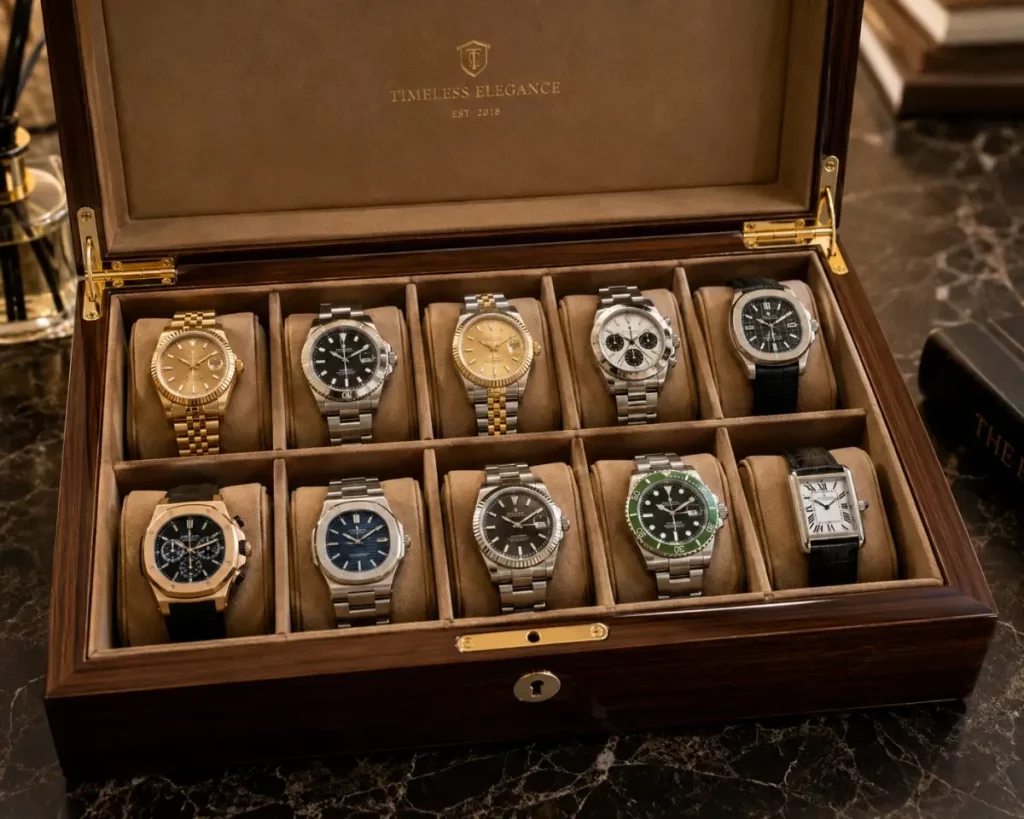
You store statement watches by strapping them around plush, form-fitting pillows that maintain the natural curvature of the band and prevent strap creasing. Understanding how to use a jewelry box specifically for luxury horology protects delicate automatic movements from physical shocks. Throwing expensive timepieces into flat drawers causes metal-on-metal friction and scratches the sapphire crystal glass. Padded watch wells ensure your prized watches remain secure and visually impressive.
Why do watch pillows prevent strap damage?
Watch pillows simulate the shape of a human wrist, preventing the leather or metal links from folding at sharp, unnatural angles. In other words: constant compression on a flat surface will warp and crack premium leather bands over time. By keeping the strap securely wrapped around a plush cushion, you maintain its structural integrity. This display method also presents your luxury watches at a beautiful, readable angle.
Where should you place heavy watch metal bands?
Heavy steel and gold watch bands belong in deep, individual slots lined with high-density foam or soft velvet cushions. This custom layout ensures they cannot collide.
Maintain your timepiece collection perfectly with these steps:
- Keep crowns facing upward to avoid setting damage.
- Use individual dividers to isolate metal bracelets.
- Store watches far away from household magnetic fields.
| Compartment Feature | Size / Depth Spec | Recommended Item Type | Maximum Recommended Capacity | |
|---|---|---|---|---|
| Shallow Slotted Tray | 1.5 cm depth | Dainty rings, eternity bands | 1 item per individual slot | |
| Deep Square Well | 4.0 cm depth | Chunky cocktail rings, bangles | 2 coordinated items maximum | |
| Cylindrical Roll | 6.0 cm diameter | Rigid watch bracelets, link cuffs | 1 cuff or watch per roll |
Maintaining watches on dedicated pillows prevents strap deformation and safeguards watch crowns from lateral impacts.
Key Takeaway: Wrapping your statement timepieces around plush display pillows preserves band materials and keeps watch crystals completely free from scratches.
How to Use a Jewelry Box When Traveling?
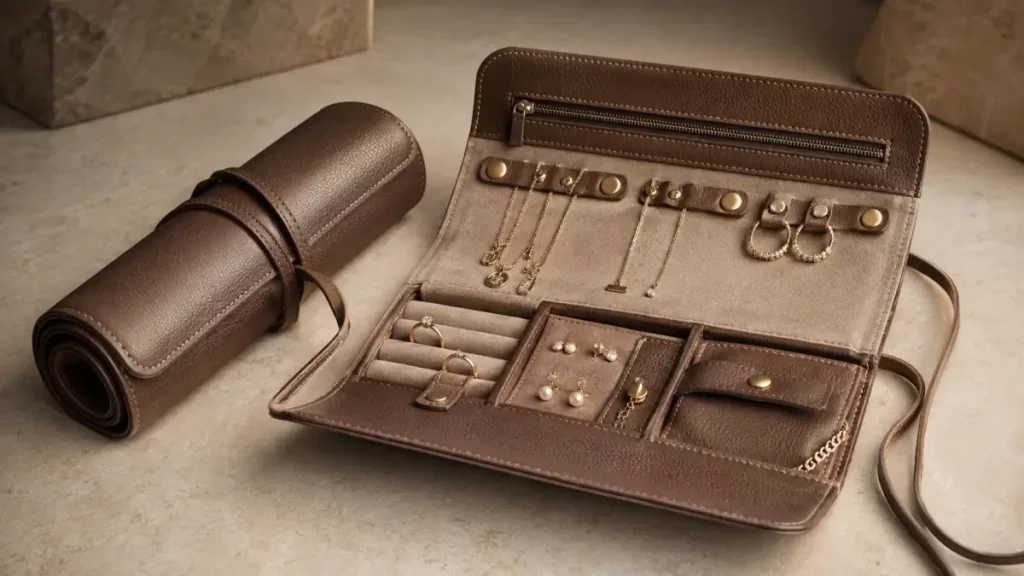
You use a jewelry box when traveling by opting for a compact, highly secure leather roll or hard-shell mini case equipped with tight compression straps. Learning how to use a jewelry box on the go is essential to protect your fine pieces from the constant vibration of transit. Standard household boxes are too bulky and allow items to bounce around, leading to loose stones and tangled chains. A specialized travel roll holds each accessory tightly in place within its padded pocket.
What are the benefits of travel jewelry rolls?
Travel jewelry rolls maximize limited luggage space while providing individual zippered pouches that isolate your delicate gold and silver accessories. Look: when your suitcase is subjected to turbulent flights, tight leather pockets absorb the impact. This protective compression ensures that rings do not spin and earring posts do not bend. You can travel with peace of mind knowing your fine collection is secure.
How do you pack necklaces securely on the go?
Secure your traveling necklaces by utilizing dedicated snaps on leather straps and slipping the remaining chain into elasticized bottom pouches. This keeps them completely immobilized.
Follow these secure travel packing principles:
- Never pack multiple necklaces on a single travel snap.
- Wrap fragile gemstone studs in soft microfiber cloth.
- Place the travel container in your personal carry-on bag.
| Travel Organizer Feature | Optimal Travel Capacity | Recommended Jewelry Class | Key Safety Benefit | |
|---|---|---|---|---|
| Snap Strap | 3-4 delicate chains | Fine gold necklaces | Prevents movement and tangling | |
| Padded Ring Bar | 5-6 classic bands | Engagement & wedding rings | Holds bands tightly to avoid spinning | |
| Zippered Mesh Pocket | 2-3 statement earrings | Large hoops or drops | Keeps pairs together without friction |
Securing your accessories inside a compressed travel roll prevents structural damage caused by transit vibrations.
Key Takeaway: Utilizing a compact, padded travel case ensures your high-value pieces remain completely secure, organized, and damage-free throughout your journey.
How to Use a Jewelry Box for Fine Gold Pieces?
You care for fine gold pieces by storing them inside plush, velvet-lined slots that protect the soft metal alloy from getting scratched by harder materials. Knowing how to use a jewelry box correctly for high-karat gold is vital since pure gold is highly malleable. Mixing twenty-four-karat bands with hard gemstones like diamonds will rapidly wear down your gold surfaces. Segregating your gold collection preserves its deep, rich luster and structural detailing.
Why is gold separation critical?
High-karat gold possesses an incredibly soft surface structure that is highly susceptible to denting and deep micro-abrasions from harder metals. Here is the thing: even eighteen-karat gold can be scratched easily by sterling silver or platinum. If you pack all your metal bands into a single open well, their finishes will quickly degrade. Isolating each gold piece inside its own velvet slot is the only way to retain its flawless polish.
Can paper jewelry packaging protect gold?
Premium paper packaging boxes with soft, custom-fit foam inserts are highly effective for storing delicate heirloom gold jewelry. They provide an airtight and non-reactive environment.
Protect your fine gold jewelry by implementing these habits:
- Store solid gold pieces away from plated costume items.
- Wrap valuable gold necklaces in individual satin pouches.
- Ensure velvet-lined inserts have zero chemical adhesive residue.
| Metal Category | Ideal Storage Partner | Risk Factor | Recommended Isolation Step | |
|---|---|---|---|---|
| Platinum / 18k Gold | Keep separate or with same karat | Platinum scratches gold | Place in alternating soft-ring rolls | |
| 925 Sterling Silver | Keep in airtight, lined drawers | Accelerated oxidation | Store alongside activated tarnish strips | |
| Plated Costume Metal | Keep isolated in velvet pouches | Acidic transfer erodes plating | Use separate sealable fabric drawers |
Separating gold pieces by karat value ensures that softer metals are never abraded by harder alloy formulations.
Key Takeaway: Housing fine gold pieces in individual plush velvet compartments prevents surface scratching and maintains their deep metallic glow over generations.
How to Use a Jewelry Box to Sort Gemstone Rings?
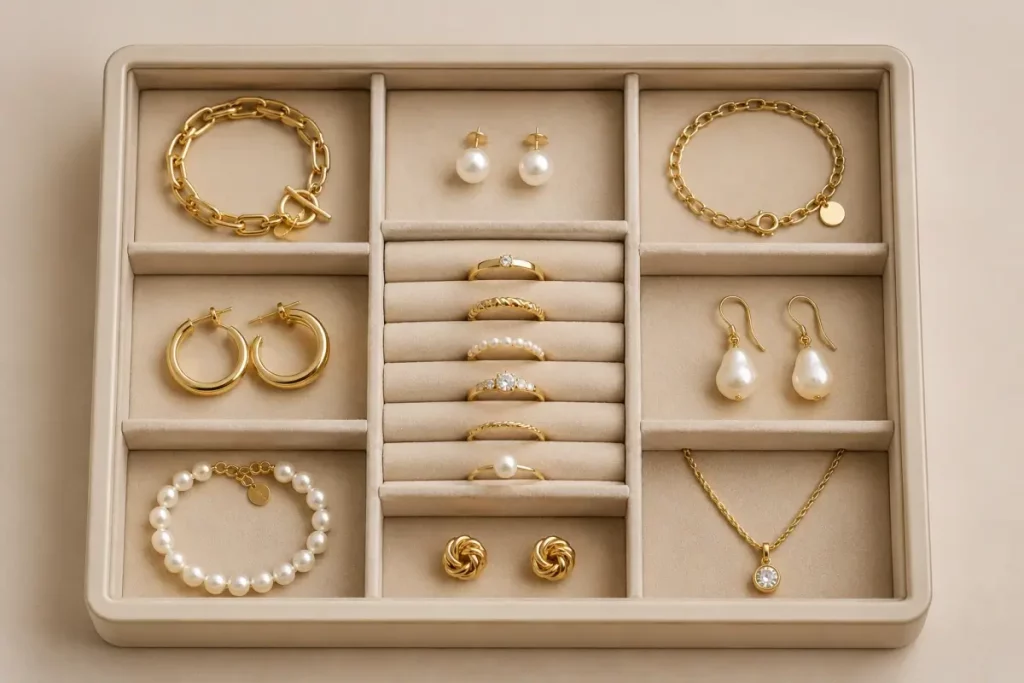
You sort gemstone rings by inserting them individually into padded ring rolls that isolate the mineral settings and prevent stones from scratching adjacent metal bands. Many enthusiasts do not know how to use a jewelry box cushion matrix to secure their precious stones safely. Harder minerals like diamonds and sapphires will easily chip softer stones like pearls, opals, and emeralds if stored together. Systematic ring roll organization keeps every gem beautifully visible and perfectly isolated.
Why do gemstone hardness scales matter?
Different gemstones possess wildly different Mohs hardness ratings, meaning a hard diamond will permanently scratch a soft pearl upon contact. Think about it: keeping your bridal set nestled directly against an emerald cocktail ring is an expensive mistake. The sharp facets of a brilliant-cut gem act like small saws against softer surfaces. Padded rolls keep each ring facing upward and safely separated from its neighbors.
How do you organize your ring rolls?
Organize your ring cushion matrix by metal tone and gemstone category to create a stunning, color-coordinated visual gallery. But that is not all.
To maximize the life of your gemstone settings, apply these rules:
- Place high-prong solitaire rings in alternating, spaced slots.
- Store organic gems like pearls in soft microfiber environments.
- Keep eternity bands isolated to prevent side-stone loss.
| Gemstone Type | Mohs Hardness Rating | Recommended Storage Material | Placement Priority | |
|---|---|---|---|---|
| Diamond | 10 (Extremely Hard) | Individual padded ring slot | Isolated from all other gemstones | |
| Emerald / Aquamarine | 7.5 – 8 (Brittle) | Soft plush velvet channel | Protected from lateral impact pressure | |
| Natural Pearl | 2.5 (Extremely Soft) | Silk or fine microfiber lining | Separated completely from metal bands |
Separating gemstones based on mineral hardness eliminates the risk of accidental facet chipping and metal abrasions.
Key Takeaway: Slotting gemstone rings individually into cushioned rolls ensures harder stones never contact softer materials, preserving facet integrity.
How to Use a Jewelry Box to Maintain Valuables?
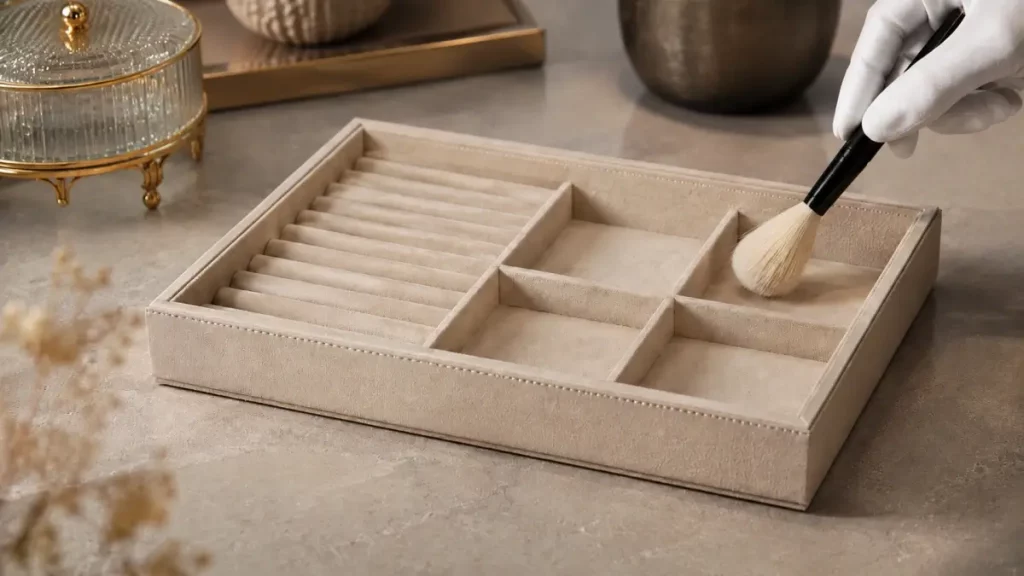
You maintain your valuables by performing a monthly dry cleaning sweep of the compartments and inspecting every clasp, prong, and metal link. Learning how to use a jewelry box as a proactive maintenance hub is crucial for the long-term preservation of your collection. Microscopic dust particles act as harsh abrasives that slowly dull metal finishes and scratch delicate stones. Regular maintenance routines keep your organizer clean and your accessories structurally sound.
How do you clean plush velvet inserts?
Cleaning velvet drawer linings requires you to gently lift dust and lint using a soft-bristle brush or a dedicated miniature lint roller. Look: when you neglect the interior of your jewelry compartments, abrasive particles accumulate in the corners. This dust acts as sandpaper against highly polished silver and gold bands. A quick, gentle monthly sweep ensures a perfectly clean environment for your valuables.
How do you inspect your collection?
Your monthly cleaning session is the perfect opportunity to inspect every precious piece under bright, direct light for signs of structural wear. This preventive step catches damage early.
Maintain your jewelry assets flawlessly with these quick steps:
- Check ring prongs to ensure gemstones are completely secure.
- Test all lobster and spring clasps for proper tension.
- Wipe down metal bands with a dry microfiber cloth before storing.
| Action Step | Suggested Time Investment | Tool / Material Needed | Projected Protective Benefit | |
|---|---|---|---|---|
| Categorize Rings & Studs | 10 Minutes | Slotted ring inserts, foam grids | Eliminates immediate friction scratches | |
| Hang and Fasten Necklaces | 15 Minutes | Wall/Door hanging hooks | Prevents structural metal link tangles | |
| Clean Box Velvet Lining | 5 Minutes | Soft micro-lint roller, dry brush | Removes abrasive microscopic dust |
A routine monthly inspection catches loose stones and worn prongs before they lead to catastrophic jewelry loss.
Key Takeaway: Performing quick, systematic monthly maintenance keeping velvet linings clean ensures your valuable collection remains beautifully polished and structurally secure.
How to Use a Jewelry Box for Luxury Collections?
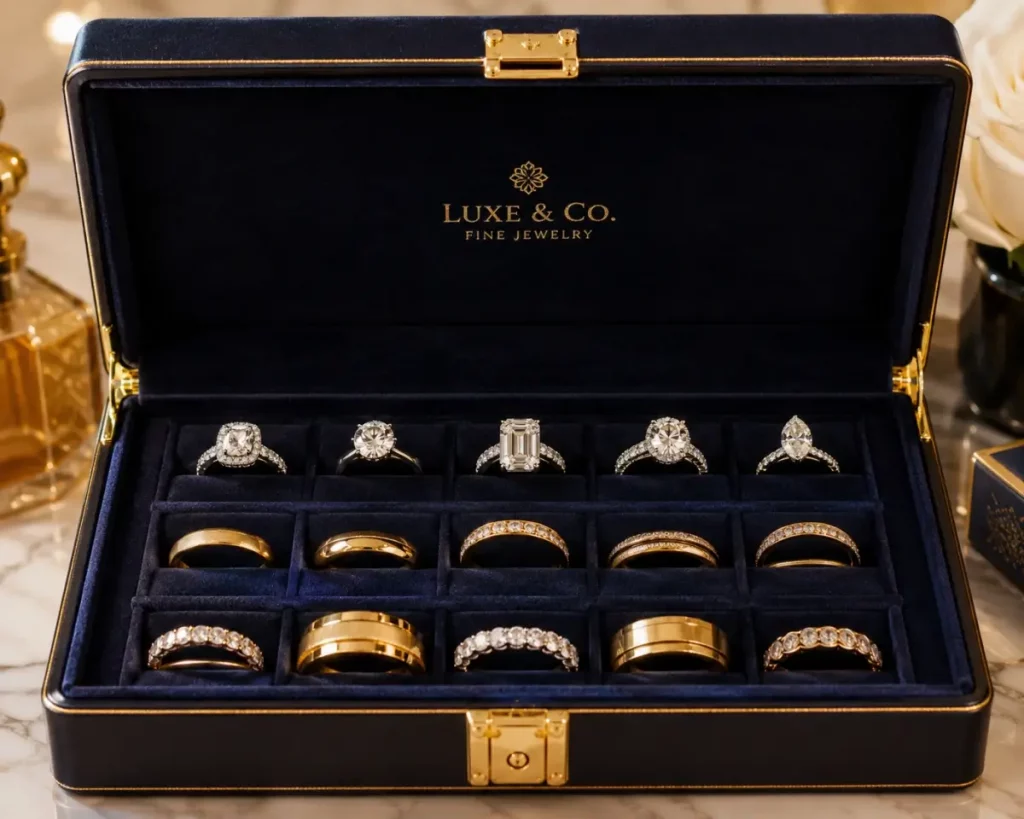
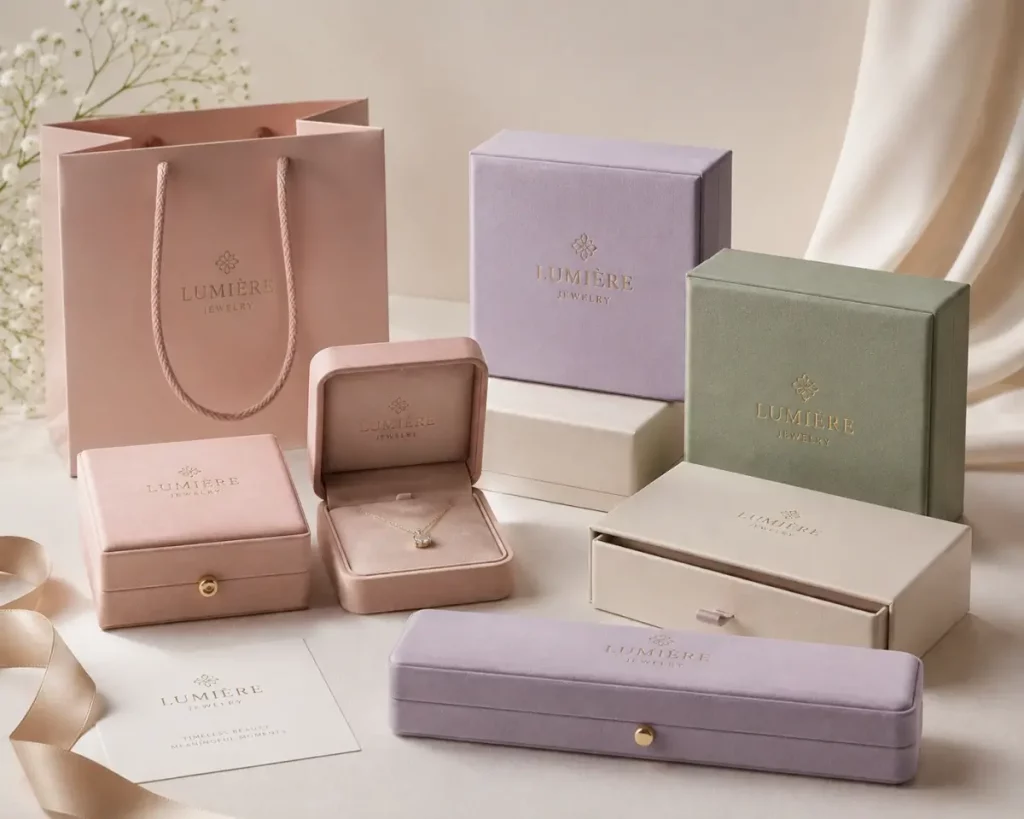
You store a luxury collection by pairing systematic discipline with custom-designed, multi-layered B2B packaging architectures that reflect your brand’s exceptional standards. Discerning collectors and high-end brands must master how to use a jewelry box as a powerful extension of their premium product presentation. Standard, unsegmented boxes fail to communicate the elegance and value of bespoke gold and diamond accessories. Bespoke compartment layouts elevate the unboxing experience while offering unmatched physical protection.
Why do luxury brands invest in custom boxes?
Bespoke packaging serves as a critical touchpoint that reinforces your brand’s commitment to craft, material quality, and customer care. Think about it: a beautifully engineered wooden or rigid paper box makes your fine pieces look spectacular. When custom-built inserts hold each gold band tightly in place, your clients immediately perceive the premium value. Exceptional presentation turns regular customers into lifetime brand advocates.
How can custom layouts scale your B2B brand?
Offering your retail clients pre-configured, modular compartment systems simplifies their inventory management and drastically reduces showcase damage. This active preservation builds immense trust.
If you are a jewelry brand looking to design custom, protective packaging solutions that your clients will love to keep, contact us today to build structural prototypes.
- Customize box materials to match your brand’s unique color palette.
- Integrate custom-sized ring slots, earring cards, and necklace hooks.
- Utilize anti-tarnish micro-suede linings to guarantee product longevity.
| Package Feature | Ideal Base Material | Customization Option | Target B2B Product Class | |
|---|---|---|---|---|
| Rigid Drawer Box | Heavy-duty grayboard | Matte paper with gold-foil stamping | Fine bridal bands, diamond studs | |
| Luxury Wooden Case | Premium walnut/mahogany | High-gloss finish, brass hinges | Luxury automatic watches, cuffs | |
| Anti-Tarnish Drawer | Deep charcoal micro-suede | Removable modular grid inserts | Sterling silver, delicate chains |
Coordinating your structural packaging design with specific jewelry classes elevates customer satisfaction and minimizes shipping damage.
Key Takeaway: Designing bespoke, compartment-driven packaging solutions protects valuable collections while establishing a highly memorable, high-end visual presence for your brand.
Why Partner with a Premium Packaging Manufacturer?
Organizing your jewelry effectively preserves its value, but presenting your collections in custom, factory-engineered packaging elevates your brand to new heights. As a leading global packaging and printing manufacturer, King Tai supports premium brands with structural box development, anti-tarnish linings, and bespoke design finishes. Whether you need luxury wooden watch cases, velvet ring boxes, or elegant paper packaging, our team is ready to bring your brand vision to life with flawless execution. To transform your product presentation and protect your high-value assets with world-class craftsmanship, contact us today to receive custom structural prototypes and competitive factory pricing.
Frequently Asked Questions
Can I store gold and silver jewelry together in the same compartment?
No, you should not mix gold and silver pieces in the same storage section. Harder metals will rapidly scratch softer gold alloys upon physical contact, and silver naturally transfers tarnish-accelerating chemical compounds. Storing them in isolated, dedicated drawers maintains their distinct surface polishes.
What’s the best way to clean a dusty velvet lining?
The best option is a soft-bristle camel-hair brush or a specialized miniature sticky lint roller. Gently sweep or roll the fabric in the direction of the velvet nap to lift dust particles without tearing the delicate fibers. Never apply harsh liquid chemical cleaners to plush linings as they can permanently degrade the fabric’s soft texture.
How do I know if my jewelry box is completely anti-tarnish?
The most accurate indicator is the chemical formulation of its internal lining fabric. Premium anti-tarnish jewelry boxes utilize micro-suede or velvet infused with zinc or copper particles that actively absorb airborne pollutants. If your box lacks these specialized synthetic linings, you must place carbon tarnish strips inside to protect your silver.
Can I keep my jewelry box in the bathroom?
No, this is highly discouraged due to constant humidity and rapid temperature fluctuations. High moisture levels accelerate sterling silver tarnishing and can cause custom wooden storage cases to warp and crack. Always place your organizer in a dry, climate-controlled space like a bedroom vanity.
What’s the best compartment layout for fragile earrings?
A shallow tray featuring a high-density grid pattern of small, independent squares is ideal. This secure layout ensures that delicate metal earring posts stay protected and prevents individual matching studs from getting separated. Never drop hoop styles and small posts into the same unsegmented well.