
How to Read an LxWxH Box Correctly for Custom Packaging Orders
Ordering custom packaging often seems like a deceptively simple task until you realize that a minor mismatch of just half an inch can completely ruin an entire production run. If you are currently struggling with frustrated customers returning damaged products or your finance team is questioning unexpected shipping fees, the root problem almost always lies in how the measurements were communicated to the factory. This comprehensive guide cuts through the confusion, providing you with a standardized framework to read, measure, and order your packaging correctly every single time, ensuring your business operations run smoother than ever before.
1. What does lxwxh box mean in shipping?

Here is the deal: L x W x H stands for Length, Width, and Height, which serves as the universal industry standard for measuring box dimensions across the globe. This specific sequence is absolutely critical because it tells manufacturers and logistics carriers exactly how to orient the package during production and transport. By strictly adhering to this format, you ensure that your custom box fits the product perfectly and stacks correctly on standard pallets without collapsing. Without this standardized approach, the entire supply chain would face massive inefficiencies, leading to lost revenue and damaged goods. It acts as the fundamental language that bridges the gap between your product design concept and the physical reality of logistics execution.
You might be wondering why this specific order is so rigidly enforced by every major carrier. It is because machines and humans need a consistent starting point to interpret 3D space on a 2D specification sheet. Standardization effectively prevents costly manufacturing errors by creating a common language between brands and suppliers. Automation systems, such as conveyor belts and laser scanners, read dimensions in this specific sequence to sort packages efficiently at high speeds. Furthermore, advanced logistics software relies on this precise order to calculate load stability for palletizing, ensuring that trucks are packed safely and efficiently.
Key Takeaway
| Dimension | Definition | Impact on Cost | |
|---|---|---|---|
| Length (L) | Longest side of the opening | Determines shelf depth and conveyor fit | |
| Width (W) | Shortest side of the opening | Affects pallet pattern efficiency | |
| Height (H) | Vertical depth from top to bottom | Crucial for stacking limits and volume |
Analysis: Understanding the L x W x H formula is not just about physical fit; it acts as a powerful financial lever for your business. A slight reduction in the Height variable, for example, can significantly reduce dimensional weight charges without compromising the Length or Width needed for the product display. This optimization allows you to maintain shelf presence while simultaneously slashing shipping overheads, proving that granular attention to detail directly influences your bottom line.
2. How do internal vs external dimensions affect a lxwxh box?
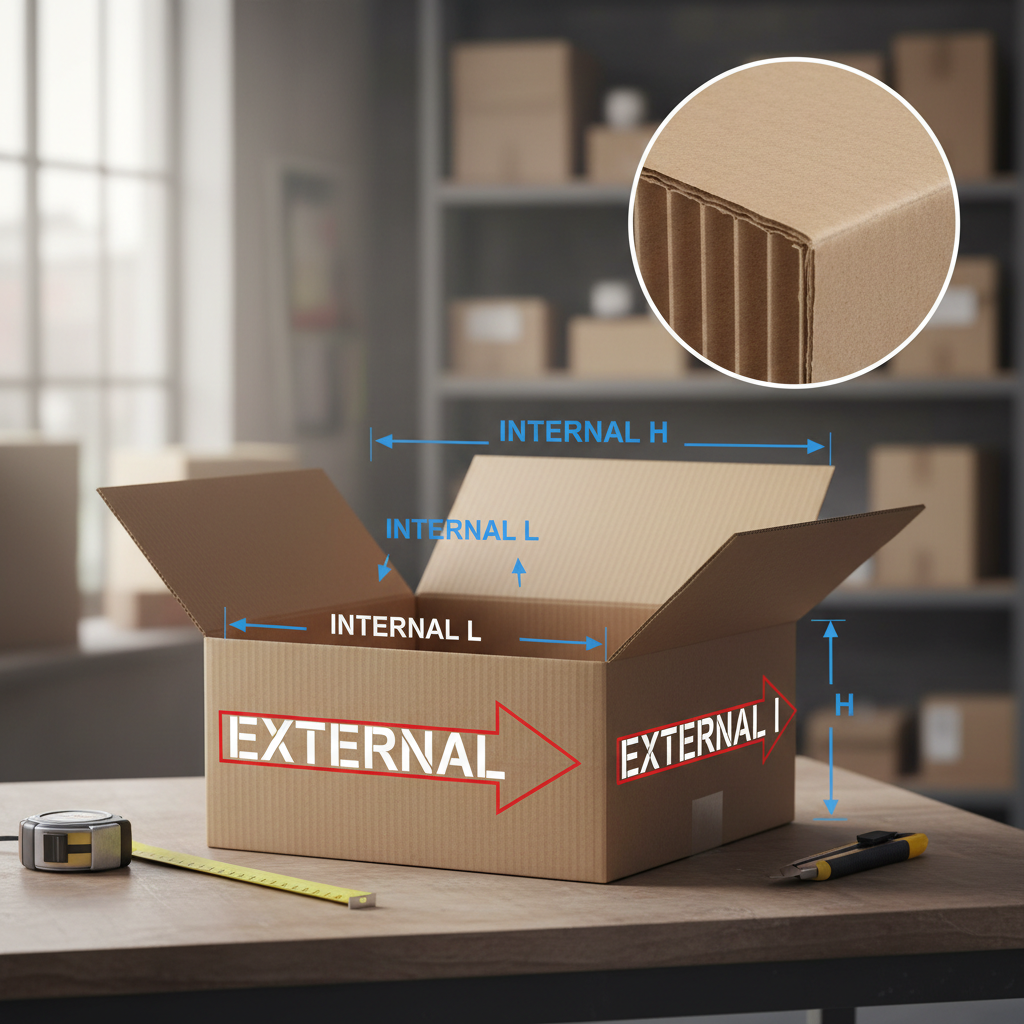
Internal dimensions (ID) measure the usable space inside the container, whereas external dimensions (OD) include the added bulk of the cardboard thickness. When sourcing a corrugated shipping boxes , confusing these two numbers is the most common reason for product damage or catastrophic assembly failure. If you provide OD to a manufacturer, they will make the box that size on the outside, meaning the inside will be too tight for your item. Conversely, if you give ID to a courier, they might re-measure the outside and charge you a higher rate than you anticipated.
But here is the kicker: If you order based on external dimensions, your product might not fit inside the box because the wall thickness eats into the available space. This is especially true for corrugated material where the flute (the wavy layer) can add significant bulk, sometimes up to a quarter-inch per wall. You must treat ID and OD as two completely separate data points in your specification sheet. ID ensures your product is safe and secure, while OD ensures your shipping budget stays within the forecasted limits.
Key Takeaway
| Measurement Type | Abbreviation | Primary Use Case | |
|---|---|---|---|
| Internal Dimensions | ID | Product fit, packaging design, insert sizing | |
| External Dimensions | OD | Shipping costs, pallet configuration, storage limits |
Analysis: The thickness of the cardboard (flute) creates the discrepancy between ID and OD, which varies based on the material grade you select. For a standard corrugated box, this difference can range from 1/8″ to 1/4″ per wall, which adds up significantly when calculating pallet loads. You must specify ID for manufacturing to guarantee product fit and OD for logistics to avoid expensive freight audits and surcharges.
3. How can you identify length, width, and height on a lxwxh box?

You identify them by looking directly at the box’s opening: Length is the longest side, Width is the shorter side, and Height is the vertical depth. Correctly identifying these sides on a box ensures that your branding appears on the correct panels and the box opens as intended for the customer. To start, place the assembled box on a flat surface with the opening facing upwards towards the ceiling. Measure the two sides that are parallel to the floor; the larger figure you record is automatically the Length, and the shorter one is the Width.
Ready for the good part? Once you find the length, the rest falls into place naturally, leaving no room for ambiguity or confusion. The final dimension to measure is the vertical line perpendicular to the floor, which we define as the Height. It is essential to note that in some industries, Height is referred to as Depth, but they refer to the exact same vertical measurement. By anchoring your measurement process to the opening of the box, you eliminate the variable of box rotation and ensure consistency across all your packaging SKUs.
Key Takeaway
| Term | Identification Method | Common Mistake | |
|---|---|---|---|
| Length | Longest measurement of the opening | Confusing it with Height on tall boxes | |
| Width | Shorter measurement of the opening | Swapping it with Length | |
| Height | Distance from opening to base | Ignoring flap thickness |
Analysis: Accurately identifying these dimensions prevents “tall” boxes from being erroneously manufactured as “flat” boxes, which would completely ruin the unboxing experience. You need to ensure that the vertical dimension is always listed last to maintain the structural integrity of the design, as the direction of the corrugated flutes is often determined by which dimension is defined as the Height.
4. What are the steps to measure a 3D lxwxh box correctly?

To measure correctly, assemble the box, identify the opening, and measure Length, then Width, then Height using a reliable tape measure. This step-by-step process guarantees that your box data is accurate for both production quotes and shipping estimates. Begin by taping the box into its final 3D shape, as measuring a flat, knock-down unit can lead to errors due to score line ambiguity. Place your tool inside the box to get the internal ID, measuring from wall to wall, not flap to flap.
Here is the deal: A soft sewing tape is too flexible and will yield inaccurate results for rigid boxes, leading to production errors that render the packaging useless. You should always use a rigid metal tape measure for larger shipping boxes to ensure a straight line across the opening. For smaller, precise folding cartons, a metal ruler or digital calipers become essential tools to capture the exact millimeter, especially when measuring the caliper or thickness of the paperboard itself.
Key Takeaway
| Step | Action | Objective | |
|---|---|---|---|
| 1 | Assemble Box | See the 3D shape clearly | |
| 2 | Identify Opening | Determine top loading vs. side loading | |
| 3 | Measure L & W | Establish the footprint | |
| 4 | Measure H | Establish the volume |
Analysis: Measuring a flat, unassembled box is incredibly difficult for beginners because the score lines can be confusing, making it hard to tell where the panel ends and the flap begins. You should always tape the box into its final shape before taking measurements to ensure the numbers reflect the actual 3D reality that your customer will experience.
5. How do design measurements differ from a standard lxwxh box?

Design measurements are 2D (Width x Height), whereas box measurements are 3D (Length x Width x Height). When working on the artwork for a box, designers flatten the 3D object into a 2D dieline, which changes how dimensions are communicated. Design software like Adobe Illustrator operates on an X (Width) and Y (Height) axis, making 2D coordinates the standard for all print files. Designers work on one panel at a time, such as just the front face, rather than visualizing the whole volume at once.
It gets better: Understanding this translation allows you to speak the designer’s language without losing the manufacturing specs that are vital for production. If you are unsure about how to translate your 3D requirements into a 2D art file, professional packaging design services can bridge this gap for you. They understand how to layout the artwork so that when the 2D sheet is folded, the logos and text align perfectly with the 3D structure of the box.
Key Takeaway
| Context | Dimension Format | Primary Goal | |
|---|---|---|---|
| Manufacturing | L x W x H | Structural construction | |
| Graphic Design | W x H | Visual layout and artwork | |
| Envelope Design | Shortest x Longest | Industry exception for envelopes |
Analysis: The conflict between 2D design protocols and 3D construction reality is a major source of printing errors. You must provide the designer with a verified dieline file that already accounts for the L x W x H structure, so they only need to focus on the W x H art placement, ensuring safety zones and bleed lines are respected.
6. Why does orientation matter for printing on a lxwxh box?
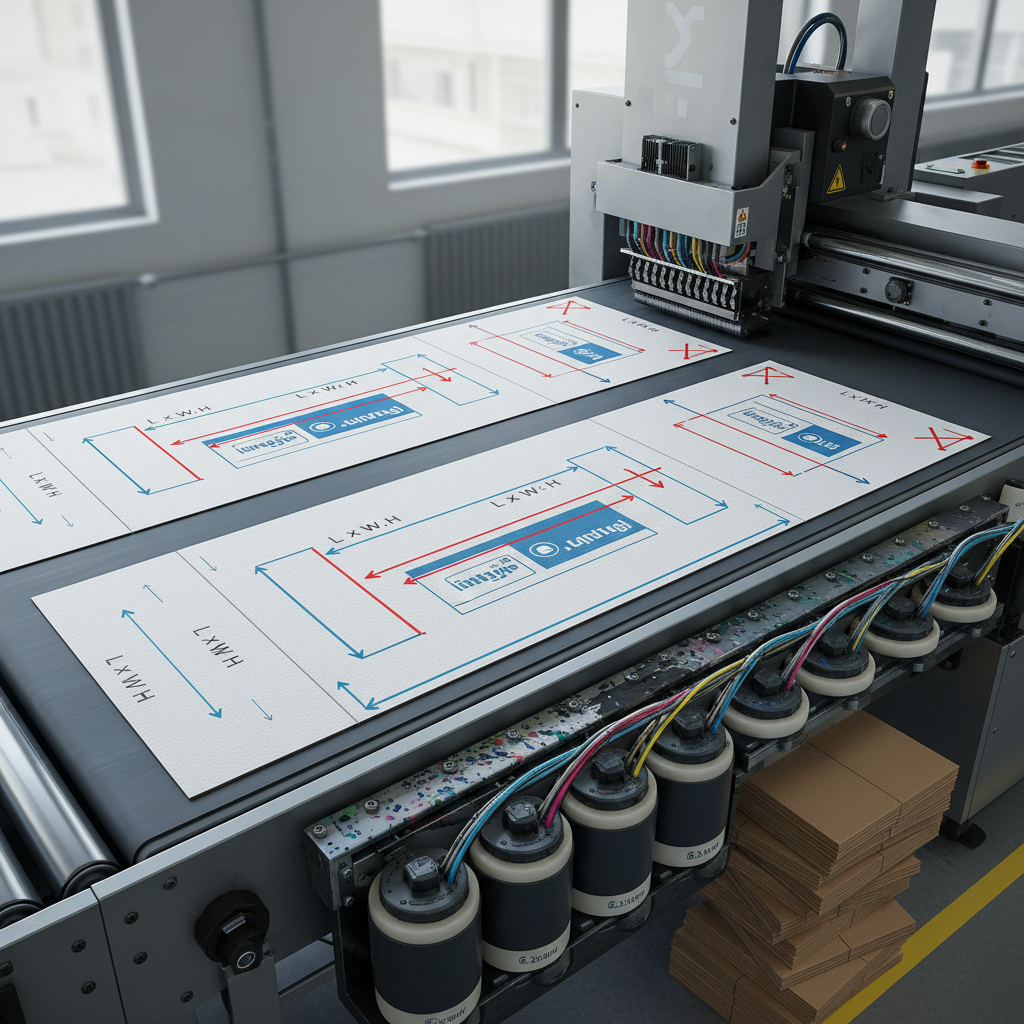
Orientation determines which panel is considered the “front” and ensures your branding faces the customer correctly upon delivery. If you ignore orientation on a box, your logo might end up on the side or bottom of the package, ruining the shelf impact. In Top Loading boxes, Length and Width are at the top, while Height is vertical. However, for End Loading boxes, the opening is on the small side, causing the measuring orientation to shift 90 degrees, completely changing which panel is the “main” display face.
You might be wondering: Does it really matter if the box is effectively square? Yes, because the flaps function differently depending on where the opening is located. For specific styles like custom mailer boxes , the large panel is usually the top, and the depth is relatively small, meaning the “Length” and “Width” define the premium real estate where your unboxing message belongs. Misinterpreting this can lead to your “Thank You” message being printed on the bottom dust flap instead of the interior lid.
Key Takeaway
| Panel Name | Dimension Pair | Typical Content | |
|---|---|---|---|
| Front | L x H | Main Logo, Product Name | |
| Top | L x W | Shipping Labels, Unboxing Msg | |
| Sides | W x H | Barcodes, Ingredients, warnings |
Analysis: Even if a box is a perfect cube of 10x10x10, the orientation dictates the direction of the fluting and the hinge of the lid. You must specify which panel is the “Front” relative to the opening to ensure the unboxing experience flows logically and the structural integrity is maximized against crushing forces.
7. What are common errors when reading lxwxh box sizes?
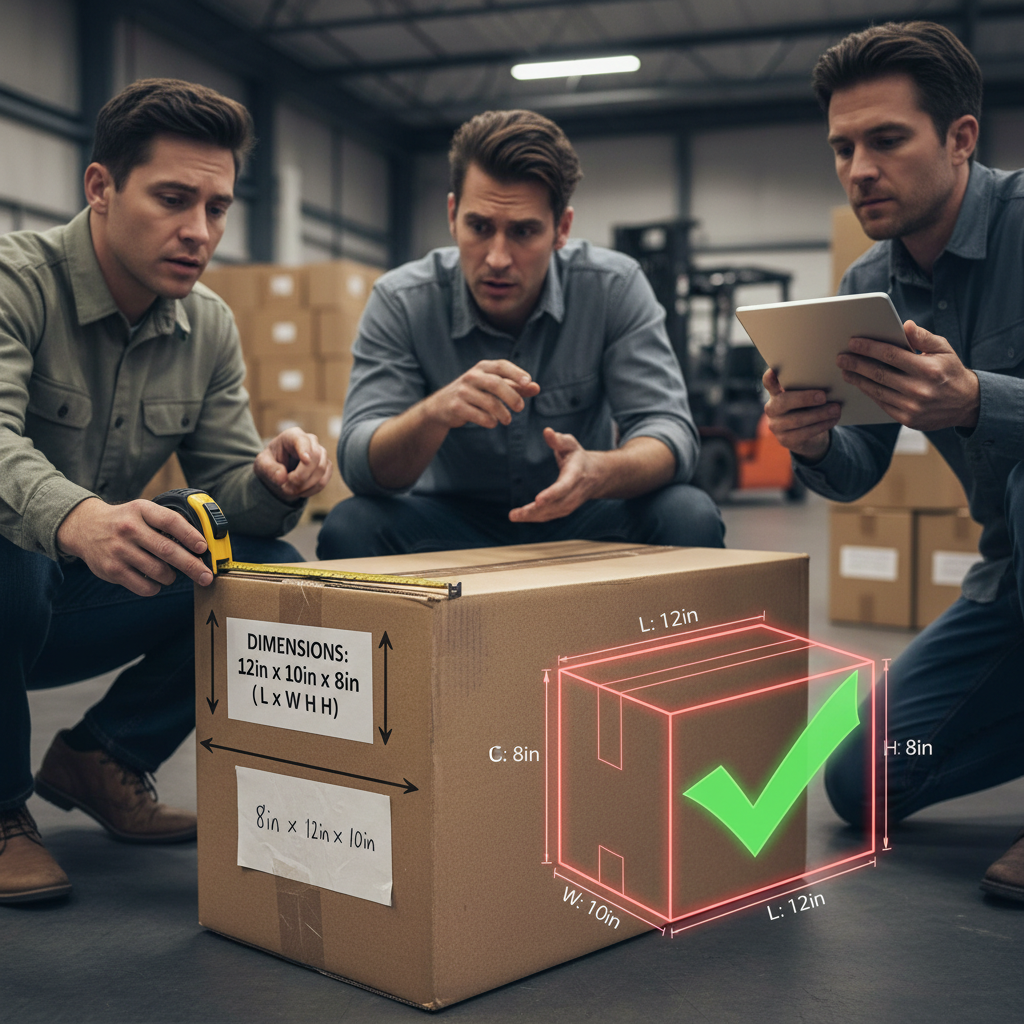
The most common errors are mixing up Length and Width, or confusing Internal and External dimensions. These simple mistakes on a box can lead to production runs that are completely unusable for your specific products. If you mix up Length and Width, the box will rotate, causing it to open from the “wrong” side. Flaps might overlap too much or not meet in the middle, compromising the closure and security of the package. Additionally, artwork intended for a long panel gets squashed onto a short panel, ruining the aesthetic.
But here is the kicker: On a perfectly square box, this error is invisible, but on a rectangular box, it is fatal. Another frequent issue involves wall thickness; overpacked boxes can bulge, changing the OD during shipping and leading to carrier surcharges. Material variance is also a factor, as different paper grades have different caliper thicknesses. For a deep dive on how material choice affects thickness, check our guide on paper weight and thickness , which explains how caliper impacts your final measurements.
Key Takeaway
| Error | Consequence | Prevention | |
|---|---|---|---|
| Swapping L/W | Incorrect opening orientation | Verify “Longest Side = Length” | |
| Using OD for ID | Product does not fit | Explicitly label dims as “ID” | |
| Ignoring Flutes | Shipping calculation errors | Measure sample with calipers |
Analysis: Precision is paramount in the packaging world. A discrepancy of a few millimeters might seem negligible to the naked eye, but in automated packaging lines, it causes jams that stop production. You should always double-check your specs against a physical prototype to ensure the theoretical numbers match the physical reality.
8. Why is the specific order crucial for every lxwxh box?

The specific order is crucial because it acts as a universal code that aligns manufacturers, designers, and logistics providers. Without strict adherence to this sequence for your box, the supply chain breaks down due to miscommunication. CAD software defaults to L x W x H for all structural design tasks, and online quoting engines will often reject inputs that do not follow this logic, or worse, return erroneous prices that blow your budget. Furthermore, Global Trade and international shipping manifests rely on this sequence for volume metrics.
What is the real story? It is about speaking the same language across borders and systems. If a factory in China reads your dimensions as W x L x H while you intended L x W x H, the grain direction of the cardboard will be wrong. This results in boxes that look correct but have only a fraction of the necessary stacking strength, leading to crushed pallets and damaged inventory once they reach the warehouse.
Key Takeaway
| Stakeholder | Reliance on Order | Potential Issue from Error | |
|---|---|---|---|
| Manufacturer | Sets machine calibration | Crushed boxes (wrong grain direction) | |
| Carrier | Calculates truck space | Freight audit penalties | |
| Warehouse | Plans rack height | Inefficient storage density |
Analysis: The order is not a suggestion; it is a syntax that governs the industry. Just as sentences need grammar to be understood, packaging needs L x W x H to be processed by machines and humans alike. You protect your bottom line by adhering to this simple standard, eliminating the risk of structural failure during transit.
9. Do you need extra space inside a custom lxwxh box?
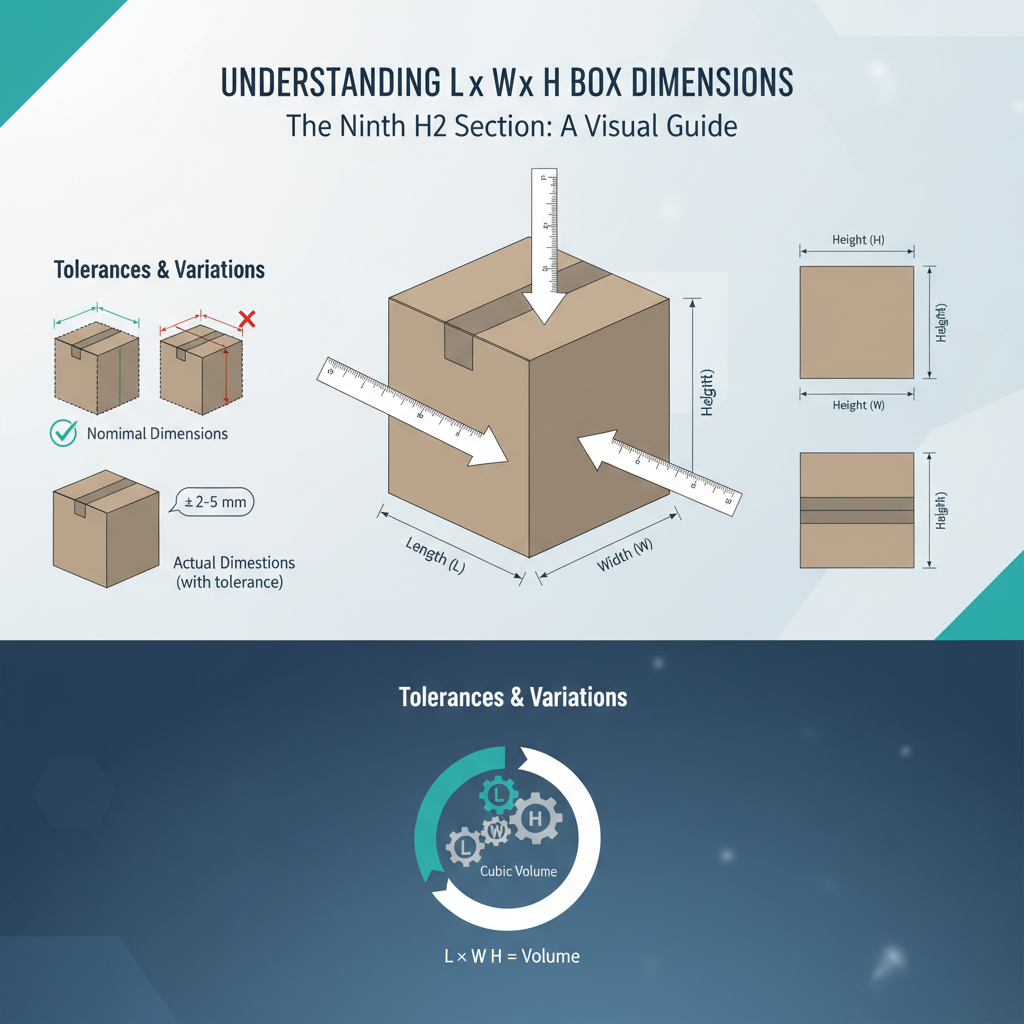
Yes, you need to add clearance (tolerance) to the internal dimensions to allow the product to slide in and out easily. A box with zero clearance is virtually impossible to pack efficiently and risks damaging the product during the fulfillment process. A standard rule is to add 0.125″ (1/8 inch) to each side for a snug, professional fit that feels premium. If manual packing speed is a priority in your warehouse, adding 0.25″ (1/4 inch) provides a looser fit that speeds up the assembly line significantly.
You might be wondering: Won’t extra space cause damage? Not if it is calculated correctly. While you need gap space for insertion, you must also consider protective materials. If you plan to use bubble wrap or foam, you need to account for that volume in your ID measurements. Rigid items generally require more clearance than soft, squeezable items like clothing, which can be compressed slightly to fit into a smaller, more economical package.
Key Takeaway
| Material | Recommended Clearance | Purpose | |
|---|---|---|---|
| Direct Product | +0.125 inches | Ease of insertion | |
| Bubble Wrap | +0.50 inches | Impact protection | |
| Peanuts/Void | +1.00 inches | Shock absorption |
Analysis: Clearance is the difference between a professional package and a frustrating one. You want your customers to slide the product out smoothly, not fight with the box and tear the flaps. Always factor in the “finger room” needed for unboxing to ensure the customer experience is seamless from the moment they receive the package.
10. How do carriers calculate rates based on lxwxh box size?
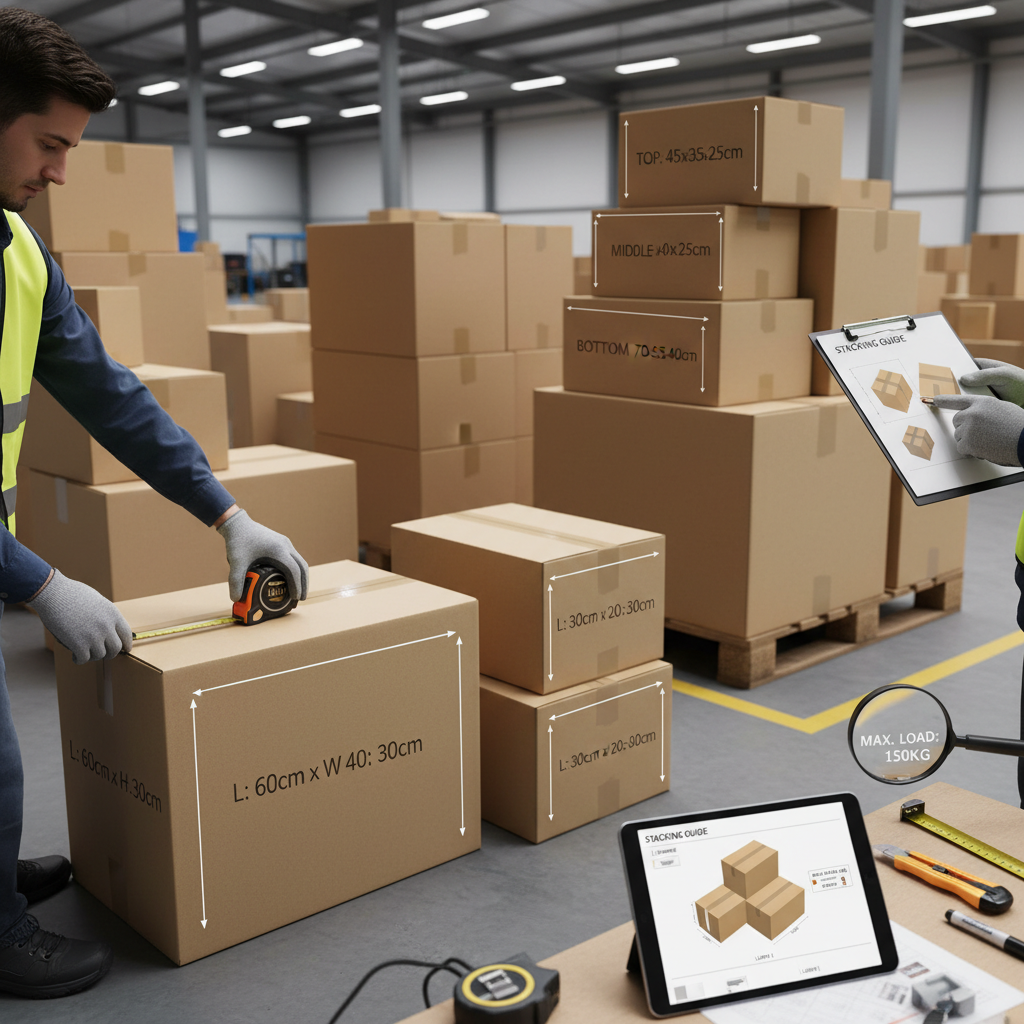
Carriers use a “divisor” to convert cubic volume into a billable weight, often charging for whichever is higher: actual weight or dimensional weight. Your box dimensions directly dictate your shipping bill, often more than the weight of the product itself. Dimensional weight uses the formula (L x W x H) divided by a standard divisor (usually 139 or 166). This means shipping a large box full of feathers costs the same as shipping an anvil if the box volume is identical. Optimizing by reducing the box height by just 1 inch can drop you into a lower price tier, saving massive amounts over a year.
Here is the deal: Air is expensive to ship. Carriers want to maximize the density of their trucks and planes, so they penalize you for shipping empty space. To optimize for shipping zones, you must practice “right-sizing,” which means using the smallest box possible that still protects the item. You should also ensure your box dimensions divide evenly into a standard 40×48 pallet to maximize load efficiency and reduce freight costs.
Key Takeaway
| Metric | Calculation Method | Impact on Price | |
|---|---|---|---|
| Actual Weight | Scale reading | Used for dense, heavy items | |
| Dim Weight | (LxWxH) / Divisor | Used for lightweight, bulky items | |
| Billable Weight | Higher of the two | The final cost basis |
Analysis: Controlling your box dimensions is a strategic logistics decision, not just a packaging one. By shaving fractions of an inch off your L, W, or H, you can potentially save thousands of dollars annually in shipping fees.
Conclusion
Reading box dimensions correctly is the foundation of successful packaging and logistics. It prevents costly manufacturing errors, ensures your products arrive safely, and helps you control shipping expenses. By mastering the L x W x H formula and understanding the difference between internal and external measurements, you take control of your supply chain. Do not let a simple measuring error eat into your profit margins. Empower your business with precise packaging specifications today. For expert assistance in creating the perfect fit, contact a trusted custom packaging manufacturer like Packoi.
FAQ
Q1: How do I measure a box for shipping carriers like UPS or FedEx?Carriers require the External Dimensions (OD) to calculate shipping costs. You should measure the extreme outside points of the sealed box, rounding up to the nearest inch to ensure your quote is accurate and avoid adjustment fees later.
Q2: Is there a difference between “Depth” and “Height”?No, in the context of packaging, Depth and Height generally refer to the same vertical dimension. While “Height” is the standard term in the L x W x H formula, “Depth” is often used for shallow containers like pizza boxes, but the measurement method remains the same.
Q3: What happens if I accidentally mix up the Length and Width?For a standard box, the product might still fit, but the opening orientation will be rotated 90 degrees. However, if the box has custom printing or a specific latch mechanism, swapping these numbers can result in the artwork being sideways or the box failing to function correctly.
Q4: Should I leave extra room inside the box for my product?Yes, you should always add a “clearance” or buffer to your internal dimensions. We recommend adding at least 0.125 inches (1/8th inch) to each side of your product’s measurements to allow for easy insertion and to accommodate slight manufacturing variances.
Q5: Why do graphic designers ask for Width x Height instead of L x W x H?Designers work in a 2D digital environment where screens and artboards are defined by Width (horizontal) and Height (vertical). They need the flat dimensions of the specific panel they are designing (e.g., the front face) rather than the volumetric 3D dimensions of the entire box.