A brand can choose the wrong notebook binding by comparing photographs instead of how people use the product. A training notebook may need to fold back during a session, while a retail journal may need a neater metal edge. The wrong choice can force changes to the cover, margins, and production brief after sampling.
Wire O vs spiral binding is a choice between pre-formed double-loop metal wire and one continuous plastic coil. Those mechanisms change page movement, appearance, and handling. Start with the user, then check the page block, paper, cover, margins, sampling, and repeatability.
What is the difference between Wire-O and spiral binding?
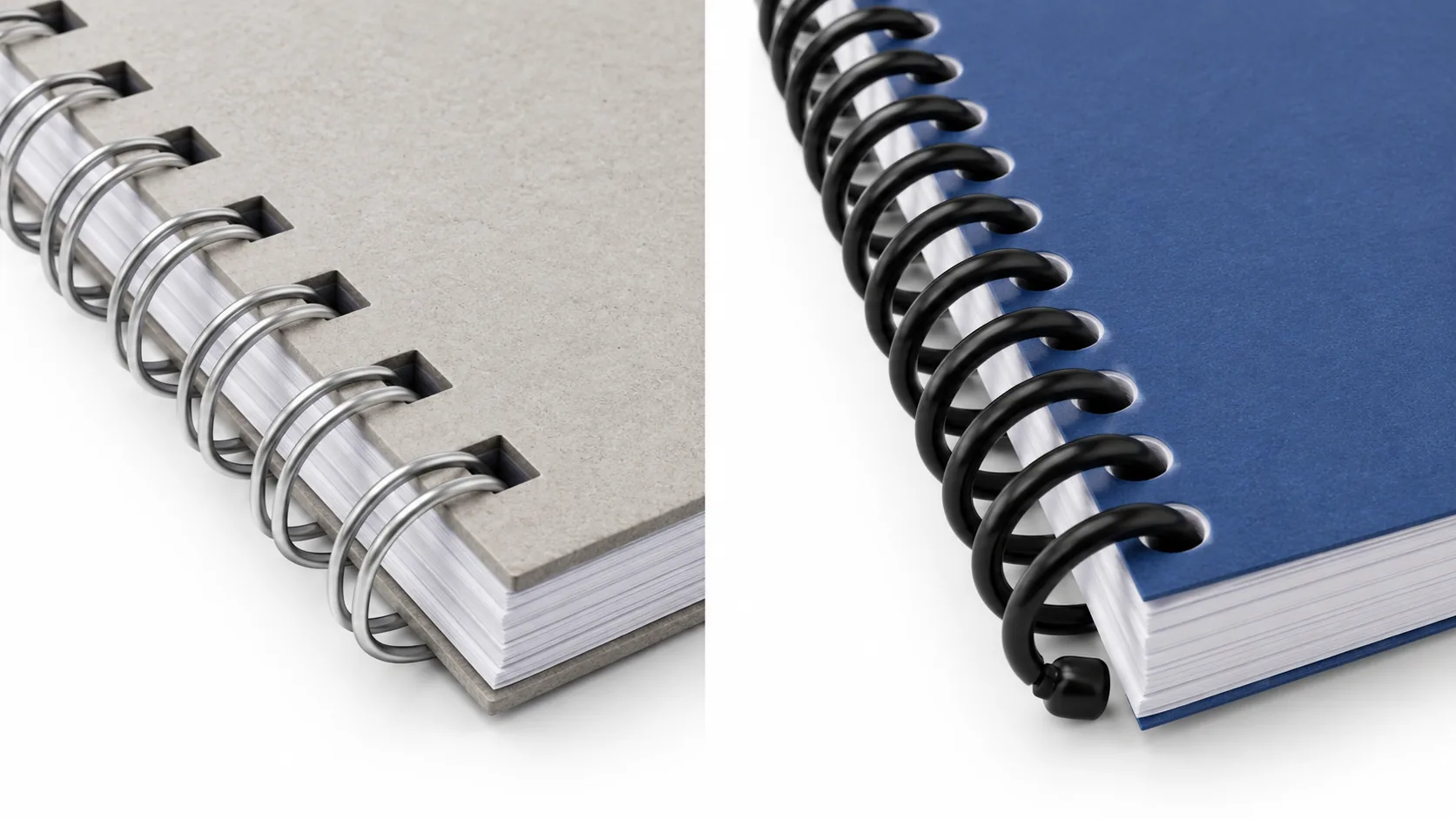
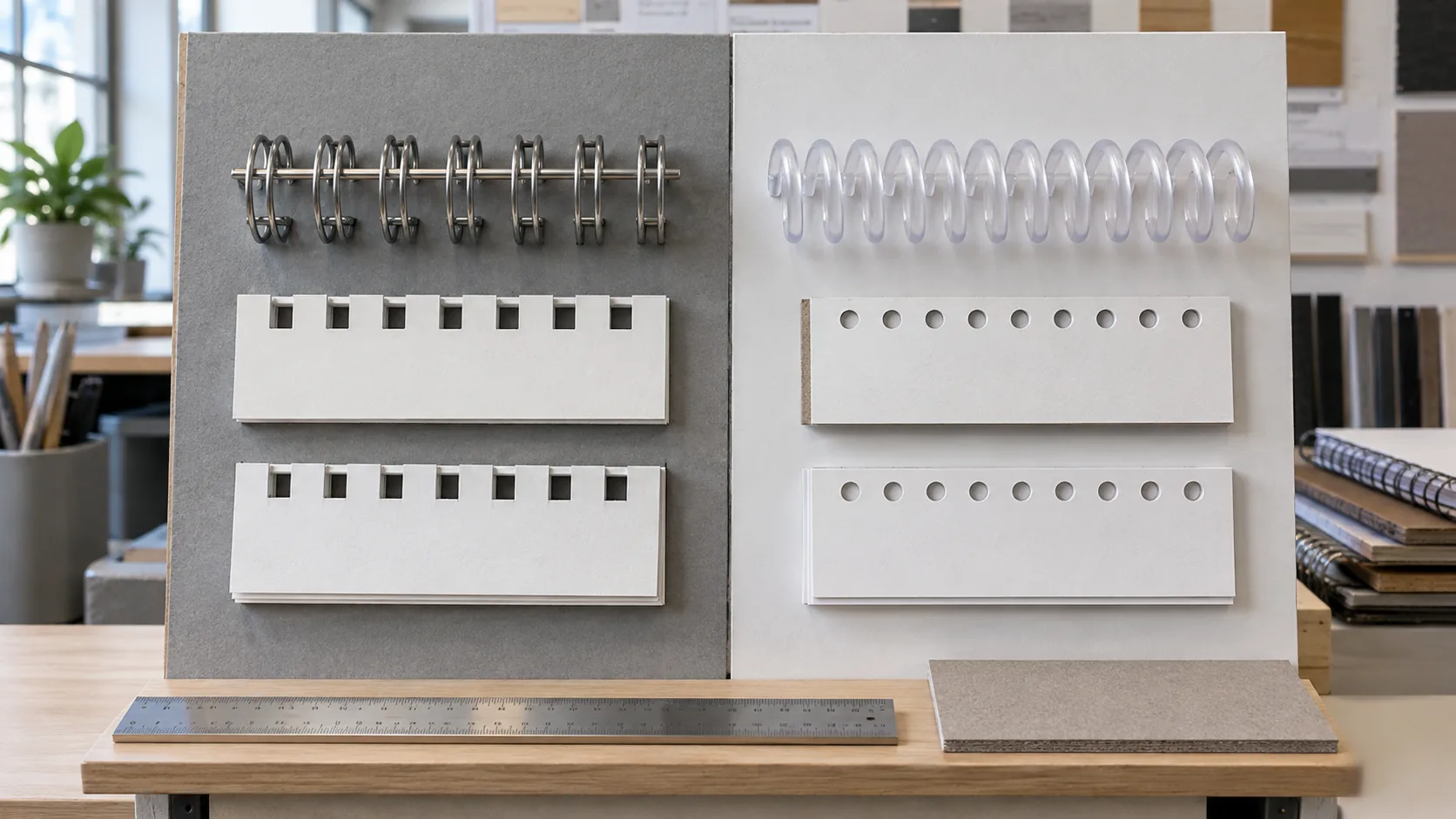
Wire-O is a double-loop metal binding element, while spiral binding uses one continuous coil threaded through a row of holes. Both can support lay-flat use, but their mechanisms produce different page movement, cover fit, appearance, and handling considerations.
How should buyers define the two mechanisms?
Use precise terms in the brief. The official State of Delaware bindery guide describes coil binding as a continuous spring-shaped plastic piece and Wire-O as double-loop wire inserted through punched holes. King Tai’s custom notebook printing service then provides the broader context of matching binding, cover, pages, finishing, and production.
The basic distinction is:
- Wire-O: separate, pre-formed pairs of metal loops are closed around the punched edge.
- Plastic spiral: one continuous plastic coil travels through the holes along the edge.
- Shared requirement: both need suitable holes, margin, cover, and page block.
- Project decision: the mechanism should match how the notebook opens, folds, looks, and gets handled.
| Mechanism | Element | Page movement | Buyer implication |
|---|---|---|---|
| Wire-O | Double-loop metal wire | Turns and can fold back | Neat metal edge and formal presentation |
| Plastic spiral | Continuous plastic coil | Turns and can fold back | Flexible, visible coil and practical handling |
| Both | Punched holes and cover | Lay-flat potential | Plan artwork and margins |
The word “spiral” should not hide whether the coil is plastic or metal. Key Takeaway: put the binding mechanism and material in the RFQ before comparing supplier quotes.
Which binding offers the better lay-flat experience?
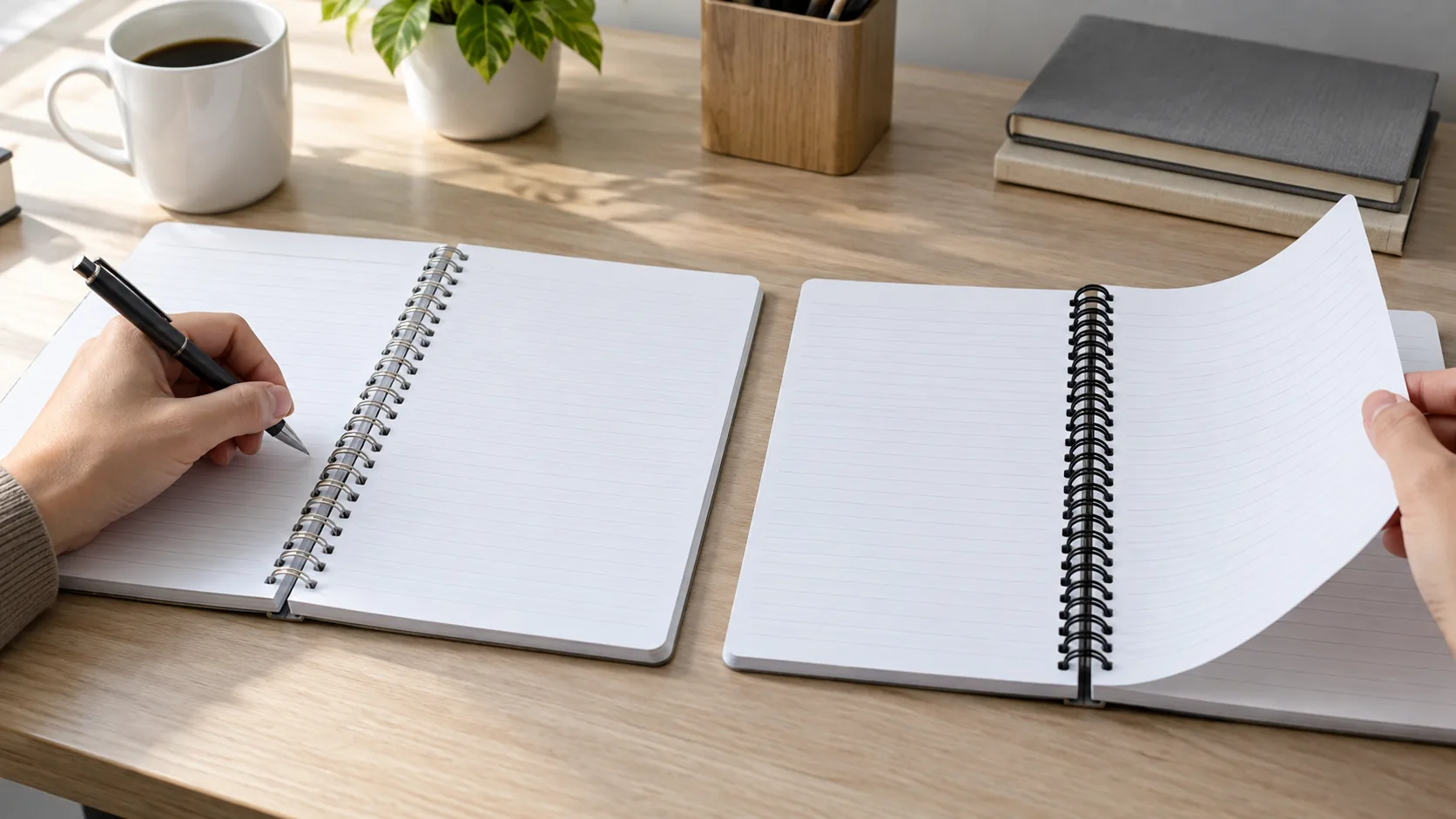
Neither binding is automatically better for every notebook; both can support a flat writing surface when the page block, holes, cover, and element size are matched. The better choice depends on whether the user writes across both sides, folds the notebook back, turns pages quickly, or wants a more structured object on a desk.
How will the user actually open the notebook?
Start with the motion the product must support. King Tai’s stationery and gifting printing solutions connects notebook format to practical writing, education, gifting, events, and internal use, each of which can create a different opening priority.
Test these motions:
- Open flat and write near the binding edge.
- Turn several pages quickly with one hand.
- Fold the notebook back if the use case requires it.
- Close the cover and check whether the stack stays aligned.
| User action | Wire-O behavior | Plastic spiral behavior | Check |
|---|---|---|---|
| Desk writing | Flat opening with a neat metal edge | Flat opening with a visible coil | Write near the holes |
| Fold-back use | Possible when the cover and page block allow it | Commonly suited to folding back | Fold and reopen the sample |
| Frequent page turning | Controlled movement through loops | Flexible movement through the coil | Turn a full section repeatedly |
| Two-sided use | Flat opening supports both sides | Flat opening supports both sides | Inspect page registration and margins |
The writing motion should decide the binding before the cover style does. Key Takeaway: choose the format that makes the user’s actual hand movement comfortable and predictable.
How do Wire-O and spiral differ in appearance?
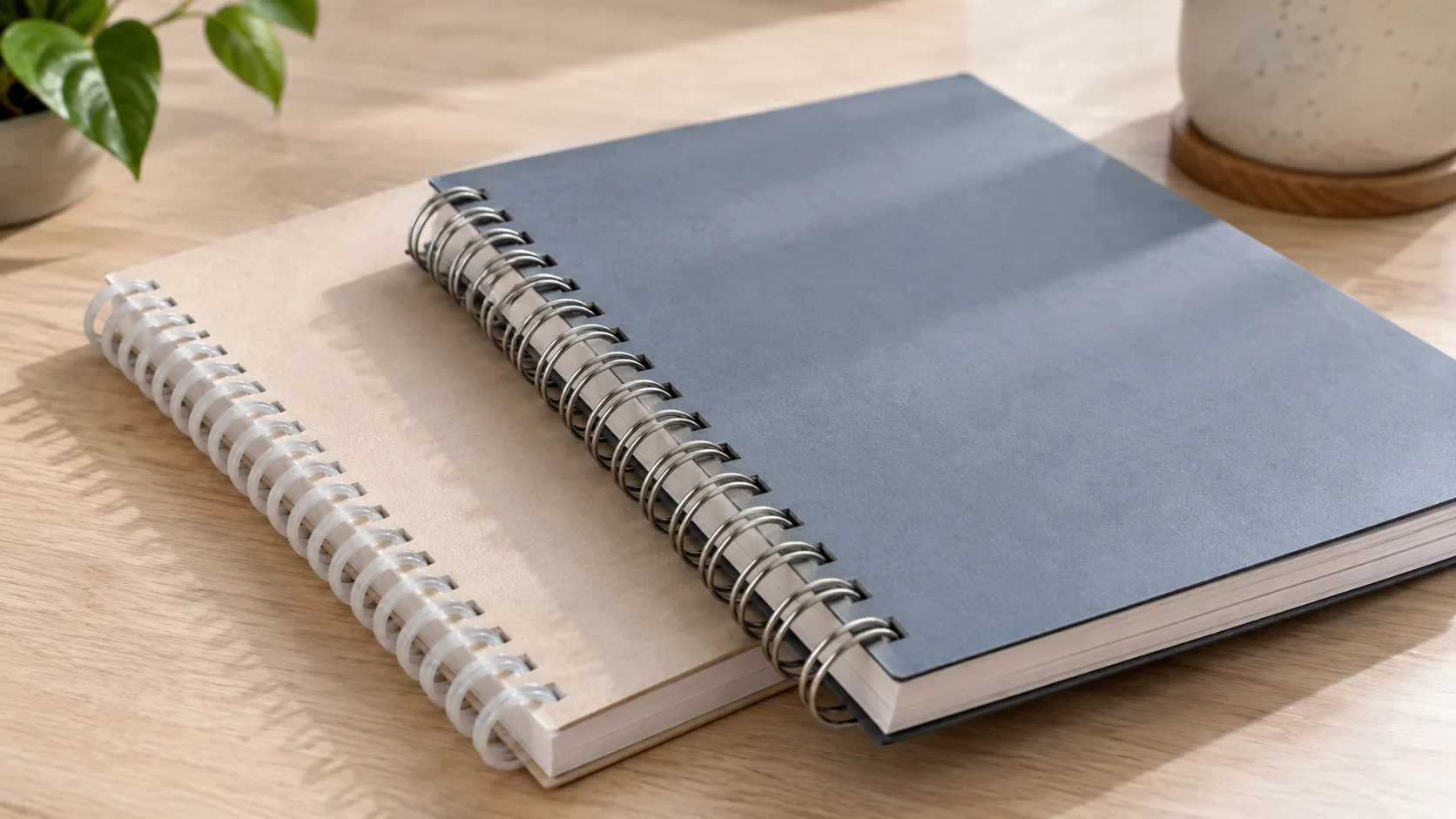
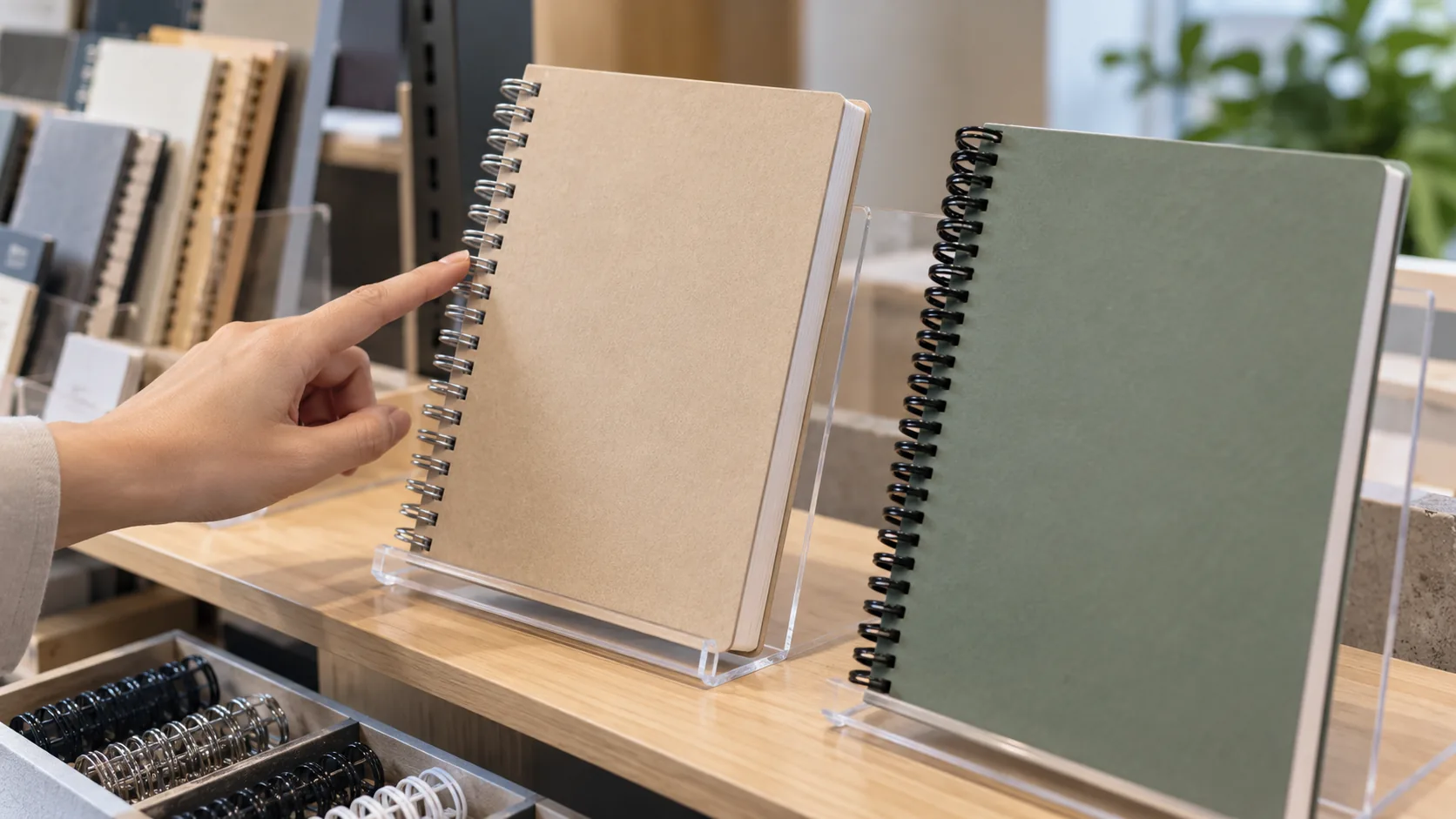
Wire-O usually gives a notebook a cleaner, more formal metal edge, while a plastic spiral makes the coil a more visible part of the product’s character. Either can look intentional, but the cover, coil color, wire finish, and page format need to belong to the same product position.
Which look fits the product line?
Use appearance to support the notebook’s market role, not to disguise a functional mismatch. A polished office or premium stationery line may favor the controlled look of Wire-O, while a school, training, campaign, or practical line may welcome the color and flexibility of plastic spiral.
Review:
- Coil or wire color against the cover palette.
- Front and back cover thickness around the binding edge.
- Whether the edge looks neat when the notebook is stacked.
- Whether the binding makes the product look formal, practical, playful, or technical.
| Visual priority | Wire-O direction | Plastic spiral direction | Proof |
|---|---|---|---|
| Formal presentation | Metal loops with aligned spacing | Possible, but more visibly casual | Review a face-out and side view |
| Color coordination | Wire finish and cover palette | Coil color can be a stronger accent | Compare under retail lighting |
| Practical school or training line | Clean, structured edge | Flexible, accessible appearance | Check handling and stack behavior |
| Premium stationery line | Pair wire with cover and finish | Use a controlled coil and refined cover | Approve a complete product sample |
Appearance is part of the product brief because the binding remains visible. Key Takeaway: select the binding look with the cover, audience, and shelf position in the same discussion.
How should page count and thickness influence the choice?
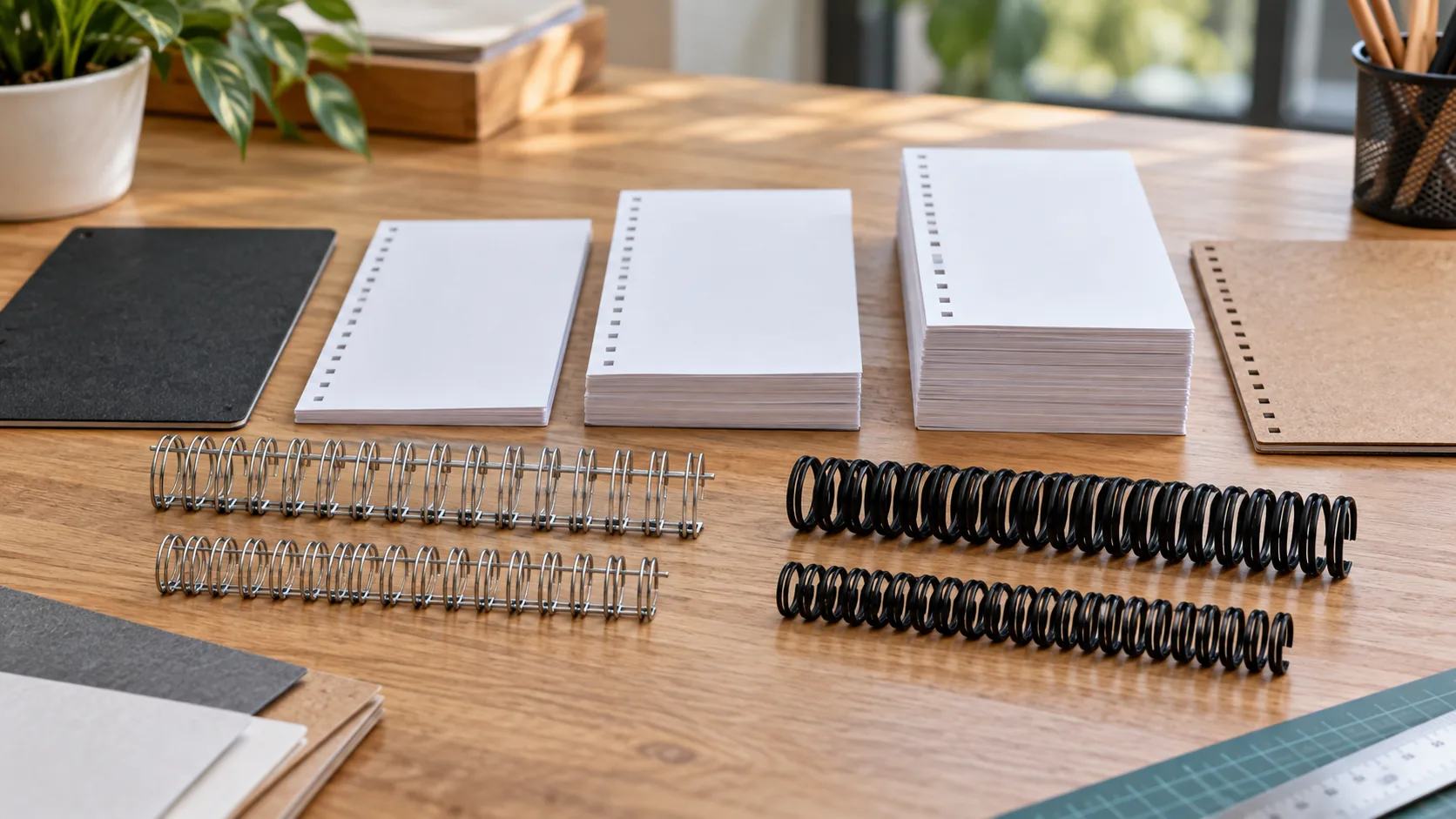
Page count and thickness should be confirmed before choosing the Wire-O or spiral element because the page block, cover, holes, and element diameter must work together. A binding that suits a thin notebook may not suit a thicker one.
What must the supplier confirm?
Use the custom printing services workflow to separate format, paper, binding, sampling, and production checks. Do not infer capacity from a binding name alone; ask the supplier to confirm the proposed element and finished build for the actual page block.
Define:
- Page count and whether it means printed sides or sheets.
- Paper thickness, cover board, and any inserts or pockets.
- Element size, hole pattern, and binding edge clearance.
- Opening behavior after the notebook is fully assembled.
| Specification | Wire-O question | Spiral question | Evidence |
|---|---|---|---|
| Page block | Does the wire size close cleanly around it? | Does the coil pass without distorting? | Bound dummy |
| Paper and cover | Do holes and edges stay stable? | Do holes and edges resist tearing? | Sample handling |
| Thickness | Is the loop diameter suitable? | Is the coil diameter suitable? | Supplier confirmation |
| Inserts or pockets | Do added layers affect closure? | Can the coil pass through the stack? | Full assembly sample |
The binding follows the page block, not the other way around. Key Takeaway: give the supplier a complete thickness and page specification before asking for a final binding recommendation.
Which binding is easier to use for writing and reference?
The easier binding is the one that matches the user’s writing motion, hand clearance, page-turning frequency, and need to fold the notebook back. Wire-O can feel more controlled and formal, while plastic spiral can feel more flexible and practical, but the finished cover and element size still determine comfort.

Which use case is the notebook serving?
A training workbook, daily office notebook, retail journal, and event handout can all need different handling. The notebook printing case study is a useful reminder that sample accuracy and repeatable production matter alongside appearance.
Match the binding to the task:
- Training or classroom: prioritize fold-back use, quick page turning, and clear writing space.
- Office reference: prioritize stable opening, page registration, and a controlled edge.
- Retail journal: balance hand feel, appearance, and the cover’s relationship to the binding.
- Event or campaign: prioritize practical use, visual coordination, and packing.
| Use case | Main priority | Likely direction | Sample action |
|---|---|---|---|
| Training workbook | Fold-back writing | Plastic spiral or suitable Wire-O | Write while folded back |
| Office reference | Neat opening and page control | Wire-O or a controlled spiral build | Turn and annotate pages |
| Retail journal | Presentation and usability | Depends on cover and range position | Review in hand and on shelf |
| Campaign notebook | Practical use and repeatability | Often plastic spiral or Wire-O | Check pack, carry, and opening |
The product’s daily motion matters more than a general binding reputation. Key Takeaway: choose after handling a representative sample in the real use position.
How do Wire-O and plastic spiral compare for durability?
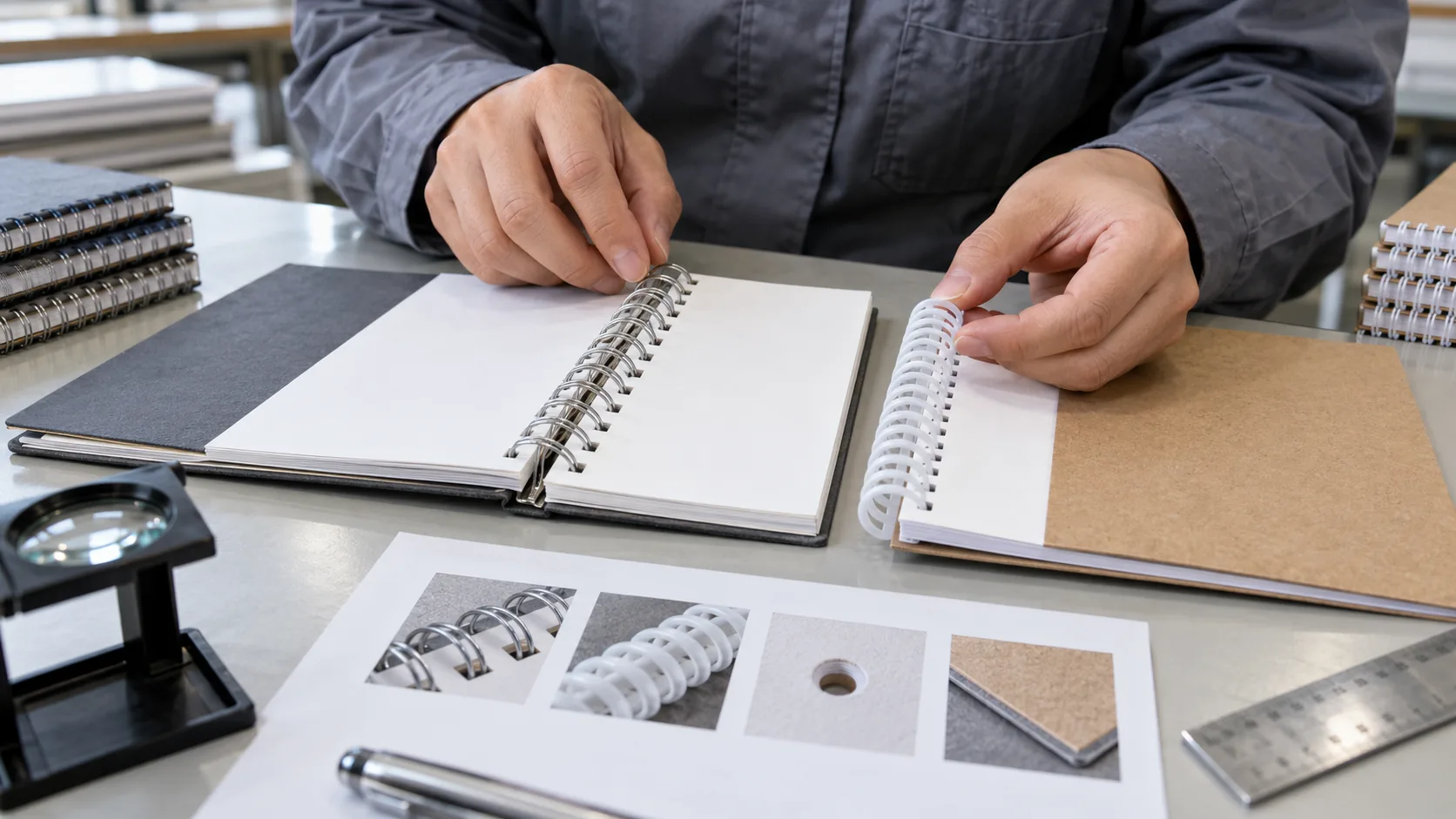
Both bindings can produce useful notebooks, but their failure risks differ: a Wire-O element can deform under force, while a plastic coil can crush or change shape under rough handling. Durability also depends on the paper holes, cover protection, element size, page block, and how the notebook is carried.
What should a durability review include?
The stationery printing planning page treats binding, paper, finishing, sampling, and production as connected decisions. Use that same logic for durability rather than assigning a material a universal lifespan.
Review the finished notebook for:
- Hole tearing or edge weakness after repeated turning.
- Wire or coil deformation after carrying and stacking.
- Cover protection at the binding edge and corners.
- Loose pages, rough closures, or misalignment after use.
| Risk | Wire-O review | Spiral review | Approval check |
|---|---|---|---|
| Element deformation | Check loop shape and closure | Check coil shape and end security | Repeat handling test |
| Hole stress | Review wire alignment and edge margin | Review coil passage and edge margin | Turn and fold pages |
| Cover protection | Check metal edge and board support | Check coil clearance and cover edge | Carry and stack sample |
| Repeatability | Compare wire, holes, and finish | Compare coil, holes, and finish | Match against approved sample |
Durability only has meaning beside a defined handling condition. Key Takeaway: test the complete notebook, not a loose wire or coil sample.
How do cover, holes, and margins affect the design?
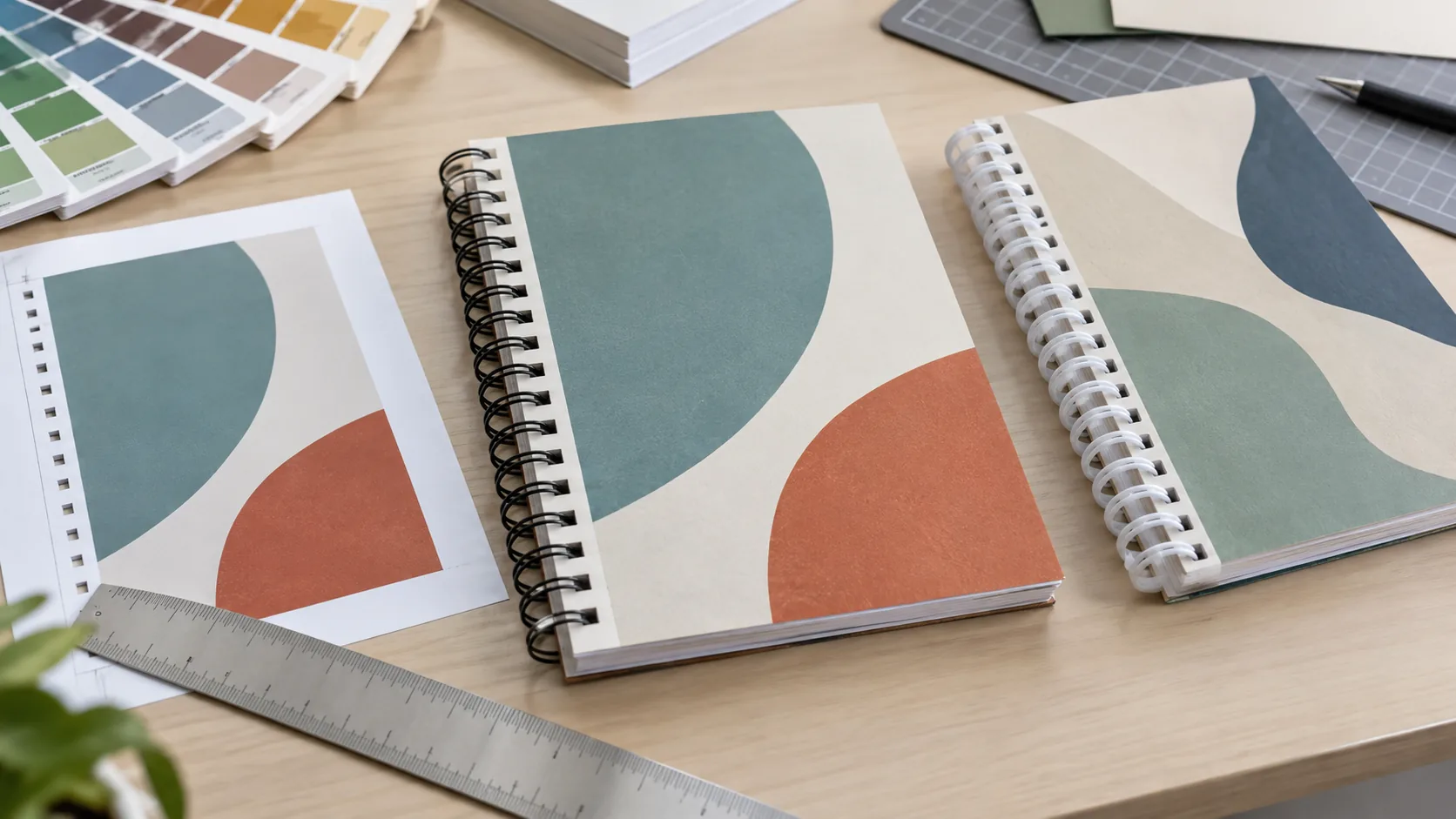
Wire-O and spiral notebooks need binding-side space for holes, element clearance, and cover alignment. Artwork that looks correct on a flat screen can lose content near the edge, break across a spread, or feel crowded when the notebook is opened.
What should the designer lock before proofing?
The cover and inside layout should be reviewed together. King Tai’s custom notebook printing page emphasizes matching layout, binding, cover, finishing, and sampling before bulk production.
Reserve and check:
- Binding-side margins around punched holes.
- Cover and page alignment at the top, bottom, and fore edge.
- Full-bleed artwork and any spread or crossover image.
- Spine and cover treatment, remembering that visible binding occupies the edge.
| Design element | Risk | Buyer action |
|---|---|---|
| Binding margin | Text or graphics fall into holes | Mark a safe area before artwork approval |
| Crossover image | Binding interrupts the spread | Use separate pages or a deliberate break |
| Cover alignment | Cover edge and pages look uneven | Review a full-size bound sample |
| Spine treatment | Wire or coil occupies the edge | Do not assume the binding edge can carry print |
Binding space is part of the design canvas. Key Takeaway: reserve the hole and element area before final artwork, not after the proof is made.
How should brands compare cost and production consistency?
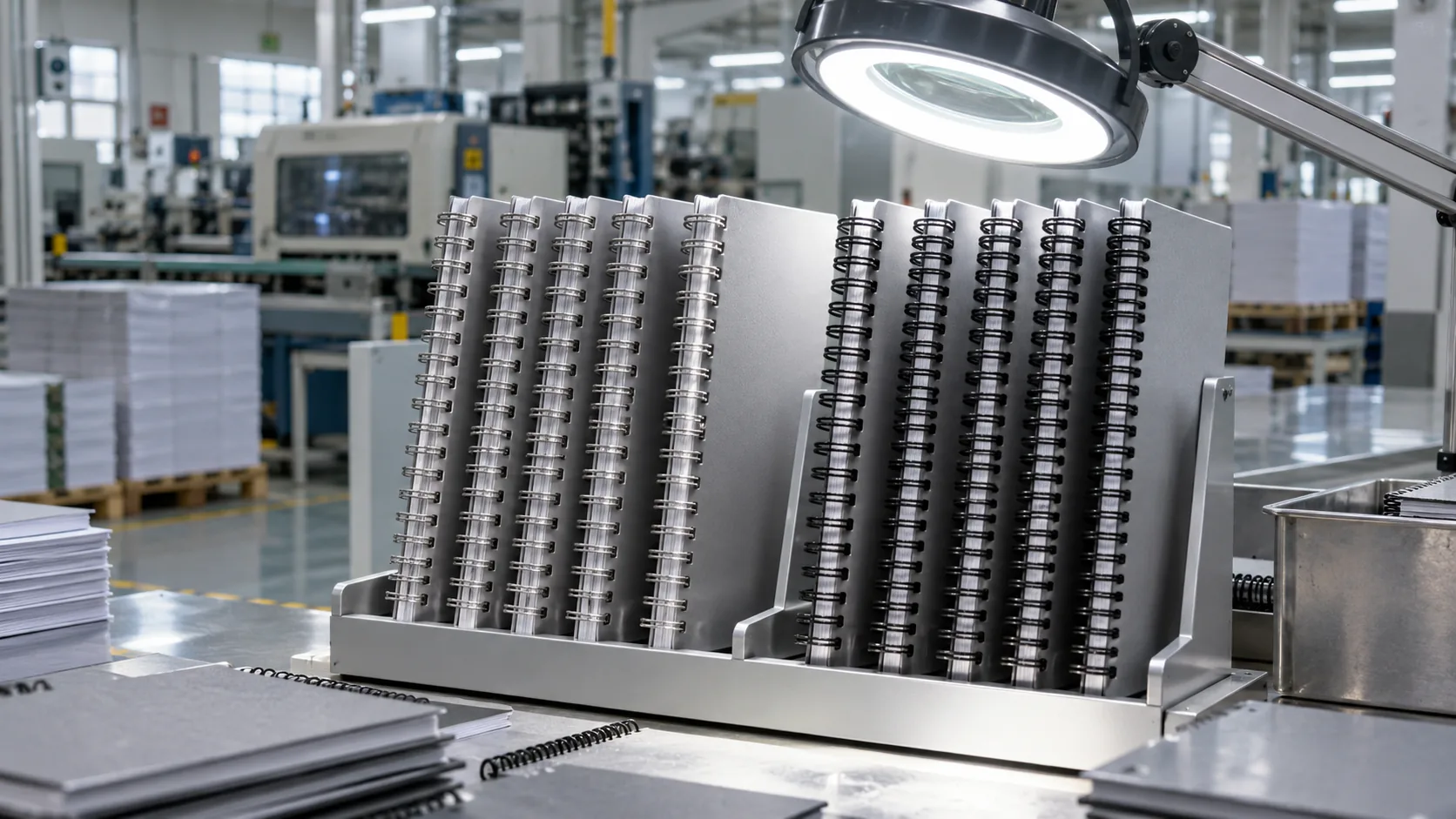
Brands should compare Wire-O and plastic spiral through the complete production result, not a binding unit price alone. Element material, page block, cover, punching, inserting, closing or crimping, finishing, sampling, labor, and repeat-order control can all affect the project.
What evidence should a supplier comparison include?
Ask for a quotation that separates the product assumptions. The printing project requirements page supports a process that aligns format, materials, binding, sampling, checking, and delivery instead of treating binding as a standalone line item.
Compare:
- Element material and color.
- Page block, cover, holes, and finished thickness.
- Setup, assembly, finishing, and packing steps.
- Sample standard and acceptable variation across repeat orders.
| Cost driver | Consistency risk | Evidence |
|---|---|---|
| Wire or coil material | Color or element variation | Material and color sample |
| Punching and insertion | Hole or alignment variation | Bound production sample |
| Cover and page block | Opening or closure changes | Full-size dummy |
| Finishing and packing | Surface or edge damage | Packed unit sample |
| Repeat production | Drift from approved standard | Reference sample and specification |
The useful comparison is the cost of a stable finished notebook. Key Takeaway: compare process control and repeatability beside the binding price.
What should a Wire-O or spiral notebook RFQ include?
A Wire-O or spiral notebook RFQ should name the mechanism, element material, page count, paper, cover, size, hole or margin requirements, finish, quantity, packing, destination, and approval standard. Use “continuous plastic coil” when that is the intended construction.
How can buyers prevent binding misunderstandings?
Send the use case and a reference sample or drawing through contact King Tai with your notebook requirements. Ask the supplier to show both mechanisms if the brand is comparing them, then record the selected element and finished sample.
Include:
- Wire-O double-loop metal or continuous plastic coil.
- Page count, paper, cover, finished size, and orientation.
- Binding-side margin, hole pattern, cover clearance, and finish.
- Quantity by SKU, packing, destination, and repeat-order plan.
- Sample approval standard and handling test.
| RFQ field | Useful wording | Why it matters |
|---|---|---|
| Mechanism | “Wire-O double-loop metal” or “continuous plastic spiral” | Removes the main ambiguity |
| Page block | “_ sheets/sides, paper _, cover ___” | Determines element and hole suitability |
| Design | “Binding margin and cover clearance confirmed” | Protects artwork and opening behavior |
| Quantity | “_ units across _ versions” | Supports setup and consistency planning |
| Approval | “Bulk follows approved sample and handling standard” | Creates a review reference |
A precise RFQ makes supplier recommendations comparable. Key Takeaway: specify the mechanism in plain language and attach the finished-use requirements.
How should a brand choose between Wire-O and spiral?
Choose Wire-O when a neat double-loop metal edge, formal presentation, and controlled page alignment fit the product. Choose a continuous plastic spiral when fold-back flexibility, visible coil color, or practical handling matters more. In both cases, confirm the page block, cover, margins, holes, and sample behavior.
The right binding is the one that serves the notebook’s use and can be repeated at the required quality. King Tai can discuss those choices with stationery brands, publishers, gift companies, and other B2B buyers before the mechanism is locked.
Share the use case, mechanism, page plan, cover, quantity, and references through contact us today. A clear binding choice gives the specification a reliable starting point.
Can Wire-O and plastic spiral both lie flat?
Yes, both can support flat opening when page block, holes, cover, and element are matched. Test the finished sample in the user’s writing position.
Is Wire-O always stronger than a plastic spiral?
No universal answer applies. Element, hole, cover, page block, and handling all affect the result, so approve the complete notebook.
Can a plastic spiral notebook fold back completely?
It can be suited to fold-back use, but the cover, page block, coil, and user motion must be checked together.
How much paper can each binding hold?
Capacity depends on paper, cover, element or coil size, hole pattern, and supplier process. Request confirmation for the actual finished thickness.
What should I send before requesting a binding quotation?
Send the mechanism, page count, paper, cover, size, margins, quantity, finish, destination, artwork, and sample or handling requirements.