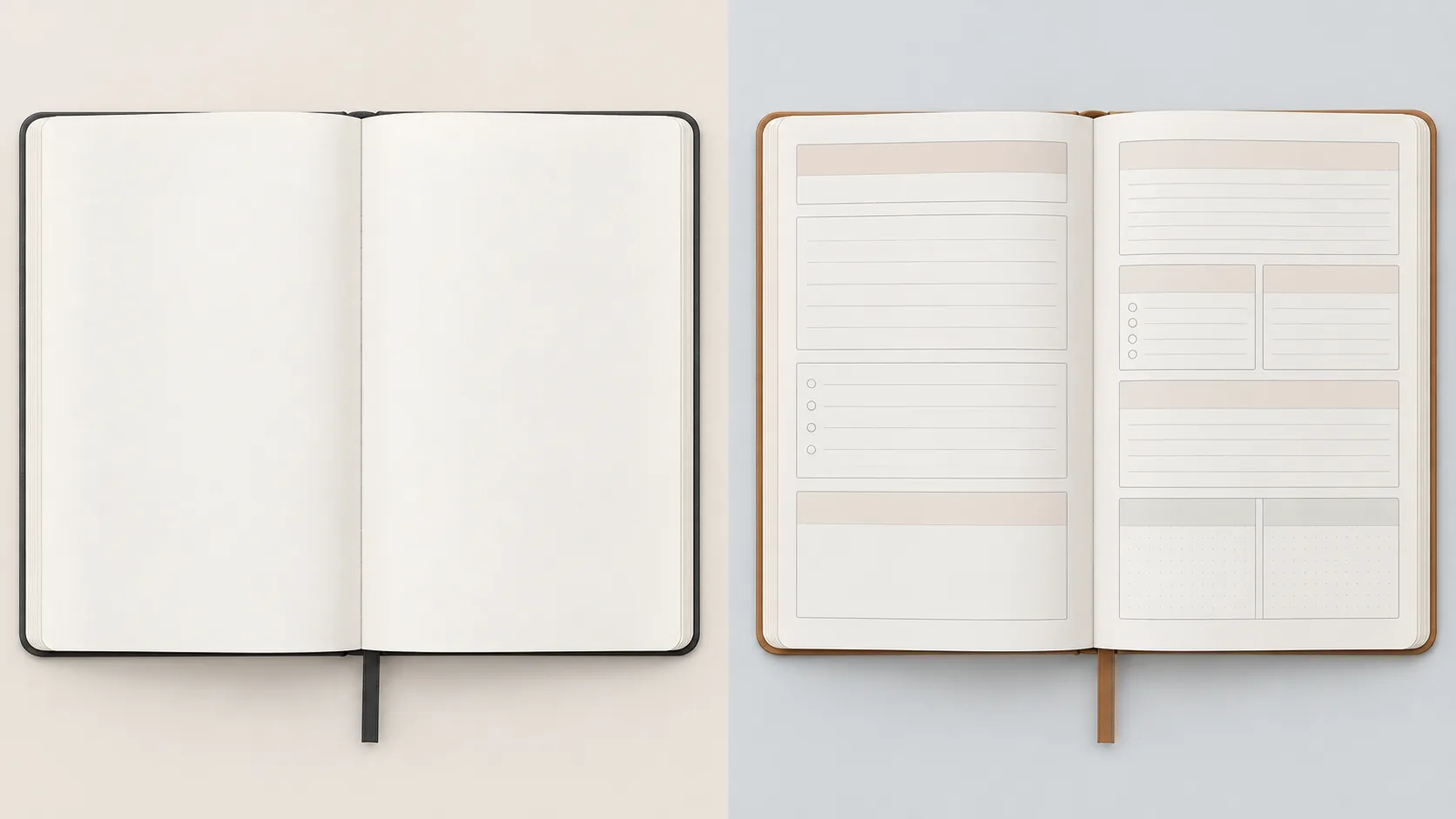
Notebook vs journal is usually a comparison between a broad format and a more defined product purpose. A notebook may support open note-taking, planning, or sketching, while a journal often adds prompts, a sequence, or a specific reason to return to its pages. The labels overlap, so a brand that chooses one without defining the interior can end up with unclear SKUs and a product that does not match customer expectations.
The practical decision is to start with the user’s action, then specify the page system, binding, cover, and production standard. This guide helps brands compare the two directions without treating a market label as a fixed technical definition.
What is the practical difference between a notebook and a journal?
The practical difference is usually purpose: a notebook is a flexible place to capture information, while a journal usually gives that writing a defined theme, routine, or content path. Either product can use lined, blank, dot-grid, hardcover, softcover, spiral, or sewn construction.
How should a buyer define the product role?
Define the role before choosing the name. King Tai’s custom notebook printing service groups projects by retail, gifting, education, publishing, events, and private-label use, showing why the same physical format can serve different product goals.
Ask:
- What will the user do? Capture notes, plan, sketch, reflect, record, or follow prompts.
- How open is the content? Free pages, light ruling, or a prescribed sequence.
- How often will the user return? Occasional notes, daily entries, or a planned program.
- What must the product communicate? Practical utility, personal reflection, gifting, or guided expertise.
| Decision dimension | Notebook direction | Journal direction | Buyer question |
|---|---|---|---|
| Purpose | Open capture and flexible notes | Defined theme or routine | What should the user do on page one? |
| Interior | Ruled, blank, grid, or mixed | Prompts, sections, sequence, or guided pages | How much content is pre-planned? |
| Naming | Broad product category | Purpose-led product position | Does the name match the interior? |
| Range role | Everyday, school, office, or practical SKU | Reflection, planner, keepsake, or guided SKU | What makes this version distinct? |
The labels are useful only when they clarify the product job. Key Takeaway: define purpose and interior before deciding whether the SKU should be called a notebook or journal.
How do notebook and journal interiors differ?
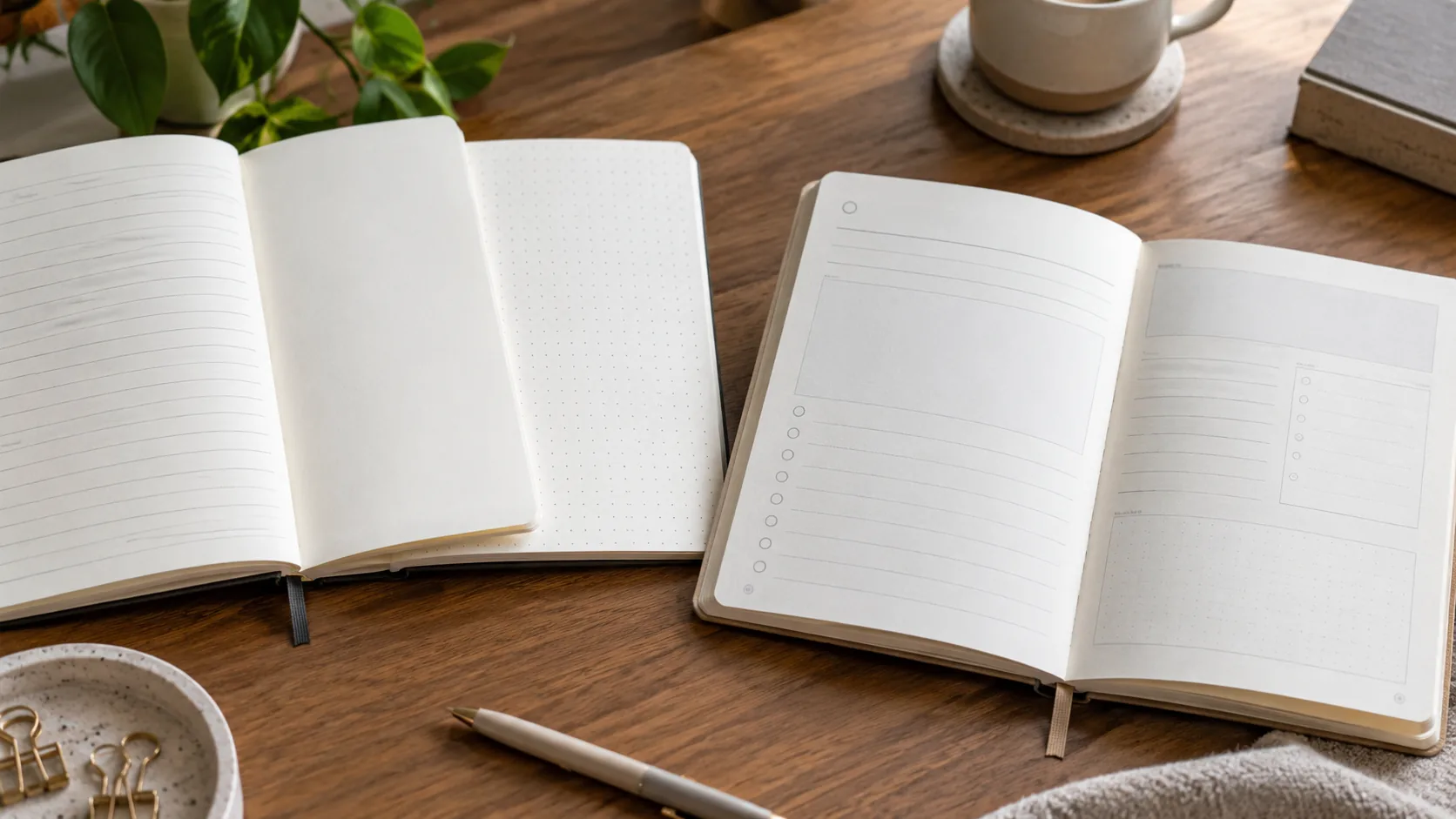
Notebook interiors usually leave more room for open capture, while journal interiors often use prompts, sections, page numbers, or a sequence that guides the user. Neither side owns a single page pattern, so the difference should be visible in the page architecture.
Which interior decisions should be planned first?
Use the stationery and gifting printing solutions page as a production reminder: product use, page layout, paper, binding, finishing, sampling, and delivery belong in the same conversation.
Specify:
- Ruling, blank space, dot-grid, graph, or guided areas.
- Prompts, indexes, dividers, pockets, or reference pages.
- Page order, repeated modules, and opening spreads.
- Print coverage and the writing space left after the content is added.
| Interior feature | Notebook use | Journal use | Approval check |
|---|---|---|---|
| Open pages | Notes, lists, sketches, meeting records | Free-form reflection | Is the page flexible enough? |
| Prompts | Optional reference or project aid | Core guidance or routine | Are prompts clear and correctly sequenced? |
| Sections | Subjects, projects, or categories | Phases, themes, or exercises | Are dividers and transitions useful? |
| Page numbers or index | Finding notes in a working book | Tracking entries or progress | Does the navigation support the content? |
The interior makes the product promise tangible. Key Takeaway: let the page architecture distinguish the SKU before relying on the cover name.
Which format suits free notes, planning, or reflection?
Free notes usually suit an open notebook format, while structured planning or reflection often benefits from a journal or guided format. A planner, bullet-style book, or project notebook can sit between the two when it gives users a framework without dictating every entry.

How should brands match format to user action?
For a project that needs a clear format, custom printing services can help connect content type, page design, paper, binding, sampling, and delivery planning. The key is to describe the action rather than asking for a generic “notebook” or “journal.”
Match the product to the task:
- Capture: flexible ruled, blank, or grid pages.
- Plan: calendars, check areas, prompts, or repeated modules.
- Reflect: dated or undated prompts with comfortable writing space.
- Learn or train: sections, reference content, exercises, or review pages.
| User task | Suitable direction | Design priority |
|---|---|---|
| Meeting notes | Flexible notebook | Fast writing and easy page finding |
| Daily planning | Planner or guided journal | Repeated structure and clear prompts |
| Creative work | Blank or dot-grid notebook | Open space and light guidance |
| Reflection program | Journal | Sequence, prompts, and return habit |
| Training record | Structured notebook or journal | Sections, reference pages, and durability |
The user action is more reliable than a category label. Key Takeaway: choose the format that makes the intended behavior easy to repeat.
How do binding and page turning affect the choice?
Binding affects how a notebook or journal opens, folds, turns, and feels in use. Spiral and Wire-O can support practical writing and lay-flat use, while sewn, hardcover, and perfect-bound directions can support a more book-like or gift-oriented product.

Which binding direction fits the product role?
The notebook printing case study shows why a sample must prove more than appearance: the finished product should remain usable and consistent when it moves into bulk production.
Consider:
- Whether the user writes near the binding edge.
- Whether pages need to fold back or remain in a book-like spread.
- Whether a visible coil, Wire-O, spine, or sewn structure supports the brand position.
- Whether the page block, cover, and binding stay balanced at the intended thickness.
| Binding direction | Suitable use | Trade-off | Sample check |
|---|---|---|---|
| Spiral or Wire-O | Practical writing, training, and planning | Visible binding edge | Open flat and fold back |
| Perfect bound | Clean, book-like journal or notebook | May resist flat opening | Write near the spine |
| Sewn or hardcover | Premium, keepsake, or long-life journal | More structure and weight | Check opening, spine, and hand feel |
| Softcover bound | Portable, campaign, or everyday line | Less cover protection | Check flex, corners, and page hold |
For a keepsake journal intended to be retained, consider opening stress too. The U.S. National Archives' bound-volume guidance recommends supporting covers and pages rather than forcing a volume flat; test the chosen construction under the journal's expected handling. Key Takeaway: choose binding from the user's motion and desired product feel, not from the label alone.
How should brands choose covers for notebooks and journals?
Notebook covers often prioritize practical print, portability, or everyday handling, while journal covers may place more weight on tactile presentation, gifting, and a clear emotional or thematic position. The same cover material can serve both if the interior and finish support the intended product.

What should the cover communicate?
King Tai’s custom notebook formats page connects cover material, surface finish, logo treatment, page layout, and binding. Treat those elements as one physical message instead of choosing the cover before the product role is clear.
Review:
- Cover material and hand feel.
- Finish, logo treatment, and visual hierarchy.
- Protection for the page block and intended carrying condition.
- Relationship between cover family and interior function.
| Product position | Cover direction | Risk | Buyer check |
|---|---|---|---|
| Practical notebook | Printed paper, flexible cover, simple finish | May feel too generic or weak | Test daily handling |
| Premium journal | Cloth, PU, leather, or structured cover | Finish can exceed the interior value | Compare cover to page experience |
| Gift notebook | Clear branding and tactile surface | Presentation may overshadow utility | Open, write, and pack the sample |
| Guided journal | Cover reinforces theme or program | Cover promise may exceed content | Review cover beside page sequence |
The cover should make the interior promise credible. Key Takeaway: use material and finish to reinforce the product role rather than define it alone.
How do page counts and use cycles change the product?
Page count and use cycle should follow how often the user returns, how much content each entry needs, and how portable the finished product must be. An everyday notebook may be replenished or replaced frequently, while a guided or keepsake journal may need a longer sequence and a more deliberate construction.

What should brands decide before fixing page count?
The stationery printing planning page links use case, page count, paper, binding, sampling, and delivery. Define the content cycle before asking the supplier for a page count, because page architecture changes thickness and binding suitability.
Decide:
- Expected entry frequency and project duration.
- Number of repeated prompts, modules, or sections.
- Portable versus desk-based use.
- Reorder, edition, or multi-SKU plan.
| Use cycle | Page planning | Production question |
|---|---|---|
| Quick notes | Flexible block and simple ruling | Can it stay light and easy to carry? |
| Daily routine | Repeated dates or prompts | Is the sequence complete and clear? |
| Long project | Sections, indexes, and durable build | Does the binding suit the finished thickness? |
| Keepsake or gift | Deliberate sequence and presentation | Does the construction justify the longer use? |
The page block should reflect how the product returns to the user. Key Takeaway: plan page count from use cycle and content sequence, then confirm the binding.
How can a brand build a clear notebook and journal SKU range?
A clear range can share covers or formats while separating products through interior function, binding, prompts, materials, or use context. Each SKU should answer a different customer need instead of changing the name while keeping the same product.

Which differences are strong enough to justify a SKU?
Use the printing project requirements process to describe the product role, page plan, materials, sampling, checking, and delivery for every version. A range becomes easier to source when the differences are written as specifications.
Build around roles such as:
- Everyday notebook for open notes.
- Guided journal for a defined routine.
- Planner for time or project structure.
- Premium journal for gifting or keepsake use.
| SKU role | Interior | Cover or binding direction | Distinction |
|---|---|---|---|
| Everyday notebook | Ruled, blank, or grid | Practical cover and binding | Fast, flexible capture |
| Guided journal | Prompts and sequence | Tactile or structured cover | Defined return habit |
| Planner | Dates, modules, check areas | Stable opening and clear navigation | Repeated planning task |
| Premium journal | Curated content and writing space | Higher tactile and presentation focus | Keepsake or gift position |
The range is easier to explain when each product has a visible job. Key Takeaway: give every SKU a distinct user task, interior, and construction reason.
How should buyers compare suppliers for notebooks and journals?
Buyers should compare suppliers by their ability to translate the notebook or journal concept into a stable sample and repeatable bulk product. Communication, page accuracy, binding, finishing, packing, and reference standards matter beside the initial unit quote.

What evidence should a supplier comparison include?
The notebook printing case study centers on sample quality, finishing, communication, and repeat production. Use those same evidence points when comparing suppliers for a journal or notebook range.
Compare:
- Understanding of the product role and page sequence.
- Material, paper, cover, and binding recommendations.
- Physical sample accuracy and approval process.
- Bulk consistency, packing, and communication checkpoints.
| Criterion | Evidence | Decision question |
|---|---|---|
| Product understanding | Written brief or restated use case | Are notebook and journal roles understood? |
| Page execution | Page proof or sample | Does the interior match the intended task? |
| Binding and cover | Finished sample | Does it open and feel right in use? |
| Repeat control | Approval standard and checkpoints | How will bulk be compared with the sample? |
| Communication | Clear revisions and next steps | Can the project move without repeated ambiguity? |
Supplier control is part of the product experience. Key Takeaway: compare the supplier’s ability to carry the product idea into repeat production.
What should a notebook or journal RFQ include?
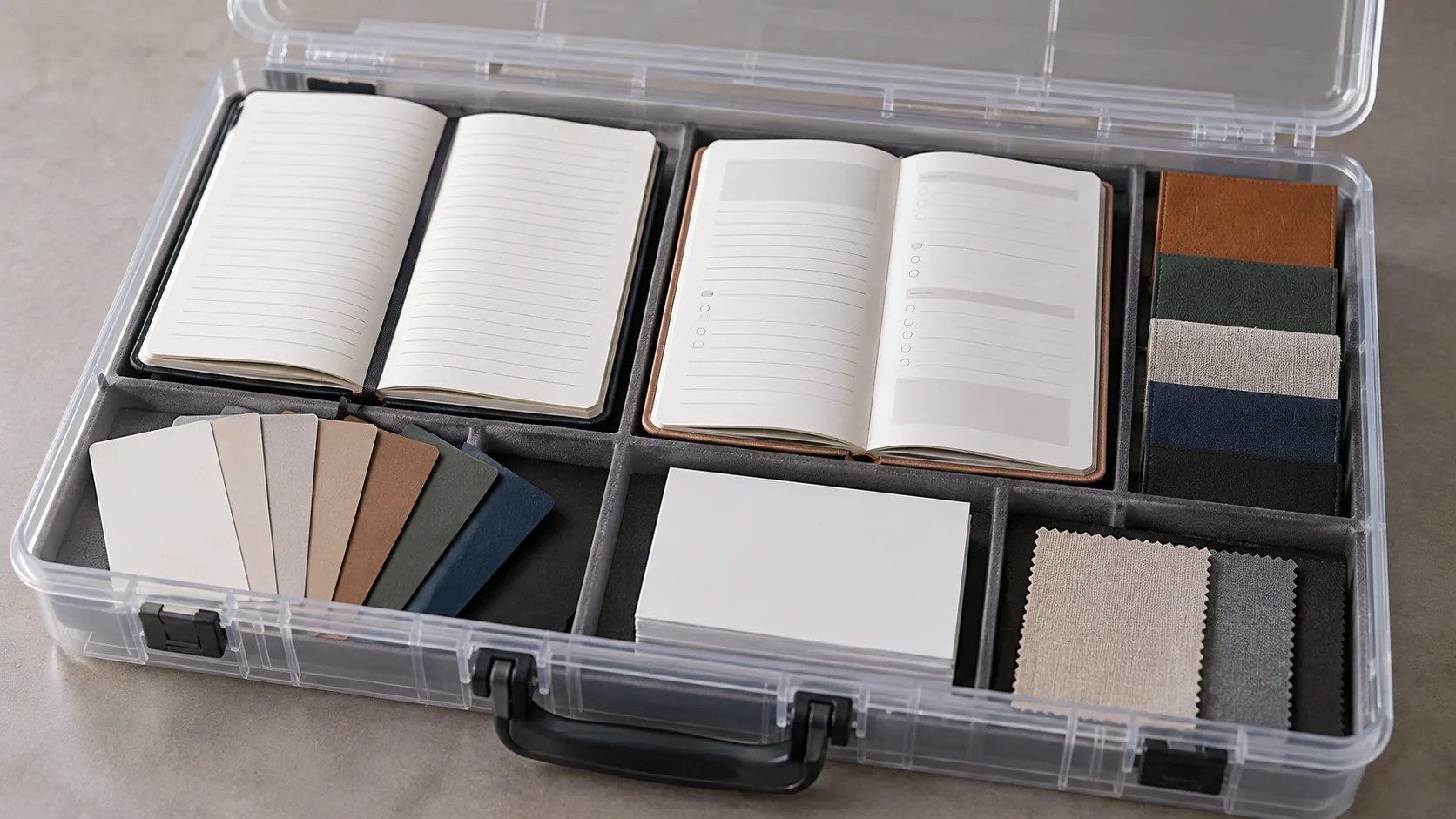
A notebook or journal RFQ should state the product role, user task, interior, page sequence, size, page count, paper, cover, binding, finish, quantity, packing, destination, and approval standard. If the label is still open, ask for comparable notebook and journal directions instead of leaving the interpretation implicit.
How can buyers make the comparison easy to quote?
Send the use case and available references through contact King Tai with your notebook requirements. Ask the supplier to separate shared components from the choices that distinguish the SKU.
Include:
- Product role: notebook, journal, planner, or guided format.
- Interior: ruling, prompts, sections, indexes, and page sequence.
- Construction: paper, cover, binding, finish, and packing.
- Commercial context: quantity by SKU, destination, and repeat-order plan.
- Approval: sample standard, handling expectations, and acceptable variation.
| RFQ field | Useful wording | Why it matters |
|---|---|---|
| Product role | “Open notebook” or “guided reflection journal” | Sets the content expectation |
| Interior | “Ruled pages” or “prompt sequence with sections” | Makes the page job buildable |
| Construction | “Softcover, Wire-O, selected paper, finish” | Connects feel and production |
| Quantity | “_ units across _ versions” | Supports SKU and setup planning |
| Approval | “Bulk follows approved sample” | Creates a review reference |
A clear RFQ turns an overlapping label into a production plan. Key Takeaway: describe the product job and the finished specification in the same brief.
How should a brand choose between a notebook and a journal?
Choose a notebook when the product should support open capture and flexible use. Choose a journal when a defined purpose, prompt system, sequence, or emotional product position should guide the user. The labels can overlap, so the interior, cover, binding, and sample standard should make the distinction clear.

King Tai can discuss those choices with stationery brands, publishers, gift companies, and other B2B buyers before the product is fixed. Share the use case, page plan, cover direction, binding, quantity, and references through contact us today. A clear product role gives the rest of the notebook or journal specification a stable starting point.
Can a journal also be a notebook?
Yes. Journal is often a purpose-led use of the broader notebook format, so the interior and product position should explain the difference.
What’s the main product difference between a notebook and a journal?
Purpose is the useful starting point. A notebook leaves more room for open capture, while a journal often guides a recurring or themed activity.
Can notebooks and journals use the same binding?
Yes. Spiral, Wire-O, sewn, hardcover, and softcover formats can serve either product when the opening behavior fits the user task.
How should a retail brand name the two products?
Use names that match the interior and use cycle. Avoid calling a prompt-led product a general notebook if the guided function is its main value.
What should I prepare before requesting a notebook or journal quote?
Prepare the user task, product role, page sequence, paper, cover, binding, quantity, destination, references, and sample approval standard.